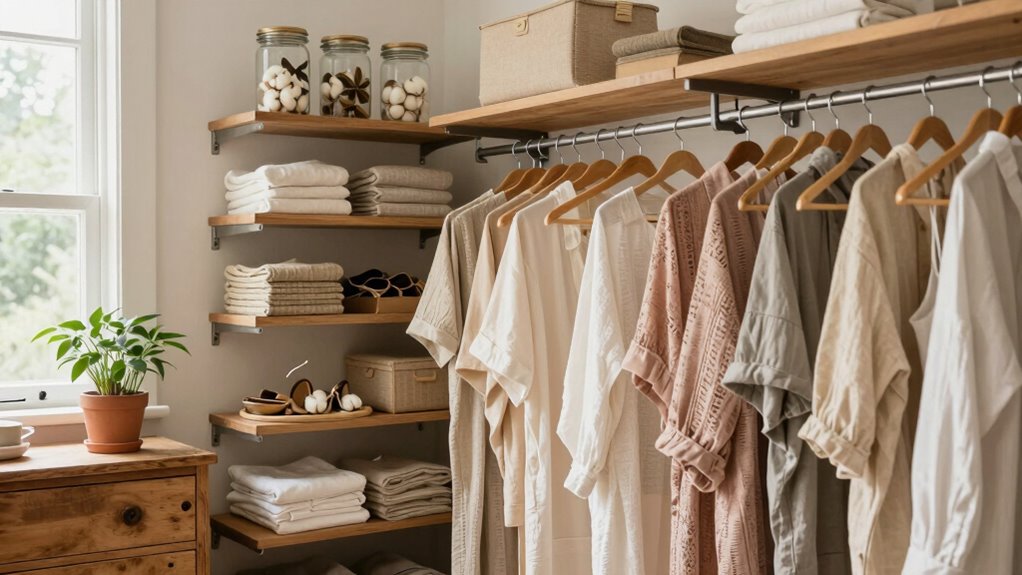

An eco-friendly closet features high-quality, timeless pieces made from sustainable materials like organic cotton or recycled fabrics. You choose brands committed to ethical practices and avoid fast fashion by shopping intentionally, supporting secondhand shops, and fostering a minimalist approach. Properly caring for your clothes extends their lifespan, reducing waste. If you’re curious about building a truly sustainable wardrobe, you’ll uncover more tips and ideas that can transform your closet into a greener space.

Get your wardrobe favorites delivered free — and shop member deals
- Fast, free delivery on millions of items
- Access to Prime Big Deal Days deals on October 6–7
- Prime Video, Amazon Music and more included
Key Takeaways
- Contains high-quality, timeless pieces made from eco-friendly materials like organic cotton, hemp, or recycled fabrics.
- Features clothing from brands committed to ethical practices and sustainability certifications such as Fair Trade or GOTS.
- Organized with used, vintage, or secondhand items, reducing demand for new fast fashion products.
- Maintains garments properly through eco-friendly washing and care routines to extend their lifespan.
- Reflects mindful shopping habits focused on versatility, durability, and supporting ethical brands.

Creating an eco-friendly closet isn’t just about making environmentally conscious choices; it’s about transforming your daily habits to reduce waste and support sustainable fashion. When you build a sustainable wardrobe, you focus on quality over quantity, choosing pieces that last longer and serve multiple purposes. Green fashion choices involve selecting clothing made from eco-friendly materials like organic cotton, hemp, or recycled fabrics, which minimize environmental impact. Instead of impulsively buying fast fashion, you become intentional about where and how you shop, prioritizing brands committed to ethical practices.
Your eco-friendly closet reflects a mindful approach to consumption. You start by decluttering, donating or recycling items you no longer wear, making room for sustainable pieces. This step reduces clutter and prevents waste, helping you see what you already own and identify gaps in your wardrobe. When shopping, you look for certifications like Fair Trade or GOTS, which guarantee that your clothing is produced ethically and sustainably. These green fashion choices often come with a slightly higher price tag but pay off in durability and reduced environmental harm.
You also pay attention to your clothing care routines. Washing your clothes in cold water, avoiding dryers, and using eco-friendly detergents extend the lifespan of your garments. This conscious effort reduces microplastic pollution and energy consumption, aligning with your eco-friendly goals. Shopping secondhand or vintage becomes a natural part of your sustainable wardrobe, giving new life to pre-loved items and reducing demand for new production. Thrift stores and online resale platforms are great resources for finding unique pieces that match your style and values.
In your daily routine, you prioritize versatile pieces that mix and match easily, minimizing the need for excess clothing. When you do buy new, you choose timeless styles that won’t go out of fashion quickly, encouraging a more sustainable approach to fashion consumption. Maintaining your clothes properly ensures they stay in good shape longer, further reducing waste. Incorporating sustainable fashion practices into your wardrobe choices helps support ethical production and reduces environmental harm. Additionally, learning about clothing care routines can significantly extend the lifespan of your garments, making your wardrobe more eco-friendly. A mindful shopping approach also plays a crucial role in supporting sustainable fashion choices and reducing overall waste. Being aware of the environmental impact of clothing can motivate you to make more informed decisions and prioritize sustainable options, ultimately contributing to a healthier planet.
As an affiliate, we earn on qualifying purchases.
Frequently Asked Questions
How Can I Start Transitioning to an Eco-Friendly Closet?
You can start shifting to an eco-friendly closet by choosing sustainable fabric choices like organic cotton, hemp, or bamboo. Look for brands that prioritize ethical manufacturing processes to guarantee fair labor practices and reduce environmental impact. Gradually replace fast fashion items with quality pieces from eco-conscious labels. Keep an eye out for secondhand options or clothing swaps, and wash your clothes mindfully to extend their lifespan, making your closet greener over time.
What Brands Prioritize Sustainable and Eco-Friendly Clothing?
Think of choosing brands as planting a garden of sustainable growth. You’ll find brands like Patagonia, Everlane, and Tentree prioritize sustainable fabric choices and ethical manufacturing processes. They’re committed to transparency and reducing environmental impacts, nurturing your wardrobe with eco-friendly materials. By supporting these brands, you become a gardener tending to a healthier planet, cultivating a closet that’s stylish, responsible, and aligned with your values.
How Do I Care for Eco-Friendly Fabrics Properly?
To care for eco-friendly fabrics, you should prioritize eco-friendly washing methods, like cold water and gentle cycles, to reduce energy use and fabric wear. Always follow the care label instructions to maintain fabric durability, avoiding harsh detergents and bleach. Air-dry your clothes when possible, as heat can degrade eco fabrics faster. This approach helps extend your clothes’ lifespan while keeping them eco-friendly and vibrant.
Are Second-Hand Stores Truly Eco-Friendly?
Did you know second-hand stores extend the lifespan of clothing by up to 60%, making them more eco-friendly? Yes, they’re a great way to combat fast fashion and reduce textile waste. Shopping second-hand keeps garments out of landfills and lowers demand for new production. Plus, you get unique pieces! So, yes, second-hand stores are truly eco-friendly, helping you make a positive impact on the environment while building a stylish wardrobe.
How Often Should I Update or Refresh My Eco-Friendly Wardrobe?
You should refresh your eco-friendly wardrobe every few months to stay aligned with fashion sustainability and ethical fashion choices. Regular updates help you incorporate new sustainable pieces, reduce waste, and support ethical brands. Pay attention to seasonal changes and trends, but prioritize quality over quantity. By consciously updating your wardrobe, you guarantee your clothing choices remain eco-conscious, stylish, and true to your commitment to sustainable living.
Conclusion
By embracing eco-friendly choices, your closet transforms into a sanctuary of sustainability, proving that small changes can spark a big impact. Imagine your wardrobe as a garden of conscious decisions, each piece a bloom of responsibility. As you make greener choices, you’re not just dressing yourself—you’re shaping a better future. So, why not turn your closet into a beacon of hope, showing that fashion and sustainability can truly walk hand in hand?
Halloween Picks
halloween
As an affiliate, we earn on qualifying purchases.