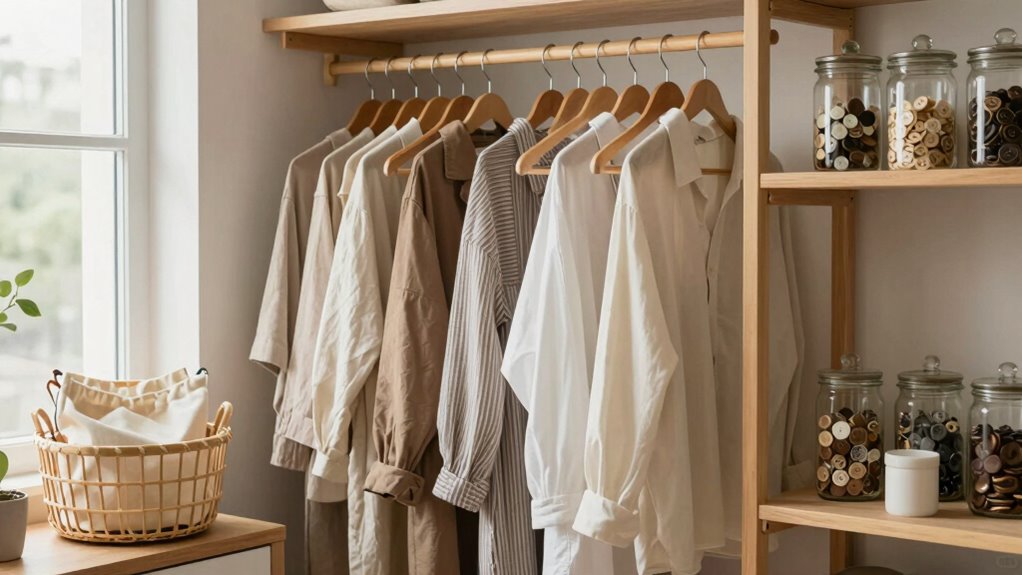

To build a more sustainable closet, start by questioning each purchase and focusing on quality over quantity. Donate or sell clothes you no longer wear, and plan your wardrobe around versatile, timeless pieces. Support eco-friendly brands and learn basic mending skills to extend clothing lifespan. Making small, consistent changes like these can add up over time, helping you develop responsible shopping habits. Keep exploring to discover more ways to create a sustainable wardrobe that fits your lifestyle.

Get your wardrobe favorites delivered free — and shop member deals
- Fast, free delivery on millions of items
- Access to Prime Big Deal Days deals on October 6–7
- Prime Video, Amazon Music and more included
Key Takeaways
- Rethink shopping by prioritizing quality, timeless pieces, and avoiding impulsive, trendy buys.
- Donate or sell unused clothes to extend their life and support a circular economy.
- Plan your wardrobe around versatile staples and learn basic repairs to reduce unnecessary purchases.
- Support sustainable brands with transparent, eco-friendly practices and recycling initiatives.
- Make small, consistent eco-friendly choices to gradually build a more sustainable wardrobe.
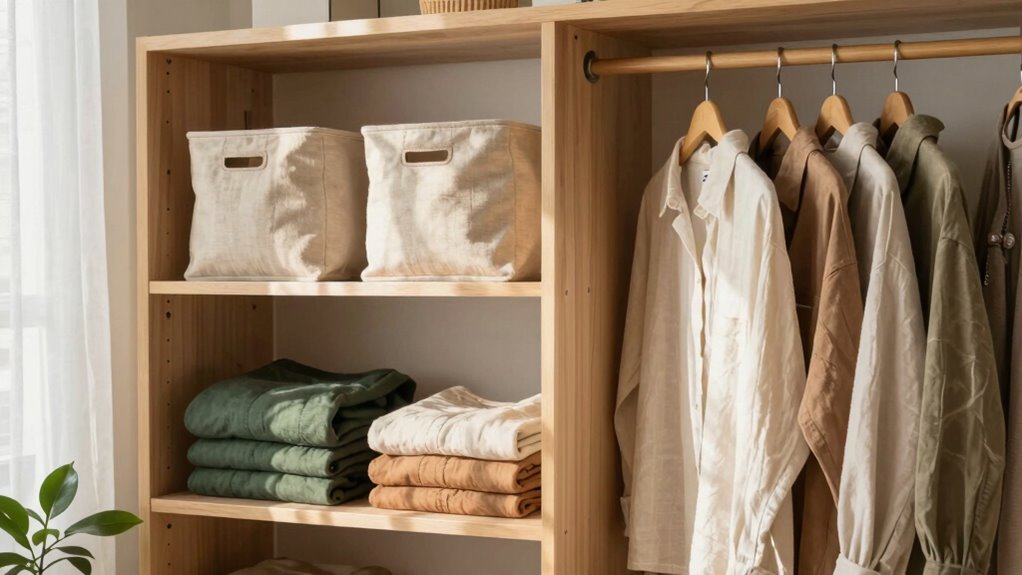
Creating a more sustainable closet doesn’t have to happen overnight; instead, it’s about making small, manageable changes that add up over time. The fashion industry, especially fast fashion, encourages quick, cheap purchases that often end up in the landfill after just a few wears. To break free from this cycle, start by questioning your shopping habits. When you see a trendy piece on sale, ask yourself if you truly need it or if it’s just a fleeting desire. Choosing quality over quantity is key—invest in well-made items that last longer, reducing the need to replace clothing frequently. This simple shift helps cut down on waste and discourages impulsive buying driven by fast fashion trends.
Small, manageable changes over time can create a more sustainable wardrobe.
Another effective habit is embracing clothing recycling. Donating or selling clothes you no longer wear keeps them out of landfills and gives them a second life. Look for local thrift stores or online marketplaces where your castoffs can find new owners. Additionally, explore clothing recycling programs that break down old textiles into raw materials for new products. Many brands now offer take-back initiatives, encouraging consumers to return worn-out garments for proper recycling. This practice not only reduces waste but also supports a circular economy, where clothing materials are reused instead of discarded. Contrast ratio can also play a role in making more sustainable choices, as high contrast ratios in projectors can enhance viewing quality without needing additional equipment, reducing electronic waste. Moreover, being aware of sustainable fashion practices can guide you toward more eco-conscious decisions in your wardrobe.
Be mindful during your shopping trips by prioritizing versatile, timeless pieces instead of fleeting trends. When you buy less, you naturally lessen your environmental footprint. Planning your wardrobe around staple items ensures you get more wear out of each piece, making your closet more sustainable without sacrificing style. Also, consider repairing clothes instead of tossing them. A simple sewing fix can extend a garment’s life exponentially, saving you money and reducing waste. Learning basic mending skills empowers you to maintain your wardrobe responsibly.
Supporting brands committed to sustainability makes a big difference. Look for labels that prioritize eco-friendly fabrics, ethical production practices, and transparent supply chains. These companies often promote clothing recycling initiatives and avoid fast fashion’s short-lived trends. By choosing these brands, you help foster a more sustainable industry and set a positive example for others.
Incorporating these habits into your routine might seem small at first, but over time, they can considerably reduce your environmental impact. Remember, building a sustainable closet isn’t about perfection but progress. Every conscious purchase, donation, or repair adds to a more eco-friendly wardrobe. Over time, these small actions will become second nature, making your closet not only more sustainable but also more aligned with your values.
As an affiliate, we earn on qualifying purchases.
Frequently Asked Questions
How Do I Identify Truly Sustainable Clothing Brands?
You can identify truly sustainable clothing brands by checking their eco labels and verifying their commitment to ethical sourcing. Look for certifications like GOTS, Fair Trade, or B Corp, which indicate responsible practices. Research the brand’s transparency about supply chains and labor conditions. Prioritize companies that openly share their sustainability efforts, use eco-friendly materials, and avoid fast fashion. This way, you’re supporting brands that genuinely care for people and the planet.
What Are Eco-Friendly Alternatives to Fast Fashion?
Imagine swapping neon fabric dyes for earthy, natural hues that breathe with the seasons. To go eco-friendly, choose brands with ethical certifications that guarantee fair labor and sustainable practices. Instead of fast fashion’s quick fades, opt for timeless pieces made from organic or recycled fabrics. These alternatives not only reduce environmental impact but also support a more transparent, responsible fashion industry you can feel good about wearing every day.
How Can I Reduce Clothing Waste Effectively?
You can reduce clothing waste by donating clothes you no longer wear to charity or clothing donation centers. Additionally, recycling textiles helps prevent waste from ending up in landfills. Look for local textile recycling programs or drop-off points. Make a habit of buying only what you need, repairing damaged items, and repurposing old clothes into new items. These steps help minimize waste and promote a more sustainable wardrobe.
What Are the Best Ways to Care for Sustainable Garments?
To care for sustainable garments, always follow the care labeling instructions to prevent damage and prolong fabric durability. Use gentle washing cycles, cold water, and eco-friendly detergents to reduce environmental impact. Avoid excessive washing and drying, which can wear out fabrics faster. Proper storage also helps maintain shape and quality. By taking these steps, you guarantee your sustainable pieces last longer, reducing waste and supporting your eco-friendly wardrobe goals.
How Do I Stay Motivated to Maintain Sustainable Habits?
Think of maintaining sustainable habits as tending a garden—you’ll see growth with consistent care. To stay motivated, focus on mindful shopping and keep your wardrobe organized, which makes it easier to choose eco-friendly options. Remind yourself of the positive impact you’re making. Celebrate small wins, like donating clothes or resisting fast fashion. These habits build momentum, turning sustainability into a natural part of your daily life.
Conclusion
By making small, mindful changes, you can markedly reduce your fashion footprint. Did you know that 92 million tons of textile waste end up in landfills each year? Imagine your closet transforming into a space of sustainability, where every piece is thoughtfully chosen and cared for. Building these habits might seem simple, but together they create a powerful impact. Stick with it, and you’ll not only refresh your wardrobe but also help protect our planet for future generations.
Fall Picks
fall essentials
As an affiliate, we earn on qualifying purchases.