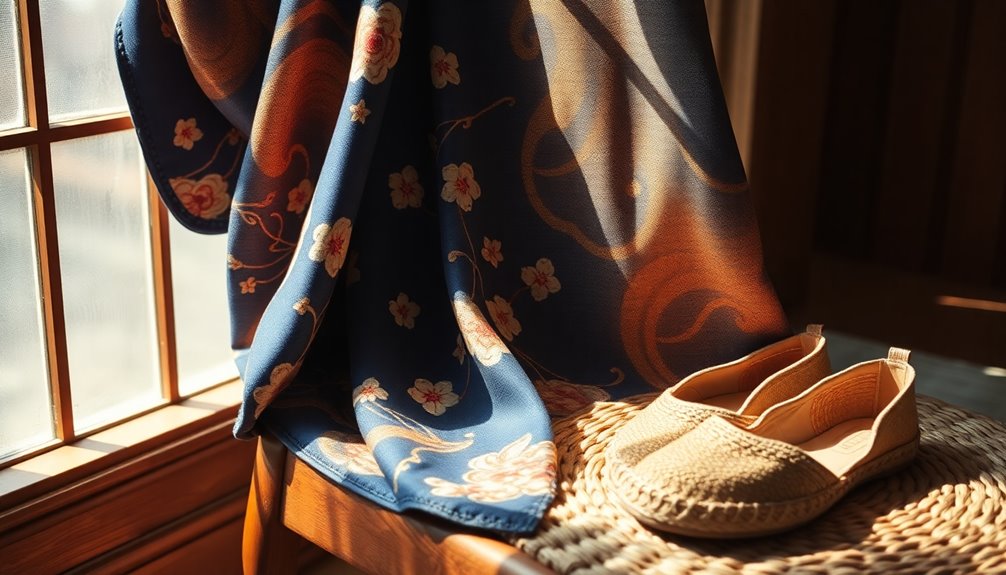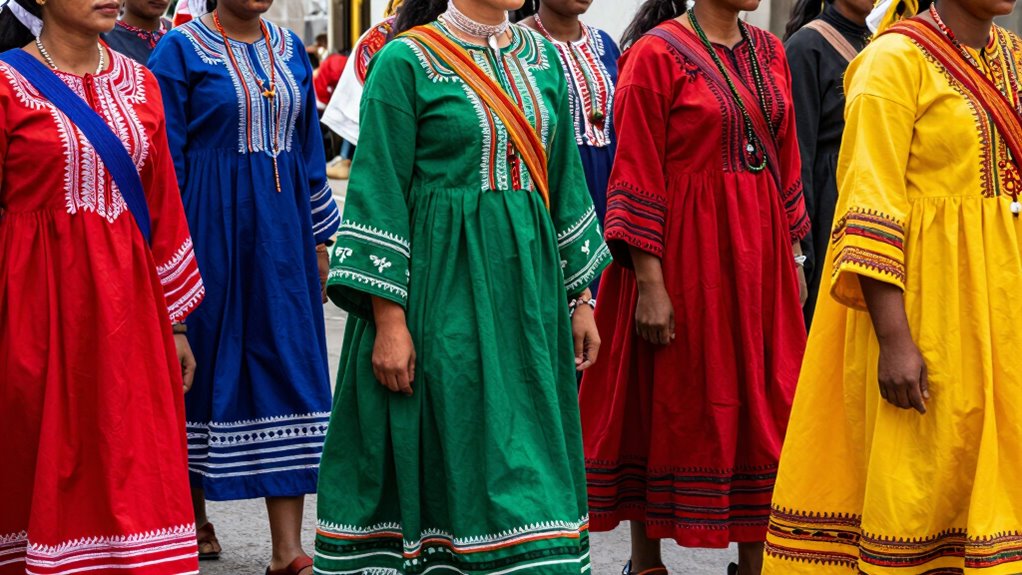

Color symbolism plays a key role in cultural fashion by conveying identity, social status, and spiritual beliefs through specific hues and dye techniques. You’ll notice how traditional colors represent deeper meanings, from joy and celebration to spiritual devotion. Different societies use colors to signal roles or community bonds, often passed down through generations. Understanding these vibrant symbols helps you appreciate the rich stories behind each garment. Keep exploring, and you’ll uncover even more fascinating cultural insights.
Prime for Young Adults — start your free trial
Fast free delivery, streaming and member deals for eligible 18–24 year olds.
As an affiliate, we earn on qualifying purchases.
Key Takeaways
- Colors in traditional clothing convey cultural values, social statuses, and spiritual beliefs beyond aesthetic appeal.
- Specific dye techniques and vibrant pigments reflect and preserve cultural heritage and craftsmanship.
- Clothing colors indicate societal roles, age, marital status, or religious devotion within communities.
- Traditional color symbolism evolves, blending historical meanings with modern interpretations in fashion.
- Wearing culturally significant colors fosters identity, heritage pride, and cultural storytelling through attire.

Color plays a powerful role in cultural fashion, conveying meanings and emotions that go beyond mere aesthetics. When you look at traditional clothing from around the world, you’ll notice how specific colors symbolize deeper cultural values, social statuses, or spiritual beliefs. This symbolism is often reinforced through color calibration, ensuring that the intended hues and their associated meanings are accurately represented and preserved. Traditional dye techniques play a significant role in how these colors are produced and maintained. Many cultures have developed unique methods to create vibrant pigments that hold cultural significance. For example, the indigo dyeing process in West Africa or the use of saffron in South Asian textiles isn’t just about achieving a beautiful hue—it’s about maintaining tradition and conveying specific symbolic meanings. These dye techniques often involve complex processes that have been passed down through generations, making the colors themselves a testament to cultural history and craftsmanship. When you see a fabric dyed with a traditional method, you’re witnessing a tangible connection to that culture’s identity and heritage. Furthermore, the authenticity of dyeing techniques can significantly influence how a color’s symbolism is perceived and valued within a community.
In many societies, the choice of color in clothing isn’t random but carefully curated to reflect societal roles or spiritual beliefs. In Japan, kimono colors can denote the season, the wearer’s age, or marital status, with specific shades reserved for particular occasions. Similarly, in India, the vibrant colors of sarees and turbans symbolize everything from celebration to religious devotion. The way these colors are used isn’t just about personal preference; it’s a language that communicates group identity and social harmony. When you wear or observe these garments, you’re engaging with a visual dialogue rooted in tradition and social meaning. Additionally, understanding cultural symbolism enhances appreciation for the depth of these fashion choices, revealing their importance beyond mere aesthetics. Recognizing the traditional dye techniques used in these textiles further deepens your understanding of their cultural significance. The symbolism of color in cultural fashion also evolves over time, blending old meanings with contemporary interpretations. Yet, the core idea remains that colors are more than superficial choices—they’re embedded with history, emotion, and cultural significance. When you understand the roots of traditional dye techniques and the psychological impact of colors, you gain a richer perspective on how fashion functions as a cultural narrative. It’s not just about looking good; it’s about expressing identity, honoring tradition, and communicating profound cultural values through every hue.
As an affiliate, we earn on qualifying purchases.
Frequently Asked Questions
How Do Color Meanings Vary Across Different Cultures?
You’ll find that color meanings vary across cultures due to cultural color rituals and historical color significance. For instance, white symbolizes purity in some societies, while it represents mourning elsewhere. These differences reflect each culture’s unique history and traditions. You should pay attention to these variations, especially when exploring cultural fashion, as they reveal deeper social values and beliefs embedded in colors, shaping how people express identity and respect tradition.
Are Color Symbols Universally Recognized or Culturally Specific?
Color symbols aren’t universally recognized; they’re deeply rooted in cultural perceptions. Your understanding of color psychology and color perception varies depending on cultural context, influencing how you interpret colors in fashion. For example, red might symbolize luck in China but danger elsewhere. So, when you see colors in different cultures, remember that their symbolism is culturally specific, shaped by unique traditions, histories, and beliefs rather than universal meanings.
How Has Globalization Impacted Traditional Color Symbolism?
Globalization has blurred traditional color symbolism, influencing your perception of colors in branding and interior design. You now see a mix of cultural influences, making colors like red or white carry different meanings worldwide. This shift allows brands to use color symbolism in branding more universally, but it can also dilute specific cultural meanings. In interior design, you might blend traditional and modern color symbolism, creating spaces that reflect diverse cultural influences.
Can Color Symbolism Influence Fashion Trends Globally?
Yes, color symbolism can influence global fashion trends. You’ll notice how color psychology shapes popular choices in fashion color palettes, as designers incorporate meanings like calmness or passion into their collections. These associations resonate across cultures, guiding what you see on runways and in stores worldwide. By understanding this, you can better recognize how emotional and cultural signals drive the evolution of fashion trends globally.
How Do Designers Incorporate Cultural Color Meanings?
Imagine a designer weaving cultural color palettes into their work, like a painter blending shades to tell a story. You see this in fashion when they incorporate color psychology, choosing hues that evoke specific emotions rooted in tradition. They carefully select colors that honor cultural meanings, making each piece a wearable tribute. By doing so, designers create garments that resonate deeply, connecting wearers to rich histories and shared identities.
Conclusion
Understanding how color symbolism appears in cultural fashion helps you see the deeper stories behind what people wear. Every hue carries meaning, history, and identity, connecting individuals to their heritage in powerful ways. When you notice these colors, you’re not just observing fashion—you’re witnessing a rich tapestry of tradition and expression. Isn’t it fascinating how something as simple as a color can reveal so much about a culture’s values and history?
Fall Picks
fall essentials
As an affiliate, we earn on qualifying purchases.