When discussing cultural fashion, approach it with respect and curiosity, recognizing its deep meanings and origins beyond just appearances. Avoid trivializing or exoticizing traditional attire, and instead focus on understanding its cultural significance and ongoing evolution. Listen actively to those who identify with the fashion, and ask thoughtful questions to show genuine interest. Respecting the context and history behind the clothing helps you honor its importance. If you want to explore how to do this thoughtfully, keep exploring these principles.

Get your wardrobe favorites delivered free — and shop member deals
- Fast, free delivery on millions of items
- Access to Prime Big Deal Days deals on October 6–7
- Prime Video, Amazon Music and more included
Key Takeaways
- Recognize and respect the cultural significance and heritage behind traditional clothing.
- Engage with authentic sources and listen actively to those who identify with the fashion.
- Avoid reducing cultural attire to mere aesthetics or exotic trends; focus on its meaning.
- Acknowledge that cultural fashion evolves but retains core values and symbolism.
- Approach discussions with humility, curiosity, and a genuine desire to understand beyond appearance.
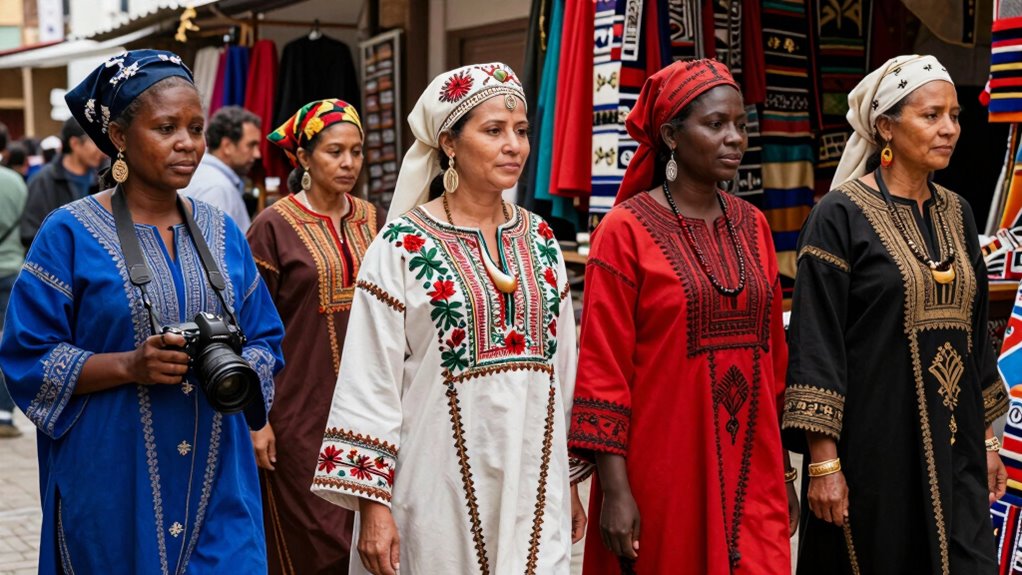
Discussing cultural fashion can be a meaningful way to learn about different traditions and identities, but it requires sensitivity and awareness. When you talk about clothing rooted in specific cultures, you need to recognize its cultural significance beyond aesthetics. These garments often carry deep meanings, histories, and social values that aren’t immediately visible. By understanding this, you avoid reducing cultural fashion to just trendy or exotic items. Instead, you approach it with respect, acknowledging its importance to the community it belongs to.
Fashion evolution plays a *vital* role in how cultural clothing is perceived and adapted over time. You might notice that what once served as traditional attire has evolved, blending with modern trends or other cultural influences. This evolution isn’t a sign of cultural loss but a natural process reflecting adaptability and resilience. When you discuss these changes, you should be careful not to dismiss the original significance or suggest that tradition is outdated. Instead, appreciate how cultural fashion remains dynamic, serving as a bridge between history and contemporary identity. Recognizing cultural resilience helps deepen understanding of how communities maintain their heritage while adapting to new contexts.
Cultural fashion evolves, blending tradition with modern trends—celebrating resilience while honoring original significance.
It’s essential to be mindful of the context in which you talk about cultural clothing. If you’re discussing it in an educational or cultural setting, focus on learning from those who identify with the fashion. Listen actively and avoid making assumptions about its meaning or significance. When you’re unsure, ask thoughtful questions rather than making statements that could come off as trivializing or appropriative. Respectful curiosity goes a long way in fostering understanding and appreciation. Engaging with authentic sources and cultural context can help you better grasp the layers of meaning behind traditional attire.
Avoid framing cultural fashion as a costume or a trend without recognizing its roots. When you see someone wearing traditional attire, instead of commenting on how it looks or how “exotic” it appears, consider the story behind it. Recognize that it’s part of a community’s identity and heritage, not just an aesthetic choice. This perspective helps prevent flattening the varied and complex nature of cultural fashion into a superficial trend.
Finally, remember that cultural fashion isn’t static; it’s a living expression of history, identity, and resilience. Your role is to approach it with humility and genuine interest. By doing so, you contribute to a respectful dialogue that honors the traditions and adaptations of different cultures without reducing them to mere visual elements. Understanding cultural significance and its evolving nature is essential to truly appreciating and respecting these expressions of identity. This approach allows you to appreciate the richness and depth behind every piece of cultural clothing.
As an affiliate, we earn on qualifying purchases.
Frequently Asked Questions
How Do I Recognize Cultural Appropriation Versus Appreciation?
You can recognize cultural appropriation versus appreciation by understanding the significance of cultural identity and fashion symbolism. When you respect the meaning behind traditional designs and acknowledge their origins, you’re appreciating the culture. Avoid using symbols out of context or for mere aesthetics, which risks cultural appropriation. Engage with the culture—learn about its history and significance—so your admiration is genuine, respectful, and avoids flattening the rich diversity behind cultural fashion.
What Are Respectful Ways to Ask About Someone’s Cultural Attire?
Ever wondered how to ask about someone’s cultural attire respectfully? Approach with cultural sensitivity and respectful curiosity, avoiding assumptions. You might say, “I admire your attire—can you tell me about its significance?” This shows genuine interest without appropriating. Keep your questions open-ended, listen actively, and respect their boundaries. Would you want someone to ask you about your cultural dress with the same respect?
How Can I Learn About Cultural Fashion Without Stereotypes?
You can learn about cultural fashion by studying its history and understanding its symbolism. Delve into reputable sources, such as books and documentaries, to gain context and avoid stereotypes. Engage with communities or cultural experts respectfully, asking questions that show genuine interest. Avoid making assumptions based on appearances alone. Recognize that fashion reflects deeper traditions and stories, helping you appreciate its richness without reducing it to superficial stereotypes.
Are There Specific Phrases to Avoid When Discussing Cultural Clothing?
When discussing cultural clothing, avoid phrases like “exotic,” “traditional only,” or “costume.” Instead, use respectful language that acknowledges cultural significance and diversity. Be mindful of cultural sensitivity by focusing on the meaning behind the attire and its context within the community. This approach helps you honor the culture without stereotyping or diminishing its importance, fostering a respectful and authentic conversation.
How Do I Address Cultural Fashion in Diverse Settings?
You immerse yourself in cultural exchange with enthusiasm, but remember, addressing cultural fashion requires serious fashion sensitivity. Approach conversations with genuine curiosity, listen actively, and avoid stereotypes or assumptions. When discussing diverse settings, highlight the significance behind clothing choices, emphasizing respect and understanding. Your openness fosters authentic dialogue, ensuring you honor each culture’s unique expression without flattening or appropriating it. Embrace the richness, and let respect guide every comment and question.
Conclusion
Now that you understand how to approach cultural fashion with respect and nuance, remember to listen more than you speak. Celebrate the rich tapestry of traditions without reducing them to mere trends—think of it as guarding a sacred relic in your own digital vault. By doing so, you honor the past while embracing the future. Let’s not forget, even in the age of the internet, true appreciation is timeless—like a handwritten letter in a world of emails.
Fall Picks
fall essentials
As an affiliate, we earn on qualifying purchases.