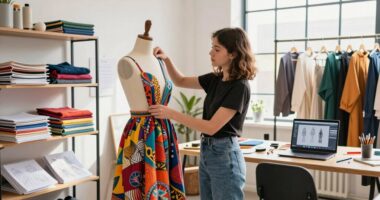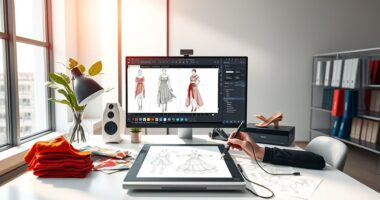
To learn fashion skills outside of formal school, you should immerse yourself in industry trends by following fashion blogs, magazines, and social media accounts. Practice hands-on techniques through online tutorials and simple projects like skirts or T-shirts. Engage with communities by joining forums, attending events, or collaborating with others. Stay curious, experiment regularly, and seek feedback to improve. Keep exploring these methods, and you’ll discover more ways to develop your unique fashion style.
Key Takeaways
- Follow fashion blogs, magazines, and social media influencers to stay updated on trends and industry insights.
- Utilize free online tutorials, courses, and YouTube channels to develop practical sewing and design skills.
- Join local or online fashion communities, forums, and groups to network and gain feedback.
- Attend fashion shows, exhibitions, and markets for inspiration and industry exposure.
- Practice regularly with simple projects, keep a sketchbook, and seek feedback to improve craftsmanship.
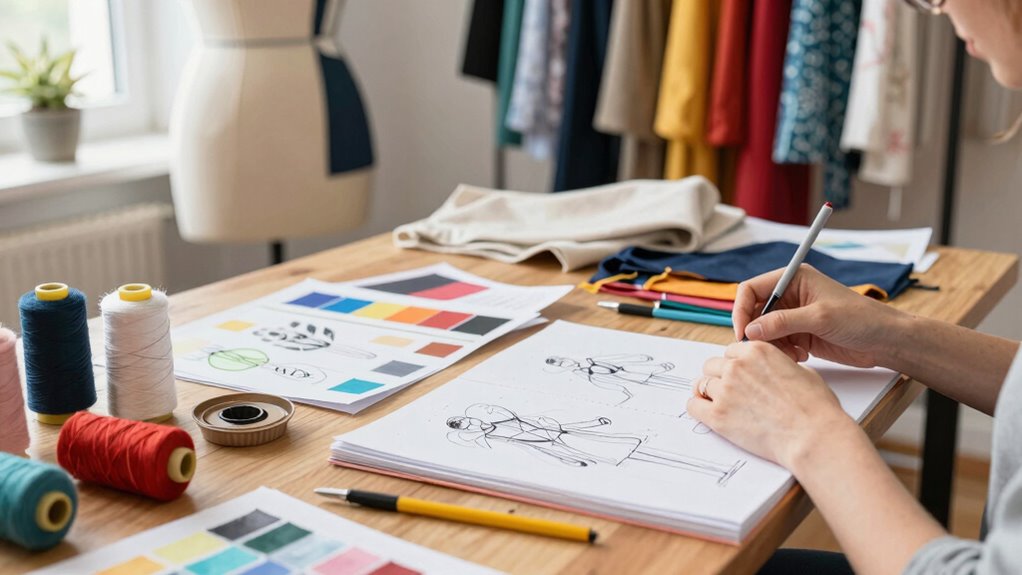
Learning fashion skills outside of formal school might seem challenging, but it’s entirely possible with the right approach. The key is to immerse yourself in the world of fashion, stay curious about the latest trends, and practice regularly. Start by researching current fashion industry trends, which will give you insight into what’s popular and what consumers are looking for. Following fashion magazines, blogs, and social media accounts of influential designers and brands helps you stay updated on seasonal styles, color palettes, and innovative fabric choices. This knowledge informs your understanding of what makes a garment fashionable and relevant, guiding your DIY garment creation efforts.
Immerse yourself in fashion trends through magazines, blogs, and social media to inspire your DIY designs.
When it comes to developing practical skills, hands-on experience is your best teacher. You don’t need a formal education to learn how to sew or design; plenty of online tutorials, YouTube channels, and free courses are available to help you get started. Begin with simple projects like basic skirts, t-shirts, or accessories. As you gain confidence, challenge yourself with more complex designs. Working on DIY garment creation allows you to experiment with different fabrics, cuts, and techniques, refining your craftsmanship along the way. Keep a dedicated sketchbook for ideas and designs—it helps you visualize concepts and track your progress. Practicing regularly is essential to developing your skills and building confidence. Additionally, understanding industry trends can help you anticipate what styles will resonate with your audience and inform your design choices. Staying informed about fashion industry insights can also help you adapt to market shifts and consumer preferences more effectively. Engaging directly with the industry through networking and community involvement can accelerate your learning and provide valuable perspectives. Developing a personal style is also a crucial part of the learning process, allowing you to stand out and express your unique creative voice.
Networking with other fashion enthusiasts can accelerate your learning. Join local sewing clubs, online forums, or social media groups dedicated to fashion and DIY projects. These communities offer valuable feedback, inspiration, and advice that can enhance your skills. Attending fashion shows, exhibitions, or pop-up markets in your area also exposes you to the latest styles and innovative designers, broadening your perspective. Don’t be afraid to replicate runway looks or incorporate current trends into your own designs as a practical learning method—this approach helps you understand construction and styling more deeply.
Additionally, consider internships or volunteering opportunities with local fashion boutiques or design studios. Even if unpaid, these experiences provide real-world insights into how the industry operates, from sourcing fabrics to managing production timelines. Over time, you’ll develop your eye for detail and your ability to adapt trends into your personal style. Remember, mastering fashion skills outside of formal school takes persistence and passion. With continuous learning, experimentation, and engagement with the fashion community, you’ll build a solid foundation that can lead to personal projects or even a future career in fashion.
As an affiliate, we earn on qualifying purchases.
Frequently Asked Questions
What Are the Best Online Resources for Learning Fashion Design?
You should explore online platforms like Skillshare, Udemy, and Creativebug for fashion design courses. They offer tutorials on fashion illustration techniques and fabric sourcing, helping you develop essential skills. You can also follow industry blogs and YouTube channels dedicated to fashion design. These resources provide practical tips on sketching, choosing fabrics, and trend analysis, all at your own pace, making them perfect for learning outside formal education.
How Can I Build a Professional Fashion Portfolio Independently?
Did you know that 85% of fashion professionals say a strong portfolio is key to success? To build yours independently, start with clear fashion sketches that showcase your unique style. Focus on fabric selection to highlight your understanding of textiles. Photograph your work professionally, organize it into a cohesive presentation, and regularly update your portfolio with new designs. This approach helps demonstrate your skills and attracts potential clients or employers.
What Are Effective Ways to Network in the Fashion Industry?
You can network effectively in the fashion industry by attending industry events like fashion shows and workshops, where you meet professionals face-to-face. Use social media to connect with designers, brands, and influencers—engage with their content genuinely and share your work. Remember to be authentic and proactive; building relationships takes time, but consistent interaction helps you stay visible and opens doors to collaborations and opportunities.
How Do I Find Mentors Outside of Formal Education?
Think of finding mentors as planting seeds in a garden. You can discover mentorship programs and attend industry events to meet experienced professionals who can nurture your growth. Reach out with genuine interest, ask insightful questions, and build authentic relationships. These connections can blossom into valuable guidance, helping you navigate the fashion world outside formal education. Stay proactive and open, and you’ll find mentors who inspire and elevate your journey.
What Skills Are Most Valuable for a Self-Taught Fashion Professional?
You should focus on mastering fashion sketching and fabric sourcing, as these skills are essential for a self-taught fashion professional. Practice sketching regularly to develop your unique style and improve your ability to communicate ideas visually. Simultaneously, learn to source fabrics effectively to understand quality and cost. These skills help you create compelling designs and build strong industry connections, making you more versatile and confident in your independent fashion journey.
Conclusion
Learning fashion skills outside of formal school is like planting a seed—you nurture it with passion, practice, and curiosity. As you explore online tutorials, join local workshops, or experiment with your own designs, you’ll watch your skills blossom into a vibrant wardrobe of talent. Remember, the journey is your runway—walk it with confidence, and let your creativity shine brighter than any spotlight. Your fashion future is truly in your hands.