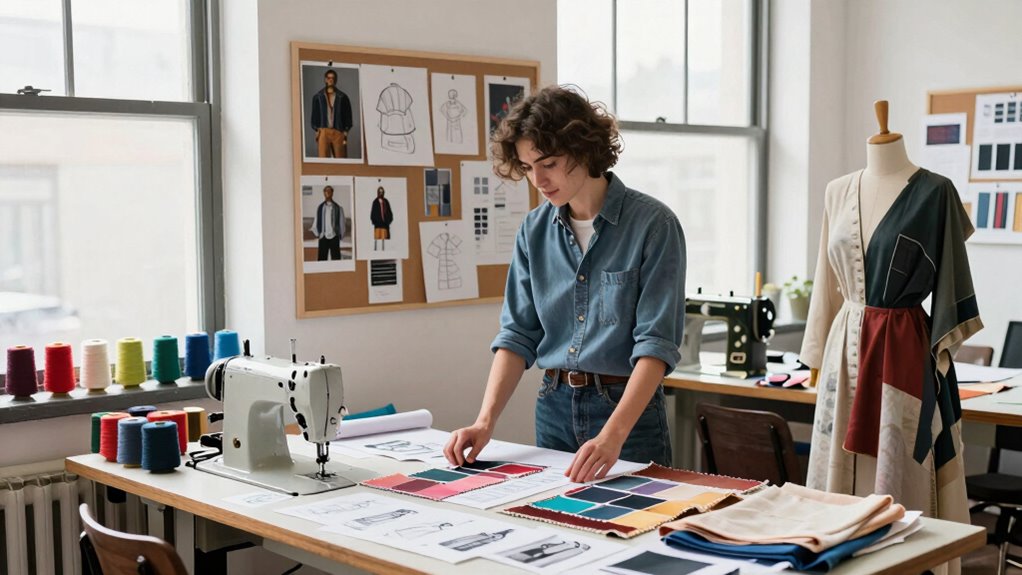
To learn fashion skills outside of formal school, focus on gaining practical experience through online courses, self-guided projects, and industry research. Connect with professionals via social media and local meetups for mentorship and feedback. Experiment with eco-friendly fabrics and textile techniques to develop your craft. Build a diverse portfolio to showcase your progress and stay current with industry trends. Keep exploring new methods and inspiration, and you’ll find ways to grow beyond traditional education.
Key Takeaways
- Engage in online courses, tutorials, and self-guided projects to develop practical skills independently.
- Connect with industry professionals through social media, forums, and local meetups for mentorship and networking.
- Experiment with sustainable textiles and textile techniques like dyeing, weaving, and fiber treatments.
- Build a diverse portfolio showcasing your sketches, prototypes, and finished garments to demonstrate growth.
- Stay updated on industry trends and innovations through blogs, trade shows, and industry publications.
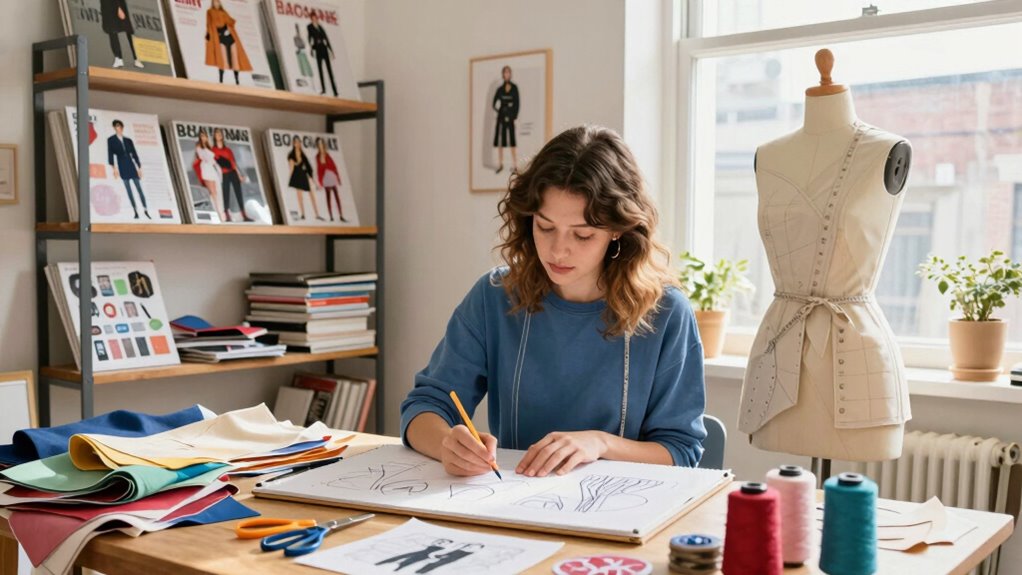
Learning fashion skills outside of formal school is entirely possible with the right approach and resources. You don’t need a traditional classroom to develop a solid understanding of the industry. Instead, you can immerse yourself in practical experiences, online courses, and self-guided projects that build your expertise. For example, exploring sustainable design allows you to understand how to create eco-friendly fashion pieces, emphasizing environmentally responsible choices in materials and production methods. This focus not only helps reduce waste but also aligns with the growing demand for ethically conscious fashion. To master sustainable design, you can start by researching brands that prioritize sustainability and studying their practices. You might also experiment with using organic fabrics, recycled textiles, or innovative eco-friendly dyes in your own designs. Learning about textile technology is equally essential; it helps you grasp how fabrics are produced, processed, and manipulated to achieve desired qualities. By understanding textile technology, you can make informed decisions about materials, ensuring your designs are both innovative and sustainable. You can access online tutorials, attend workshops, or read industry publications to deepen your knowledge of textiles. Hands-on experimentation is indispensable—try dying fabrics, testing different weaves, or exploring how various fibers interact with dyes and treatments. These activities give you practical insights into textile behavior, enabling you to develop unique fabrics or improve existing ones for your designs. Networking with industry professionals through social media, forums, or local meetups can provide mentorship and guidance. Many experts share their knowledge on sustainable design and textile technology, and engaging with them can inspire new ideas and techniques. Additionally, building a portfolio of your work—whether sketches, prototypes, or finished garments—demonstrates your skills and growth. Keep yourself updated on the latest innovations by following industry blogs, attending trade shows, or subscribing to newsletters focused on sustainable fashion and textile advancements. This continuous learning helps you stay ahead of trends and incorporate cutting-edge techniques into your practice. Remember, learning outside traditional education requires discipline and curiosity. Set clear goals, dedicate regular time to your projects, and seek feedback from peers or mentors. Developing a comprehensive understanding of textile technology and sustainable practices is crucial for creating innovative designs. Understanding the different dog breeds can also inspire your creative process, as each breed has unique characteristics that can influence fashion design themes or collections. Over time, your skills will develop, and you’ll gain confidence in your ability to create stylish, sustainable fashion pieces rooted in a deep understanding of textile technology. With persistence and resourcefulness, you can forge a successful path in fashion—no formal schooling needed.
As an affiliate, we earn on qualifying purchases.
Frequently Asked Questions
How Can I Find Affordable Fashion Courses Online?
You can find affordable fashion courses on various online platforms like Udemy, Skillshare, and Coursera. These sites offer a wide range of classes tailored to different skill levels, often at discounted prices or with free options. To get the best deals, look out for sales, discounts, or trial periods. By exploring these platforms, you’ll access quality education without breaking the bank, helping you develop your fashion skills efficiently.
What Are the Best Resources for Learning Fashion Illustration?
Think of learning fashion illustration as planting a garden—you need the right tools to grow. For fashion sketching and mastering color theory, explore resources like YouTube tutorials, online platforms like Skillshare, and fashion-specific websites like Fashionary. Practice regularly, study from fashion magazines, and join online communities. These resources help you develop your skills, understand proportions, and bring your designs to life with vibrant colors and confident sketches.
How Do I Build a Professional Fashion Portfolio Independently?
You should start by creating diverse, high-quality designs that showcase your skills and personal style. Focus on strong portfolio presentation, organizing your work clearly and professionally. Build your personal branding by including a logo, consistent styling, and an engaging bio. Regularly update your portfolio with new projects to reflect growth. Share your work online through social media and fashion platforms to attract industry attention and potential clients.
Are There Online Communities for Aspiring Fashion Designers?
Yes, you can find online communities for aspiring fashion designers. Platforms like Reddit, Facebook groups, and Discord servers host discussions on fashion trends and sustainable design. These communities let you share your work, get feedback, and stay updated on industry trends. Engaging actively helps you learn new techniques, understand market shifts, and connect with like-minded designers passionate about eco-friendly fashion and current styles.
How Can I Get Feedback on My Fashion Designs Without Formal Education?
Imagine your designs are stars waiting to shine; peer review can be your guiding constellation. Seek out online communities and social media groups where fellow fashion enthusiasts share honest feedback. You can also find mentorship opportunities through industry forums or local fashion meetups. These avenues act like a compass, helping you refine your skills and gain valuable insights without formal schooling, transforming your raw ideas into runway-ready masterpieces.
Conclusion
Remember, just like Da Vinci’s notebooks or Coco Chanel’s legendary designs, your journey in fashion is uniquely yours. Embrace every challenge and opportunity to learn—whether it’s through online tutorials, street style, or community projects. Your creativity is the brush, and persistence is the color. Keep experimenting, and soon you’ll be sketching your own masterpiece, proving that fashion mastery isn’t confined to classrooms but flourishes in passion and practice.