

To save energy and stay stylish, focus on proper laundry habits. Regularly clean filters, use high-efficiency detergents, and load your washer correctly to maximize performance. Opt for cold water settings and shorter cycles for lightly soiled clothes, which reduces energy use. Maintaining your appliances also boosts efficiency and extends their lifespan. When you choose eco-friendly practices, you protect the environment and save money—keep exploring to discover even more tips for sustainable laundry.
Key Takeaways
- Use high-efficiency detergents and cold water settings to reduce energy consumption while maintaining fabric care.
- Regularly maintain washer parts like filters and hoses to ensure optimal performance and energy efficiency.
- Properly load the washer to maximize capacity, reducing unnecessary wash cycles and energy use.
- Choose shorter, soil-appropriate cycles to save energy without compromising cleaning quality.
- Incorporate energy-efficient appliances and eco-friendly detergents to support sustainability in laundry routines.
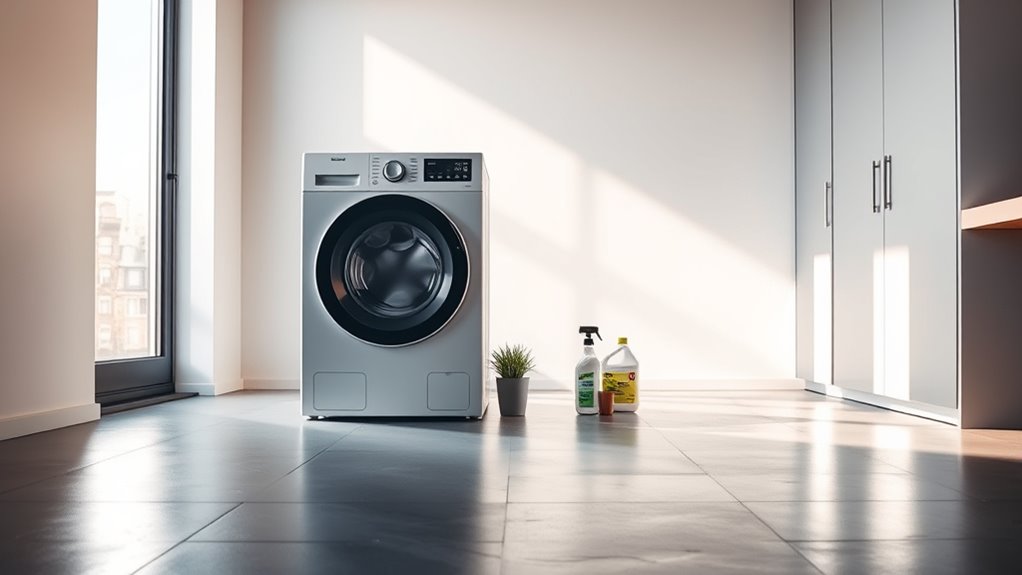
Laundry can be a surprisingly energy-intensive task, but by making a few simple changes, you can substantially cut your energy use. One of the most effective ways to do this is by paying attention to your washer maintenance. A well-maintained washer runs more efficiently, using less water and electricity. Regularly check and clean your washer’s filter and gasket to prevent buildup that can hinder performance. If your machine has a self-cleaning cycle, run it periodically to keep everything in excellent condition. Also, verify that your washer’s hoses are in good shape to avoid leaks that waste water and energy. When your washer is operating smoothly, it consumes less power, which directly impacts your energy bill.
Maintaining your washer boosts efficiency, saving water, energy, and reducing bills.
Another essential aspect of saving energy in laundry is your choice of detergent. Using the right detergent can make a big difference in how efficiently your clothes are cleaned, reducing the need for repeated washes. Opt for high-efficiency (HE) detergents designed for low-water washers, as they produce fewer suds and help your machine operate more efficiently. Using too much detergent or the wrong type can cause excess suds, forcing your washer to work harder and consume more energy. Additionally, choosing eco-friendly detergents can contribute to overall sustainability, aligning your laundry habits with your environmental values. Remember, less is often more—using the recommended amount of detergent ensures clothes get clean without overburdening your washer.
Beyond maintenance and detergent choices, consider loading your washer properly. Overloading or underloading can lead to inefficient use of water and energy. Aim to fill the washer to its maximum capacity, leaving enough space for clothes to move freely, which improves cleaning and reduces wash cycles. Also, select cold water settings whenever possible. Heating water accounts for a significant portion of laundry energy consumption. Washing with cold water not only saves energy but also helps preserve the colors and fabrics of your clothes, extending their lifespan.
Lastly, be mindful of your wash cycle selections. Shorter cycles use less energy, so choose the appropriate setting based on the soil level of your laundry. For lightly soiled clothes, a quick wash can be just as effective as a longer cycle. Incorporating energy-efficient appliances can further enhance your savings and reduce your environmental impact. By combining good washer maintenance, thoughtful detergent choices, proper loading, cold water washes, and cycle optimization, you can considerably reduce your laundry’s energy footprint. These small, conscious adjustments allow you to maintain a stylish wardrobe while embracing sustainable living, proving that eco-friendly practices can seamlessly fit into your daily routine.
Frequently Asked Questions
How Do Different Fabric Types Affect Energy Consumption During Washing?
Different fabric types impact your energy consumption because delicate fabrics often require gentler washing cycles with more water, using more energy. Heavier fabrics like towels or jeans need longer cycles, increasing energy use. To save energy, choose appropriate fabric care settings and wash similar fabrics together. This way, you optimize washing cycles, reduce unnecessary energy use, and keep your clothes looking great while being eco-friendly.
Can Laundry Detergents Impact the Energy Efficiency of Washing Machines?
Detergent ingredients can directly impact your washing machine’s efficiency. If you choose eco-friendly detergents, they often require less water and energy during washing cycles, boosting efficiency. Harsh chemicals may demand longer or hotter cycles, increasing energy use. By selecting sustainable, effective detergents, you help optimize your washer’s performance, conserving energy and water. This simple switch supports both your laundry routine and environmental responsibility, making your efforts more effective and eco-conscious.
What Are the Environmental Benefits of Air Drying Compared to Using a Dryer?
Air drying offers significant environmental benefits over using a dryer. It reduces energy consumption, lowering your carbon footprint, especially if you power your home with solar power. Plus, it’s gentler on your garments, preserving their quality longer. By choosing air drying, you contribute to conserving resources and minimizing pollution, making your garment care eco-friendly and sustainable. It’s a simple step toward a greener lifestyle that benefits both your wardrobe and the planet.
How Does Water Temperature Influence Overall Energy Use in Laundry?
Imagine you’re saving energy by lowering your water temperature. When you use lower temperature settings, you cut down on water heating energy, which is a major part of laundry energy use. For example, switching from hot to cold water can reduce your energy consumption considerably. Your choice of temperature settings directly impacts overall energy use, making laundry more sustainable while still getting your clothes clean.
Are There Eco-Friendly Laundry Products That Enhance Energy Savings?
Yes, you can find eco-friendly laundry products that boost energy savings. Look for biodegradable detergents, which are gentle on the environment, and pair them with energy-efficient washing machines. These machines use less water and power, maximizing your savings. By choosing sustainable products and appliances, you not only protect the planet but also reduce your energy bills, making your laundry routine both eco-conscious and cost-effective.
Conclusion
By choosing energy-saving laundry habits, you’re not just saving electricity—you’re transforming your entire wardrobe into a beacon of sustainability. Every small effort you make can have a ripple effect, turning your laundry routine into a powerful act of environmental heroism. Imagine, with each load, you’re wielding the power to save the planet more effectively than a thousand superheroes combined. So, embrace these eco-friendly tips and become a true champion of style and sustainability.