To create a DIY canopy bed with gauze and branches, start by selecting sturdy, aesthetic branches and clean them thoroughly. Hang lightweight gauze fabric from ceiling hooks or tension rods, ensuring it drapes evenly for a romantic look. Secure the branches to the ceiling or wall, arranging them to form a natural frame around your bed. Tie branches at the top if needed, and finish the fabric edges for a polished appearance. Keep exploring for detailed steps and tips to craft your perfect canopy.
Key Takeaways
- Measure your bed perimeter to select and hem gauze fabric for a lightweight, airy canopy.
- Choose sturdy, straight branches and clean them to serve as a natural frame for the canopy structure.
- Secure branches to the ceiling with eye hooks or anchors, ensuring stability and safety.
- Hang gauze fabric from the branches or ceiling, evenly draping for a romantic, flowing effect.
- Combine fabric and branches thoughtfully for a personalized, rustic canopy bed that is both beautiful and secure.
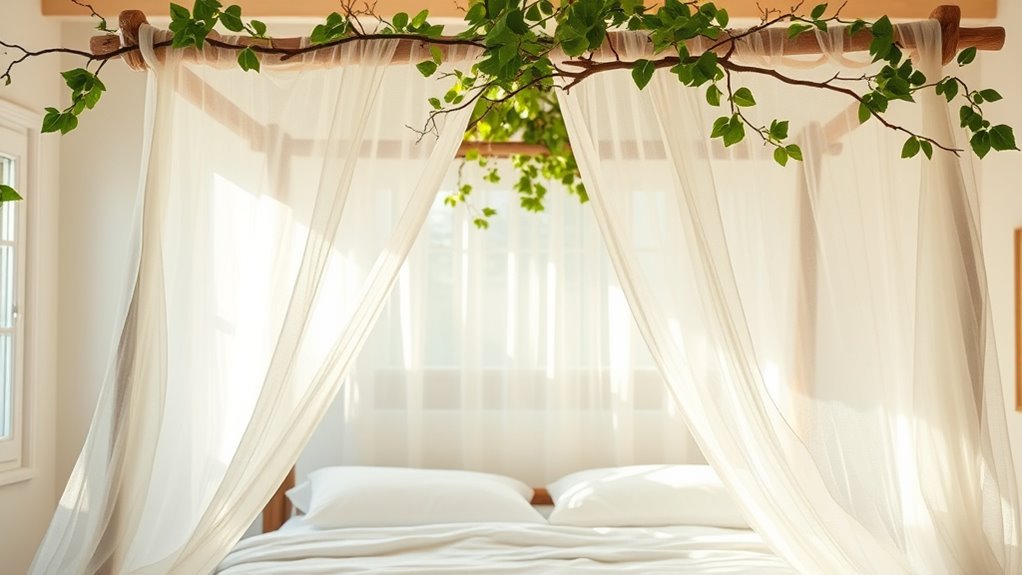
Creating a DIY canopy bed is a rewarding project that adds elegance and personalization to your bedroom. When you start, one of the most important decisions revolves around fabric choices. Gauze is an excellent option because it’s lightweight, breathable, and offers a delicate, airy appearance that instantly elevates the look of your bed. You can choose from plain white, soft pastel shades, or even patterned fabrics to match your room’s decor. Make sure to select fabrics that are easy to work with and durable enough to withstand regular use. Once you’ve chosen your fabric, measure the perimeter of your bed frame carefully, allowing extra for hems and seams. This precision ensures that the drapes hang evenly and create a lush, romantic effect. Sew or hem the fabric edges for a clean finish, or opt for no-sew options if you prefer a quicker setup. When hanging the gauze, use sturdy hooks or tension rods that won’t slip or damage your ceiling or wall. Proper fabric care ensures your canopy remains beautiful over time and maintains its delicate appearance.
Next, think about how you’ll incorporate natural elements like branches into your canopy design. Branch installation can be both simple and striking if done correctly. First, select branches that are sturdy, straight, and aesthetically appealing—birch, maple, or willow branches work well for this purpose. You’ll want to clean and treat the branches to prevent pests or decay, especially if you plan to keep them indoors for a long time. The installation process involves securing these branches to the ceiling or wall around your bed frame. Use strong, reliable hardware such as eye hooks, ceiling anchors, or brackets, depending on your ceiling type. Drill carefully and ensure the branches are evenly spaced to create a balanced look. You can either attach the branches directly to the ceiling, making a sort of canopy frame, or create a freestanding structure with the branches leaning or tied together at the top. Tying the branches with natural twine or wire allows you to shape a cohesive frame that looks organic yet sturdy. When installing, keep safety in mind—double-check that all hardware is secure and that the branches won’t fall or shift over time.
Combining fabric choices like gauze with well-installed branches creates a stunning, personalized canopy bed. The fabric provides a soft, flowing backdrop, while the branches add a natural, rustic charm. Taking your time with both fabric selection and branch installation ensures your DIY project is both beautiful and safe. Once set up, you’ll have a unique, handcrafted canopy bed that reflects your style and enhances your space.

CozyWeave Bed Canopy Drapery Bed Curtains Gauze Decor Universal Size Bedspread Scarf 2PCS 62 * 236inch
- Wider Size for Most Beds: 62 x 236 inches fits various beds
- Premium Soft Muslin Fabric: Durable, breathable, allows sunlight
- Easy to Clean and Maintain: Machine washable, tumble dry, iron
As an affiliate, we earn on qualifying purchases.
As an affiliate, we earn on qualifying purchases.
Frequently Asked Questions
How Can I Ensure the Branches Are Safe and Sturdy?
To guarantee your branches are safe and sturdy, focus on branch stability and proper weight distribution. Use strong, healthy branches with thick diameters, avoiding dead or weak ones. Secure them with durable fasteners, like heavy-duty screws or rope, and distribute weight evenly across the frame. Reinforce joints with additional supports if needed, and periodically check for signs of wear or damage to keep your canopy bed safe and secure.
What Types of Gauze Are Best for Breathable Canopies?
Imagine a canopy that’s both airy and stylish—choose lightweight, breathable gauze like cotton or linen for the best results. These fabrics offer excellent fabric durability and come in a variety of gauze color options, allowing you to match your decor effortlessly. Opt for fine, loosely woven gauze to guarantee maximum airflow, making your canopy cozy yet breathable. This way, you create a beautiful, functional space that invites relaxation.
How Do I Prevent Mold or Pests on Branches?
To prevent mold or pests on branches, you should treat them with a natural fungicide or insect repellent before installing your canopy. Guarantee proper branch treatment by drying the branches thoroughly and applying a sealant if needed. Regularly inspect the branches for any signs of mold or pests, and clean them with a mixture of water and vinegar. Good airflow around the branches also helps with mold prevention, keeping your canopy safe and fresh.
Can This Design Be Adapted for a Small Child’s Bed?
Yes, you can adapt this design for a small child’s bed by childproofing it with safe, smooth branches and secure gauze. Use playful decor ideas like colorful fabrics or themed accessories to make it inviting. Remember to follow childproofing tips, such as ensuring no sharp edges or loose parts, and regularly inspect the structure for stability. This way, your little one can enjoy a cozy, whimsical space safely.
What Are Eco-Friendly Alternatives for Branches and Gauze?
Did you know that over 80% of textiles can be made sustainably? For eco-friendly alternatives, you can use sustainable materials like bamboo or reclaimed wood for branches. For gauze, opt for organic cotton or linen, which are biodegradable and grown without harmful chemicals. You might also explore natural dyeing methods with plant-based dyes to add color, reducing your environmental impact while creating a beautiful, eco-conscious canopy bed.
Conclusion
Building your DIY canopy bed with gauze and branches feels like creating your own secret garden retreat. Imagine slipping under the fabric, feeling cocooned in your personal sanctuary—a peaceful escape from the world. Just like a child’s dream of a fairy-tale hideaway, your handmade bed transforms a simple space into a magical haven. With each knot and branch, you’re crafting more than furniture—you’re weaving comfort and creativity into a cozy, enchanting retreat you’ll cherish forever.