
An eco-friendly closet features sustainable fabrics like organic cotton, hemp, and recycled materials, all sourced ethically and with transparency. You’ll find timeless, high-quality pieces that last longer, reducing the need for frequent replacements. It’s organized with natural fiber hangers and laundry supplies, promoting efficiency and waste reduction. Your wardrobe reflects thoughtful choices, balancing style with sustainability. If you want to discover practical tips to create your own eco-conscious space, there’s plenty more to explore.

Get your wardrobe favorites delivered free — and shop member deals
- Fast, free delivery on millions of items
- Access to Prime Big Deal Days deals on October 6–7
- Prime Video, Amazon Music and more included
Key Takeaways
- Contains sustainable fabrics like organic cotton, hemp, and recycled materials sourced from transparent, eco-conscious brands.
- Features ethically produced pieces with fair wages and safe working conditions, often certified by Fair Trade or B Corp.
- Comprises timeless, high-quality garments that are versatile, durable, and supported by vintage or secondhand finds.
- Organized with eco-friendly hangers and natural fiber storage solutions, promoting longevity and reducing waste.
- Reflects mindful choices, balancing style with environmental impact through thoughtful wardrobe curation.
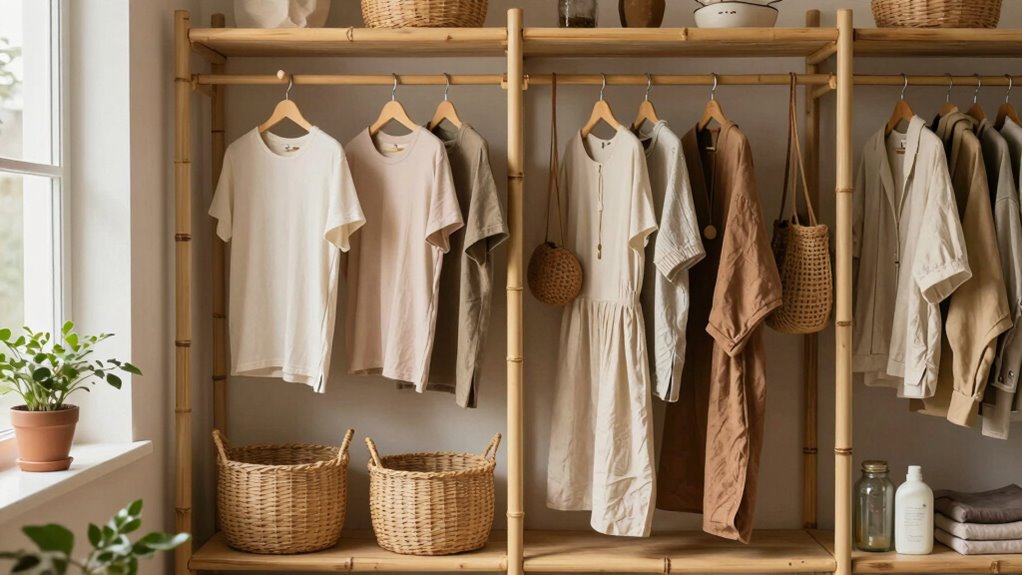
Creating eco-friendly closet looks isn’t just a trend—it’s a conscious choice to reduce your environmental impact while staying stylish. When you start building this kind of wardrobe, you focus on sustainable materials that are produced with minimal environmental harm. Think organic cotton, hemp, Tencel, or recycled fabrics that require less water and energy to produce. These materials often come from companies that prioritize transparency and eco-conscious production methods, making it easier for you to shop responsibly. By choosing sustainable fabrics, you’re not only reducing your carbon footprint but also supporting brands that value long-term ecological health.
Ethical sourcing plays an essential role in creating an eco-friendly closet. This means prioritizing brands that guarantee fair wages and safe working conditions for everyone involved in the supply chain. When you select clothing from companies committed to ethical sourcing, you support fair labor practices and help combat exploitation in the fashion industry. It’s about more than just the product; it’s about the story behind it. You want to know that your clothes are made with respect for the environment and the people who make them. This often involves researching labels, looking for certifications like Fair Trade or B Corp, or shopping from local brands that have transparent supply chains.
In a truly eco-friendly closet, you’ll find a mix of versatile, high-quality pieces that last longer. Instead of fast fashion’s fleeting trends, you invest in timeless designs that can be styled in multiple ways and worn for years. This reduces waste and the need for constant repurchasing. You might also choose secondhand or vintage items, which extend the life of garments and keep clothes out of landfills. When shopping, pay attention to the durability and craftsmanship of each piece, since well-made items tend to age better and require fewer replacements. Incorporating sustainable production methods also helps to minimize environmental harm during manufacturing.
Your wardrobe will also be organized with sustainability in mind. Opt for eco-friendly hangers made from bamboo or recycled plastic, and use natural fiber laundry bags to protect your clothes. Simple habits like washing clothes in cold water and line drying can greatly lower your environmental impact. Additionally, incorporating natural fibers in your wardrobe choices ensures that your clothing aligns with eco-conscious values. By consciously assembling your wardrobe with sustainable materials and sourcing from ethical brands, you create a closet that reflects your values. It’s about making mindful choices every step of the way—turning your wardrobe into a statement of eco-conscious living without sacrificing style.
As an affiliate, we earn on qualifying purchases.
Frequently Asked Questions
How Do I Start Transitioning to an Eco-Friendly Closet?
To start shifting to an eco-friendly closet, focus on sustainable laundry habits by using eco-friendly detergents and washing clothes in cold water. Practice eco-conscious shopping by choosing secondhand items, prioritizing natural fibers, and supporting brands committed to sustainability. Gradually replace fast fashion pieces with durable, eco-friendly alternatives. This approach reduces your environmental impact and helps build a wardrobe that’s both stylish and sustainable.
Are Eco-Friendly Clothes as Durable as Conventional Ones?
Eco-friendly clothes can be just as durable as conventional ones if made through sustainable fashion and ethical sourcing. Brands focused on sustainability often use high-quality, eco-conscious materials designed to last, reducing waste and environmental impact. While some may have a different feel initially, many eco-friendly garments are built to withstand wear and tear, so you’ll find that investing in sustainable fashion benefits both your wardrobe and the planet.
What Are the Best Eco-Friendly Fabric Options?
You should consider fabrics like organic cotton, hemp, and Tencel, as they’re among the best eco-friendly options. Sustainable textile innovations have improved these materials’ durability and softness, making them practical choices. Organic fiber benefits include reduced chemical use and better soil health. These fabrics are biodegradable, renewable, and often require less water and energy to produce, helping you build a closet that’s gentle on the planet while still stylish and long-lasting.
How Can I Identify Truly Sustainable Brands?
You can identify truly sustainable brands by checking their certifications like GOTS, Fair Trade, or OEKO-TEX, which verify eco-friendly practices. Look for brands committed to ethical manufacturing, ensuring fair wages and safe working conditions. Research their transparency—trust brands that openly share their supply chain info and environmental impact. These indicators help you confidently support companies dedicated to sustainability, reducing your ecological footprint with every purchase.
What Is the Cost Difference Between Eco-Friendly and Regular Clothing?
The cost difference between eco-friendly and regular clothing might feel like comparing a spaceship to a bicycle, but sustainable fashion often costs 20-50% more due to ethical sourcing and eco-conscious materials. While prices can be higher, you’re investing in quality, reduced environmental impact, and fair wages. Over time, this investment supports a more sustainable future, making your wardrobe not just stylish but also morally responsible.
Conclusion
Imagine stepping into your closet and feeling a sense of pride, knowing every piece is kind to the planet. Just like planting a tree benefits future generations, choosing eco-friendly clothes creates a ripple effect of positive change. When you opt for sustainable fashion, you’re not just updating your wardrobe — you’re helping reduce pollution and conserve resources. Your closet becomes a sanctuary of mindful choices, proving that small steps can lead to big environmental impacts.
Fall Picks
fall essentials
As an affiliate, we earn on qualifying purchases.