When selecting an area rug, focus on the pile type to match your lifestyle and space. Plush piles are thick, soft, and cozy but require more care, making them great for comfort areas. Flatweaves are sleek, durable, and easier to clean, ideal for high-traffic spots. Understanding fiber textures and maintenance tips helps you choose the best option. Keep exploring to discover how each pile type suits different spaces and needs.
Key Takeaways
- Choose low-pile or flatweave rugs for high-traffic areas for easier maintenance and durability.
- Opt for plush or shag piles in cozy spaces where comfort and luxury are priorities.
- Consider fiber materials like wool or nylon for increased durability and stain resistance.
- Match fiber textures to the room’s style and usage to ensure longevity and aesthetic appeal.
- Regular cleaning and proper maintenance extend the lifespan of different pile types and preserve their look.
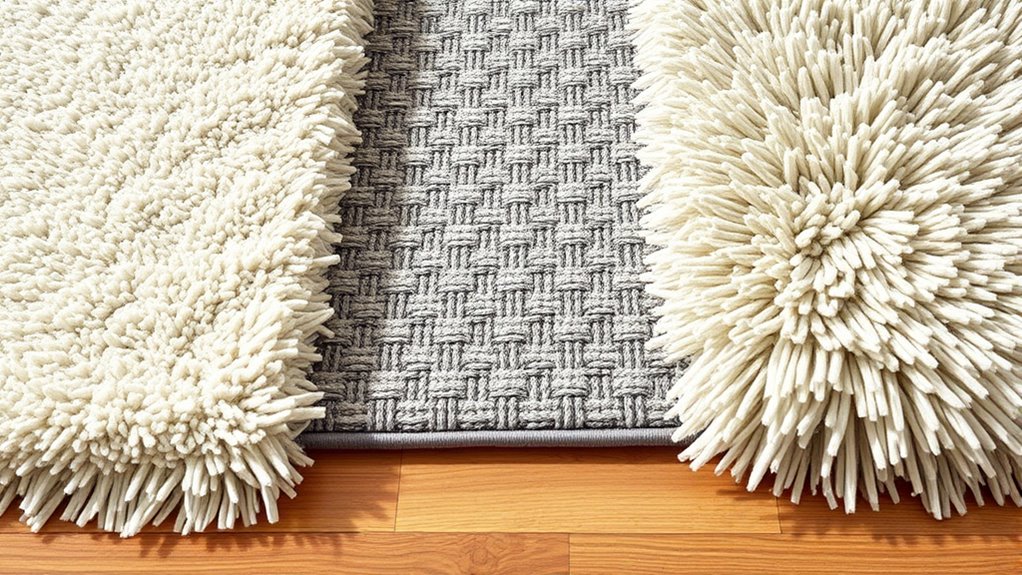
Choosing the right fiber textures plays a significant role here, as different pile types offer distinct looks and feels. For example, plush piles are thick and soft, creating a luxurious feel underfoot, while flatweaves are thin and tightly woven, offering a sleek and modern look. Understanding these fiber textures helps you select a rug that aligns with your style and lifestyle. If you have kids or pets, a low pile or flatweave might be easier to maintain and clean, whereas plush piles might require more upkeep but offer a cozy, inviting atmosphere. Additionally, modern heat pump technology often includes noise reduction features, making them a quieter choice for homes. When it comes to maintenance tips, the type of pile you choose can simplify or complicate cleaning routines. High-pile carpets, like shag or plush, tend to trap dirt and debris more easily, so regular vacuuming becomes essential. Using a vacuum with adjustable height settings and a rotating brush can help lift dirt from deep within the fibers without damaging the rug. For low-pile or flatweave rugs, maintenance is generally easier since they don’t trap as much dust, and spot cleaning with mild detergent often suffices. Whichever pile type you pick, it’s wise to rotate the rug periodically to ensure even wear and prevent fading from sunlight exposure. Additionally, employing rug pads can prevent slipping, protect the fibers, and reduce wear over time. Choosing the right fiber textures also involves considering the rug’s construction and how it will be used. For high-traffic areas, durable fibers like wool, nylon, or polypropylene are excellent choices because they withstand foot traffic and resist stains better. If you prefer natural fibers, jute or sisal can bring an earthy, textured look, but keep in mind they may require more careful maintenance and aren’t as resilient as synthetic options. When selecting based on fiber textures, don’t forget to ask about the rug’s cleaning instructions—some materials are more sensitive to cleaning agents or sunlight. Proper maintenance tips, like avoiding excessive moisture or direct sunlight, can extend the life of your rug and keep its fiber textures looking vibrant and new.
Frequently Asked Questions
How Do Pile Types Affect Rug Durability?
You might notice that pile types influence rug durability considerably. Higher fiber density means more fibers per square inch, making the rug more resistant to wear. Pile compression occurs when fibers get flattened over time; dense piles resist this better. So, choosing a rug with a dense fiber fill and a pile type suited to your foot traffic ensures your rug stays looking good longer, resisting crushing and crushing damage effectively.
Are Certain Pile Types Better for High-Traffic Areas?
While some area rug styles may seem more resilient, not all pile types hold up equally in high-traffic zones. You’ll want to evaluate pile material options like low pile or tightly woven styles, as they tend to withstand wear and tear better. These pile types offer a balance of durability and comfort, making them ideal choices for busy areas. Opting for the right pile ensures your rug stays beautiful longer.
Can Pile Height Influence Allergy Concerns?
You might wonder if pile height affects allergy concerns. Longer piles can trap more allergy triggers and allergen accumulation, making it harder to keep your space dust-free. Shorter piles, in contrast, are easier to clean thoroughly, reducing allergen buildup. So, if allergies are a concern, opting for low-pile rugs can help minimize allergen triggers and keep your environment healthier and more comfortable.
What Maintenance Is Required for Different Pile Types?
You need to contemplate how different pile types impact maintenance. For example, high-pile rugs require more frequent cleaning because they tend to trap dust accumulation and dirt. Low-pile rugs are easier to vacuum regularly and resist dust buildup. To keep your rugs in top shape, clean them often, adjusting the frequency based on the pile type. Regular maintenance helps extend their life and keeps your space healthier.
How Do Pile Types Impact Rug Comfort Underfoot?
You’ll notice that different pile types substantially impact rug comfort underfoot. For example, plush piles offer fiber softness, making them cozy and inviting, while low-pile options feel firmer but are easier to walk on. Your choice affects both comfort and aesthetic appeal, as softer fibers create a luxurious look. Consider how much comfort you want versus durability, and select a pile type that balances both for your space.
Conclusion
Choosing the right pile type is like finding the perfect pair of shoes—you want comfort, style, and durability. By understanding the differences between plush, loop, and cut pile rugs, you can pick one that fits your space and lifestyle perfectly. Trust your instincts and consider your needs, just like selecting a favorite book or a cozy sweater. With the right rug, your space will feel as inviting as a warm hug.