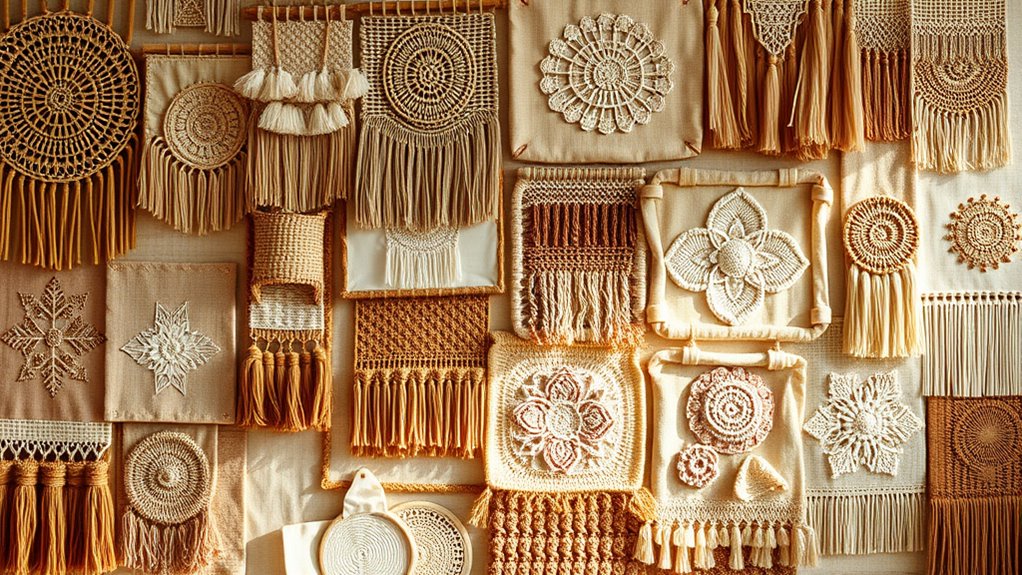

To add charm to a blank wall, consider simple textile art ideas like hanging large woven tapestries, creating DIY fabric collages, or arranging modular textile squares. You can also experiment with macramé or embroidery hoops for personalized touches. Layer different fabrics or mix textures for visual interest. These easy ideas can make a big impact and reflect your style. Keep exploring for more creative tips to transform your space effortlessly.

Get your wardrobe favorites delivered free with Prime
- Fast, free delivery on millions of items
- Prime Video, Amazon Music and more included
- Member-only deals all year
Key Takeaways
- Hang large, woven tapestries or fabric art as statement pieces for immediate impact.
- Create DIY textile art with simple techniques like embroidery or fabric collage for personalized decor.
- Use modular textile squares or strips arranged in grids or patterns for easy, versatile wall displays.
- Layer different fabrics and textures to add depth and visual interest to your walls.
- Incorporate float mounting or flexible arrangements to easily update or customize your textile wall art.

When your walls feel empty and uninspired, textile art offers a vibrant and versatile solution to transform your space. Fiber art, in particular, provides a rich array of textures, colors, and patterns that can turn dull walls into eye-catching focal points. Wall hangings made from textiles are easy to incorporate and instantly add warmth and personality to any room. Whether you prefer intricate designs or simple, bold statements, textile wall art can reflect your style and elevate your decor effortlessly.
Textile art transforms blank walls into vibrant, personalized focal points with rich textures, colors, and patterns.
One of the simplest ways to introduce fiber art into your home is by hanging a large, statement wall hanging. You don’t need to be a master weaver or quilter to create or find stunning pieces. Many artisans craft beautiful woven tapestries and fabric art that are ready-made and affordable. These wall hangings can be hung directly on the wall, bringing in a splash of color and a layered texture that breaks up a blank, flat surface. They also work well in various spaces, from living rooms and bedrooms to entryways and offices.
If you prefer a more DIY approach, you can craft your own textile wall art. Using materials like fabric scraps, yarn, or even embroidery hoops, you can create personalized pieces that suit your color palette and style. Tapestry weaving, macramé, or fabric collage are popular techniques that require minimal tools but produce impressive results. These projects allow you to add a handcrafted touch to your walls, making your space feel more inviting and unique. Plus, creating your own fiber art gives you the flexibility to experiment with different textures and patterns, ensuring your wall hangings are truly one-of-a-kind.
Another easy idea is to incorporate modular textile art pieces. Instead of one large wall hanging, opt for smaller textile squares or strips arranged in a grid or asymmetric pattern. This approach adds visual interest and can be customized to fit the size of your wall. You can mix different fabrics, colors, and textures for a dynamic look. Modular fiber art is also easy to update; swap out or rearrange pieces whenever you want a fresh change.
Finally, layering multiple textile pieces can add depth and dimension to your walls. Combine lighter, delicate fabrics with heavier, textured textiles for a visually striking effect. This approach works well in creating a gallery-style wall, where various wall hangings and fiber art pieces come together to form an eclectic, artistic display. Overall, fiber art wall hangings are a simple, effective way to breathe life into your blank walls, making your home feel more vibrant, cozy, and uniquely yours. Incorporating float mounting techniques can also help achieve a polished, professional presentation that enhances the visual appeal of your textile art.
As an affiliate, we earn on qualifying purchases.
Frequently Asked Questions
What Materials Are Best for Beginner Textile Wall Art Projects?
For beginner textile wall art projects, you should choose fabric textures like cotton, linen, or felt, which are easy to work with. Opt for simple color palettes to keep it manageable and visually appealing. Use basic tools like glue or a needle and thread. These materials let you experiment comfortably, helping you develop your skills while creating beautiful wall art that brings texture and color to your space.
How Can I Protect My Textile Art From Dust and Pests?
Dust covers and pest prevention are essential for protecting your textile art. You might think it’s enough to keep it in a closet, but proper display methods matter more. Use clear acrylic frames or glass covers to shield your pieces from dust and pests while showcasing them beautifully. Regularly inspect your art, and consider using natural pest deterrents like cedar or lavender. This keeps your textile art pristine and safe for years.
Are There Eco-Friendly Options for Textile Wall Decorations?
Yes, you can choose eco-friendly options for textile wall decorations by using sustainable fibers like organic cotton, hemp, or bamboo. Recycled textiles, such as repurposed fabric scraps or old clothing, also make beautiful, sustainable wall art. These options not only reduce waste but also add unique textures and stories to your decor. By selecting eco-conscious materials, you create stunning, environmentally friendly wall art that supports sustainability.
How Do I Hang Heavy Textile Art Securely?
Think of your wall as a stage, and your heavy textile art as the star performer. To secure it, you need sturdy mounting hardware that can handle the weight distribution evenly, preventing any dramatic falls. Use heavy-duty hooks, anchors, or a cleat system, and guarantee your hardware matches the weight of your textile piece. This way, your artwork will hang confidently, acting as a enthralling focal point without fear of slipping away.
Can Textile Art Be Displayed Outdoors Safely?
Yes, you can display textile art outdoors safely by choosing weatherproof fabrics and applying UV resistant finishes. These materials protect your artwork from rain, sun, and humidity, ensuring it stays vibrant and intact over time. Secure your textile art properly using outdoor-rated hardware, and consider placing it in a sheltered spot to prolong its lifespan. Regularly check and maintain the finishes to keep your outdoor textile art looking beautiful.
Conclusion
Now that you’ve discovered simple textile art ideas for blank walls, imagine the stunning transformations waiting to happen. But here’s the real question—what masterpiece will you create next? With just a few materials and a touch of creativity, you hold the power to turn any empty space into a mesmerizing focal point. Don’t wait too long—your perfect wall art is closer than you think, and the possibilities are endless. Are you ready to make it happen?
Evergreen bestsellers Picks
bestsellers
As an affiliate, we earn on qualifying purchases.