
Fast fashion encourages you to buy many one-off garments that quickly go out of style, leading to massive material waste. This cycle pushes brands to produce constantly, creating more textile waste that sits in landfills for decades, harming the environment. Using eco-friendly dyes and recycling materials can help reduce this impact. If you keep exploring, you’ll uncover effective strategies to combat these sustainability challenges and make more responsible choices.
Key Takeaways
- One-off garments lead to rapid disposal, increasing textile waste and environmental burden.
- Short-lived fashion cycles promote overproduction and resource depletion.
- Discarded clothing often ends up in landfills, taking decades to decompose.
- Material waste from unique designs challenges recycling and reuse efforts.
- Lack of sustainable design practices hampers transition to circular economy models.
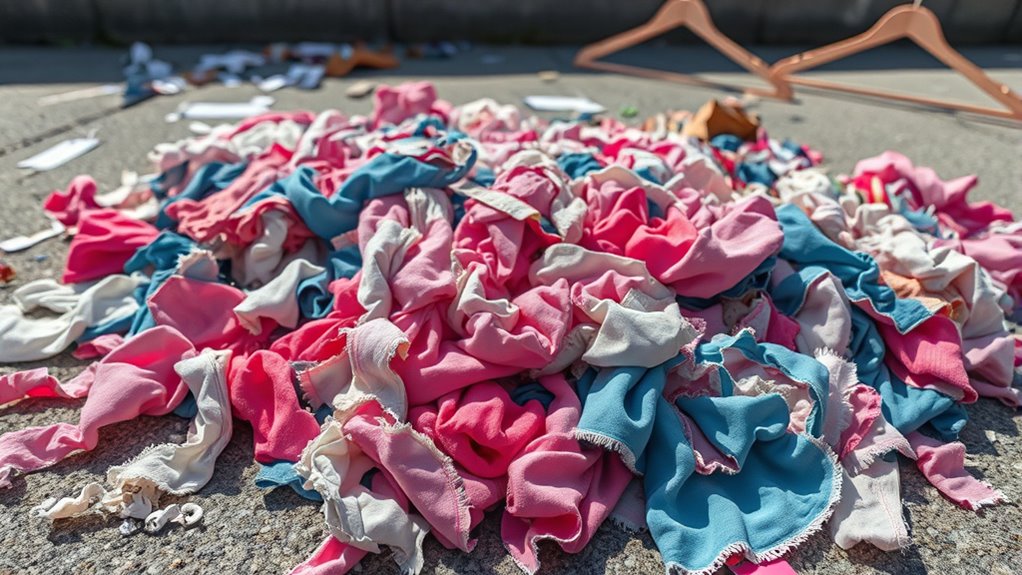
Have you ever wondered why achieving true sustainability remains so difficult? One of the biggest hurdles is the fast-paced nature of fashion, leading to a surge of one-off garments that quickly become waste. When you buy a new outfit, it’s often designed for short-term wear, and once it’s out of style or worn out, it’s discarded, contributing to an overwhelming cycle of material waste. This pattern not only depletes resources but also creates mountains of textile waste that end up in landfills, where they can take decades to decompose. This cycle of overproduction and disposal directly conflicts with sustainability goals, making it clear that the industry needs to rethink its approach. Incorporating home decor elements can also encourage more sustainable choices in everyday living. A key part of this rethink involves adopting eco-friendly dyes. Traditional dyeing processes are notorious for their environmental impact, consuming large amounts of water and releasing toxic chemicals into waterways. Switching to eco-friendly dyes can markedly reduce this pollution. These dyes are made from natural, biodegradable ingredients that pose less threat to ecosystems and human health. By choosing sustainable coloring options, brands can minimize their carbon footprint and promote a more environmentally responsible process. This small but impactful change helps move the industry toward a more sustainable future, where the focus isn’t just on aesthetics but also on environmental integrity. Another critical strategy to combat waste is embracing the circular economy. Instead of the traditional linear model—where products are made, used, and then discarded—the circular economy encourages reusing, recycling, and refurbishing materials and garments. You can see this in brands that design clothes with recycling in mind or offer take-back programs for old items. When you participate in such initiatives, you’re helping extend the life cycle of garments and reduce the need for new raw materials. The circular economy aims to close the loop, turning waste into new resources rather than letting it pile up. It’s a way to rethink how products are produced and consumed, emphasizing durability, repairability, and recyclability.
Frequently Asked Questions
How Can Consumers Identify Sustainable Fashion Brands?
To identify sustainable fashion brands, you should look for eco labels that indicate environmentally friendly practices. Increasing consumer awareness helps you recognize brands committed to eco-friendly materials and ethical production. Check for certifications like Fair Trade or GOTS, and research brand transparency. By paying attention to these indicators, you can make informed choices and support brands dedicated to reducing waste and promoting sustainability.
What Innovations Exist for Recycling Single-Use Garments?
You can explore recycling innovations like chemical recycling and textile biodegradation to turn single-use garments into new materials. These innovations break down fibers more efficiently, reducing waste and environmental impact. Chemical recycling dissolves textiles into their basic components, allowing for high-quality reuse, while textile biodegradation promotes natural breakdown. By supporting brands that invest in these technologies, you help advance sustainable fashion and minimize textile waste.
How Do Fast Fashion Cycles Impact Environmental Waste?
Fast fashion cycles accelerate textile overproduction, leading to increased environmental waste. As you buy and discard clothing rapidly, it strains landfills and consumes vast resources. The proliferation of quick turnaround trends means more garments are produced with little regard for durability or recyclability. This cycle creates a significant waste problem, emphasizing the need for sustainable practices and mindful consumption to reduce the environmental impact of fast fashion.
Are There Government Policies Addressing Clothing Waste Reduction?
You might find that governments are implementing policies to reduce clothing waste through legislative incentives and recycling programs. These initiatives encourage brands to design more sustainable garments and promote consumer participation in recycling efforts. By supporting these policies, you help minimize textile waste and environmental impact. Staying informed about local regulations can also guide your choices, making sustainable fashion more accessible and effective in tackling waste issues.
What Role Do Designers Play in Sustainable Garment Production?
Like Da Vinci’s masterful sketches, your role as a designer shapes sustainable fashion. You influence ethical sourcing by choosing eco-friendly materials and prioritize design longevity, ensuring garments last and reduce waste. Your innovative approach can challenge fast fashion’s throwaway culture, inspiring consumers to value quality over quantity. By integrating sustainability into your designs, you become a catalyst for positive change, helping to create a more responsible and enduring industry.
Conclusion
Sustainability suffers when single-use styles spawn staggering scraps. By banning wasteful habits and embracing eco-friendly practices, you can break the cycle of needless garment garbage. Every choice counts—choose consciously, create carefully, and champion change. Together, you can curb costly consumption, cut carbon, and combat climate concerns. Let’s lead with less, love with logic, and leave a lighter footprint. Small steps, significant solutions—sustainability starts with you.