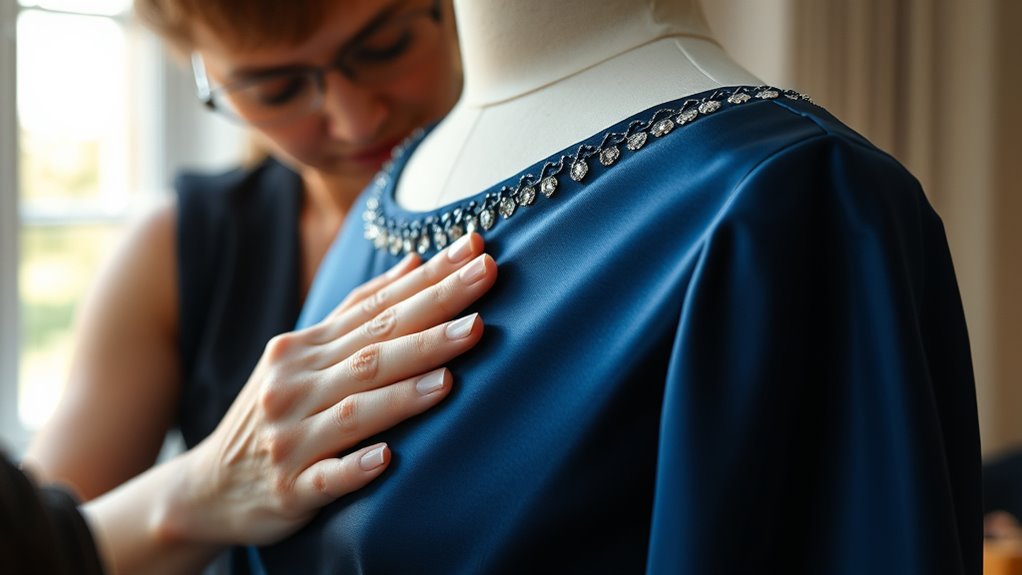

During client fittings, you see how couture garments are perfected through careful adjustments like taking in seams, repositioning darts, and tweaking lengths. You’ll notice how the tailor communicates with you, explains each change, and uses pinning and marking to evaluate the fit. Every alteration gets closer to sculpting a garment that feels like a second skin, tailored just for you. Stay with us to discover more about how these steps create stunning, personalized fashion.

Get your wardrobe favorites delivered free — and shop member deals
- Fast, free delivery on millions of items
- Access to Prime Big Deal Days deals on October 6–7
- Prime Video, Amazon Music and more included
Key Takeaways
- Client fittings assess how fabric drapes and interacts with movements, revealing necessary adjustments for a perfect fit.
- Alterations such as taking in seams, repositioning darts, and adjusting length refine the garment to the client’s body shape.
- Multiple fittings and precise techniques like pinning, marking, and unpicking stitches ensure optimal customization.
- Clear communication with the client during fittings aligns expectations and explains how adjustments improve comfort and appearance.
- The iterative process of fittings and alterations results in a bespoke, couture-quality garment that perfectly molds to the wearer.

Have you ever wondered how the perfect fit for your clients is achieved? It all begins with a thorough dress fitting, where every detail is scrutinized to guarantee the garment complements the wearer’s unique shape. During this initial fitting, you’ll see how the fabric drapes and how the design interacts with your client’s movements. This step is essential because it reveals any discrepancies between the original pattern and the actual body measurements. From there, the alteration process kicks in. It involves meticulous adjustments—taking in seams, letting out fabric, repositioning darts—that tailor the garment precisely to your client’s form. You might think of it as sculpting the fabric to mirror their body, almost like a bespoke second skin.
The beauty of the alteration process lies in its ability to transform an almost-perfect piece into a flawless one. When your client tries on the dress, you’ll notice small gaps or extra fabric that need attention. These are opportunities to refine the fit. It’s a hands-on process where you, as the designer or seamstress, rely on your experience and intuition to decide whether to take in the sides, adjust the length, or tweak the neckline. Each change is carefully measured and executed, often requiring multiple fittings to get everything just right. This iterative process guarantees that the final garment isn’t just visually stunning but also comfortable and supportive.
Throughout this journey, communication is key. You want your client to feel involved, to understand how each alteration enhances their look and comfort. Sometimes, you’ll pin and mark the fabric, then step back to evaluate the overall silhouette. Other times, you may need to unpick stitches or re-drape the fabric on a mannequin. The goal is to achieve harmony between the design and the wearer’s body. It’s a delicate dance of precision, patience, and artistry. No detail is too small; every seam, dart, and hem counts toward the perfect fit.
In the end, it’s this careful combination of dress fitting and the alteration process that makes couture truly special. It’s not just about creating beautiful clothing; it’s about creating a piece that feels like it was made just for your client. When they finally try on the finished garment and see how it molds to their body, you realize all the effort was worth it. Because the perfect fit isn’t just about appearance—it’s about confidence, comfort, and the artistry of craftsmanship. Additionally, understanding client measurements is fundamental to achieving this level of precision and ensuring the garment suits the individual perfectly.
As an affiliate, we earn on qualifying purchases.
Frequently Asked Questions
How Long Does a Typical Client Fitting Session Last?
A typical client fitting session lasts about 1 to 2 hours. During this time, you work closely with your stylist, discussing fabric selection and style preferences. The stylist takes precise measurements and fits your garment, making adjustments as needed. This process guarantees every detail aligns with your vision, creating a perfect couture piece. Your involvement and feedback help tailor the final look, making the session both productive and personalized.
What Are the Most Common Adjustments Made During Fittings?
Imagine you’re a fashion wizard in the 21st century, tweaking a gown. You’ll most often make seam adjustments to perfect fit and refine fabric draping for elegance. These tweaks make certain the garment hugs your curves flawlessly and flows beautifully. Sometimes, you might need to take in or let out seams, or adjust the fabric’s draping to enhance movement. These small changes make a big difference in creating couture perfection.
How Do Fitters Ensure Comfort Alongside Style?
You guarantee comfort alongside style by carefully selecting the right fabric and taking precise body measurements. Fitters choose fabrics that breathe, stretch, and feel comfortable against your skin, balancing elegance with practicality. They tailor the garment based on your measurements, adjusting seams and fit points to avoid tightness or discomfort. This personalized approach guarantees that your couture piece not only looks stunning but also feels great to wear all day.
Can Fittings Be Personalized for Specific Fabric Types?
Yes, fittings can be personalized for specific fabric types. For instance, imagine you’re tailoring a silk gown; you’d consider fabric compatibility and adjust tailoring techniques like seam allowances and lining. This guarantees the fabric drapes beautifully and maintains its integrity. By customizing fittings, you optimize comfort and style, making sure the garment fits perfectly and enhances the fabric’s natural qualities.
How Many Fittings Are Usually Needed for a Perfect Fit?
You usually need two to three fittings to achieve a perfect fit, depending on your fabric selection and client preferences. During each fitting, adjustments are made to guarantee the garment aligns with your unique measurements and style. This process allows the tailor to refine details, address fabric behavior, and incorporate your feedback, resulting in a couture piece that fits flawlessly and reflects your personal taste.
Conclusion
As you step into the fitting room, remember that each stitch and adjustment brings the couture closer to perfection. It’s a delicate dance between precision and artistry, where your presence transforms fabric into a masterpiece. Just as a sculpture isn’t complete until the final touch, your fitting embodies the harmony of craftsmanship and individuality. In this moment, you’re not just wearing fashion—you’re shaping it. And that’s what truly makes couture extraordinary.
Fall Picks
fall essentials
As an affiliate, we earn on qualifying purchases.