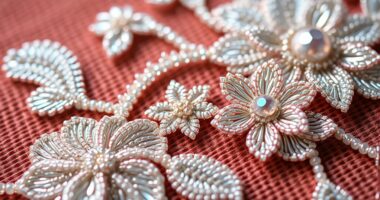
Inside the atelier, you’ll explore masterful techniques like fabric manipulation, including pleating, draping, and folding, which shape textiles into sculptural forms. Hand embroidery adds luxurious detail and personal touches, reflecting centuries of craftsmanship. Every stitch and fold showcases meticulous artistry that transforms simple fabric into wearable art. Understanding these couture methods elevates your design skills, and if you keep exploring, you’ll uncover even more secrets behind creating stunning, one-of-a-kind garments.
Key Takeaways
- Fabric manipulation techniques like pleating, draping, and folding create structured, dynamic garments with texture and movement.
- Precise hand embroidery adds luxurious details, motifs, and personal touches that elevate couture designs.
- Couture craftsmanship emphasizes meticulous folding and pinning to develop complex, sculptural forms without heavy linings.
- Combining tradition and innovation allows artisans to transform fabric into wearable art through unique techniques.
- Each couture piece is a one-of-a-kind creation, reflecting expert skill, artistry, and attention to detail in every stitch and fold.
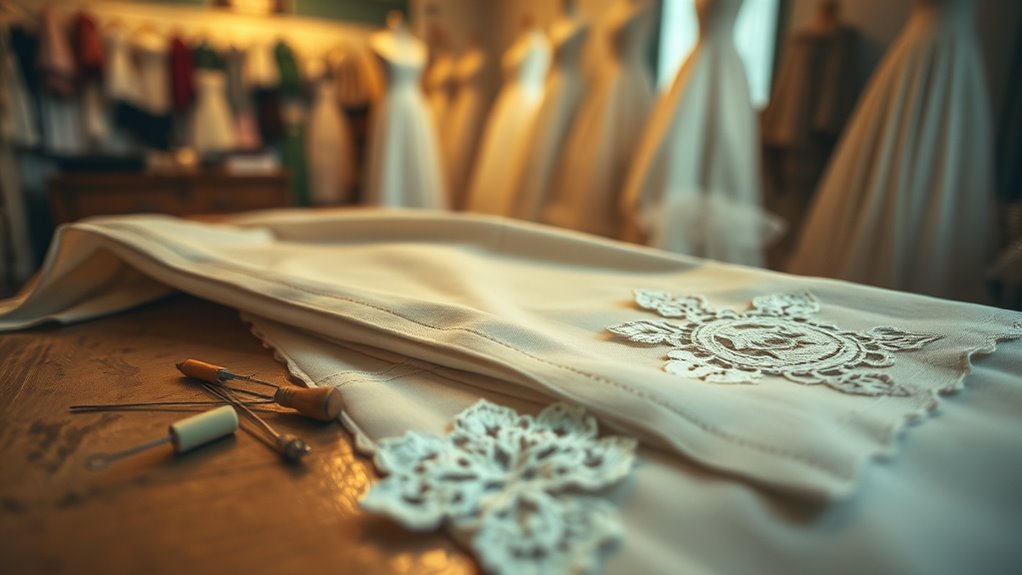
Ever wondered what sets couture apart from ordinary fashion? It’s the meticulous craftsmanship and the artistry that transforms fabric into a masterpiece. Couture isn’t just about the final look; it’s about the techniques used to craft each piece, making every garment a one-of-a-kind creation. Two essential techniques in the couture world are fabric manipulation and hand embroidery. These methods showcase the skill and patience of artisans, elevating garments from simple clothing to wearable art.
Fabric manipulation involves shaping and altering fabric in intricate ways to create texture, volume, and movement. You’ll find this technique in pleating, draping, gathering, and folding fabrics with precision. It’s about understanding how different fabrics behave and using that knowledge to craft structured, sculptural designs. When executed skillfully, fabric manipulation adds dimension and depth, transforming a flat piece of cloth into something dynamic and alive. For example, a couturier might fold and pin fabric to develop complex pleats that hold their shape without the need for heavy lining or interlining. This process demands a keen eye for detail and a deep understanding of fabric properties, ensuring that each fold and curve enhances the overall design. The beauty of fabric manipulation lies in its ability to create visual interest through three-dimensional effects, making the garment appear to flow and breathe with the wearer.
Hand embroidery is another cornerstone of couture craftsmanship. Unlike machine embroidery, hand embroidery requires painstaking attention to detail and a steady hand. You’ll see this technique embellishing garments with intricate motifs, delicate beading, or shimmering threads that catch the light. It’s a slow process, but the result is worth it. Every stitch is deliberate, adding texture, depth, and a personal touch that machine-made embroidery simply can’t replicate. Hand embroidery often involves techniques like French knots, bullion stitches, or satin stitches, which can be combined to produce detailed patterns or luxurious accents. Couturiers use hand embroidery to elevate a plain fabric into a symbol of artistry and luxury. It’s also a way to incorporate cultural motifs or personal stories into a piece, making each garment uniquely meaningful. When you see couture pieces up close, the hand-embroidered details reveal a level of craftsmanship that’s rare to find in mass-produced fashion, emphasizing the value of time, skill, and artistry in couture design.
Together, fabric manipulation and hand embroidery demonstrate the dedication behind couture. They transform simple textiles into extraordinary works of art, reflecting centuries of tradition and innovation. When you wear couture, you’re not just wearing clothing—you’re experiencing a piece of history and craftsmanship that’s been lovingly crafted by skilled artisans.
Frequently Asked Questions
What Fabrics Are Preferred for Haute Couture Garments?
For haute couture garments, you prefer luxurious fabrics like silk, satin, taffeta, and velvet because of their rich textures and drape. Your fabric selection often includes intricate embroidered or embellished textiles, showcasing textile innovation. These materials allow you to craft exquisite, one-of-a-kind pieces, highlighting craftsmanship and elegance. You prioritize quality and uniqueness, ensuring each garment reflects the highest standards of couture artistry.
How Do Couture Designers Choose Their Color Palettes?
You might think choosing colors is simple, but couture designers master an art that’s almost magical. They harness color psychology to evoke emotions and carefully select seasonal palettes that reflect current trends and nature’s changing hues. This deliberate process guarantees each gown tells a story and resonates deeply. By blending intuition with expert knowledge, they craft stunning palettes that captivate and inspire, making every couture piece uniquely unforgettable.
What Are the Key Tools Used in Couture Embroidery?
You use essential needlework tools like embroidery needles, hoops, and thimbles to create couture embroidery. Key stitches include satin, French knots, and seed stitches, each adding texture and detail. These embroidery stitches are the foundation of intricate designs. With your needlework tools, you carefully execute each stitch, ensuring precision and elegance, transforming fabrics into stunning couture pieces that showcase craftsmanship and artistry.
How Long Does It Typically Take to Complete a Couture Piece?
Creating a couture piece can take what feels like an eternity—sometimes hundreds of hours. You’ll need to contemplate timing considerations carefully, as each stitch reflects intense craftsmanship intricacies. From initial sketches to final embroidery, every detail demands patience and precision. Expect weeks or even months, depending on complexity, because couture isn’t rushed. Your dedication transforms fabric into art, showcasing exceptional skill and time-honored techniques that make each masterpiece truly one-of-a-kind.
What Is the History Behind Traditional Couture Techniques?
You should know that traditional couture techniques have deep roots in fashion evolution, dating back to 19th-century France. These methods, influenced by cultural influences like royal court dress and artisan craftsmanship, evolved over time to emphasize hand-sewn details and luxurious fabrics. As you learn these techniques, you connect with a rich history of craftsmanship that highlights the artistry and cultural significance behind high fashion’s development.
Conclusion
Mastering couture techniques transforms your designs from simple ideas into works of art. Just as a delicate hand stitches intricate patterns, your dedication turns raw fabric into elegance. Remember, in fashion, perfection isn’t just about beauty—it’s about precision. Like a sculptor with marble, your craftsmanship shapes dreams into reality. Embrace both patience and passion, because in couture, the smallest detail can make the biggest difference. Your artistry lies in the delicate balance between skill and creativity.