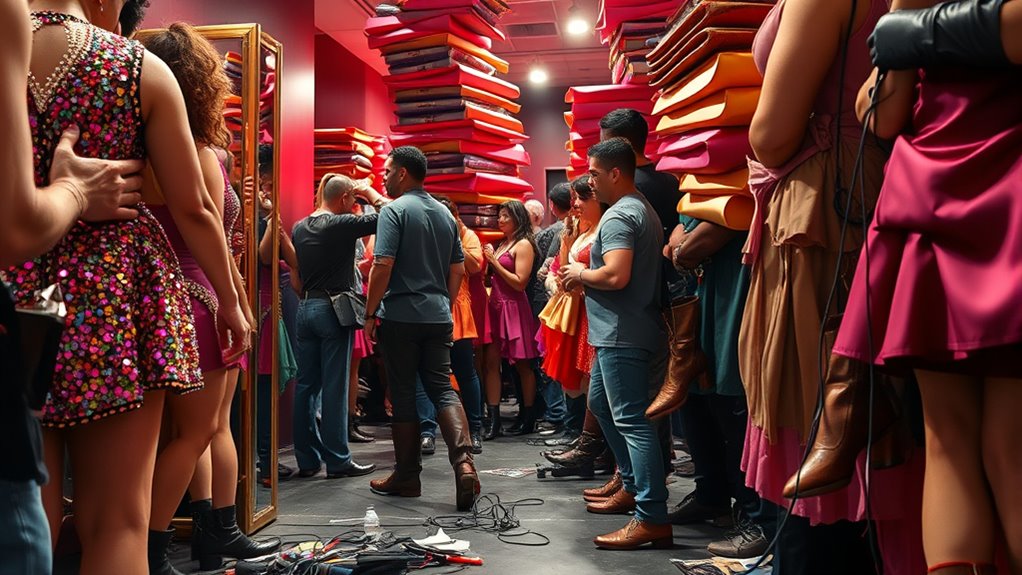

Backstage at a show is a buzzing hub of activity, where security prevents unauthorized access and keeps everything safe. You’ll see artists exchanging quick words, sharing laughs, and calming nerves before stepping onto stage. Behind the scenes, organized chaos reigns, with everyone knowing their role to guarantee a smooth flow. This behind-the-scenes world may seem hectic, but it’s carefully managed to make the show perfect—stay with us to explore more of what happens backstage.
Key Takeaways
- Backstage activities are highly organized, involving artist interactions, security management, and coordination to ensure smooth performances.
- Security personnel control access, monitor entrances, and handle emergencies to maintain a safe environment backstage.
- Artists exchange last-minute notes, encouragement, and share energy to calm nerves before stepping on stage.
- The backstage area appears chaotic but follows a structured rhythm with designated roles for each team member.
- Behind the scenes emphasizes teamwork, mutual respect, and safety protocols to support a successful show.
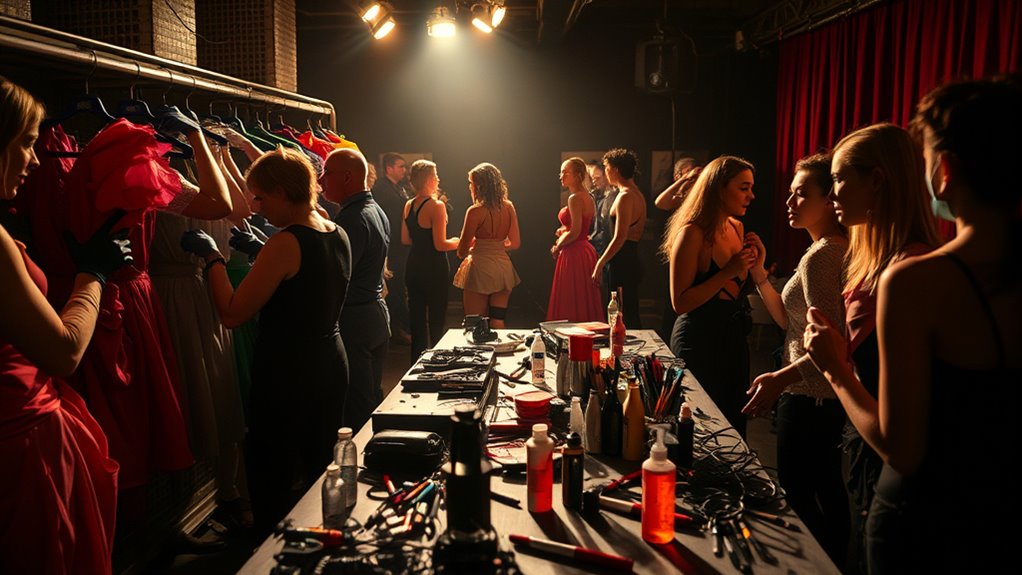
Have you ever wondered what really happens behind the scenes at a theater or concert? The moments before a show are filled with activity, anticipation, and a carefully orchestrated flow that most audiences never see. As you step backstage, you quickly realize it’s a bustling hub where artist interactions are both deliberate and spontaneous. Artists often move through this space with a mix of focus and familiarity, exchanging quick words with crew members, sharing a laugh with peers, or taking a moment to collect themselves. These interactions are essential—they help build rapport, ease nerves, and foster a sense of camaraderie before stepping into the spotlight. It’s a behind-the-scenes dance that emphasizes teamwork and mutual respect, guaranteeing the performance feels seamless to the audience.
But this busy environment relies heavily on backstage security to keep everything running smoothly and safely. Security personnel are the unsung guardians of this space, managing access and maintaining order. Their job isn’t just about preventing unauthorized entry; it’s about creating a protected environment where artists can focus on their craft without distractions or safety concerns. You might see security stationed near dressing rooms, checking credentials, or monitoring entrances with keen eyes. They also coordinate with the crew to keep backstage activities discreet, respecting the privacy of performers and staff alike. This layer of protection is essential, especially considering the high-profile nature of many events, where fans or press might try to get too close. Backstage security ensures that everyone—artists, crew, and authorized personnel—can operate in an environment that’s both safe and professional. Additionally, security measures often include protocols for emergency situations to ensure swift response if needed.
Within this controlled space, artist interactions are often strategic. They might discuss last-minute changes, share words of encouragement, or simply exchange pleasantries to ease pre-show jitters. These moments can be brief but are indispensable in setting the tone for a successful performance. It’s a place where nerves are calmed and energy is exchanged, all under the watchful eye of security that keeps everything in balance. You’ll notice that despite the chaos that sometimes surrounds the backstage area, there’s a calm rhythm to it all—organized chaos, really—where every person has a role. This behind-the-scenes world is a fundamental part of any show, guaranteeing that when the curtain rises, everything unfolds flawlessly, and the artist’s focus remains where it belongs—on delivering an unforgettable performance.
Frequently Asked Questions
How Do Backstage Passes Get Distributed?
You usually get backstage passes through your connections, promotion roles, or event staff. When distributing backstage access, organizers consider the dress code to make sure everyone looks professional. Passes are handed out to performers, crew, VIPs, or special guests, often at designated points or via security. You need to show your pass for entry, and it’s essential to follow the dress code to maintain the event’s vibe and security.
What Security Measures Protect Performers Backstage?
You can’t imagine the fortress-like security protecting performers backstage, where stage security is tighter than Fort Knox. Only authorized personnel with backstage passes gain access, and strict ID checks guarantee no intruders slip through. Metal detectors, surveillance cameras, and vigilant security guards monitor every entrance, making backstage access nearly impossible for outsiders. This high level of security safeguards performers, allowing them to focus on giving their best without worry.
Are There Hidden Areas Backstage Not Open to the Public?
Yes, there are hidden corridors and secret rooms backstage that aren’t open to the public. You might not see these areas during a show, but they serve important functions like storage, quick access routes for crew, or private spaces for performers. These hidden areas help keep the backstage operations smooth and discreet, ensuring the show runs seamlessly without distractions or interruptions.
How Do Performers Prepare Before Going on Stage?
You probably think performers just walk on stage, but they actually prepare by doing wardrobe changes and running through tech rehearsals. These rehearsals help them sync with lighting, sound, and cues, ensuring everything runs smoothly. Before stepping out, they often warm up their voices or bodies and review their routines. This prep boosts confidence and minimizes mistakes, so they’re fully ready to deliver their best performance when the spotlight hits.
What Are Common Backstage Etiquette Rules?
You should always follow the backstage protocol by respecting dress code and maintain quiet when others are performing. Keep your area tidy, avoid unnecessary movement, and wait your turn patiently. Remember to greet crew members politely and stay out of performers’ way. Being considerate and discreet helps make certain a smooth show, allowing everyone to focus and deliver their best performance without distractions or disruptions.
Conclusion
Now you see behind the curtain, where the magic truly happens. Backstage is a whirlwind of energy, a hidden symphony of voices, footsteps, and whispered secrets that keep the show alive. It’s where chaos and calm dance together, shaping every moment on stage. So next time you watch a performance, remember the vibrant chaos behind the scenes—where dreams are stitched together in a flurry of passion, ready to burst into the spotlight.