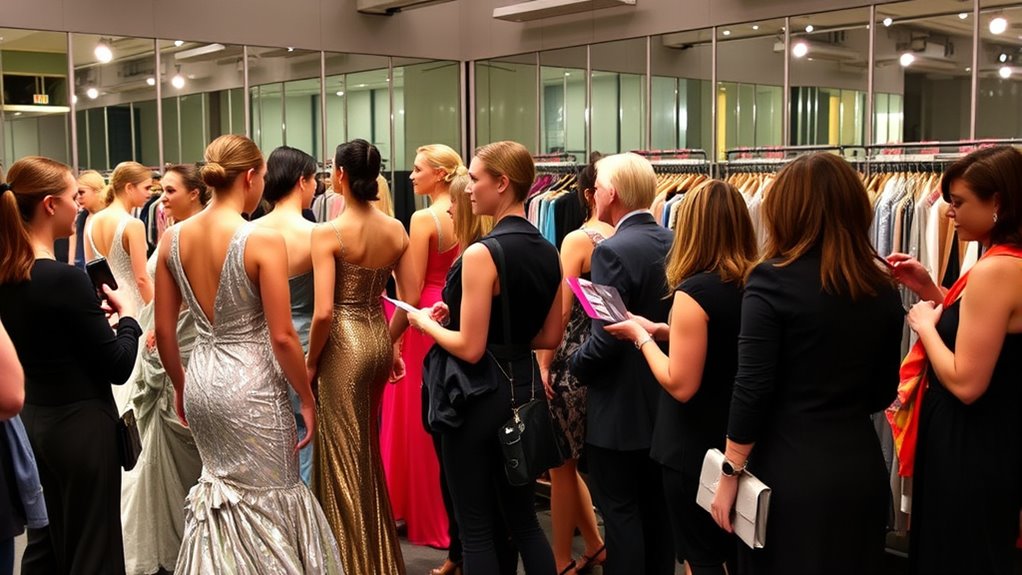

To volunteer backstage at regional fashion events, arrive early dressed professionally and be prepared to assist models with wardrobe changes quickly and quietly. Stay organized, communicate clearly with designers and stylists, and keep the backstage area tidy. Maintain a calm, respectful attitude, and follow instructions closely to help keep the show running smoothly. If you want to know more about staying professional and making a positive impact backstage, keep going to learn helpful tips.

Get your wardrobe favorites delivered free — and shop member deals
- Fast, free delivery on millions of items
- Access to Prime Big Deal Days deals on October 6–7
- Prime Video, Amazon Music and more included
Key Takeaways
- Contact event organizers early to express interest and inquire about volunteer opportunities backstage.
- Attend any required training sessions or orientation to understand backstage procedures and etiquette.
- Arrive early in professional attire, prepared to assist with wardrobe, model prep, and schedule needs.
- Follow instructions from show coordinators, maintain a calm demeanor, and support models discreetly.
- Keep backstage organized, respect privacy, and stay alert to ensure a smooth, distraction-free runway show.

Have you ever wondered how fashion events run smoothly behind the scenes? It’s often a whirlwind of activity, precise timing, and coordinated effort. When you volunteer backstage, understanding your role is essential to making everything flow seamlessly. One of the key aspects of this is knowing the model responsibilities and practicing proper backstage etiquette. These elements guarantee that models are prepared, confident, and focused, which ultimately contributes to a successful show.
As a backstage volunteer, your primary job is to support the models and help the show stay on schedule. This involves assisting models with wardrobe changes, making sure they’re dressed correctly and quickly, and helping them get into their looks without stress. You’ll need to be attentive to model responsibilities, which include maintaining professionalism, respecting their space, and understanding that they require calm and privacy to perform at their best. Remember, models rely on your support to stay relaxed and ready. Avoid unnecessary chatter, and always speak politely, respecting their focus and personal space.
Backstage etiquette is essential in creating a smooth environment. Always arrive early, dressed appropriately, and prepared to follow instructions from the show coordinators. Keep your area tidy, as clutter can cause delays or accidents. Be discreet when handling wardrobe pieces or assisting models—don’t draw unnecessary attention to yourself or the models. Maintain a calm demeanor, even if things feel hectic; your composed attitude will help keep everyone else focused. Be aware of your surroundings, and don’t interfere with the models’ routines unless asked. Respect their space and privacy, especially during makeup or hair touch-ups, and avoid taking photos without permission.
Effective communication is indispensable. Listen carefully to any instructions from the show director or stylist, and don’t hesitate to ask questions if you’re unsure about your duties. Staying aware of the schedule is also important; know when models need to be ready, when fittings happen, and when to clear the runway for the next segment. Your role might involve passing accessories, adjusting garments, or organizing the backstage area, so stay alert and proactive. Additionally, understanding the importance of contrast ratio can help ensure the visual environment remains professional and distraction-free.
Ultimately, your contribution as a volunteer backstage hinges on professionalism, attentiveness, and a respectful attitude. By understanding model responsibilities and practicing proper backstage etiquette, you’ll help create a positive environment that allows the show to run on time and with style. Your efforts behind the scenes are essential in making the event a memorable success for everyone involved.
professional backstage fashion volunteer outfit
As an affiliate, we earn on qualifying purchases.
As an affiliate, we earn on qualifying purchases.
Frequently Asked Questions
What Attire Is Appropriate for Backstage Volunteering?
When volunteering backstage, you should wear comfortable, neat attire that aligns with fashion industry etiquette, avoiding flashy or distracting clothing. Opt for black or neutral colors to blend in and stay professional. Follow backstage safety guidelines by avoiding loose jewelry, long hair tied back, and sturdy footwear. This guarantees you remain unobtrusive, safe, and respectful of the environment, helping everything run smoothly behind the scenes.
How Early Should I Arrive for My Volunteer Shift?
You should aim to arrive at least 30 to 60 minutes before your shift begins. This allows for proper timing coordination and guarantees you’re prepared for any last-minute instructions. Arriving early offers shift flexibility, helping you settle in and get comfortable. Being punctual demonstrates professionalism and shows your commitment to the team. Always check with event organizers for specific start times to align with their schedule perfectly.
Are There Age Restrictions for Backstage Volunteers?
You might wonder if there are age restrictions for backstage volunteers. Typically, teen volunteers are welcome, but some events may require a minimum age or a signed consent form. Dress code is important, so dress professionally and comfortably. Always check the event’s specific guidelines beforehand. If you’re a teen volunteer, guarantee you meet age requirements and follow dress code expectations to have a smooth experience backstage.
Will I Receive Training Before Volunteering Backstage?
You’ll usually get a training overview before volunteering backstage, which helps you understand the event’s flow and your responsibilities. This training covers backstage etiquette, ensuring you know how to behave professionally, assist models, and handle equipment properly. Most organizers want volunteers prepared, so you’ll likely attend a brief session or receive instructions beforehand. Being well-informed makes your backstage experience smoother and more enjoyable, helping you confidently support the event.
How Many Hours Are Typically Required for Backstage Volunteering?
You might wonder how many hours you’ll need for backstage volunteering. Typically, it varies depending on the event’s size and your volunteer responsibilities, but expect to commit a few hours, often before and during the show. You’ll learn backstage etiquette to guarantee smooth operations, and your role could include helping models, managing wardrobe, or assisting with setup. Be prepared for a rewarding experience that requires dedication and teamwork.
Conclusion
Don’t let doubts hold you back—volunteering backstage is a fantastic way to gain experience and connect with industry pros. Even if you’re new, your enthusiasm and willingness to help are what matter most. With a bit of effort, you’ll find yourself immersed in the excitement, learning skills that can jumpstart your fashion career. So, step in, volunteer, and discover how rewarding and fun backstage work truly is!
Halloween Picks
halloween
As an affiliate, we earn on qualifying purchases.