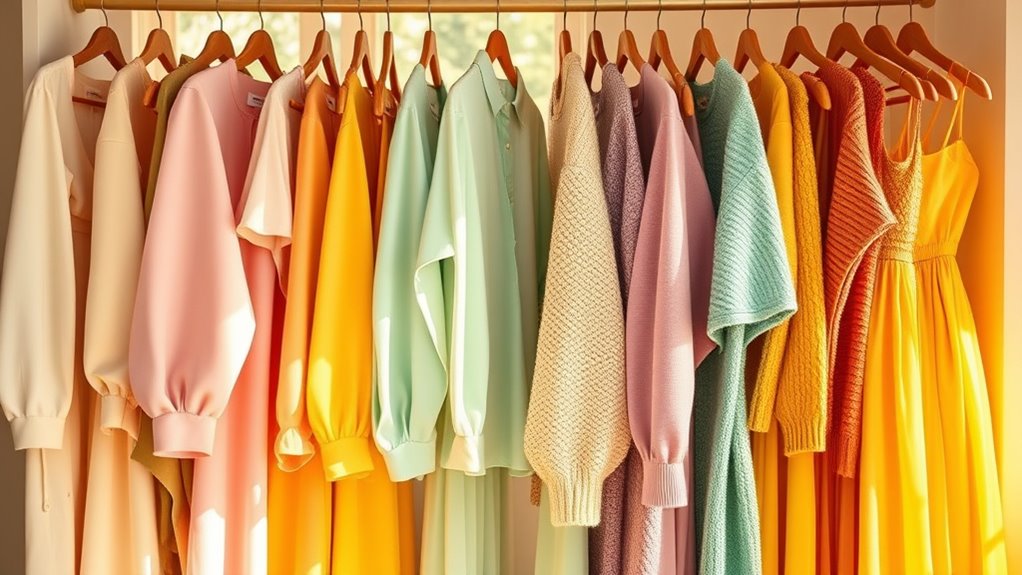

By intentionally choosing colors that match or influence your mood, you can turn your wardrobe into a tool for emotional well-being. Bright hues like yellow energize you, while softer shades help soothe anxiety. Cool tones can boost confidence, and warm colors create approachability. When you use color therapy through your outfits, you support your mental health and self-care. Keep exploring how you can make your closet a powerful mood-boosting resource.

Get your wardrobe favorites delivered free — and shop member deals
- Fast, free delivery on millions of items
- Access to Prime Big Deal Days deals on October 6–7
- Prime Video, Amazon Music and more included
Key Takeaways
- Use bright, bold colors like yellow or red to boost energy and uplift mood during low-energy days.
- Incorporate soft, muted tones such as pastels or earth shades to promote calmness and reduce anxiety.
- Choose colors that align with your emotional needs—green for balance, blue for serenity, or warm tones for approachability.
- Leverage color psychology intentionally to reflect or influence your mood, enhancing emotional well-being through wardrobe choices.
- Employ mood dressing as a practical tool for emotional regulation, self-expression, and supporting mental health through color selection.
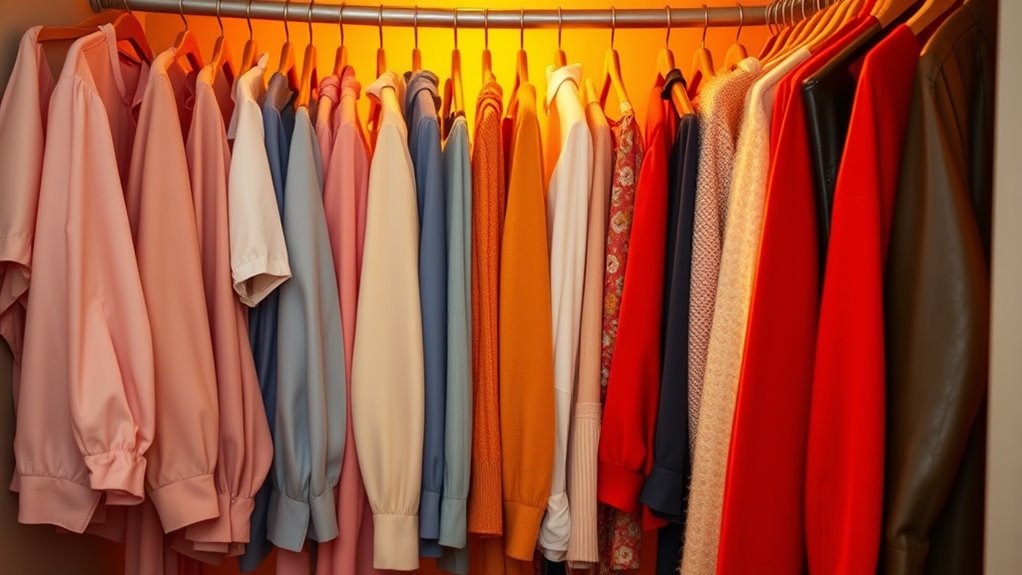
Have you ever noticed how your mood influences the way you dress? Sometimes, when you’re feeling upbeat, you reach for bright yellows or lively reds, while on days you’re feeling introspective or subdued, you might prefer muted tones or darker shades. This isn’t just coincidence; it’s a reflection of how color associations and emotional expression play a role in your wardrobe choices. Your clothing becomes a visual language, subtly communicating your inner state and even shaping how others perceive you. When you understand this connection, you can harness it to boost your confidence or manage your emotions more effectively.
Colors have a powerful way of conveying emotions and influencing your mood. For example, blue often symbolizes calmness and serenity, making it an excellent choice when you need to relax or feel centered. Red, on the other hand, is associated with energy, passion, and excitement, perfect for days when you want to feel more assertive or inspired. Green embodies balance and harmony, ideal when you seek reassurance or comfort. By paying attention to these color associations, you’re actively engaging in emotional expression through your wardrobe. Instead of dressing randomly, you can select outfits that mirror or influence how you’re feeling, creating a cycle of emotional regulation through color choices.
Colors convey emotions and influence your mood—choose wisely to reflect and regulate your feelings through your wardrobe.
When you pick your clothes based on your mood, you’re fundamentally using color therapy without even realizing it. Bright, bold colors can energize you and lift your spirits, especially if you’re feeling sluggish or down. Conversely, softer shades can provide a soothing effect if you’re anxious or overwhelmed. This intentional use of color helps you manage your emotional state more consciously. For instance, choosing a cheerful yellow shirt on a gloomy day can brighten your outlook and even influence those around you. Meanwhile, donning darker hues when you’re introspective allows you to embrace your emotional depth without feeling exposed.
Understanding the impact of color associations also gives you an edge in social situations. If you want to appear approachable and friendly, wearing warm tones like orange or peach can send welcoming signals. If you need to establish authority or professionalism, cooler shades like navy or charcoal help convey confidence and seriousness. Your wardrobe becomes a versatile tool for emotional expression, helping you navigate daily interactions with intention. By aligning your clothing choices with your emotional needs, you’re practicing a form of self-care that’s both practical and expressive.
Additionally, being aware of color psychology allows you to make more deliberate choices that support your mental health and emotional well-being. In the end, mood dressing is about using color intentionally to reflect and influence your feelings. It’s a way to tap into the psychological power of colors and make your wardrobe a source of emotional support. Whether you want to boost your energy, calm your nerves, or project confidence, understanding the connection between color associations and emotional expression puts you in control of your personal style and well-being.
As an affiliate, we earn on qualifying purchases.
Frequently Asked Questions
How Can I Incorporate Mood Dressing Into Everyday Work Attire?
You can incorporate mood dressing into your work wardrobe by choosing colors based on your personal color analysis and seasonal wardrobe planning. Opt for calming hues like blues and greens on stressful days to promote focus, or energizing reds and oranges when you need motivation. Mix and match these colors to reflect your mood while maintaining professionalism. This tailored approach helps boost your confidence and keeps your wardrobe aligned with your emotional well-being.
Are There Specific Colors to Avoid for Certain Emotional States?
You should avoid red if you’re feeling anxious, as its energy can heighten stress, based on color symbolism and emotional associations. Similarly, black might intensify feelings of sadness or depression, so consider skipping it during low moods. Instead, opt for calming colors like blue or green, which are linked to tranquility and balance. Being mindful of color symbolism helps you select shades that support your emotional well-being.
Can Color Therapy Improve Mental Health Beyond Clothing Choices?
Color therapy can indeed boost your mental health beyond clothing choices by aiding emotional regulation and stress management. When you intentionally incorporate calming or uplifting colors into your environment, you influence your mood and reduce anxiety. Using color therapy techniques, like adding blue tones for relaxation or yellow for positivity, helps you manage stress more effectively and maintain emotional balance, leading to overall improved mental well-being.
How Do Cultural Differences Influence Color Perceptions in Mood Dressing?
You should consider how cultural symbolism and regional color meanings influence your mood dressing choices. Different cultures see colors differently—red might symbolize luck in China but danger in Western countries. By understanding these perceptions, you can intentionally select colors that resonate positively with your cultural background, boosting your mood. Awareness of regional meanings helps you use color therapy effectively, ensuring your outfit supports your emotional well-being across diverse social contexts.
What Accessories Best Complement Mood-Enhancing Outfits?
Think of accessories as your outfit’s harmony, like a conductor guiding an orchestra. You’ll want jewelry coordination that highlights your mood—delicate necklaces for calm or bold statement pieces for confidence. Footwear choices also matter; comfortable shoes boost your mood, while colorful or stylish options add flair. These accessories amplify your emotional expression, making your mood dressing truly resonate. Embrace these details to create a cohesive, mood-enhancing look every time.
Conclusion
Remember, clothing isn’t just about style—it’s a reflection of your mood and mindset. By choosing colors that uplift and energize you, you can turn your wardrobe into a daily mood booster. As the saying goes, “Clothes make the man,” but they also make the mood. So next time you get dressed, pick hues that resonate with how you want to feel. Your closet can be your personal palette for positivity and confidence.
Halloween Picks
halloween
As an affiliate, we earn on qualifying purchases.