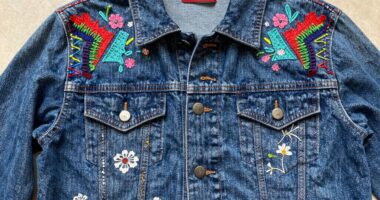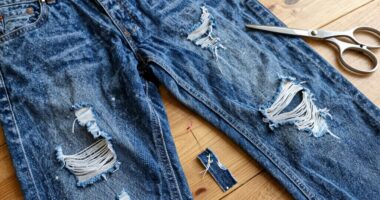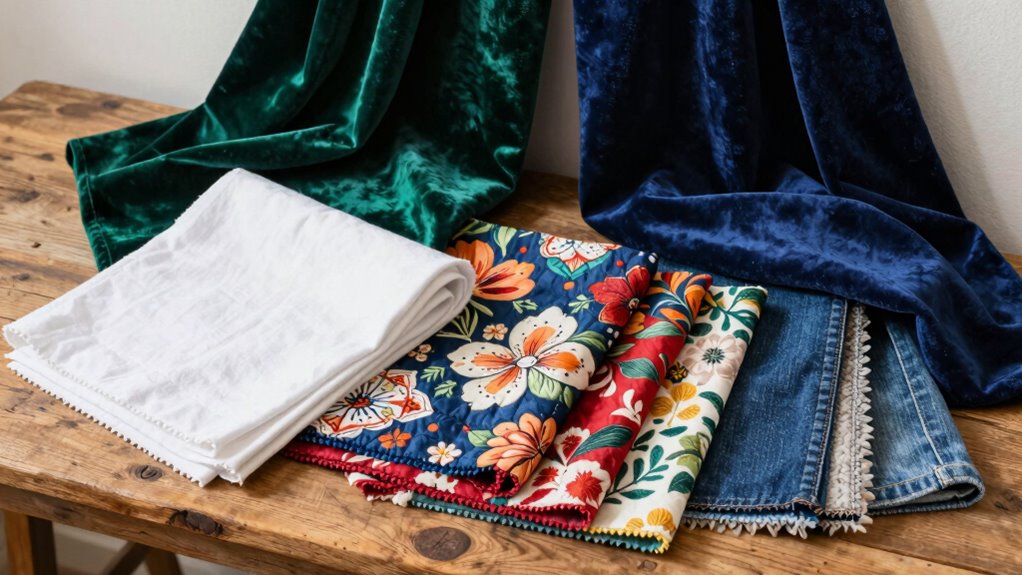

For practicing DIY fashion, stick with forgiving, versatile fabrics like cotton and denim. These materials are durable, easy to sew, and hold their shape well, giving you polished results. Heavy-weight cotton or canvas are great for transforming old clothes through patches or seam taking-in. Pre-wash before working, and choose eco-friendly options if possible. If you keep exploring, you’ll discover even more tips to make your DIY projects successful and sustainable.
Key Takeaways
- Choose forgiving, versatile fabrics like cotton and denim for easier handling and better results.
- Opt for heavy-weight fabrics such as canvas or heavy cotton suitable for upcycling and patchwork projects.
- Pre-wash fabrics to prevent shrinking and color bleeding, ensuring consistent project outcomes.
- Select eco-friendly fabrics like organic cotton or linen to support sustainable DIY fashion practices.
- Use durable, easy-to-sew fabrics that hold their shape well for polished, long-lasting finished pieces.
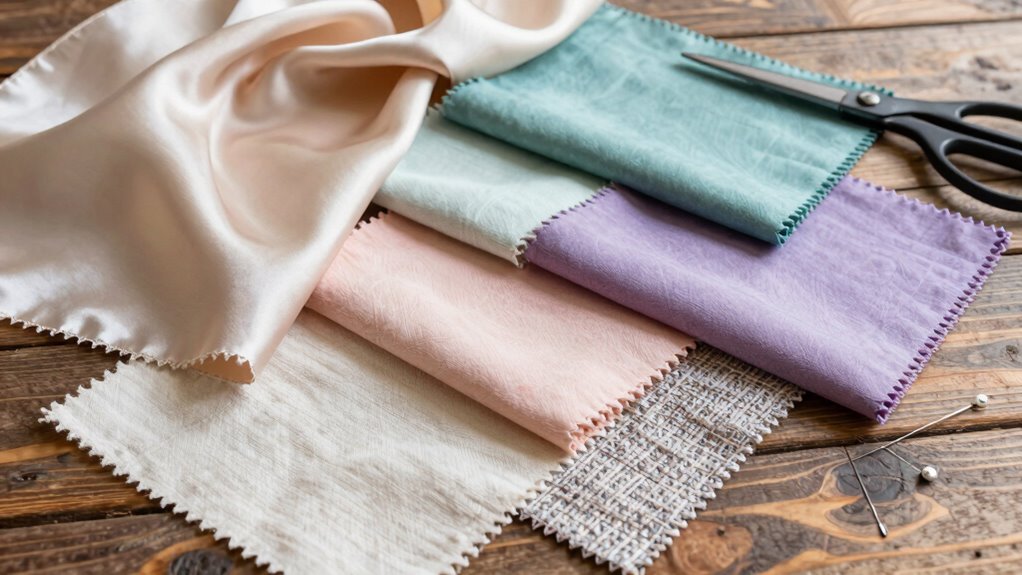
Are you ready to set free your creativity with DIY fashion projects? Choosing the right fabrics can make all the difference in how your creations turn out and how enjoyable the process is. When you’re just starting out, it’s smart to focus on fabrics that are forgiving and versatile, making upcycling techniques easier and more rewarding. Cotton and denim are excellent options because they’re durable, easy to work with, and readily available. Plus, they hold their shape well, which means your projects will look polished without much fuss. If you’re experimenting with transforming old clothes or thrifted finds, these fabrics are forgiving enough to handle some mistakes and adjustments.
Start your DIY journey with versatile, durable fabrics like cotton and denim for easier upcycling and polished results.
As you immerse yourself in your DIY journey, understanding fabric care tips becomes essential. Proper care not only extends the life of your finished pieces but also makes future projects smoother. For instance, pre-washing fabrics helps prevent shrinking or color bleeding after your project is complete. When working with natural fibers like linen or cotton, you’ll find they respond well to simple washing and ironing—perfect for maintaining your creations’ look and feel. Synthetic fabrics, like polyester or nylon, may require gentler care, so always check washing instructions before you start cutting and sewing. Keeping your fabrics clean and properly stored guarantees they stay in top condition for many projects ahead. Additionally, choosing fabrics that are environmentally friendly can support more sustainable living practices, especially when selecting eco-friendly fabrics.
Getting comfortable with upcycling techniques is a great way to breathe new life into old textiles. Fabrics like canvas or heavy-weight cotton are especially suitable for upcycling because they can handle more aggressive transformations, such as adding patches or taking in seams. When you’re working with vintage or worn fabrics, learn to spot areas that need reinforcement or special treatment. This is where fabric care tips come in handy—knowing how to clean, handle, and store your materials guarantees your upcycled pieces remain durable and beautiful. Furthermore, paying attention to the environmental impact of your fabric choices can help you make more eco-conscious decisions throughout your DIY projects. Exploring eco-friendly fabrics can also inspire you to incorporate innovative, sustainable materials into your designs. Also, selecting fabrics that are easy to sew can significantly improve your confidence and efficiency during your projects.
In the end, the choice of fabric impacts every step of your DIY fashion process—from cutting and sewing to finishing touches. Starting with versatile, easy-to-handle fabrics makes a big difference, especially when you’re still mastering upcycling techniques. Pay attention to fabric care tips, and you’ll find your projects not only look great but also last longer. Whether you’re revamping old jeans, creating unique accessories, or customizing thrifted finds, selecting the right fabrics sets the foundation for success. With patience, practice, and the right materials, you’ll craft one-of-a-kind pieces that reflect your style and creativity. Remember, using sustainable fabrics can also help reduce environmental impact while you pursue your creative passions.

PLANTIONAL Woven Cotton Iron-On Fusible Interfacing: 44 inch X 2 Yards White Heavy Weight 100% Cotton Single-Sided Interfacing for Blouses Dress Shirts Collars DIY Crafts Supplies
【Natural Cotton Fabric】- Crafted from pure cotton, this interfacing offers a soft and reliable backing, enhancing the quality…
As an affiliate, we earn on qualifying purchases.
As an affiliate, we earn on qualifying purchases.
Frequently Asked Questions
Can I Dye All Types of Fabrics Easily at Home?
You can dye many fabrics at home, but some are easier than others. Natural fibers like cotton, linen, and silk take dye well, especially when fabric blending creates unique textile textures. Synthetic fabrics like polyester are trickier because they don’t absorb dye easily. To get vibrant colors, choose fabrics with a smooth surface and consistent weave, and always follow dye instructions carefully for the best results.
Which Fabrics Are Most Eco-Friendly for DIY Projects?
You want eco-friendly fabrics for your DIY projects? Look for sustainable textile options like organic cotton, hemp, bamboo, and Tencel, which are biodegradable, require fewer chemicals, and use less water. Choose eco-conscious fabric choices that prioritize environmental impact, support sustainable farming, and reduce waste. By selecting these materials, you help protect the planet while creating stylish, eco-friendly fashion pieces that reflect your commitment to sustainability.
Are There Fabrics Suitable for Beginner-Level Sewing Projects?
Yes, there are fabric types perfect for beginner sewing projects. You should start with cotton, as it’s easy to handle and forgiving with sewing techniques like straight stitches. Flannel and linen are also good choices because they’re stable and simple to sew. These fabrics allow you to practice basic stitches and techniques without fuss, helping you build confidence as you learn and improve your skills in DIY fashion.
How Do I Choose Fabrics That Won’T Shrink After Washing?
To prevent shrinkage after washing, choose fabrics labeled as pre-shrunk or those made from synthetic fibers like polyester, which resist shrinking. Wash new fabrics in cold water and use gentle fabric softening to maintain their size and shape. Always check care labels for shrinkage prevention tips. By selecting these fabrics and following proper washing practices, you’ll keep your DIY projects looking great and fitting well over time.
What Fabrics Are Best for Making Durable, Long-Lasting Clothing?
Did you know that high-quality denim lasts up to 10 years with proper care? For durable, long-lasting clothing, opt for fabrics like heavy cotton, denim, canvas, or wool. These materials withstand frequent washing when you follow proper fabric care. Use strong sewing techniques, double stitching, and reinforced seams to enhance longevity. Selecting the right fabric and sewing carefully guarantees your DIY projects stay sturdy and stylish for years.

8.5OZ Cotton Durable Denim Fabric 62 Inches Width Entelare(Deep Blue 1Yard)
Fabric Quality: 100% Cotton
As an affiliate, we earn on qualifying purchases.
As an affiliate, we earn on qualifying purchases.
Conclusion
Now that you know the best fabrics for your DIY fashion adventures, you’re practically unstoppable! With the right material, you could turn a simple scrap into a masterpiece so stunning, it’ll stop traffic. Imagine crafting a piece so perfect, it becomes the envy of every runway and the highlight of every wardrobe. So grab your fabric, release your creativity, and transform your wildest fashion dreams into reality—because with these fabrics, you’re destined to create legendary looks!

Rindion 100% Cotton Fabric, 63 in x 1.3 Yard Unbleached Muslin Fabric, Medium Weight Linen Fabric by The Yard for Sewing Embroidery, Garments, Arts and Crafts
Product Details: You will receive 63 inches wide x 1.3 yards long of cotton fabric, providing ample material…
As an affiliate, we earn on qualifying purchases.
As an affiliate, we earn on qualifying purchases.

Wear, Repair, Repurpose: A Maker's Guide to Mending and Upcycling Clothes
As an affiliate, we earn on qualifying purchases.
As an affiliate, we earn on qualifying purchases.