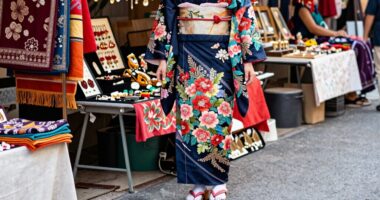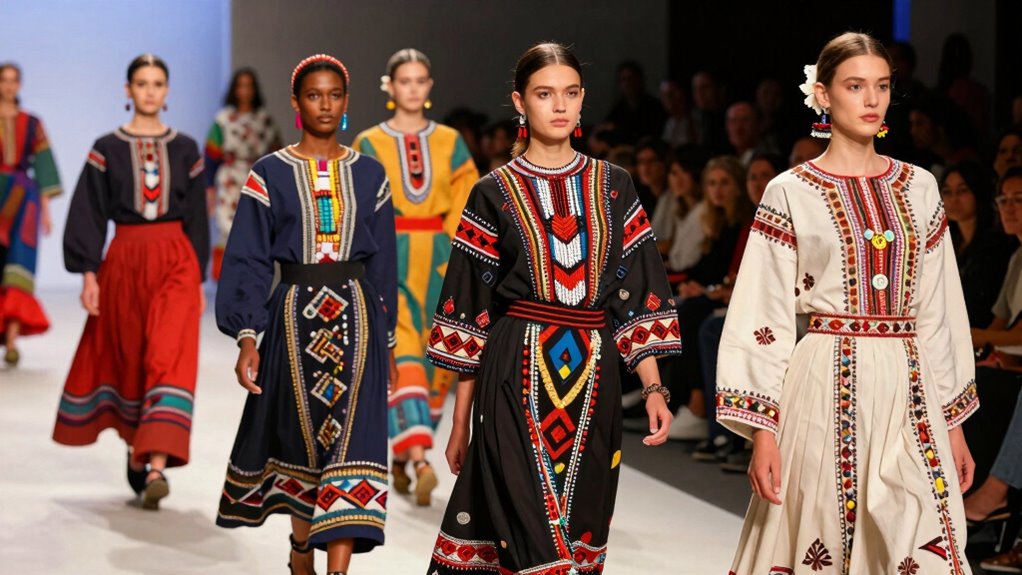

Regional dress inspires contemporary runway styles by integrating traditional symbols, fabrics, and craftsmanship into modern designs. You’ll see designers reimagine cultural motifs, such as embroidery or silhouettes, to create bold statements that honor heritage while appealing to today’s fashion trends. This blend fosters a dialogue between the past and present, adding depth and identity to new collections. Stay with us to explore how this fusion preserves traditions and sparks innovative fashion.
Key Takeaways
- Designers incorporate traditional garments’ silhouettes and motifs into modern runway pieces to create cultural dialogue.
- Traditional textiles and craftsmanship are reinterpreted with contemporary cuts and materials for innovative designs.
- Cultural symbols and embroidery are adapted into bold prints and details, blending heritage with modern aesthetics.
- Runway styles celebrate regional identities by collaborating with artisans, preserving traditional techniques through high fashion.
- Fashion showcases cultural stories and symbolism, fostering respect and awareness while appealing to global audiences.
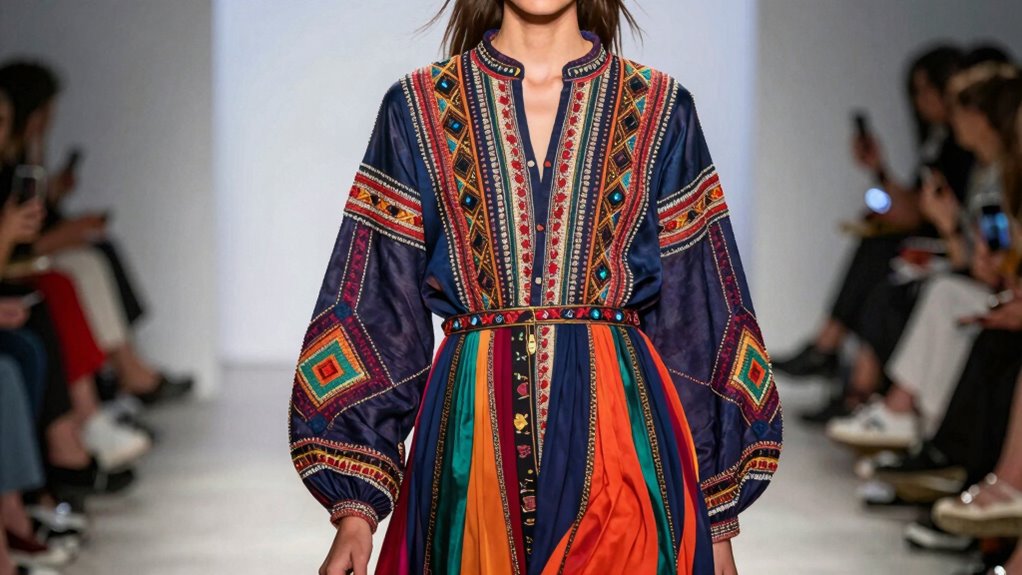
Regional dress has long served as a powerful expression of cultural identity, but today’s runway styles often draw inspiration from these traditional garments. When you look at modern fashion shows, you’ll notice how designers incorporate elements rooted in history, transforming cultural symbolism into contemporary statements. These influences aren’t just about aesthetics; they carry stories, beliefs, and histories, giving each piece a deeper meaning. By blending these symbols with current trends, designers create a dialogue between the past and present, making fashion more meaningful and resonant.
Modern fashion bridges history and innovation, transforming traditional symbols into meaningful, contemporary runway statements.
Fabric craftsmanship plays an essential role in this process. Traditional garments often showcase intricate techniques passed down through generations—handwoven textiles, embroidered patterns, and carefully crafted details. When designers borrow from these textiles, they’re not only adopting the visual language but also honoring the skilled artisans behind them. They might reinterpret traditional fabrics into modern cuts or use contemporary materials to mimic the textures and patterns. This approach emphasizes the artistry involved in fabric craftsmanship, highlighting the value of tradition while pushing the boundaries of innovation.
As you observe runway collections inspired by regional dress, you’ll see how designers balance authenticity and creativity. They might take a bold motif from a specific culture and rework it into a striking print, or they might adapt a traditional silhouette into a sleek, modern shape suited for today’s fashion scene. This process involves a deep appreciation for the cultural symbolism embedded in these garments. For example, a vibrant sash or embroidered detail may symbolize status, protection, or spiritual beliefs, and when integrated into a contemporary outfit, it retains that significance while appealing to a global audience.
You also notice how fabric craftsmanship influences the texture and tactile appeal of these designs. The use of luxurious silks, textured textiles, or handwoven fabrics adds richness and authenticity. Sometimes, designers collaborate with artisans from the original regions, ensuring that their techniques are preserved and celebrated. This not only elevates the garments but also supports and sustains traditional craft communities. Recognizing the importance of traditional textile techniques helps deepen our appreciation for the cultural heritage woven into fashion. Additionally, understanding cultural symbolism enriches our interpretation of these fashion pieces, emphasizing their significance beyond mere appearance.
Furthermore, the integration of traditional craft techniques often involves a respectful dialogue with the cultural origins, ensuring that these influences are represented thoughtfully rather than superficially. Designers are increasingly aware of the importance of cultural sensitivity and cultural preservation in their work, which fosters a more respectful appreciation of the traditions they draw from. Ultimately, modern runway styles inspired by regional dress serve as a bridge—connecting cultural symbolism and fabric craftsmanship with current fashion trends. They invite you to appreciate the depth behind each piece, recognizing that fashion isn’t just about appearance but also about storytelling, heritage, and artistry. This blend of old and new transforms the runway into a space where tradition is celebrated, reimagined, and given new life.
traditional embroidered clothing
As an affiliate, we earn on qualifying purchases.
As an affiliate, we earn on qualifying purchases.
Frequently Asked Questions
How Do Designers Choose Which Regional Elements to Incorporate?
You choose regional elements based on textile authenticity and cultural symbolism. You research traditional fabrics and techniques to guarantee authenticity, respecting their origins. You also consider cultural symbolism to honor the meaning behind the designs, avoiding misappropriation. By blending these elements thoughtfully, you create runway styles that celebrate regional heritage while appealing to modern aesthetics. This careful selection enhances the garment’s story, making it both stylish and culturally respectful.
Are There Cultural Sensitivities When Blending Traditional Dress With Modern Fashion?
Yes, there are cultural sensitivities when blending traditional dress with modern fashion. You need to avoid cultural appropriation by respecting the origins and significance of the designs. Make certain to practice ethical sourcing by collaborating with artisans and sourcing materials responsibly. By acknowledging and honoring the culture, you guarantee that your fashion choices are respectful and authentic, fostering appreciation rather than misrepresentation or exploitation.
How Has Regional Dress Evolved to Influence Global Fashion Trends?
You see how regional dress has evolved into a global fashion influence through cultural preservation and artistic fusion. Designers incorporate traditional patterns, fabrics, and techniques into modern silhouettes, blending heritage with contemporary style. This evolution celebrates diversity while respecting origins. By doing so, you help keep cultural traditions alive, inspiring innovative fashion that resonates worldwide, fostering appreciation and understanding across cultures through creative expression.
What Challenges Do Designers Face When Integrating Regional Motifs?
You’re steering a tightrope, balancing cultural authenticity with fashion commercialization. When integrating regional motifs, you face challenges like preserving traditional meanings while appealing to global markets. It’s easy to fall into stereotypes or cultural misappropriation if you’re not careful. To succeed, you need to respect the origins of these designs, ensuring your work honors their significance and maintains genuine cultural integrity amidst commercial pressures.
How Do Regional Dress Inspirations Impact Sustainable Fashion Practices?
Regional dress inspirations can positively impact sustainable fashion by promoting ethical sourcing, ensuring that traditional materials and techniques are respected and fairly compensated. However, you must be cautious of cultural appropriation, which can undermine authenticity and offend communities. By collaborating with local artisans and honoring cultural significance, you help create designs that are both sustainable and respectful, fostering a more equitable fashion industry that values diversity and tradition.
Conclusion
So, next time you admire a sleek runway look, remember it might just be a modern twist on centuries-old regional dress. It’s amusing how fashion often circles back, borrowing from traditions it claims to forget. Maybe today’s designers are secretly just vintage enthusiasts, secretly inspired by the past they pretend to overlook. In the end, what’s old is new, and what’s new might just be a clever nod to the rich stories woven into regional attire.