You’ll notice that handwork in global fashion traditions showcases exceptional craftsmanship rooted in cultural stories, symbols, and heritage. Techniques like embroidery, weaving, and stitching carry meaning beyond their beauty, representing history, beliefs, and social values. Each handmade piece connects you to a community’s identity and traditions. The artistry preserves cultural memory and continues to influence modern styles. Keep exploring to discover how these timeless techniques shape the rich tapestry of global fashion.
Key Takeaways
- Handwork in fashion embodies cultural identities through unique techniques, patterns, and motifs passed down generations.
- Traditional textile methods like sashiko or embroidery encode social, spiritual, and historical symbolism.
- Artisanal craftsmanship preserves cultural heritage, narratives, and community stories within garments.
- Handcrafted textiles maintain cultural continuity, linking modern fashion to historical and cultural roots.
- The intricate effort and skill involved highlight the symbolic and aesthetic significance of traditional fashion techniques.

Throughout history, handwork has played a vital role in shaping global fashion traditions, reflecting cultural identities and artisanal skills passed down through generations. When you observe traditional garments, you can’t ignore the intricate textile techniques that artisans employ—each stitch, weave, or embroidery tells a story. These techniques are often unique to specific regions, embodying centuries of craftsmanship that define a community’s aesthetic and cultural values. From the delicate beadwork of African textiles to the complex weaving patterns of Central America, these methods are more than just decorative; they serve as a visual language of cultural symbolism. You begin to see that every motif, color choice, and pattern isn’t random but loaded with meaning, representing historical beliefs, social status, or spiritual beliefs.
Handwork reveals cultural stories through intricate techniques and symbolic patterns passed down through generations.
As you explore different cultures, you realize that textile techniques are deeply intertwined with cultural symbolism. For example, in Japan, the art of sashiko stitching isn’t merely decorative but carries connotations of perseverance and protection. In India, vibrant sarees with embroidered borders often symbolize fertility, prosperity, or religious devotion, with specific colors and motifs holding particular significance. These patterns aren’t just aesthetic choices—they’re woven into the fabric of social rituals and identity. When you wear or admire such garments, you’re connecting with a tradition that encodes history, values, and social narratives in each thread. Recognizing the artisanal craftsmanship behind these textiles helps you appreciate the dedication and cultural heritage embedded in each piece. Additionally, understanding traditional textile techniques enhances your appreciation for the cultural symbolism expressed through these garments. Studying these techniques reveals the cultural significance that continues to influence contemporary fashion, ensuring their stories endure. This knowledge of craftsmanship is essential to fully appreciating the depth of these cultural expressions and their enduring importance in fashion.
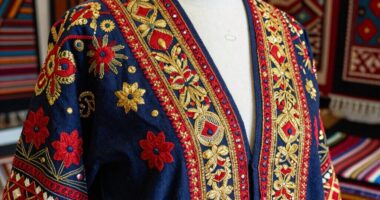
Handwork in fashion isn’t just about aesthetics; it’s about preserving heritage. You can appreciate how artisans dedicate hours—sometimes days or weeks—to craft each piece, a process that often involves traditional textile techniques passed from generation to generation. This meticulous work sustains cultural symbolism, ensuring that these stories and meanings remain alive in contemporary fashion. It’s a reminder that beauty isn’t merely visual but rooted in cultural memory and identity. Whether it’s a hand-embroidered jacket or a woven scarf, you recognize that these items carry more than style—they embody a community’s history, beliefs, and resilience.
hand embroidered traditional garments
As an affiliate, we earn on qualifying purchases.
As an affiliate, we earn on qualifying purchases.
Frequently Asked Questions
How Has Modern Technology Influenced Traditional Handwork Techniques?
Modern technology has transformed traditional handwork techniques by introducing digital embroidery and 3D printing. You can now create intricate designs with precision, blending craftsmanship with innovation. Digital embroidery software allows you to design complex patterns quickly, while 3D printing enables the production of textured embellishments that were once handmade. These advancements preserve cultural techniques while making fashion creation faster, more accessible, and highly detailed, enriching the global fashion landscape.
Are There Any Certifications for Authentic Handcrafted Fashion Items?
Yes, there are certifications for authentic handcrafted fashion items. You can look for authenticity verification labels like Fair Trade, GOTS, or Craftmark, which adhere to certification standards guaranteeing genuine craftsmanship. These certifications help you verify that the products are handmade by skilled artisans, supporting ethical practices and preserving traditional techniques. When shopping, always check for these labels to verify you’re investing in authentic, high-quality handcrafted fashion pieces.
How Do Artisans Preserve Their Cultural Heritage Through Handwork?
You preserve cultural heritage through handwork by practicing traditional techniques that embody your community’s cultural identity and artistic expression. By passing down skills from generation to generation, you keep these customs alive, ensuring they remain vibrant and relevant. You might also incorporate symbols, patterns, and methods unique to your culture, fostering a sense of pride and connection. Your craftsmanship becomes a living demonstration of your cultural legacy, inspiring future artisans.
What Are the Economic Impacts of Handwork on Local Communities?
Handwork boosts local economies by creating jobs and supporting small businesses, leading to economic empowerment. When you buy handcrafted items, you help artisans earn a fair income, which promotes sustainable community development. This not only preserves cultural traditions but also strengthens local markets. Your support encourages artisans to continue their craft, ensuring that traditional handwork remains a crucial part of their community’s economic stability and cultural identity.
Can Traditional Handwork Adapt to Contemporary Fashion Trends?
Yes, traditional handwork can adapt to contemporary fashion trends, blending cultural authenticity with modern aesthetics. While some may see a clash, you can highlight how craft sustainability enriches designs, making them both trendy and meaningful. By respecting traditional techniques and innovating thoughtfully, you guarantee that handwork remains relevant, appealing to today’s consumers who value authenticity. This balance preserves cultural heritage while embracing the evolving landscape of global fashion.
Conclusion
Just as a delicate tapestry weaves countless threads into a vibrant story, your appreciation for handwork connects you to centuries of tradition and artistry. When you cherish these intricate crafts, you’re not just observing fashion — you’re holding a piece of history, a whisper of culture echoing through time. Embrace this beauty, for in honoring handwork, you become part of a living, breathing legacy that celebrates the soul behind every stitch.