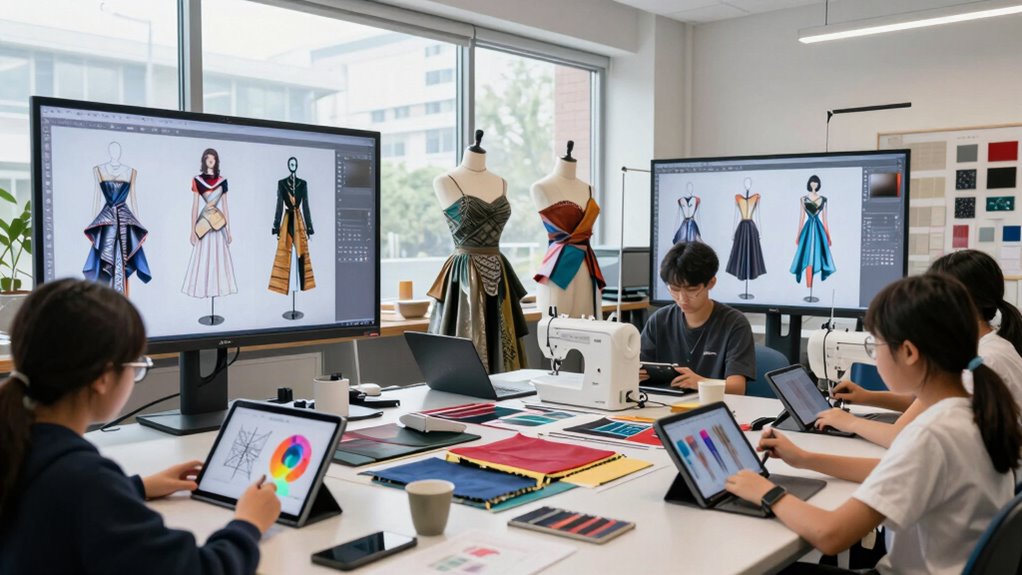

Fashion education is evolving quickly because it must adapt to technological advances and industry demands for sustainability. You’ll find courses now prioritize eco-friendly materials, ethical sourcing, and circular design principles. These changes prepare you for a competitive market focused on environmental responsibility and innovation. By incorporating new tools and practices, programs help you stay relevant in a fast-changing industry. Keep exploring to learn more about how these shifts shape your future in fashion.
Key Takeaways
- Technological advancements enable innovative teaching methods and new design tools in fashion education.
- Industry demands for sustainable practices drive curriculum updates and eco-conscious training.
- Rapid market changes require students to adapt to emerging technologies and ethical standards.
- Growing awareness of environmental impact prompts integration of eco-friendly materials and circular design principles.
- Competitiveness in the global fashion market necessitates ongoing curriculum evolution aligned with industry standards.
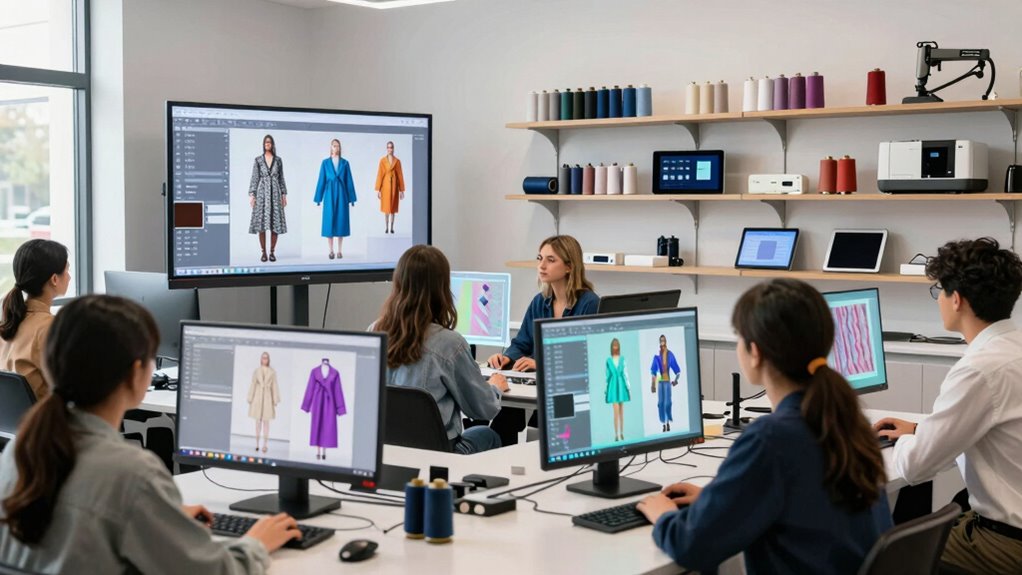
Fashion education is evolving rapidly, driven by technological advances and shifting industry demands. You’re now part of a landscape where sustainable practices aren’t just buzzwords—they’re fundamental to how fashion is taught and practiced. Schools are integrating eco-friendly materials, ethical sourcing, and circular design principles into their curricula. You learn to contemplate the environmental impact of each decision, recognizing that sustainability isn’t optional but essential for future success. This shift reflects broader industry trends, pushing you to create designs that are both innovative and responsible. You’re encouraged to think beyond aesthetics and prioritize longevity, recyclability, and minimal waste. This focus on sustainable practices transforms your approach, making you more conscious of your role in reducing fashion’s environmental footprint. Incorporating template compatibility testing into your design process can further optimize resource use and streamline production. Additionally, understanding sustainable material sourcing helps you select eco-friendly fabrics and materials that align with industry standards. Keeping up with industry standards ensures your designs meet current ethical and environmental expectations, preparing you for a competitive market. Staying informed about emerging technologies is crucial for adapting to rapid industry changes, especially as new innovations reshape sustainable practices in fashion.
As an affiliate, we earn on qualifying purchases.
Frequently Asked Questions
How Are Traditional Fashion Schools Adapting to Digital Trends?
You’ll notice traditional fashion schools are embracing digital trends by offering virtual internships, allowing students to gain real-world experience remotely. They’re also integrating augmented reality into their curriculum, giving you immersive design and visualization tools. These adaptations help you stay ahead, fostering innovation and practical skills that align with modern industry demands. As a student, you benefit from cutting-edge technology, making your education more dynamic and future-ready.
What New Skills Are Emerging as Essential in Fashion Education?
Imagine your skill set as a garden that’s constantly evolving. You now need to nurture innovative materials, understanding their properties and potentials, and cultivate creative collaborations that blend diverse ideas into unique designs. These skills are essential, allowing you to stay ahead in fashion’s dynamic landscape. You become a gardener of innovation, constantly learning how to integrate new technologies and partnerships to grow fresh, innovative fashion styles.
How Does Online Learning Impact Hands-On Fashion Training?
Online learning transforms your hands-on fashion training by offering virtual workshops and digital mentorships that enhance practical skills. You can access expert guidance from anywhere, participate in real-time projects, and learn at your own pace. While it may lack some physical experience, these digital tools help you develop creativity and technical abilities efficiently. Embracing online platforms guarantees you stay updated and adaptable in the ever-evolving fashion industry.
Are There Increasing Opportunities for International Collaboration?
Yes, there are increasing opportunities for international collaboration in fashion education. You can engage in cultural exchange programs and global networking initiatives that broaden your perspectives. These collaborations allow you to learn from diverse traditions and innovative ideas worldwide. While some may worry about language barriers, digital platforms make communication seamless. Embracing these opportunities enriches your experience, helping you develop a global outlook essential for today’s interconnected fashion industry.
How Is Sustainability Integrated Into Current Fashion Curricula?
You’ll find sustainability integrated into current fashion curricula through a focus on sustainable materials and eco-friendly practices. Students learn to select eco-conscious fabrics, reduce waste, and implement ethical production methods. Courses emphasize environmental impact, encouraging innovation in sustainable design. By incorporating real-world case studies and industry collaborations, you gain practical knowledge to create fashion that’s both stylish and environmentally responsible, preparing you for a greener future in the industry.
Conclusion
As you navigate this evolving fashion landscape, remember that change is the guiding compass—like a chameleon blending into new environments. Embrace innovation and adaptability as your tools, for they’re the wings that will carry you forward. Just as a seed transforms into a vibrant bloom, your education must also grow and adapt. Stay curious, stay flexible—your future in fashion depends on your ability to continuously reinvent yourself in this ever-shifting runway.