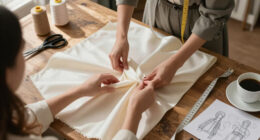
When evaluating fabric quality before buying, use the fabric hand test to feel its texture, weight, and resilience. Pick up the textile and gently assess its surface for smoothness, softness, or rough patches. Check how it responds to stretching or pressing—fabrics that spring back tend to be more durable. Remember, feeling the fabric helps you choose the right quality and durability for your needs. If you’re curious about perfecting this skill, there’s more to discover.

Get your wardrobe favorites delivered free — and shop member deals
- Fast, free delivery on millions of items
- Access to Prime Big Deal Days deals on October 6–7
- Prime Video, Amazon Music and more included
Key Takeaways
- Use the fabric hand test to assess surface smoothness, softness, or roughness for quality evaluation.
- Feel the fabric’s weight and pliability to determine durability and suitability for intended use.
- Check how the fabric responds to gentle stretching; resilient fabrics spring back, indicating higher quality.
- Detect irregular textures or coarse patches that may signify lower craftsmanship or inferior material.
- Use tactile feedback to confirm that the fabric’s appearance aligns with its feel, ensuring it meets your expectations.

The fabric hand test is a simple yet essential method to evaluate the feel and quality of textiles. When you’re shopping for fabric, this test helps you get a tactile sense of the material before making a purchase. It’s especially useful because visual cues alone can be misleading; a fabric might look appealing but feel coarse or flimsy to the touch. By performing the hand test, you can assess not only the fabric’s appearance but also its textile durability, ensuring you choose something that will last and maintain its quality over time.
To conduct the fabric hand test, you simply pick up the textile and feel its surface with your fingers. Notice how it responds to your touch—does it feel smooth, soft, or rough? Is it stiff or pliable? This firsthand experience gives you insight into the fabric’s quality that photos or descriptions can’t provide. For example, a fabric with a fine, even surface usually indicates good craftsmanship and consistent textile durability. On the other hand, if you feel irregularities, such as rough patches or a coarse texture, it could point to lower quality or less durability. This tactile evaluation allows you to gauge whether the fabric’s appearance aligns with its feel, helping you avoid materials that might look good but wear out quickly.
Feel the fabric’s surface; smooth, rough, or uneven textures reveal quality and durability.
The fabric hand test also reveals how the textile might behave in real use. A fabric that feels resilient and substantial is likely to hold up well through washing and wear. Conversely, if it feels flimsy or overly thin, it might not stand the test of time. Keep in mind that the weight and drape of the fabric contribute to both its appearance and durability. Heavier, tightly woven textiles generally feel sturdier and are often more durable, making them ideal for items that need to withstand frequent use. Lighter fabrics might feel delicate but can still be durable if woven properly; the hand test helps you differentiate between the two.
When you perform this test, pay attention to how the fabric responds to gentle stretching or pressing. A fabric that springs back easily indicates good resilience and durability. If it feels limp or doesn’t return to its original shape, it might not be the best choice for long-term use. This simple check guarantees you’re making an informed decision based on both how the fabric looks and how it feels, giving you confidence in your purchase. Additionally, understanding the impact of fiber content on fabric feel can further guide your selection. Ultimately, the fabric hand test is a quick, effective way to select textiles that meet your standards for appearance and durability, saving you time and frustration down the line.
As an affiliate, we earn on qualifying purchases.
Frequently Asked Questions
Can Fabric Hand Tests Predict Fabric Durability?
Fabric hand tests can give you an idea of fabric softness and material flexibility, but they don’t reliably predict durability. You might feel a fabric’s smoothness or stretch, but that doesn’t tell you how well it will hold up over time. To assess durability, look for fabric strength, weave tightness, and care instructions. Feel alone isn’t enough—you need to take into account other factors for a true durability prediction.
How Do Different Fabrics Feel During the Hand Test?
During the hand test, you’ll notice that different fabrics feel distinct in texture comparison and softness evaluation. Soft fabrics like silk feel smooth and gentle, while sturdier materials like denim have a rougher, more rigid texture. As you compare, focus on how the fabric responds to your touch—some are plush and supple, others crisp or coarse. This helps you assess quality and choose fabrics that match your preferences and project needs.
Is the Hand Test Suitable for All Fabric Types?
The hand test isn’t suitable for all fabric types, especially those with delicate fabric surfaces or significant fabric stretch. For delicate fabrics, pressing or visual inspection is better, while fabrics with stretch may feel different under your fingers. You should use the hand test mainly for sturdy, non-stretch fabrics where feeling the surface and firmness gives you a good idea of quality. Always consider fabric type for accurate assessment.
Can Fabric Hand Tests Detect Fabric Authenticity?
Fabric hand tests can help you detect fabric authenticity by giving you a sense of its texture and feel, but they aren’t foolproof for textile verification. While you might notice differences in quality or authenticity through touch, these tests alone can’t confirm genuine material. To guarantee fabric authenticity, combine hand tests with other verification methods, like label checks or expert assessments, for more reliable textile verification.
How Does Fabric Weight Influence the Hand Test?
Fabric weight considerably impacts your tactile sensation during the hand test. Heavier fabrics feel denser and sturdier, giving you a sense of durability, while lighter fabrics feel more delicate and flexible. By paying attention to weight, you can better gauge fabric quality and authenticity. Your tactile sense guides you in distinguishing between different types of fabrics, helping you make informed purchasing decisions and ensuring you select items that meet your expectations.
Conclusion
Now that you’ve felt the fabric’s hand, you’ve revealed its story—each touch a whisper of comfort, strength, and style. Just as a handshake seals a bond, your touch seals the quality of your choice. Remember, a fabric’s feel is like a handshake with your future wardrobe—trust it, nurture it, and let it speak volumes about your taste. In every touch, you hold the power to choose fabrics that truly resonate with your soul.
Fall Picks
fall essentials
As an affiliate, we earn on qualifying purchases.