Cheap cotton’s environmental costs are heavy. You may not see the impacts, but excessive pesticide use harms soil, water, and wildlife. Water depletion from over-irrigation causes shortages and damages ecosystems. These practices pollute drinking water and threaten nearby communities. If you keep exploring, you’ll discover how these issues contribute to long-term ecological damage and how choosing better options can help protect our planet’s health.

Get your wardrobe favorites delivered free — and shop member deals
- Fast, free delivery on millions of items
- Access to Prime Big Deal Days deals on October 6–7
- Prime Video, Amazon Music and more included
Key Takeaways
- Overuse of pesticides in cotton farming pollutes soil, water, and harms beneficial insects and wildlife.
- Chemical runoff from pesticides damages ecosystems and contaminates drinking water sources.
- Excessive water extraction for cotton cultivation depletes local water supplies, harming communities and aquatic habitats.
- Over-irrigation causes soil salinization, land degradation, and reduces land fertility over time.
- Environmental degradation from chemical and water overuse leads to biodiversity loss and increased farming costs.
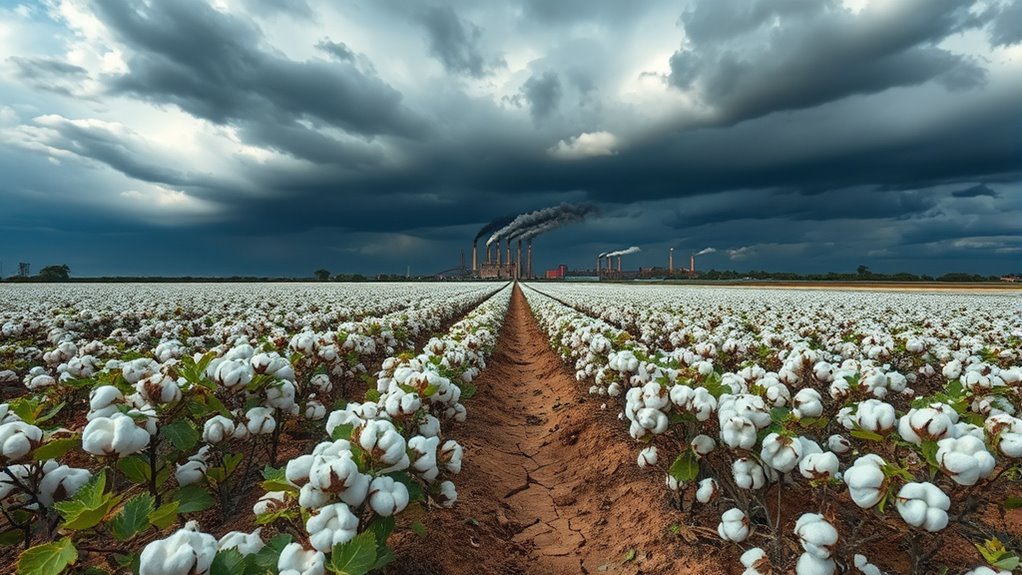
While cheap cotton may lower clothing costs, it often comes with significant environmental consequences. One of the most pressing issues is pesticide overuse. To produce large quantities of cheap cotton, farmers frequently rely on heavy applications of chemical pesticides. These pesticides are used to ward off pests and maximize yields quickly, but they come with serious environmental and health risks. When pesticides leach into the soil and water, they harm local ecosystems, kill beneficial insects, and contaminate drinking water sources. As a result, wildlife suffers, and nearby communities face increased health problems from exposure. The overuse of pesticides in cotton farming creates a cycle of dependency, pushing farmers to apply even more chemicals to combat pests that develop resistance, further amplifying environmental damage.
In addition to pesticide overuse, water depletion is a critical concern tied to cheap cotton production. Growing cotton requires enormous amounts of water, especially in regions where water resources are already strained. To meet the high demand for inexpensive clothing, farmers often divert vast quantities of water from rivers, lakes, and underground aquifers. This overextraction depletes local water supplies, causing water scarcity for communities, agriculture, and natural habitats. As water sources dwindle, ecosystems suffer, and the balance of local environments is disrupted. For farmers, this means they must often drill deeper or find alternative sources, which can be costly and unsustainable in the long run. The intense water demand for cheap cotton also contributes to soil degradation, as over-irrigation leads to salinization and reduces land fertility.
As an affiliate, we earn on qualifying purchases.
Frequently Asked Questions
How Does Cheap Cotton Affect Local Communities Financially?
When you buy cheap cotton, you might not realize how it impacts local communities financially. It often fuels labor exploitation, where workers receive low wages and poor conditions. This perpetuates rural poverty, making it hard for families to improve their living standards. By supporting fair trade, you help combat these issues, ensuring workers are paid fairly and rural communities can thrive instead of remaining trapped in poverty.
What Are the Long-Term Health Effects of Cheap Cotton Farming?
You might not realize it, but working with cheap cotton often exposes you to health risks like pesticide exposure, which can harm your long-term health. Prolonged contact with cotton fiber health issues can lead to respiratory problems, skin irritations, or even more serious illnesses. The constant pesticide use in cheap cotton farming increases these risks, making it essential to weigh safer practices to protect your health and well-being over time.
Can Sustainable Alternatives Match the Affordability of Cheap Cotton?
You might wonder if sustainable alternatives can match the affordability of cheap cotton. While ethical sourcing often costs more upfront, many brands are investing in innovative methods to lower market pricing. By prioritizing eco-friendly practices, you support a future where sustainable options become more accessible without sacrificing affordability. Over time, increased demand and improved techniques could make environmentally responsible cotton just as budget-friendly as traditional, cheap cotton.
How Does Cheap Cotton Production Influence Global Water Resources?
When you choose cheap cotton, it often leads to water depletion and aquifer exhaustion. Manufacturers rely on intensive water use, draining local water sources and risking long-term availability. This overextraction harms ecosystems and reduces water for communities. By understanding this impact, you can make more informed choices, supporting sustainable options that protect crucial water resources instead of contributing to the ongoing depletion caused by cheap cotton production.
What Policies Could Effectively Regulate Cheap Cotton Imports?
You can push for policies like tariff policies and import quotas that regulate cheap cotton imports effectively. Tariff policies increase costs for imported cotton, encouraging local sourcing and sustainable practices. Import quotas limit the volume of cheap cotton entering the market, reducing environmental strain. By advocating for these measures, you help promote responsible production, support local farmers, and lessen environmental impacts associated with cheap cotton imports.
Conclusion
Just like Icarus flying too close to the sun, chasing cheap cotton soars on fleeting gains. But beneath its softness lies a harsh truth—soil depleted, waters scarred, and ecosystems broken. If you ignore these costs, you risk repeating history’s mistakes, soaring until the fall. Choose mindful consumption, and let’s break free from the cycle, forging a future where sustainability isn’t just a myth, but a reality woven into every thread we wear.
Fall Picks
fall essentials
As an affiliate, we earn on qualifying purchases.