

To save your shoes from winter salt stains, start by gently brushing off loose salt crystals. Use a mixture of equal parts water and white vinegar to treat stubborn spots, blotting with a soft cloth. For leather shoes, apply a conditioner afterward to restore moisture. Prompt cleaning prevents long-term damage and keeps your shoes looking fresh. Keep going to discover more tips for keeping your footwear in top condition all winter long.
Key Takeaways
- Gently brush off loose salt crystals immediately to prevent deeper penetration into shoe materials.
- Use a mixture of water and white vinegar to treat stubborn salt stains effectively.
- For leather shoes, clean with a damp cloth and apply conditioner afterward to restore moisture.
- For fabric or synthetic shoes, wash by hand or machine with appropriate stain removers.
- Regularly clean shoes after winter to prevent discoloration, material damage, and prolong their lifespan.
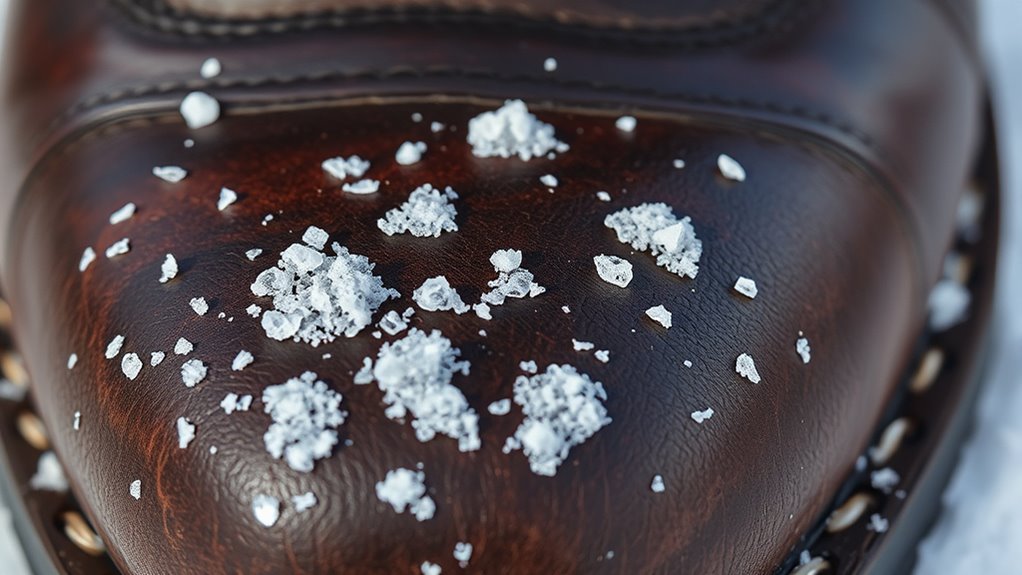
As winter snow melts, the salt used to melt ice often leaves unsightly stains on your driveway, sidewalk, and car surfaces. But salt doesn’t just stain concrete and metal—it can also damage your shoes. If you’ve noticed white or yellowish spots on your footwear after walking through salted streets, it’s time to focus on shoe cleaning and salt stain removal. Left untreated, these stains can degrade materials, weaken leather, and make your shoes look worn out. That’s why acting quickly is essential to preserve your footwear’s appearance and longevity.
Start by gently brushing off any loose salt crystals from your shoes with a soft-bristled brush or an old toothbrush. This prevents additional salt from settling deeper into the material. If your shoes are leather, avoid soaking them in water; instead, dampen a clean cloth with a mixture of mild soap and water. Wipe down the affected areas carefully, paying attention to any stained spots. For fabric shoes, you can usually wash them more thoroughly, either by hand or in the washing machine if the label permits. Just remember to remove any laces or insoles first, as they can trap salt and dirt.
For stubborn salt stains, a mixture of equal parts water and white vinegar works wonders. Vinegar helps break down salt residues and neutralizes any lingering mineral deposits. Dampen a cloth with this solution and gently blot the stained areas. Be cautious not to oversaturate leather or delicate materials. After cleaning, wipe the shoes with a clean, damp cloth to remove any vinegar residue. Allow your shoes to air dry in a well-ventilated area, away from direct heat or sunlight, which can cause leather to crack or fabric to fade.
If you’re dealing with persistent salt stains on leather, consider applying a leather conditioner afterward to restore moisture and flexibility. For canvas or synthetic shoes, a stain remover designed for those materials can be effective. Regular shoe cleaning after winter salt exposure not only keeps your shoes looking good but also extends their lifespan. Remember, prompt salt stain removal is key—delaying cleaning can lead to discoloration, material breakdown, and a shorter shoe lifespan.
In the end, taking a few minutes to clean your shoes after winter walks can save you money and keep your footwear in tip-top shape. With proper shoe cleaning techniques and salt stain removal methods, you’ll be able to enjoy your shoes long after the snow has melted. Incorporating proper maintenance practices can further protect your shoes from future winter damage.

Angeus Desalter Salt & Stain Remover- Removes Salt Stains from Boots, Shoes, Car Seats, & More- 4oz
As an affiliate, we earn on qualifying purchases.
As an affiliate, we earn on qualifying purchases.
Frequently Asked Questions
Can Salt Stains Damage Different Shoe Materials Equally?
Salt stains can damage different shoe materials unevenly. Leather might suffer from discoloration, losing its rich hue, while suede is more prone to deterioration, becoming rough or stained. You should clean salt stains promptly and use appropriate treatments for each material. Ignoring the stains risks permanent damage, so take action quickly to protect your shoes from lasting harm, especially during winter months when salt exposure is common.
How Often Should I Clean Salt Stains From My Shoes?
A stitch in time saves nine, and that’s especially true for salt stains. You should clean your shoes as soon as possible after winter maintenance to prevent damage. Regularly removing salt buildup helps maintain your shoes’ condition and appearance, especially during winter months. Aim to clean salt stains weekly or whenever you notice them to keep your shoes in top shape and ensure long-term shoe preservation.
Are There Natural Remedies to Prevent Salt Stains?
You can try natural remedies like applying a mixture of white vinegar and water to your shoes to prevent salt stains. This solution helps neutralize salt and create a barrier. You might also sprinkle baking soda on shoes before wearing them in snowy conditions. These salt stain prevention tips are simple, effective, and eco-friendly. Regularly wiping your shoes after exposure to salt can further reduce the risk of stubborn stains.
Do Salt Stains Affect the Longevity of Shoes?
Salt stains can considerably affect the longevity of your shoes by causing salt penetration, which weakens the material and accelerates shoe deterioration. When salt seeps into the shoes, it can break down the leather or fabric over time, leading to cracks, discoloration, and structural damage. To protect your shoes, clean off salt regularly and use protective treatments, preventing salt penetration and extending their lifespan.
Can Professional Cleaning Fully Restore Salted Shoes?
Think of professional cleaning as a gentle healer for your salted shoes. While it can often reduce shoe discoloration and slow sole degradation, it might not fully restore them if damage is severe. The salt’s corrosive nature leaves lasting marks, like scars on a veteran. So, while cleaning helps, some damage may be permanent, reminding you to protect your shoes from winter’s harshness early on.
Conclusion
Winter salt stains can be a real headache, but with quick action, you can save your shoes from lasting damage. Think of your shoes like a sponge—if you don’t rinse out the salt promptly, it’ll soak in and cause more harm. So, next time you see those white marks, wipe them off fast and keep your shoes looking fresh. Stay proactive, and your footwear will thank you for it all season long.