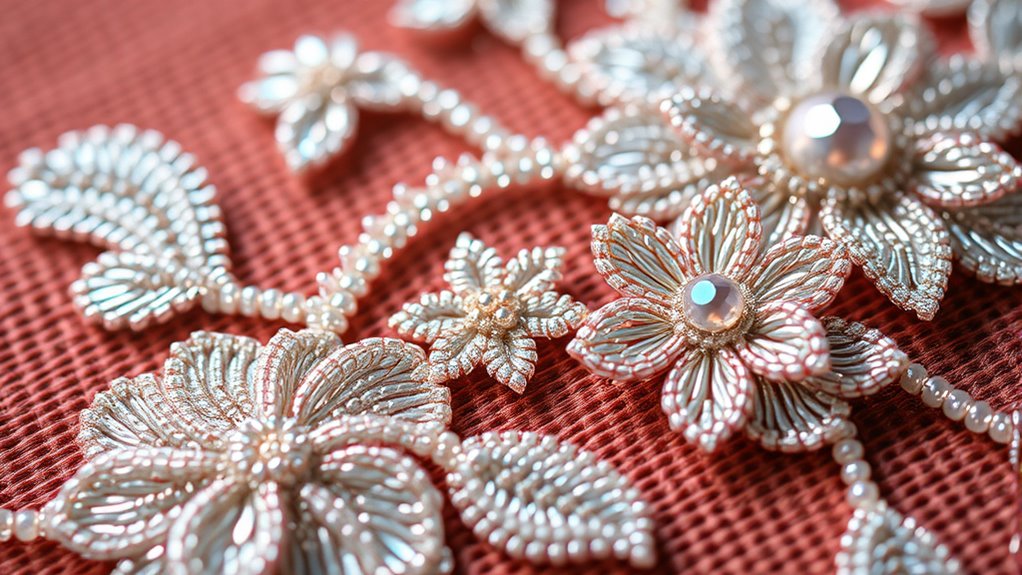

Balancing time and cost in hand-beaded embroidery depends on your project’s complexity and quality goals. Simple designs with basic stitches and affordable beads take less time and money, while intricate patterns with premium beads and advanced techniques demand more effort and expense. Investing in good tools improves efficiency and results, but increases initial costs. If you want to produce high-quality, durable pieces efficiently, understanding these factors helps you plan better—more details await those who explore further.

Get your wardrobe favorites delivered free with Prime
- Fast, free delivery on millions of items
- Prime Video, Amazon Music and more included
- Member-only deals all year
Key Takeaways
- Complex, detailed designs require significantly more time and higher material costs compared to simple patterns.
- Investing in quality beads and tools increases initial expenses but improves durability and final appearance.
- Time spent on hand-beaded embroidery depends on stitch complexity, bead type, and design intricacy.
- Simplified projects reduce both time commitment and overall costs, ideal for beginners or budget-conscious crafters.
- Skill development over time accelerates work pace, gradually balancing time investment with crafting quality.
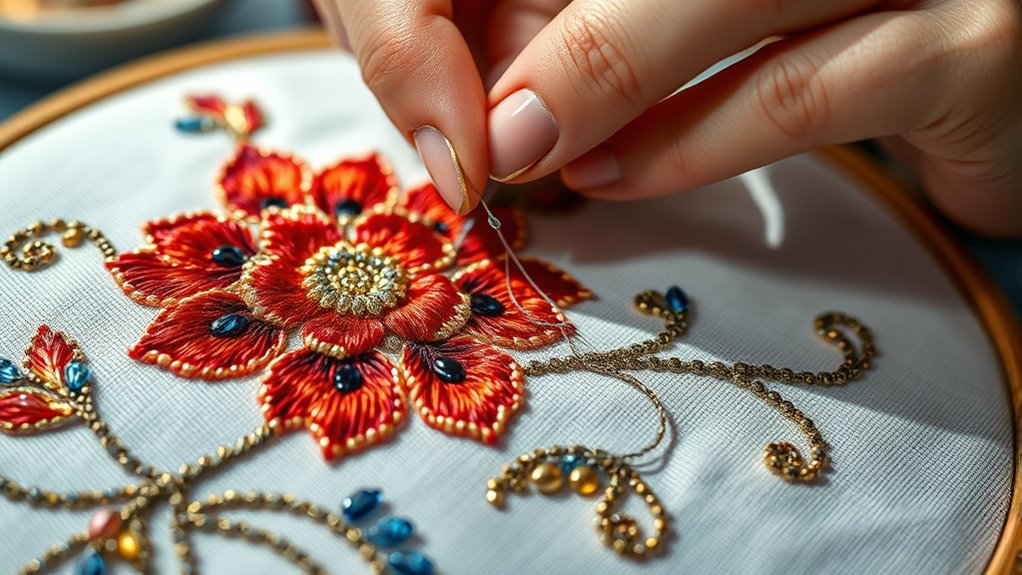
Hand-beaded embroidery is a meticulous craft that transforms fabric into intricate works of art through the careful application of beads. When you decide to undertake this craft, you’ll quickly realize that mastering beading techniques is essential. The way you handle different bead types, stitch styles, and patterns directly impacts both the beauty of your finished piece and the amount of time it takes to complete. Using the right embroidery tools is equally important. Sharp needles, fine scissors, and sturdy hoops make your work more precise and efficient, reducing frustration and saving time. Investing in quality tools guarantees that each stitch is consistent and that beads are securely attached, preventing costly rework.
Mastering beading techniques and using quality tools enhances your hand-beaded embroidery’s beauty and efficiency.
You’ll find that the beading techniques you choose influence the overall time and effort required. For simple patterns, basic backstitch or running stitch with beads might suffice, allowing you to complete projects relatively quickly. However, more elaborate designs, such as peyote or brick stitch, demand greater skill and patience. These techniques create textured, detailed effects but require careful planning and slower, more deliberate stitching. As you become more proficient, you’ll notice your speed increases, but the complexity of the design still plays a significant role in the total time needed. Additionally, understanding the different bead types and their characteristics can help streamline your work and improve efficiency.
The cost of hand-beaded embroidery isn’t just about the beads themselves; it also encompasses the embroidery tools and supplies. High-quality beads tend to be more expensive but are worth the investment for their uniformity and durability. Cheaper beads may save money upfront but might require more frequent replacements or lead to a less polished appearance. Additionally, quality embroidery tools—such as precision needles and durable thread—cost more initially but improve your work’s consistency and reduce frustration. These tools can last for many projects, spreading out their cost over time.
Time is a significant factor in hand-beaded embroidery, especially for large or intricate designs. You might spend hours just placing beads in a specific pattern or securing each one individually. The more detailed your design, the longer it takes. As you gain experience, you’ll develop a steady rhythm, but be prepared for the fact that complex projects can take days or even weeks to finish. The balance between time and cost ultimately depends on your goals. If you’re aiming for a highly detailed, professional-looking piece, expect to invest both time and money. But if you’re just starting or creating simpler designs, you can manage these costs and time commitments more easily.
hand-beaded embroidery needle set
As an affiliate, we earn on qualifying purchases.
As an affiliate, we earn on qualifying purchases.
Frequently Asked Questions
What Are the Best Tools for Hand-Beaded Embroidery?
When choosing tools for hand-beaded embroidery, focus on beading needle selection and thread compatibility. You’ll want fine, sharp needles that pass easily through beads without damage. Opt for durable, flexible threads like nylon or polyester to guarantee smooth stitching and secure your beads properly. Having a variety of needle sizes and high-quality threads makes your work easier and results in a more polished finish.
How Do I Choose the Right Beads for My Project?
Choosing beads might seem as simple as picking pretty colors, but don’t be fooled. You need to take into account bead color selection to match your design’s mood and bead size considerations for texture and durability. If you ignore these, your masterpiece might end up looking like a rainbow gone wrong or falling apart. Trust your project’s vibe, and select beads that complement both your vision and the craftsmanship you aim to achieve.
Can Hand-Beaded Embroidery Be Done on Different Fabrics?
You can absolutely do hand-beaded embroidery on different fabrics, but fabric suitability is key. Thinner fabrics like silk or chiffon require delicate embroidery techniques to avoid damage, while sturdier materials like denim or canvas handle beads more easily. Consider the fabric’s weight and texture to choose the right stitches and bead size. Testing on scrap fabric helps guarantee your embroidery techniques will work well without compromising your project’s look or durability.
How Do I Prevent Beads From Falling off Over Time?
To prevent beads from falling off over time, focus on bead securement and thread durability. Use strong, high-quality thread and guarantee each bead is tightly sewn with secure knots. Double-stitch or use backstitch techniques for extra hold. Regularly check your work and reinforce any loose areas. Applying a clear, flexible adhesive on the thread can also provide added security, helping your embroidery stay intact and beautiful longer.
What Are Common Mistakes to Avoid in Hand-Beaded Embroidery?
You might think avoiding mistakes is simple, but in hand-beaded embroidery, it’s like steering a maze blindfolded. To prevent errors, pay close attention to thread tension—too tight, and beads break; too loose, and they fall off. Choose the right needle—blunt or sharp—so your beads stay secure. Avoid rushing, skipping knots, or using the wrong thread, or you’ll face a tangled mess instead of a beautiful piece.
Conclusion
Mastering hand-beaded embroidery requires patience and precision, but it’s truly rewarding. Did you know that on average, a single inch of intricate beadwork can take up to four hours to complete? This highlights the incredible skill and dedication involved. By understanding the time and cost involved, you can better appreciate the artistry behind each piece. So, next time you admire embroidered artwork, remember the hours of meticulous effort woven into every stitch.
Halloween Picks
halloween
As an affiliate, we earn on qualifying purchases.