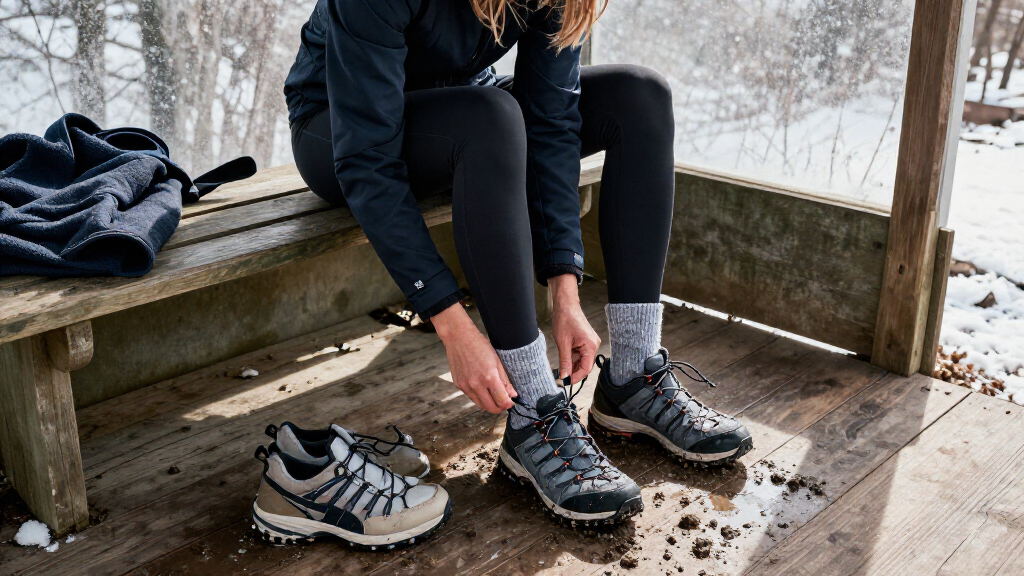
The best cold-weather recovery sneakers pair easy-on comfort with enough warmth and traction for short outdoor trips after activity. My best overall pick is the adidas Terrex Winter Slip-On Cold.RDY Shoes for convenient wear; the Merrell Coldpack 3 Zero Thermo is a stronger fit when waterproof protection and insulation matter more, while the Arc’teryx Norvan 4 Nivalis GTX suits buyers who want a technical, trail-oriented shoe. The main tradeoff is that the warmest, most weather-ready choices can feel more like boots than relaxed recovery footwear. Read on for how the seven options differ and which one fits your winter routine.

Get your wardrobe favorites delivered free with Prime
- Fast, free delivery on millions of items
- Prime Video, Amazon Music and more included
- Member-only deals all year
Key Takeaways
The Winter Slip-On Cold.RDY Shoes lead for everyday recovery use because slip-on convenience is more relevant to quick post-activity trips than a full hiking-shoe build.
Waterproof warmth points toward the Merrell Coldpack 3 Zero Thermo; its boot format is better suited to harsher conditions, but less sneaker-like than the slip-ons.
The Norvan 4 Nivalis GTX is the technical outlier: it makes more sense for trail-minded buyers than for people seeking a simple indoor-to-outdoor recovery shoe.
Mid-top hiking models favor coverage over casual ease, so the Terrex AX4 Mid Cold.RDY and Anylander CLIMAWARM+ fit buyers who value a more substantial winter shoe.
Recovery comfort and winter readiness are different goals. A warm, grippy shoe may be useful outside yet feel too structured for relaxed wear around home.
| adidas Men’s Terrex AX4 Mid Cold.RDY Hiking Shoes |  | Best for Cold-Weather Hikes | Insulation: PrimaLoft | Outsole: Continental Rubber | Water resistance: Not water resistant | VIEW LATEST PRICE | See Our Full Breakdown |
| adidas Terrex Winter Slip-On Cold.RDY Shoes |  | Best for Convenient Cold-Weather Errands | Upper material: Textile | Insulation: PrimaLoft ECO and PrimaLoft Gold | Technology: COLD.RDY | VIEW LATEST PRICE | See Our Full Breakdown |
| Reebok Nano X4 Adventure Winter Training Shoes |  | Best for Indoor Training After Cold-Weather Walks | Model: Nano X4 Adventure Winter | Sole material: Rubber | Outer material: Leather | VIEW LATEST PRICE | See Our Full Breakdown |
| adidas Men’s Terrex Anylander CLIMAWARM+ Mid-Top Hiking Shoes |  | Best for Warm, Light Mid-Top Coverage | Insulation: CLIMAWARM+ | Lining: Brushed winter lining | Upper: Textile and synthetic | VIEW LATEST PRICE | See Our Full Breakdown |
| Merrell Men’s Coldpack 3 Zero Thermo Waterproof Winter Boots |  | Best for Wet, Bitterly Cold Conditions | Insulation: 400 grams | Upper: Waterproof suede leather and waterproof nylon ripstop | Water protection: Breathable waterproof membrane | VIEW LATEST PRICE | See Our Full Breakdown |
| adidas Terrex Winter Slip-On Cold.RDY Boots |  | Best for Simple Cold-Weather Errands | Footwear type: Boots | Fit category: Unisex adult | Outer material: Rubber | VIEW LATEST PRICE | See Our Full Breakdown |
| Arc’teryx Norvan 4 Nivalis GTX Men’s Shoe |  | Best for Technical Winter Trails | Lining: Textile/synthetic | Outer material: Polyester | Waterproofing: GORE-TEX liner with Invisible Fit Technology | VIEW LATEST PRICE | See Our Full Breakdown |
| cold weather recovery sneaker | Insulation | Closure | Sole material |
|---|---|---|---|
| adidas Men’s Terrex AX4 Mid Co | PrimaLoft | Lace-up | — |
| adidas Terrex Winter Slip-On C | PrimaLoft ECO and PrimaLoft Gold | — | Rubber |
| Reebok Nano X4 Adventure Winte | — | — | Rubber |
| adidas Men’s Terrex Anylander | CLIMAWARM+ | Lace-up | Rubber |
| Merrell Men’s Coldpack 3 Zero | 400 grams | Toggle lace; lace is 60% recycled | — |
| adidas Terrex Winter Slip-On C | — | Lace-up | Rubber |
| Arc’teryx Norvan 4 Nivalis GTX | — | — | — |
More Details on Our Top Picks
adidas Men’s Terrex AX4 Mid Cold.RDY Hiking Shoes
The Terrex AX4 Mid Cold.RDY is the most hike-focused sneaker-like option here: its PrimaLoft insulation adds warmth, while the mid-cut design and Continental Rubber outsole suit cold trails better than the training-first Reebok Nano X4 Adventure Winter. The 10 mm drop, with a 24 mm heel and 14 mm forefoot, gives it a defined heel-to-toe profile rather than a flat gym-shoe feel. That makes it a sensible pick for walking and hiking, not a substitute for a waterproof winter boot. Its main limitation is explicit: the shoe is not water resistant, so slush and persistent wet weather can defeat the insulation. It also runs small, making a half-size adjustment worth planning. Compared with the warmer, waterproof Merrell Coldpack 3 Zero Thermo, the AX4 is a lighter-duty choice for cold conditions where water exposure is limited.
Pros:- PrimaLoft insulation adds warmth for cold-weather outings.
- Continental Rubber outsole is designed for traction in wet and dry conditions.
- Mid-cut construction offers more coverage than a low training shoe.
- At least 50% of the upper contains recycled content.
Cons:- Not water resistant, limiting protection in slush and sustained wet weather.
- Runs small and may require buying half a size larger.
Best for: Hikers who want insulated mid-cut shoes for cold, mostly dry trails and prefer a more athletic feel than a winter boot.
Not ideal for: People walking through slush, rain, or standing water, since the listed shoe is not water resistant; also a poor fit for buyers who need true-to-size sizing.
- Insulation:PrimaLoft
- Outsole:Continental Rubber
- Water resistance:Not water resistant
- Midsole drop:10 mm
- Heel / forefoot height:24 mm / 14 mm
- Closure:Lace-up
- Upper recycled content:At least 50%
- Fit note:Runs small; buy half a size larger
Our verdict“Choose the AX4 for cold, mostly dry hikes where insulated mid-cut coverage matters more than waterproof protection.”
adidas Terrex Winter Slip-On Cold.RDY Shoes
The Terrex Winter Slip-On Cold.RDY puts warmth and easy daily wear ahead of trail-specific detail. Its PrimaLoft ECO and PrimaLoft Gold insulation, textile upper, and COLD.RDY construction make it a plausible option for quick outdoor trips in cold weather, while the regular fit offers a simpler sizing starting point than the AX4 Mid, which is reported to run small. It is also a more casual alternative to the ankle-height Merrell Coldpack 3 Zero Thermo, but it does not list that boot’s waterproof membrane, 400 grams of insulation, or Vibram outsole. There is a product-data wrinkle: the name says “Slip-On,” yet the closure is listed as lace-up. I would choose it for convenience only after verifying how this version fastens; buyers needing dependable storm protection should favor the Merrell instead.
Pros:- PrimaLoft ECO and PrimaLoft Gold provide insulation for cold-weather use.
- COLD.RDY construction is intended for colder conditions.
- Regular fit gives buyers a straightforward fit reference.
- Rubber sole suits everyday outdoor wear.
Cons:- Closure information is inconsistent: the name says slip-on, while the spec lists lace-up.
- No waterproof membrane or water-resistance rating is provided.
- The supplied details do not specify outsole traction features for icy or wet terrain.
Best for: People seeking an insulated shoe for short cold-weather errands who want a regular fit and do not need documented waterproofing.
Not ideal for: Buyers who need a clearly specified slip-on closure, waterproof protection, or a boot-like level of warmth and coverage.
- Upper material:Textile
- Insulation:PrimaLoft ECO and PrimaLoft Gold
- Technology:COLD.RDY
- Fit:Regular
- Sole material:Rubber
- Listed closure:Lace-up
- Listed size:10 M
- Color:Black
Our verdict“Pick this for insulated everyday wear if the closure suits you, but choose the Merrell Coldpack for specified waterproof protection.”
Reebok Nano X4 Adventure Winter Training Shoes
The Reebok Nano X4 Adventure Winter is the training-focused outlier in this group. Its responsive cushioning and stable platform are aimed at cross-training, lifting, cardio, climbing, and running—not at keeping feet warm or dry outdoors. That makes it a better match for gym sessions during winter than the insulated adidas Terrex AX4 Mid or CLIMAWARM+ Anylander, both of which specify cold-weather insulation. The rubber sole and leather outer material add everyday utility, but the product details name no insulation, winter lining, waterproofing, or cold-weather outsole compound. I would not treat “Winter” in the model name as proof of weather protection. For recovery after a workout, its versatile training setup may be useful indoors; for outdoor recovery walks on cold, wet ground, the Merrell Coldpack 3 Zero Thermo offers much more clearly specified protection.
Pros:- Responsive cushioning supports a range of training activities.
- Stable construction suits weightlifting and cross-training.
- Designed for cross-training, cardio, weightlifting, climbing, and running.
- Rubber sole and leather outer material provide a durable training-shoe setup.
Cons:- No specific insulation, winter lining, or cold-weather technology is described.
- No waterproofing or water-resistance claim is provided.
- Its training-oriented build is less suited to outdoor winter recovery than the insulated Terrex models.
Best for: Gym-goers who want one stable, cushioned shoe for varied training during winter and mainly exercise indoors.
Not ideal for: Anyone buying specifically for cold outdoor recovery walks, snow, or wet conditions, since no winter insulation or weather protection is described.
- Model:Nano X4 Adventure Winter
- Sole material:Rubber
- Outer material:Leather
- Inner material:Fabric
- Intended activities:Cross-training, cardio, weightlifting, climbing, and running
- Gender:Men’s and women’s
- Origin:Imported
Our verdict“Choose the Nano X4 Adventure Winter for indoor winter workouts, not as your dedicated cold-weather recovery sneaker.”
adidas Men’s Terrex Anylander CLIMAWARM+ Mid-Top Hiking Shoes
The Terrex Anylander CLIMAWARM+ Mid-Top balances cold-weather warmth with a lightweight textile-and-synthetic upper. Its CLIMAWARM+ insulation and brushed lining make it more purpose-built for cold outings than the Reebok Nano X4 Adventure Winter, whose details describe training cushioning but no winter protection. The mid-top design also gives it a more covered feel than a low-cut shoe, while the rubber outsole is intended for varied terrain. Compared with the more heavily insulated Merrell Coldpack 3 Zero Thermo, however, the Anylander is the less weather-protective choice: the listing does not specify a waterproof membrane or insulation weight. That distinction matters for recovery walks in damp snow or prolonged wet conditions. I’d favor the Anylander for cold, routine walks where a lighter upper is appealing, and the Merrell when waterproofing and quantified insulation take priority.
Pros:- CLIMAWARM+ insulation is designed for cold conditions.
- Brushed winter lining adds an extra layer of warmth.
- Textile and synthetic upper is described as lightweight and comfortable.
- Rubber outsole is intended for traction on varied surfaces.
Cons:- No waterproof membrane or water-resistance rating is specified.
- No insulation weight is provided for comparison with the Merrell’s 400-gram insulation.
- Cold-weather lining may feel too warm for mild or warm conditions.
Best for: Walkers who want a lightweight mid-top with named cold-weather insulation for routine outings on varied, mostly dry terrain.
Not ideal for: People facing prolonged wet weather or deep slush who want a stated waterproof membrane and a quantified insulation level.
- Insulation:CLIMAWARM+
- Lining:Brushed winter lining
- Upper:Textile and synthetic
- Sole material:Rubber
- Closure:Lace-up
- Cut:Mid-top
- Origin:Imported
Our verdict“Choose the Anylander for lightweight warmth on cold, mostly dry walks, and the Merrell Coldpack when wet-weather protection matters more.”
Merrell Men’s Coldpack 3 Zero Thermo Waterproof Winter Boots
The Merrell Coldpack 3 Zero Thermo is the strongest choice here when a recovery walk may involve wet snow, slush, or cold rain. Unlike the adidas Terrex AX4 Mid, which is explicitly not water resistant, the Merrell pairs a waterproof membrane with waterproof suede leather and nylon ripstop; its 400 grams of insulation also provide a more substantial warmth specification than the adidas Terrex Anylander CLIMAWARM+, which does not list an insulation weight. The Vibram XS Trek Evo outsole is designed for traction and flexibility on wet surfaces, and heel air cushioning adds shock absorption and stability underfoot. The tradeoff is boot-like coverage and closure: its ankle-height shaft is shorter than a taller winter boot, and the toggle lace may not offer the fine adjustment of traditional laces. For buyers who want a lighter, more sneaker-like feel, the adidas options may be easier to wear.
Pros:- Waterproof membrane pairs with waterproof suede leather and nylon ripstop.
- 400 grams of insulation provide a stated warmth level.
- Vibram XS Trek Evo outsole is designed for traction and flexibility on wet surfaces.
- Merrell Air Cushion in the heel absorbs shock and adds stability.
Cons:- Ankle-height shaft provides less coverage than a taller winter boot.
- Toggle lace closure may offer less adjustability than traditional laces.
- More boot-like coverage may feel less like a lightweight recovery sneaker than the adidas Terrex options.
Best for: People taking cold-weather recovery walks through wet conditions who want specified waterproof construction, substantial insulation, and heel cushioning.
Not ideal for: Buyers who prefer a low-profile sneaker, need taller-leg coverage, or want the precise adjustability of conventional laces.
- Insulation:400 grams
- Upper:Waterproof suede leather and waterproof nylon ripstop
- Water protection:Breathable waterproof membrane
- Outsole:Vibram XS Trek Evo
- Shaft height:Ankle
- Shaft circumference:4 inches
- Closure:Toggle lace; lace is 60% recycled
- Cushioning:Merrell Air Cushion in the heel
Our verdict“Choose the Coldpack 3 Zero Thermo when waterproofing and substantial insulation matter more than sneaker-like lightness.”
adidas Terrex Winter Slip-On Cold.RDY Boots
I’d choose these when quick, uncomplicated coverage matters more than technical trail protection. The rubber outer material and rubber sole give them a more boot-like direction than the separate adidas Terrex Winter Slip-On Cold.RDY Shoes in this roundup, while the lace-up closure offers a way to adjust the fit rather than relying on a purely slip-on entry. That makes this pair a plausible option for short outdoor walks and everyday cold-weather recovery, but the supplied details do not specify insulation, waterproofing, tread pattern, or cushioning. Compared with the Arc’teryx Norvan 4 Nivalis GTX, these are a simpler choice without a documented gaiter or technical traction system. I’d pass if you need verified snow sealing or dependable grip on steep, icy terrain.
Pros:- Rubber outer material is suited to a boot-oriented build.
- Rubber sole provides a durable outsole material.
- Lace-up closure allows fit adjustment.
- Listed as unisex adult footwear.
Cons:- No insulation or temperature rating is provided.
- Waterproofing and snow-sealing features are not specified.
- No cushioning, tread-pattern, or traction details are supplied.
Best for: Shoppers wanting rubber-constructed footwear for brief cold-weather outings and who prefer an adjustable lace-up fit.
Not ideal for: Trail users or anyone needing documented waterproofing, insulation, or specialized snow-and-ice traction; those features are not listed for this model.
- Footwear type:Boots
- Fit category:Unisex adult
- Outer material:Rubber
- Sole material:Rubber
- Closure:Lace-up
- Origin:Imported
Our verdict“Choose these for straightforward cold-weather outings with an adjustable fit, but pick the Arc’teryx Norvan 4 Nivalis GTX for documented snow protection and technical traction.”
Arc’teryx Norvan 4 Nivalis GTX Men’s Shoe
For recovery walks that cross snowy, muddy, or uneven trails, I’d rank this ahead of the simpler adidas Terrex Winter Slip-On Cold.RDY Boots. The GORE-TEX liner and ankle-covering integrated gaiter are designed to keep moisture and debris out, while the Vibram Megagrip outsole targets grip on challenging ground. Its responsive EVA and polyolefin midsole, 19 mm stack, and 6 mm drop give the shoe a more trail-focused ride than a basic cold-weather boot. A single-pull speed-lacing system is also easier to adjust with gloves than conventional laces. The tradeoff is specialization: this winter running design may feel excessive in mild weather, and the supplied details do not say that traction devices or carbide spikes are included.
Pros:- GORE-TEX liner and integrated gaiter are designed to block moisture, snow, mud, and debris.
- Vibram Megagrip outsole is built for traction on difficult terrain.
- Responsive EVA and polyolefin midsole provides shock absorption.
- Glove-friendly speed lacing tightens with a single pull.
Cons:- Winter-focused construction may be less comfortable in warm conditions.
- Traction devices and carbide spikes are not listed as included.
- Technical trail features may be unnecessary for casual, mostly dry walks.
Best for: Winter trail runners and active walkers who need a waterproof, gaiter-equipped shoe for snowy or muddy routes.
Not ideal for: Buyers seeking a casual everyday recovery sneaker for mild weather, or anyone who needs included traction devices rather than compatibility alone.
- Lining:Textile/synthetic
- Outer material:Polyester
- Waterproofing:GORE-TEX liner with Invisible Fit Technology
- Integrated gaiter:Ankle-covering GORE-TEX
- Midsole:EVA and polyolefin
- Outsole:Rubber with Vibram Megagrip and LITEBASE
- Drop:6 mm
- Stack height:19 mm
- Traction compatibility:Traction devices and carbide spikes
Our verdict“Pick the Norvan 4 Nivalis GTX for wet, snowy trail recovery walks; choose a simpler option such as the adidas Terrex Winter Slip-On Cold.RDY Boots for less technical outings.”
How We Picked
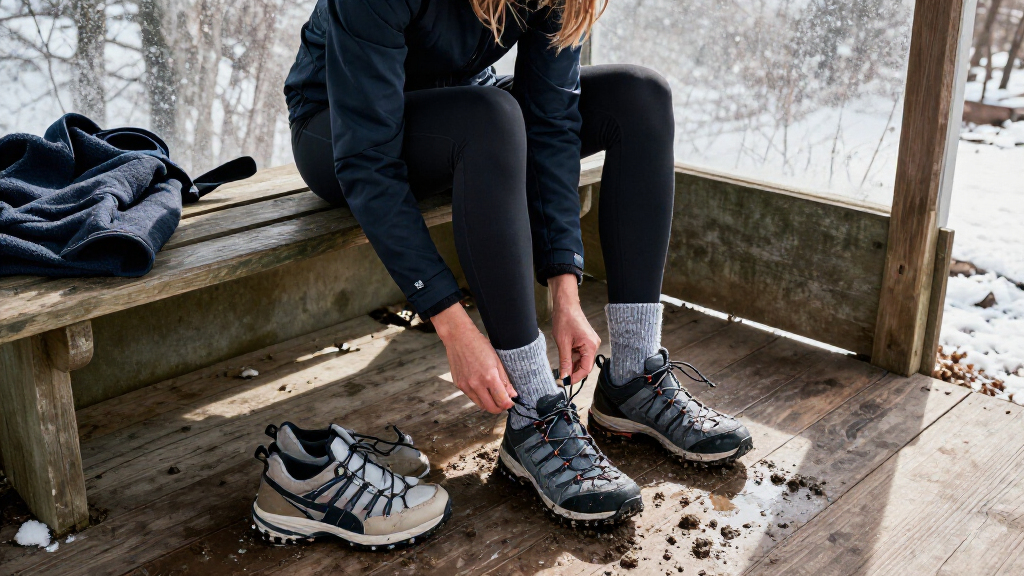
I compared the seven options through the needs implied by cold-weather recovery: easy wear after exercise, warmth for brief outdoor use, traction, weather protection, and a comfortable feel when the day’s activity is over. I also weighed footwear format, since a slip-on, training shoe, trail shoe, and mid-top boot solve different problems even when all can be used in winter.
The ranking favors the most balanced fit for recovery routines, not the most technical product. The adidas Winter Slip-On Cold.RDY Shoes rank first for their practical slip-on role; the Merrell Coldpack 3 Zero Thermo ranks higher for buyers who need a more protective winter boot. More specialized hiking and trail models rank below them for everyday recovery, while still making sense for buyers whose cold-weather routine includes rougher terrain or training. No pick should be treated as a substitute for a dedicated recovery sandal or a purpose-built deep-winter boot in conditions beyond its intended use.
| cold weather recovery sneaker | Closure |
|---|---|
| adidas Men’s Terrex AX4 Mid Co | Lace-up |
| adidas Terrex Winter Slip-On C | — |
| Reebok Nano X4 Adventure Winte | — |
| adidas Men’s Terrex Anylander | Lace-up |
| Merrell Men’s Coldpack 3 Zero | Toggle lace; lace is 60% recycled |
| adidas Terrex Winter Slip-On C | Lace-up |
| Arc’teryx Norvan 4 Nivalis GTX | — |
Factors to Consider When Choosing Best Cold Weather Recovery Sneakers
Before choosing, decide what “recovery” means in your routine: changing into something easy after a workout, walking the dog in cold weather, or heading back out on trails. Those scenarios call for different levels of warmth, structure, and grip. Use these factors to avoid paying for protection you will not use—or choosing a relaxed shoe that falls short outdoors.
Match the shoe format to your recovery routine
Slip-ons are appealing when you want to change footwear quickly after training or step outside for a short errand. Their convenience does not automatically make them suitable for long walks, uneven paths, or deep snow. Mid-tops and boots give a more substantial feel, but take more effort to put on and may be less relaxing indoors. Trail and training models can support more active use, though their performance focus may be unnecessary for a recovery-only routine. Decide where the shoe will spend most of its time before choosing the format.
Choose warmth for your actual winter conditions
Cold-weather footwear is not one-size-fits-all: a chilly driveway and a long walk through snow place different demands on insulation and coverage. A warmer build can be a benefit outside but may feel excessive in a heated home or during active movement. Think about how long you will be outdoors, whether your feet tend to run cold, and if you will wear thick socks. Avoid choosing the warmest-looking option by default; too much insulation can reduce versatility. For short trips in mild winter weather, ease and comfort may matter more than maximum coverage.
Treat waterproofing and insulation as separate needs
Waterproof protection helps when slush, wet snow, or puddles are part of the routine, while insulation addresses cold. One does not guarantee the other, so check the product’s stated construction rather than assuming a winter label covers both. A waterproof shoe can also feel less comfortable if your feet become warm during movement, especially when worn indoors. For mostly dry, brief outings, a lighter option may be easier to live with. For repeated exposure to wet conditions, prioritize weather protection and accept that the shoe may feel more boot-like.
Prioritize grip for the surfaces you use
Outsoles designed for hiking or trail use may suit packed paths and uneven ground better than a casual sole, but tread alone does not make a shoe safe on ice. Consider whether your normal route includes pavement, gravel, snow, or slick surfaces, and choose for the most demanding regular condition. A heavier, more aggressive shoe may feel clumsy on indoor floors or quick errands. Do not infer ice traction from winter branding alone. If icy ground is common, look for specific traction information and consider separate traction aids when appropriate.
Balance recovery comfort against support and structure
Recovery footwear should feel comfortable after exertion, but buyers often mistake a soft feel for support—or assume a supportive hiking shoe will feel relaxing. A more structured shoe can be useful when walking outside, yet its weight and stiffness may be unwelcome during downtime. Fit matters too: leave enough room for winter socks without allowing the foot to slide. Try shoes later in the day if your feet tend to swell, and check that the heel stays secure. If your priority is lounging, a technical shoe may be more shoe than you need.
Pay for versatility only if you will use it
A technical trail or hiking shoe can justify its added complexity when it will also serve outdoor walks, training, or rougher routes. If you need a pair mainly for quick post-workout trips, those capabilities may add bulk without improving your daily routine. Conversely, a convenient slip-on can disappoint if you expect it to handle long, wet walks. Think about how many jobs the shoe must do and which one matters most. The best value is the model that fits those jobs reliably, not the one with the longest feature list.
Frequently Asked Questions
Are recovery sneakers suitable for walking on icy sidewalks?
Not automatically. Winter-ready materials and rugged tread do not guarantee reliable grip on smooth ice, and the products in this roundup serve different outdoor purposes. Check the maker’s traction guidance and think about your usual route before relying on any shoe in icy conditions. If ice is frequent, traction devices may be a more sensible addition than expecting a recovery shoe to handle every surface. Use extra care when moving between snow, pavement, and indoor floors.
Should I choose a slip-on or a mid-top for post-workout wear?
Choose a slip-on if quick changes and short trips are your main needs; that is the clearest advantage of the adidas Winter Slip-On Cold.RDY Shoes. A mid-top is a better match when you want more coverage for outdoor walking and are willing to trade some convenience. Neither format is universally more comfortable, since fit, sock thickness, and how long you wear the shoe all matter. If you expect both lounging and longer walks, think carefully about which use happens more often. A single pair may not excel at both.
Do I need waterproof footwear if I only go outside briefly?
It depends on whether those brief trips involve wet snow, slush, or standing water. If the ground is usually dry, waterproof construction may be less important than easy wear and a comfortable fit. When wet conditions are routine, the more protective boot-style option in this group is a better place to start. Remember that waterproofing does not itself add warmth, so consider insulation separately. Also think about indoor wear, where a more protective build may feel less relaxed.
Can I wear a trail or hiking shoe as a recovery shoe?
Yes, if your recovery routine includes outdoor walking or uneven ground and you are comfortable with a more structured shoe. The Terrex mid-tops and Arc’teryx Norvan are more activity-oriented than a simple slip-on, so they may feel less suited to lounging. Their specialized character is useful when you want one pair for winter movement as well as post-activity wear. If you mainly need easy indoor-to-outdoor footwear, that extra structure may not be worth the tradeoff. Check fit with the socks you plan to wear in cold weather.
Should I size up to fit thick winter socks?
Do not size up automatically; extra length can let your foot slide and make walking less secure. Try the shoe with the socks you expect to wear, and check both toe room and heel hold. A snug fit that feels fine with thin socks may become uncomfortable when insulation is added. If you cannot try it on, consult the manufacturer’s sizing guidance and return policy before ordering. Fit can vary across slip-ons, training shoes, and boots, so do not assume one model’s size will match another’s.
Conclusion
For most buyers seeking one cold-weather pair for casual recovery use, I would start with the adidas Terrex Winter Slip-On Cold.RDY Shoes as the best overall choice. The best value direction is the simplest model that fits your routine: choose a slip-on for quick, mostly dry outings rather than paying for hiking or trail capability you will not use. For a best premium, technical option, the Arc’teryx Norvan 4 Nivalis GTX suits trail-minded buyers, while the Merrell Coldpack 3 Zero Thermo is the stronger pick for those who prioritize a protective winter boot. Beginners should favor the straightforward slip-on format; buyers needing more coverage can look to the Terrex mid-tops, and anyone focused on wet-weather protection should begin with the Merrell. Pick based on your usual surface, exposure, and recovery routine—not winter branding alone.