The best wearable fitness trackers balance useful health and activity data with a design you will want to wear every day. My best overall pick is the Fitbit Charge 6, which offers a strong mix of tracking and smartwatch-style convenience; the Fitbit Inspire 3 is a simpler choice for beginners, while the Amazfit Helio suits people who prefer a screenless design and fewer distractions. The main tradeoffs are display versus battery life, rich features versus straightforward operation, and established app ecosystems versus simpler alternatives. Comfort, phone compatibility, and whether you will actually use advanced metrics matter as much as the feature list. Continue reading for the full comparison and guidance on choosing a tracker that fits your routines.

Get your wardrobe favorites delivered free with Prime
- Fast, free delivery on millions of items
- Prime Video, Amazon Music and more included
- Member-only deals all year
Key Takeaways
- Fitbit Charge 6 is the most balanced pick in this lineup, with broader everyday functionality than a basic band while remaining more fitness-focused than a full smartwatch.
- Fitbit Inspire 3 favors ease over breadth: its approachable design makes it a better starting point than feature-heavy trackers for buyers who mainly want activity and health tracking.
- Screenless trackers serve a different purpose. The Amazfit Helio and Fitbit Air are worth considering if reducing wrist notifications matters more than checking stats at a glance.
- Several listings repeat the same tracker. The Charge 6 appears in multiple bundles and standalone listings, as do the Inspire 3 and Zeacool tracker; compare the included accessories and exact model rather than assuming each listing is a distinct device.
- Display size and feature counts do not settle the choice. Models such as Samsung Galaxy Fit3 and Xiaomi Smart Band 10 emphasize visible on-wrist information, while Garmin vívosmart 5 and screenless options may suit buyers with different priorities.
| Amazfit Helio Screenless Activity Tracker |  | Best for Strength Training and Recovery | Sports modes: 27 | Battery life: Up to 10 days | Water resistance: 50 meters | VIEW LATEST PRICE | See Our Full Breakdown |
| Bestinn H32 Pro Fitness Tracker Smartwatch |  | Best for Broad Workout-Mode Selection | Display: 1.58-inch, always-on | Sports modes: 120+ | Health tracking: Heart rate, blood pressure, blood oxygen, sleep | VIEW LATEST PRICE | See Our Full Breakdown |
| Fitbit Charge 6 Fitness Tracker Bundle |  | Best Overall for Connected Health and GPS | Display: 1.04-inch OLED, 240 x 204 resolution | Built-in GPS: Yes | Water resistance: 50 meters | VIEW LATEST PRICE | See Our Full Breakdown |
| Fitbit Inspire 3 Health & Fitness Activity Tracker Bundle |  | Best for Lightweight Everyday Tracking | Display: 0.76-inch LCD, 240 x 280 resolution | GPS: Smartphone-connected | Water-resistance depth: 1 meter | VIEW LATEST PRICE | See Our Full Breakdown |
| Xiaomi Mi Smart Band 10 Fitness Tracker |  | Best Battery Life and Large Display | Display: 1.72-inch AMOLED touchscreen | Display brightness: Up to 1500 nits HBM | Battery life: Up to 21 days | VIEW LATEST PRICE | See Our Full Breakdown |
| Zeacool Fitness Tracker with Heart Rate, Blood Oxygen and Sleep Monitoring |  | Best for Workout Variety | Display: 1.47-inch AMOLED touchscreen | Sports modes: 123 | Water resistance: IP68 | VIEW LATEST PRICE | See Our Full Breakdown |
| Google Fitbit Charge 6 Fitness Tracker, Obsidian/Black |  | Best Connected Fitness Tracker | Exercise modes: Over 40 | GPS: Built-in | Health tracking: Activity, heart rate, sleep, stress, and Daily Readiness | VIEW LATEST PRICE | See Our Full Breakdown |
| Samsung Galaxy Fit3 Fitness Tracker, 1.6-Inch AMOLED Display, Gray |  | Best Lightweight Android Pick | Display: 1.6-inch AMOLED, 320 × 320 resolution | Case and band: Aluminum case with silicone band | Weight: 18.5 g | VIEW LATEST PRICE | See Our Full Breakdown |
| Google Fitbit Air Screenless Activity Tracker, Obsidian |  | Best Screenless Tracker | Display: Screenless | Band: Google Performance Loop Band, one size for 130–210 mm | Battery life: Up to 7 days | VIEW LATEST PRICE | See Our Full Breakdown |
| Fitbit Charge 6 Activity Tracker (Obsidian/Black) |  | Best Fitbit for Route Tracking | Display: 1.04-inch AMOLED | Resolution: 390 × 390 to 480 × 480 | Case and band: Resin case with silicone band; small and large bands included | VIEW LATEST PRICE | See Our Full Breakdown |
| Bakoor C60 Fitness Tracker with 1.10-Inch AMOLED Screen |  | Best for Everyday Essentials | Display: 1.10-inch AMOLED touchscreen | Water resistance: IP68 | Sports modes: 25 | VIEW LATEST PRICE | See Our Full Breakdown |
| Google Fitbit Inspire 3 Fitness Tracker, Midnight Zen/Black, Small and Large Bands |  | Best for Wellness Coaching | Display input: Touchscreen | Water resistance: 50 meters; IP68 | Exercise modes: 40+ | VIEW LATEST PRICE | See Our Full Breakdown |
| Xiaomi Smart Band 11 Fitness Tracker |  | Best for Long Battery Life | Display: 1.72-inch AMOLED | Weight: 15.6g without strap | Thickness: 9.99mm excluding PPG protrusion | VIEW LATEST PRICE | See Our Full Breakdown |
| Garmin vívosmart 5 Health and Fitness Tracker, Small/Medium, Black | 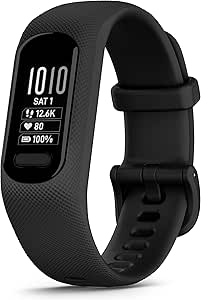 | Best for Button-and-Touch Controls | Display: 0.84-inch LCD, 88 x 154 pixels | Controls: Touchscreen and button | Water resistance: 50 meters | VIEW LATEST PRICE | See Our Full Breakdown |
| Zeacool Fitness Tracker with Heart Rate, Blood Oxygen, Sleep Monitoring, and 5 ATM Water Resistance |  | Best for Broad On-Wrist Metrics | Display: 1.1-inch AMOLED HD touchscreen | Water resistance: 5 ATM | Sport modes: 25 | VIEW LATEST PRICE | See Our Full Breakdown |
| wearable fitness tracker | Water resistance | Display | Battery life | GPS |
|---|---|---|---|---|
| Amazfit Helio Screenless Activ | 50 meters | — | Up to 10 days | No |
| Bestinn H32 Pro Fitness Tracke | IP68 | 1.58-inch, always-on | — | Phone-connected GPS |
| Fitbit Charge 6 Fitness Tracke | 50 meters | 1.04-inch OLED, 240 x 204 resolution | — | — |
| Fitbit Inspire 3 Health & Fitn | — | 0.76-inch LCD, 240 x 280 resolution | Up to 10 days | Smartphone-connected |
| Xiaomi Mi Smart Band 10 Fitnes | 50 meters | 1.72-inch AMOLED touchscreen | Up to 21 days | No |
| Zeacool Fitness Tracker with H | IP68 | 1.47-inch AMOLED touchscreen | Up to 10–14 days regular use; up to 30 days standby | — |
| Google Fitbit Charge 6 Fitness | 50 meters | — | — | Built-in |
| Samsung Galaxy Fit3 Fitness Tr | 5ATM and IP68 | 1.6-inch AMOLED, 320 × 320 resolution | Up to 14 days | No built-in GPS |
| Google Fitbit Air Screenless A | Up to 50 meters | Screenless | Up to 7 days | Via smartphone |
| Fitbit Charge 6 Activity Track | 50 meters | 1.04-inch AMOLED | Up to 7 days | Built-in |
| Bakoor C60 Fitness Tracker wit | IP68 | 1.10-inch AMOLED touchscreen | Up to 7 days; up to 15 days standby | Connected GPS |
| Google Fitbit Inspire 3 Fitnes | 50 meters; IP68 | — | — | Via smartphone |
| Xiaomi Smart Band 11 Fitness T | 5ATM (50 meters) | 1.72-inch AMOLED | Up to 21 days | — |
| Garmin vívosmart 5 Health and | 50 meters | 0.84-inch LCD, 88 x 154 pixels | Up to 7 days | — |
| Zeacool Fitness Tracker with H | 5 ATM | 1.1-inch AMOLED HD touchscreen | Up to 10–14 days regular use; up to 30 days standby | — |
More Details on Our Top Picks
Amazfit Helio Screenless Activity Tracker
The Amazfit Helio Strap makes the most sense for buyers who want fitness and recovery data without a screen competing for attention. It tracks heart rate, blood oxygen, stress, sleep, and recovery, while its 27 sports modes include dedicated strength training and HYROX options. Compared with the Fitbit Charge 6, it gives up a display and built-in GPS, so it is less useful for checking stats mid-workout or recording routes without a phone. In return, the screenless design keeps the focus on tracking, and battery life reaches up to 10 days. Its 50-meter water resistance also suits swimming. The key tradeoff is that reviewing data depends on the Zepp App rather than an on-device screen.
Pros:- Tracks heart rate, blood oxygen, stress, sleep, and recovery
- Includes strength training and HYROX modes among 27 sports modes
- Up to 10 days of battery life
- 50-meter water resistance
Cons:- No built-in GPS for phone-free route tracking
- Screenless design means workout stats are not visible on the band
Best for: Strength-training and HYROX-focused athletes who want recovery and sleep tracking in a screenless band.
Not ideal for: Runners who want built-in GPS or anyone who prefers to check workout stats directly on a display.
- Sports modes:27
- Battery life:Up to 10 days
- Water resistance:50 meters
- GPS:No
- Band material:Nylon
- Metrics:Heart rate, blood oxygen, stress, sleep duration, step count
- Connectivity:Bluetooth
- Compatibility:Android 7.0 and later; iOS 15.0 and later
Our verdict“Choose the Helio Strap if training and recovery data matter more to you than a screen or built-in GPS.”
Bestinn H32 Pro Fitness Tracker Smartwatch
The Bestinn H32 Pro puts workout variety and glanceable smartwatch features ahead of phone-free tracking. Its 120+ sports modes, always-on 1.58-inch display, and call and message notifications make it more like a basic smartwatch than the screenless Amazfit Helio Strap. It also tracks heart rate, blood pressure, blood oxygen, sleep, steps, distance, and calories. That broad feature set suits someone who wants to see activity details and notifications on their wrist without stepping up to a tracker such as the Fitbit Charge 6, which has built-in GPS and ECG. The Bestinn uses phone-connected GPS, so route tracking depends on carrying a compatible phone. The supplied information also describes IP68 water resistance, but does not give a depth rating, which makes its swim suitability less specific than trackers rated to 50 meters.
Pros:- More than 120 sports modes
- Always-on 1.58-inch display with call and message notifications
- Tracks heart rate, blood pressure, blood oxygen, sleep, steps, distance, and calories
- Replaceable, washable strap
Cons:- GPS route tracking requires a connected phone
- IP68 rating is provided without a specific water-depth rating
Best for: Casual exercisers who want an always-on screen, phone notifications, and many activity modes in one wrist-worn device.
Not ideal for: Runners who leave their phone behind or buyers who want built-in GPS and clearly specified swim-depth protection.
- Display:1.58-inch, always-on
- Sports modes:120+
- Health tracking:Heart rate, blood pressure, blood oxygen, sleep
- Activity tracking:Steps, distance, calories
- Water resistance:IP68
- GPS:Phone-connected GPS
- Compatibility:Android 4.4 or later; iOS 8.4 or later
- Watch faces:250+
Our verdict“Pick the H32 Pro for its large always-on screen and activity-mode range, but choose the Charge 6 if phone-free GPS matters more.”
Fitbit Charge 6 Fitness Tracker Bundle
The Fitbit Charge 6 is the strongest all-round choice here for buyers who want health tracking, a useful display, and built-in GPS in one slim band. It records routes without requiring a phone connection and adds 24/7 heart rate monitoring, ECG, blood oxygen, skin temperature insights, sleep, and stress metrics. Compared with the Fitbit Inspire 3, it offers built-in GPS and a broader set of listed health sensors, making it better suited to runners who want more than basic daily activity tracking. It also connects with Google Maps, Wallet, and YouTube Music. The tradeoffs are a small 1.04-inch screen and dependence on a smartphone for full app integration. This bundle adds a rapid USB charger and cleaning cloth, but the supplied data does not specify battery life.
Pros:- Built-in GPS records activities without a connected phone
- Tracks heart rate, ECG, blood oxygen, skin temperature, sleep, and stress
- Integrates with Google Maps, Wallet, and YouTube Music
- Bundle includes a rapid USB charger and cleaning cloth
Cons:- The 1.04-inch display may feel small for checking detailed information
- A smartphone is needed for full functionality and app integration
- Silicone band may not suit every formal or rugged outdoor setting
Best for: Phone-carrying and phone-free runners who want built-in route tracking alongside detailed health metrics and Google service support.
Not ideal for: Buyers who want a large display, a screenless design, or full tracker functionality without a smartphone.
- Display:1.04-inch OLED, 240 x 204 resolution
- Built-in GPS:Yes
- Water resistance:50 meters
- Metrics:Heart rate, ECG, blood oxygen, body temperature, sleep, stress
- Supported apps:Google Maps, Google Wallet, YouTube Music
- Band material:Silicone
- Color:Black/Obsidian
- Bundle accessories:Rapid USB charger and microfiber cleaning cloth
Our verdict“Choose the Charge 6 if you want the broadest mix of built-in GPS, health sensors, and connected features in this group.”
Fitbit Inspire 3 Health & Fitness Activity Tracker Bundle
The Fitbit Inspire 3 is the simpler Fitbit pick for people who want everyday activity, sleep, stress, and health tracking in a lightweight band. Its Daily Readiness Score adds a way to gauge how prepared you may be for activity, while the bundle includes three nylon bands, screen protectors, a wall adapter, a charging cable, and a cleaning cloth. Compared with the Fitbit Charge 6, the Inspire 3 has a smaller 0.76-inch screen and relies on a connected smartphone for GPS, so it is less suited to runners who want to track routes independently. Its up-to-10-day battery claim helps limit charging interruptions, and the listed water-resistance depth is only 1 meter, unlike the Charge 6’s 50-meter rating. The included six-month Premium membership adds guided workouts and insights, but those extras are tied to the membership period.
Pros:- Tracks heart rate, blood oxygen, skin temperature, sleep, and stress
- Daily Readiness Score adds a recovery-oriented activity cue
- Bundle includes three nylon bands, screen protectors, and charging accessories
- Up to 10 days of battery life
Cons:- No built-in GPS; location tracking requires a connected smartphone
- Small 0.76-inch screen limits on-device detail
- Listed water-resistance depth is 1 meter
Best for: Everyday walkers and sleep-tracking newcomers who want a light Fitbit band, interchangeable strap options, and readiness guidance.
Not ideal for: Swimmers and runners who need a clear swim-depth rating, built-in GPS, or a larger screen for on-device information.
- Display:0.76-inch LCD, 240 x 280 resolution
- GPS:Smartphone-connected
- Water-resistance depth:1 meter
- Metrics:Blood oxygen, body temperature, heart rate, sleep duration, stress
- Battery life:Up to 10 days
- Band materials:Silicone band; three nylon bands included
- Bundle membership:Six-month Fitbit Premium membership
- Bundle accessories:USB charging cable, wall adapter, screen protectors, cleaning cloth
Our verdict“Choose the Inspire 3 for lightweight daily health tracking and bundled extras, not for phone-free running routes or swim-focused use.”
Xiaomi Mi Smart Band 10 Fitness Tracker
The Xiaomi Mi Smart Band 10 is a strong fit for buyers who want a large, bright screen and fewer charging stops. Its 1.72-inch AMOLED display reaches up to 1500 nits HBM, while battery life is listed at up to 21 days with a full charge taking about an hour. That is a longer stated runtime than the Amazfit Helio Strap or Fitbit Inspire 3, and the screen gives workout and daily activity information more room than either. The band tracks heart rate, blood oxygen, sleep, and workouts, and its electronic compass can track swimming direction. The compromise is no GPS, so it cannot record a route independently like the Fitbit Charge 6. Xiaomi Fit supports metric units; buyers who want imperial measurements need a third-party Google Fit connection.
Pros:- Large 1.72-inch AMOLED touchscreen with up to 1500 nits HBM brightness
- Up to 21 days of battery life and about one-hour charging
- 50-meter water resistance and electronic-compass swimming-direction tracking
- Bluetooth 5.4 connectivity
Cons:- No built-in GPS for independent route tracking
- Xiaomi Fit supports metric units; imperial units require a third-party Google Fit connection
Best for: Display-focused users who want long battery life, swim-related tracking, and a large AMOLED screen for daily stats.
Not ideal for: Runners needing built-in GPS or users who want imperial units directly in the Xiaomi Fit app.
- Display:1.72-inch AMOLED touchscreen
- Display brightness:Up to 1500 nits HBM
- Battery life:Up to 21 days
- Charging time:About 1 hour for a full charge
- Water resistance:50 meters
- GPS:No
- Connectivity:Bluetooth 5.4
- Sensors and metrics:Heart rate, sleep duration, blood oxygen
- Band material:Fluoroelastomer
Our verdict“Pick the Mi Smart Band 10 for its bright, roomy screen and long stated battery life, but choose the Charge 6 for built-in GPS.”
Zeacool Fitness Tracker with Heart Rate, Blood Oxygen and Sleep Monitoring
The Zeacool Fitness Tracker puts workout variety ahead of connected-watch extras, with 123 sports modes plus step, distance, calorie, heart-rate, and sleep tracking. Its 1.47-inch AMOLED screen gives activity stats more room than the screenless Google Fitbit Air, while IP68 resistance supports use around water and dust. The manufacturer lists up to 10–14 days of regular-use battery life, a useful contrast with the Fitbit Air’s stated seven days, though actual runtime depends on use.
It also adds phone search, reminders, and remote photography, but its temperature and blood-oxygen readings should be treated as estimates rather than a complete health assessment. Choose it if you want many activity modes without paying for a feature-heavy Google ecosystem; skip it if you need built-in GPS or want clearer support for health readings.
Pros:- 123 sports modes cover a wide range of activities.
- 1.47-inch AMOLED touchscreen makes stats easier to read than a screenless band.
- IP68 water and dust resistance supports use during wet or dusty activities.
- Includes phone search, reminders, and remote photography.
Cons:- No built-in GPS is listed, so route tracking may require a phone.
- Temperature and blood-oxygen readings do not provide a complete picture of health.
- The stated 10–14-day battery life varies with use.
Best for: People who want a broad selection of workout modes, basic daily health tracking, and a readable screen without relying on Google apps.
Not ideal for: Runners who want GPS route recording without carrying a phone, or buyers who need clinical-grade interpretation of temperature and blood-oxygen readings.
- Display:1.47-inch AMOLED touchscreen
- Sports modes:123
- Water resistance:IP68
- Health tracking:Heart rate, blood oxygen, sleep, and temperature
- Activity tracking:Steps, distance, and calories
- Battery life:Up to 10–14 days regular use; up to 30 days standby
- Compatibility:iPhone and Android smartphones
- Charging:Magnetic fast charging
Our verdict“Choose the Zeacool if workout-mode variety and a color screen matter more to you than built-in GPS or a polished connected-app experience.”
Google Fitbit Charge 6 Fitness Tracker, Obsidian/Black
The Fitbit Charge 6 is the strongest fit here for buyers who want fitness tracking tied to useful phone services. Alongside built-in GPS, automatic workout tracking, and more than 40 exercise modes, it brings Google Maps directions, Google Wallet payments, and YouTube Music controls to the band. That makes it more capable as a daily companion than the simpler Samsung Galaxy Fit3, which lacks built-in GPS and is limited to Android phones.
The Charge 6 also tracks sleep, stress, and heart rate, and it is water resistant to 50 meters. Its tradeoff is that some coaching features require a separate Google Health Premium subscription; heart-rate display on exercise machines also depends on compatible equipment. Choose it for navigation and payment conveniences alongside workouts, but skip it if you want to avoid subscription-dependent features or prefer a less app-connected tracker.
Pros:- Built-in GPS records workouts without relying on a phone for location.
- Google Maps, Google Wallet, and YouTube Music controls add day-to-day utility.
- Automatic workout tracking and over 40 exercise modes support varied routines.
- Water resistant to 50 meters.
Cons:- Google Health Premium coaching requires a separate subscription after the trial.
- Real-time heart-rate display on exercise equipment requires compatible machines.
- Its connected features may be unnecessary for buyers seeking a simple activity band.
Best for: People who want built-in GPS and Google Maps, Wallet, and music controls alongside workout, sleep, and stress tracking.
Not ideal for: Buyers who want all coaching features without a separate subscription, or who expect every gym machine to show the tracker’s heart rate.
- Exercise modes:Over 40
- GPS:Built-in
- Health tracking:Activity, heart rate, sleep, stress, and Daily Readiness
- Google features:Maps directions, Wallet payments, and YouTube Music controls
- Water resistance:50 meters
- Connectivity:Wi-Fi and Bluetooth
- Band material:Silicone
- Color:Black case with black band
Our verdict“Pick the Charge 6 if you want GPS workouts and Google services on your wrist, and are comfortable with some coaching features sitting behind a subscription.”
Samsung Galaxy Fit3 Fitness Tracker, 1.6-Inch AMOLED Display, Gray
The Samsung Galaxy Fit3 pairs a generously sized 1.6-inch AMOLED display with a light 18.5 g aluminum case. That makes it a good choice for Android users who want workouts and sleep details on-screen without moving up to the more connected Fitbit Charge 6. It tracks 101 or more workout types, can detect some activities automatically, and adds sleep, heart-rate, blood-oxygen, and snore tracking. Its 5ATM and IP68 ratings also give it a stronger stated water-resistance profile than the Zeacool model’s IP68 rating alone.
The compromises matter: there is no built-in GPS, and the tracker does not work with iPhones. This listing also states that the international model has no US warranty, which may put off buyers who value local support. Choose it for a lightweight screen-first tracker on Android, not for independent route recording or broad phone compatibility.
Pros:- 18.5 g aluminum case is lightweight for all-day wear.
- 1.6-inch AMOLED display provides a large, bright viewing area.
- Offers 101+ workout modes and automatic workout detection.
- 5ATM and IP68 water and dust resistance.
Cons:- Android devices only; it is not compatible with iPhone or iOS.
- No built-in GPS for standalone route tracking.
- The listing states that this international model has no US warranty.
Best for: Android users who want a light tracker with a large AMOLED screen, automatic workout detection, and sleep tracking.
Not ideal for: iPhone owners, runners who want GPS route recording from the tracker itself, and US buyers who require a US warranty.
- Display:1.6-inch AMOLED, 320 × 320 resolution
- Case and band:Aluminum case with silicone band
- Weight:18.5 g
- Battery life:Up to 14 days
- Workout modes:101+ with auto detection
- Health tracking:Sleep, blood oxygen, heart rate, and snore detection
- Water resistance:5ATM and IP68
- Compatibility:Android devices only
- GPS:No built-in GPS
Our verdict“Choose the Galaxy Fit3 if you use Android and want a light, large-screen tracker, but pass if you need iPhone support, built-in GPS, or a US warranty.”
Google Fitbit Air Screenless Activity Tracker, Obsidian
The Google Fitbit Air is for buyers who want tracking without another screen to check. Its screenless build and micro-adjustable band are designed for continuous wear through workouts and sleep, while sensors track heart rate, movement, skin-temperature variation, and blood oxygen. That makes it a more deliberately low-distraction option than the display-equipped Samsung Galaxy Fit3, which presents workout and health information directly on its AMOLED screen.
The Air’s tradeoff is reduced independence: GPS runs through a smartphone, so outdoor route tracking means bringing your phone. Battery life is listed at up to seven days, shorter than the manufacturer’s regular-use claim for the Zeacool tracker. Quick charging can add up to a day of battery in five minutes, though personalized coaching requires a separate Google Health Premium subscription. Pick it for a discreet, sleep-friendly wearable; skip it if you want a wrist display or phone-free GPS.
Pros:- Screenless design avoids visual distractions during workouts and sleep.
- Micro-adjustable band is designed for all-day and overnight wear.
- Tracks heart rate, movement, skin-temperature variation, and blood oxygen.
- Quick charging can provide up to one day of battery life in five minutes.
Cons:- GPS requires a smartphone.
- Up to seven days of battery life is shorter than the stated regular-use duration for the Zeacool tracker.
- Personalized coaching requires a separate Google Health Premium subscription.
Best for: People who prefer a low-distraction band for all-day and overnight wear and are comfortable checking their data in a phone app.
Not ideal for: Runners who want phone-free GPS, or anyone who needs a screen to check workout stats and notifications at a glance.
- Display:Screenless
- Band:Google Performance Loop Band, one size for 130–210 mm
- Battery life:Up to 7 days
- Quick charging:Up to 1 day of battery life in 5 minutes
- Water resistance:Up to 50 meters
- Sensors:Accelerometer, gyroscope, skin-temperature sensor, optical heart-rate monitor, and red and infrared SpO2 sensors
- GPS:Via smartphone
- Compatibility:Android 11 or later; iOS 16.4 or later
Our verdict“Choose the Fitbit Air if you want discreet, continuous tracking without a screen, but not if you need wrist-based stats or standalone GPS.”
Fitbit Charge 6 Activity Tracker (Obsidian/Black)
This Fitbit Charge 6 listing suits buyers who put workout routes and connected Google tools near the top of their tracker checklist. Its built-in GPS can record pace and route without depending on a phone, while Google Maps and Wallet bring navigation and payments into the same compact device. Compared with the Google Fitbit Air, it offers an AMOLED screen and independent GPS; the Air trades those for a screenless design aimed at low-distraction, all-day wear.
The Charge 6 also provides continuous heart-rate monitoring, sleep and stress analysis, and water resistance to 50 meters. The listed seven-day battery life is a practical middle ground, but advanced tools such as Daily Readiness require a Premium subscription. This listing specifies iOS compatibility, so buyers on other phone platforms should check compatibility before choosing it. The resin case is less premium in feel than the Galaxy Fit3’s aluminum case.
Pros:- Built-in GPS supports route and pace tracking without a phone.
- Google Maps and Wallet add navigation and payment functions.
- Up to seven days of battery life between charges.
- Water resistance up to 50 meters supports swimming.
Cons:- Daily Readiness and some advanced features require a Premium subscription.
- Resin case may feel less premium than the Galaxy Fit3’s aluminum case.
- The provided specifications list iOS compatibility only.
Best for: iPhone users who want built-in GPS, route and pace tracking, Google Maps and Wallet, plus sleep and stress tools.
Not ideal for: Buyers who want a metal case, subscription-free access to advanced readiness features, or compatibility beyond the iOS support specified in this listing.
- Display:1.04-inch AMOLED
- Resolution:390 × 390 to 480 × 480
- Case and band:Resin case with silicone band; small and large bands included
- Battery life:Up to 7 days
- Water resistance:50 meters
- GPS:Built-in
- Sensors:Accelerometer, optical heart-rate sensor, and GPS
- Connectivity:iOS compatible
Our verdict“Choose this Charge 6 listing if you want an iOS-compatible tracker with built-in GPS and Google tools, and accept a resin case and subscription-dependent features.”
Bakoor C60 Fitness Tracker with 1.10-Inch AMOLED Screen
The Bakoor C60 covers the basics that matter for a general-purpose wearable: heart rate, activity, sleep, and 25 sports modes, plus phone notifications and reminders. Its AMOLED touchscreen gives it a more watch-like feel than the compact Garmin vívosmart 5, while up to 7 days of battery life means it does not need daily charging. Connected GPS records routes through a compatible smartphone, so it is better suited to casual outdoor workouts than phone-free runs. The tradeoff is limited assurance: its health readings are for reference, and no warranty is included. Compared with Fitbit Inspire 3, it has a shorter list of specified wellness features and requires a smartphone for GPS and app functions, but it offers a straightforward set of everyday tracking tools.
Pros:- Tracks heart rate, activity, sleep, breathing rate, and heart rate variability
- Includes 25 sports modes and connected GPS route tracking
- IP68 water resistance suits everyday exposure to water
- Provides call and message notifications with up to 7 days of battery life
Cons:- GPS and app features depend on a compatible smartphone
- Health readings are for reference and are not medical measurements
- No warranty is listed
Best for: First-time tracker buyers who want activity, sleep, notifications, and casual workout tracking in one simple band
Not ideal for: Runners who want GPS without carrying a phone, or buyers who want a stated warranty and more established wellness features
- Display:1.10-inch AMOLED touchscreen
- Water resistance:IP68
- Sports modes:25
- Battery life:Up to 7 days; up to 15 days standby
- Charging time:2 hours
- GPS:Connected GPS
- Compatibility:Android 5.0 or later; iOS 9.0 or later
- Tracked metrics:Heart rate, activity, sleep, breathing rate, and heart rate variability
Our verdict“Choose the Bakoor C60 for straightforward daily tracking and notifications, but skip it if you need phone-free GPS or a stated warranty.”
Google Fitbit Inspire 3 Fitness Tracker, Midnight Zen/Black, Small and Large Bands
The Fitbit Inspire 3 is a strong fit for people who want a tracker to connect daily movement with sleep and stress habits. Alongside all-day activity and heart-rate tracking, it adds sleep scoring, stress-related metrics, mindfulness sessions, and a vibrating alarm—a more wellness-focused set of tools than the Bakoor C60’s simpler tracking and notification mix. Its 40+ exercise modes also give active users more options than the Bakoor’s 25. The main compromise is that GPS relies on a nearby smartphone, so it cannot record a phone-free route. Some features require Fitbit Premium or vary by market, which makes the experience less complete for buyers who want every tool included by default. Small and large bands in the package also make fit easier to tailor.
Pros:- Combines activity and heart-rate tracking with sleep scoring
- Includes stress-management features, mindfulness sessions, and a vibrating alarm
- Offers more than 40 exercise modes
- Water resistant to 50 meters and supplied with small and large bands
Cons:- GPS requires a nearby smartphone
- Some features require Fitbit Premium or are available only in select markets
Best for: People who want guided sleep and stress features alongside daily activity tracking, and are comfortable carrying a phone for GPS
Not ideal for: Phone-free runners or buyers who do not want some features tied to a subscription or market availability
- Display input:Touchscreen
- Water resistance:50 meters; IP68
- Exercise modes:40+
- GPS:Via smartphone
- Connectivity:Bluetooth
- Compatibility:iOS 16.4 or later; Android 11.0 or later
- Tracked metrics:Heart rate, sleep duration, stress, and blood oxygen
- Included bands:Small and large
Our verdict“Pick the Inspire 3 if sleep and stress tools matter as much as exercise tracking, and phone-connected GPS fits your routine.”
Xiaomi Smart Band 11 Fitness Tracker
For buyers who dislike frequent charging, the Xiaomi Smart Band 11 stands out with a claimed 21-day battery life, well beyond the up-to-7-day figures listed for the Garmin vívosmart 5 and Bakoor C60. It pairs that endurance with a 15.6g body and slim profile, making it a natural choice for continuous wear, including overnight sleep tracking. The 1.72-inch AMOLED screen is larger than the Bakoor’s 1.10-inch display, so workout and health information should be easier to read at a glance. Its 150+ sports modes and 5ATM water resistance add breadth, but there is no built-in GPS: route tracking depends on a connected phone. Choose it for comfort and stamina, not phone-free outdoor workouts.
Pros:- Up to 21 days of battery life
- Lightweight 15.6g body and slim 9.99mm profile
- Large 1.72-inch AMOLED display
- Tracks heart rate, SpO2, sleep HRV, and stress, with 150+ sports modes
Cons:- No built-in GPS; location tracking depends on a connected smartphone
- Provided specifications do not list NFC payment support
- 256 MB of internal storage may limit offline media use
Best for: People who want a lightweight tracker for day-and-night wear and long stretches between charges
Not ideal for: Runners and cyclists who want location tracking without carrying a smartphone
- Display:1.72-inch AMOLED
- Weight:15.6g without strap
- Thickness:9.99mm excluding PPG protrusion
- Water resistance:5ATM (50 meters)
- Battery life:Up to 21 days
- Sports modes:150+
- Connectivity:Bluetooth
- Operating system:Xiaomi HyperOS
Our verdict“Choose the Xiaomi Smart Band 11 for a light, long-lasting tracker with a large screen, but not for phone-free route tracking.”
Garmin vívosmart 5 Health and Fitness Tracker, Small/Medium, Black
The Garmin vívosmart 5 suits buyers who want a compact tracker with both a touchscreen and a physical button. That second control can make it easier to move through workouts when tapping a small screen is inconvenient, setting it apart from the touchscreen-led Bakoor C60 and Xiaomi Smart Band 11. Its tracked metrics span heart rate, SpO2, sleep, breathing, stress, and activity, while built-in profiles include walking, running, yoga, cardio, and pool swimming. The 50-meter water resistance supports swimming and showering, and battery life reaches up to 7 days. Its 0.84-inch LCD is much smaller than Xiaomi’s 1.72-inch AMOLED, though, and GPS still depends on a paired phone. Pick it for practical controls and a focused activity set rather than a large, vivid display.
Pros:- Physical button complements the touchscreen for workout control
- Tracks heart rate, SpO2, sleep, breathing rate, stress, and activity
- Water resistant to 50 meters for swimming and showering
- Up to 7 days of battery life
Cons:- GPS connectivity relies on a paired smartphone
- The 0.84-inch LCD is smaller than the AMOLED displays on the Xiaomi Smart Band 11 and Bakoor C60
- Some health metrics are estimates, and Pulse Ox availability varies by country
Best for: Swimmers and everyday exercisers who prefer a compact tracker with both button and touchscreen controls
Not ideal for: Buyers who prioritize a large, bright AMOLED display or want GPS routes without their phone
- Display:0.84-inch LCD, 88 x 154 pixels
- Controls:Touchscreen and button
- Water resistance:50 meters
- Battery life:Up to 7 days
- Weight:24.5g
- Connectivity:Bluetooth
- Supported activities:Walking, running, yoga, cardio, and pool swimming
- Supported metrics:Heart rate, SpO2, sleep duration, breathing rate, calories, stress, and steps
Our verdict“Choose the vívosmart 5 if compact size and physical controls matter more than a large screen or independent GPS.”
Zeacool Fitness Tracker with Heart Rate, Blood Oxygen, Sleep Monitoring, and 5 ATM Water Resistance
The Zeacool Fitness Tracker offers a wide mix of listed measurements, including heart rate, blood oxygen, blood pressure, temperature, sleep, steps, distance, and calories. That breadth makes it a more metrics-heavy alternative to the Bakoor C60, whose listed tracking focuses on heart rate, activity, sleep, breathing rate, and heart rate variability. Its 1.1-inch AMOLED screen, 25 sport modes, and 5 ATM water resistance cover everyday workouts and swimming, while reminders and remote photography add phone-linked extras. The stated regular-use battery life of 10–14 days is longer than the Bakoor’s up-to-7-day claim, though it can vary with use. The tradeoff is that the supplied information does not specify a warranty, and its health measurements should not be treated as medical readings.
Pros:- Lists a broad range of tracked measurements, including blood oxygen, blood pressure, and temperature
- Offers 25 sport modes and sleep tracking
- 5 ATM water resistance supports swimming and everyday water exposure
- Regular-use battery life is listed at up to 10–14 days
Cons:- Battery life varies with use
- No warranty duration is provided
- The supplied specifications do not list built-in GPS
Best for: Smartphone owners who want a broad range of app-linked health and activity measurements in one wearable
Not ideal for: Buyers who need a clearly stated warranty, phone-free GPS, or medical-grade health readings
- Display:1.1-inch AMOLED HD touchscreen
- Water resistance:5 ATM
- Sport modes:25
- Battery life:Up to 10–14 days regular use; up to 30 days standby
- Compatibility:iPhone and Android smartphones
- App:Keep Health
- Tracked measurements:Heart rate, blood oxygen, blood pressure, temperature, sleep, steps, distance, and calories
- Material:Acrylonitrile Butadiene Styrene (ABS)
Our verdict“Choose Zeacool if you want a wide set of app-linked measurements and longer stated battery life than the Bakoor C60, but verify warranty and GPS needs first.”
How We Picked
I ranked these trackers by how well they can serve as an everyday wearable, not by the size of a feature list. The main criteria were activity and health tracking breadth, display and controls, comfort-oriented design, water-resistance information where specified, battery-life claims where provided, and the likely usefulness of the companion app and phone ecosystem. I also weighed how clearly each product’s stated features support a real buyer need, such as a screenless routine, a beginner-friendly interface, or more visible workout information.
The order favors options that appear to balance everyday usability with useful tracking, which puts the Fitbit Charge 6 first and the simpler Inspire 3 among the leading alternatives. Screenless trackers rank for buyers who value a quieter wrist, while display-led bands suit people who want to see information without reaching for a phone. I treated duplicate product names as the same underlying model rather than separate innovations; bundles may differ by included accessories, but that alone does not make a tracker more capable. Product claims can vary by listing and region, so I would verify exact model details, phone compatibility, and any app or subscription requirements before buying.
| wearable fitness tracker | Battery life |
|---|---|
| Amazfit Helio Screenless Activ | Up to 10 days |
| Bestinn H32 Pro Fitness Tracke | — |
| Fitbit Charge 6 Fitness Tracke | — |
| Fitbit Inspire 3 Health & Fitn | Up to 10 days |
| Xiaomi Mi Smart Band 10 Fitnes | Up to 21 days |
| Zeacool Fitness Tracker with H | Up to 10–14 days regular use; up to 30 days standby |
| Google Fitbit Charge 6 Fitness | — |
| Samsung Galaxy Fit3 Fitness Tr | Up to 14 days |
| Google Fitbit Air Screenless A | Up to 7 days |
| Fitbit Charge 6 Activity Track | Up to 7 days |
| Bakoor C60 Fitness Tracker wit | Up to 7 days; up to 15 days standby |
| Google Fitbit Inspire 3 Fitnes | — |
| Xiaomi Smart Band 11 Fitness T | Up to 21 days |
| Garmin vívosmart 5 Health and | Up to 7 days |
| Zeacool Fitness Tracker with H | Up to 10–14 days regular use; up to 30 days standby |
Factors to Consider When Choosing Best Wearable Fitness Trackers
Choosing a tracker is less about collecting the most metrics and more about matching its design and data to the habits you want to keep. These factors can help narrow the field before you compare individual models.
Choose a Screen Based on Your Attention Habits
A display makes it easier to check steps, workout progress, and notifications without pulling out your phone, but it can also invite more interruptions. A screenless tracker is a better fit if you want passive logging and prefer to review data later in an app. Do not assume that a larger or brighter screen makes a device easier to use: small text, cramped controls, or distracting alerts can undermine the benefit. Think about when you plan to check your stats—during exercise, throughout the day, or only at bedtime. If quick wrist access matters, prioritize readable information and simple controls over a long list of watch faces.
Check Compatibility and the App Before Buying
A tracker’s phone app is where much of its value becomes clear, since raw measurements are more useful when the software presents patterns you can act on. Check that the exact model supports your phone and that the functions you want work in your region. Buyers often focus on the tracker itself and only later discover that a feature depends on a specific phone, account, or app setting. Also look for recurring app or subscription requirements before treating a metric as part of the standard experience. If you dislike managing notifications or accounts, favor a simpler setup over a device whose benefits depend on frequent app engagement.
Match Metrics to a Real Goal
Heart rate, sleep, blood oxygen, and workout modes can help frame a routine, but a greater number of readings does not automatically mean better decisions. Start with the behavior you want to change: regular movement, workout consistency, sleep habits, or training awareness. A basic tracker may give you enough feedback for daily activity, while a more feature-rich model can be useful if you will review trends and adjust your routine. Treat wrist-based health readings as general wellness information, not a substitute for medical testing or advice. Avoid paying for metrics you are unlikely to check or understand.
Think About Comfort Across the Whole Day
Fitness trackers work best when they stay on your wrist through the activities you care about, including sleep if overnight data matters to you. A bulky case, strap irritation, or a clasp that feels awkward can make a device easy to abandon even when its software is appealing. Consider band sizing, material, how the tracker sits under sleeves, and whether it feels comfortable during exercise and at rest. Check what is included in the specific listing, since bundle contents and band options may vary. If possible, prioritize a secure fit that is snug enough for consistent readings without feeling restrictive.
Read Battery Claims in the Context of Your Routine
Battery life affects how often you need to charge and whether tracking is likely to miss sleep or workout periods. A screen, frequent notifications, continuous tracking settings, and GPS-related features can change real-world endurance, so published claims are best treated as estimates rather than guarantees. Decide whether you prefer a tracker that needs less frequent charging or one whose display and controls are more useful to you every day. Charging time and the convenience of the included cable can matter as much as the headline battery figure. If you plan to wear a tracker overnight, build charging into a routine that does not interrupt sleep tracking.
Compare Exact Listings, Not Just Product Names
This roundup includes repeated listings for the Fitbit Charge 6, Fitbit Inspire 3, and Zeacool trackers, so the number of entries does not equal the number of distinct designs. A bundle may add a charger or cleaning cloth, but buyers should check whether the core tracker and included accessories match their needs. Confirm the model name, band size, color, water-resistance details, and what comes in the box before placing an order. Third-party listings can present similar names or feature descriptions that are easy to confuse. Comparing the exact model and package helps prevent paying for accessories you do not need or overlooking a detail that affects fit.
Frequently Asked Questions
Should I choose the Fitbit Charge 6 or the Fitbit Inspire 3?
Choose the Charge 6 if you want a broader feature set and more on-wrist convenience for workouts and daily use. The Inspire 3 is a more straightforward option if activity, sleep, and basic health tracking are your main goals. The tradeoff is not simply advanced versus basic: a simpler tracker may be easier to wear and operate consistently. Check which functions you will use and whether they work with your phone and preferred app. If you are unsure, favor the model whose daily routine feels easiest to maintain.
Are screenless fitness trackers a good choice if I want to check my activity during workouts?
A screenless tracker can record activity while keeping your wrist free from frequent alerts, but it is less convenient for checking live information at a glance. If you want to see workout progress, the Samsung Galaxy Fit3, Xiaomi bands, or a display-equipped Fitbit may suit you better. Consider whether you are comfortable checking results in a phone app after a session. Screenless designs make more sense when passive tracking and fewer distractions matter more than immediate feedback. Verify how the specific model handles workout controls and data review before choosing it.
Do I need a tracker with blood oxygen and sleep monitoring?
Those features may add context to wellness trends, but they are not necessary for everyone. If your main aim is to build a walking or exercise habit, consistent step and activity feedback may be more useful than extra measurements. Sleep tracking can be helpful if you are willing to look at patterns over time, while a single night’s reading can be easy to overinterpret. Wrist-based measurements are not a diagnosis and should not replace clinical advice. Choose a model around the data you will actually review and use.
How can I compare repeated Fitbit or Zeacool listings in this roundup?
Start by checking the exact model name, then compare what each listing includes. The Charge 6 and Inspire 3 appear in standalone and bundle versions, so an added charger or cloth may be the main difference rather than the tracking hardware. The two Zeacool entries also describe similar health features, but one listing specifies 5 ATM water resistance; verify the exact version and its stated rating. Look at band sizing, color, warranty terms, and included charging accessories as well. Do not treat near-identical listings as separate tracker designs unless the specifications confirm a meaningful hardware difference.
Can a fitness tracker replace a smartwatch or a medical device?
A fitness tracker is mainly suited to activity and wellness monitoring, and some models add notifications or other everyday conveniences. It may not offer the range of apps, communication tools, or controls found on a smartwatch. Health readings from a wrist-worn tracker are also not a replacement for medical equipment or professional evaluation. If you need a particular health measurement for clinical care, ask a healthcare professional which device is appropriate. For ordinary habit tracking, choose based on comfort, app usefulness, and the features you expect to use.
Conclusion
For the broadest everyday balance in this lineup, I recommend the Fitbit Charge 6 as the best overall pick. Buyers seeking the best value should compare the Xiaomi Smart Band 10 and Samsung Galaxy Fit3 for their display-led approach, while checking the exact listing and included accessories rather than assuming a bundle adds better tracking. The Fitbit Inspire 3 is my best choice for beginners who want a simpler starting point, and the Amazfit Helio or Fitbit Air suits people who prefer a screenless, less interruptive wearable. For a more health-and-fitness-focused alternative, consider the Garmin vívosmart 5; for a compact display or a stated 5 ATM rating, compare the Bakoor C60 and the relevant Zeacool listing carefully. Match the tracker to your phone, comfort needs, and daily habits before deciding.