
The Sorel Men’s Caribou Snow Boot is my best overall pick for serious winter conditions, while The North Face Women’s ThermoBall Traction Winter Bootie suits lighter, everyday wear and NORTIV 8 Men’s Waterproof Winter Hiking Boots offer a more trail-ready approach. The best winter footwear depends on whether you need deep-snow protection, easy slip-on convenience, or flexible footwear with room for your toes. Waterproofing, warmth, traction, weight, and fit rarely come together equally in one pair. I’ve compared 13 options by their intended use and the tradeoffs their designs suggest. Read on for the full breakdown and guidance on matching a pair to your winter routine.

Get your wardrobe favorites delivered free with Prime
- Fast, free delivery on millions of items
- Prime Video, Amazon Music and more included
- Member-only deals all year
Key Takeaways
- The Sorel Men’s Caribou Snow Boot leads for buyers prioritizing substantial snow protection, while its bulk makes it less suited to quick indoor-outdoor errands.
- The North Face ThermoBall Traction Winter Bootie and the slip-on ankle styles favor convenience and lighter wear over the protection of a traditional snow boot.
- NORTIV 8 Men’s Waterproof Winter Hiking Boots are the clearest fit for winter walks and trails; casual fur-lined styles are less specialized for sustained outdoor movement.
- HIKE Footwear Caspar Pro and the unisex barefoot hiking shoes put wide-toe comfort and a flexible feel ahead of the structured support many winter boot buyers expect.
- The roundup spans several women’s ankle boots and men’s insulated snow boots, so buyers should compare intended activity and fit rather than treating all 13 as interchangeable.
| Sorel Men’s Caribou Snow Boot |  | Best for Deep Snow and Severe Cold | Upper: 100% leather; seam-sealed nubuck | Shell: Handcrafted rubber | Sole: Rubber | VIEW LATEST PRICE | See Our Full Breakdown |
| Women’s Warm Slip-On Ankle Snow Boots |  | Best for Quick Errands | Shaft height: Ankle | Closure: Slip-on | Lining: Plush fur | VIEW LATEST PRICE | See Our Full Breakdown |
| Unisex Winter Barefoot Hiking Shoes with Wide Toe Box |  | Best for Natural Toe Room | Fit: Unisex | Toe box: Wide | Outer material: Ethylene Vinyl Acetate (EVA) | VIEW LATEST PRICE | See Our Full Breakdown |
| Men’s Waterproof Fur-Lined Winter Snow Boots |  | Best for Lace-Up Versatility | Upper: Waterproof nylon Oxford cloth and microfiber | Sole material: Rubber | Lining: Artificial fur and plush | VIEW LATEST PRICE | See Our Full Breakdown |
| NORTIV 8 Men’s Waterproof Winter Hiking Boots | 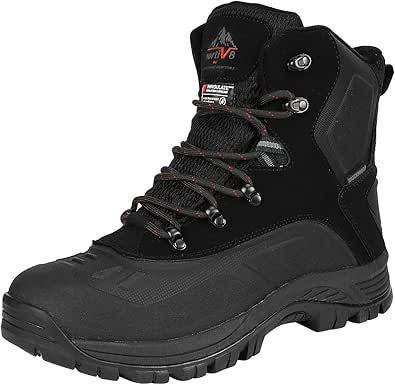 | Best for Cold-Weather Hiking | Shaft height: Ankle | Shaft circumference: 16 inches | Outer material: Faux leather and mesh | VIEW LATEST PRICE | See Our Full Breakdown |
| Women’s Warm Fuzzy Non-Slip Ankle Snow Boots |  | Best for Flexible Everyday Traction | Sole material: Synthetic rubber | Shaft height: Ankle | Shaft circumference: 5 (unit not specified) | VIEW LATEST PRICE | See Our Full Breakdown |
| The North Face Women’s ThermoBall Traction Winter Bootie |  | Best Slip-On Winter Bootie | Brand: The North Face | Upper material: Recycled P.E.T. ripstop polyester | Insulation: 100% recycled polyester ThermoBall | VIEW LATEST PRICE | See Our Full Breakdown |
| Ziitop Men’s Waterproof Fur-Lined Snow Boots |  | Best for Easy-On Wet-Weather Coverage | Sole material: Rubber | Shaft height: Ankle | Shaft circumference: 12 (unit not specified) | VIEW LATEST PRICE | See Our Full Breakdown |
| HIKE Footwear Caspar Pro Winter Barefoot Boots |  | Best for a Wide-Toe Natural Fit | Sole material: Rubber | Outer material: Polyester | Inner material: Cotton and spandex | VIEW LATEST PRICE | See Our Full Breakdown |
| ALEADER Men’s Winter Waterproof Insulated Snow Boots |  | Best for Rugged, Wet Winter Conditions | Upper material: Durable water- and wind-resistant PU-coated synthetic textile | Sole material: Rubber with non-slip outsole | Shaft height: 10 inches | VIEW LATEST PRICE | See Our Full Breakdown |
| Project Cloud Women’s Genuine Leather Micro Boots with Shearling Lining |  | Best for Cozy Everyday Wear | Upper material: Genuine leather | Outer material: Suede | Lining: Fur | VIEW LATEST PRICE | See Our Full Breakdown |
| Women’s Warm Slip-On Winter Ankle Boots |  | Best for Roomy, Lightweight Comfort | Origin: Imported | Lining: Soft fur | Sole material: Polyurethane | VIEW LATEST PRICE | See Our Full Breakdown |
| Men’s Water-Resistant Faux Fur-Lined Winter Boots |  | Best Adjustable Fit for Winter Walks | Origin: Imported | Upper material: Synthetic water-resistant leather | Outer material: Faux leather | VIEW LATEST PRICE | See Our Full Breakdown |
| winter footwear | Sole material | Closure | Lining | Shaft height |
|---|---|---|---|---|
| Sorel Men’s Caribou Snow Boot | — | — | — | Mid-calf |
| Women’s Warm Slip-On Ankle Sno | Polyurethane | Slip-on | Plush fur | Ankle |
| Unisex Winter Barefoot Hiking | Ethylene Vinyl Acetate (EVA) | Pull-on | — | — |
| Men’s Waterproof Fur-Lined Win | Rubber | Lace-up | Artificial fur and plush | — |
| NORTIV 8 Men’s Waterproof Wint | EVA and rubber | — | — | Ankle |
| Women’s Warm Fuzzy Non-Slip An | Synthetic rubber | — | Fluffy interior | Ankle |
| The North Face Women’s ThermoB | Ethylene vinyl acetate with up to 20% recycled rubber | Slip-on | — | — |
| Ziitop Men’s Waterproof Fur-Li | Rubber | Side zipper | Synthetic short fleece | Ankle |
| HIKE Footwear Caspar Pro Winte | Rubber | — | Warm lining; material details listed as cotton and spandex | — |
| ALEADER Men’s Winter Waterproo | Rubber with non-slip outsole | — | — | 10 inches |
| Project Cloud Women’s Genuine | Rubber | Slip-on | Fur | — |
| Women’s Warm Slip-On Winter An | Polyurethane | Slip-on | Soft fur | Ankle |
| Men’s Water-Resistant Faux Fur | Rubber | Adjustable lace-up | Faux fur | — |
More Details on Our Top Picks
Sorel Men’s Caribou Snow Boot
The Sorel Men’s Caribou Snow Boot is the strongest pick here for buyers who need substantial coverage in persistent snow and cold. Its seam-sealed nubuck upper and rubber shell create a more protective barrier than the lighter, ankle-height NORTIV 8 Men’s Waterproof Winter Hiking Boots. A removable, washable felt liner adds warmth and can be taken out to dry or clean, while the mid-calf shaft helps shield more of the lower leg. The tradeoff is bulk and warmth: this boot may feel excessive for errands in mild, wet weather, where the Women’s Warm Slip-On Ankle Snow Boots are easier to pull on and wear. I’d choose the Caribou for snow-heavy days, not as an all-season daily boot.
Pros:- Seam-sealed leather upper and rubber shell provide a substantial barrier against snow and wet conditions.
- Removable, washable felt liner supports warmth and easier drying.
- Mid-calf height offers more lower-leg coverage than the ankle-height options in this roundup.
- Rubber shell and sole are suited to snowy winter use.
Cons:- May be too warm and bulky for mild conditions or mostly indoor wear.
- The synthetic fur origin is not specified.
Best for: Men who regularly walk or work in deep snow and want a tall, insulated boot with a removable liner.
Not ideal for: People in mild winter climates or buyers who prioritize a lightweight, quick-on boot for short errands; its mid-calf build and warm liner may feel cumbersome.
- Upper:100% leather; seam-sealed nubuck
- Shell:Handcrafted rubber
- Sole:Rubber
- Shaft height:Mid-calf
- Liner:Removable, washable 9 mm recycled felt
- Cuff:Sherpa pile
- Heel height:1 1/4 inches
- Platform height:3/4 inch
Our verdict“Choose the Caribou if deep-snow protection and a removable warm liner matter more than low weight or easy everyday wear.”
Women’s Warm Slip-On Ankle Snow Boots
For short winter trips when convenience matters, these Women’s Warm Slip-On Ankle Snow Boots are an easier choice than a lace-up boot. The slip-on closure and lightweight build suit errands, travel, and frequent in-and-out stops, while the plush lining leaves room for thick socks. Their traction-focused outsole offers more grip than a smooth casual shoe, but the water protection is described for light snow and wet weather rather than prolonged exposure. That makes them a less convincing choice for deep snow than the Sorel Men’s Caribou Snow Boot, whose seam-sealed construction and taller shaft provide more coverage. I’d favor this pair for convenience and mild winter conditions, while skipping it for long outdoor days in heavy snowfall.
Pros:- Slip-on design makes quick trips and frequent changes easier.
- Lightweight construction is less cumbersome than a tall snow boot.
- Plush fur lining and room for thick socks support warmth.
- Slip-resistant outsole is intended for snowy and slippery surfaces.
Cons:- Water protection is not specified for heavy snow or extended wet exposure.
- Ankle-height coverage leaves more of the lower leg exposed than the Sorel Caribou.
- No detailed sizing guidance is provided beyond the listed size range and wide-foot suitability.
Best for: Women who want a lightweight, easy-on boot for neighborhood errands, travel, and short walks in light snow.
Not ideal for: Buyers who need dependable protection for deep snow, prolonged wet conditions, or demanding outdoor activity; the water resistance is described only for lighter weather.
- Shaft height:Ankle
- Closure:Slip-on
- Lining:Plush fur
- Sole material:Polyurethane
- Fit:Suitable for wide feet
- Sizes:US 5–12
- Water resistance:Designed to help keep out water and snow
- Origin:Imported
Our verdict“Pick these for quick, low-effort outings in light winter weather, not for deep snow or long exposure to wet conditions.”
Unisex Winter Barefoot Hiking Shoes with Wide Toe Box
Unlike the protective, conventional builds of the Sorel Men’s Caribou Snow Boot and NORTIV 8 Men’s Waterproof Winter Hiking Boots, this unisex option puts wide toe room and flexible movement first. Its flat, lightweight EVA construction and pull-on design make it appealing to walkers and trail users who dislike a narrow, rigid winter shoe; the fleece lining adds some comfort in cold weather. The compromise is weather protection: waterproofing is not specified, so it is a riskier choice for slush, wet snow, or extended exposure than the waterproof boots in this lineup. There is also no sizing guidance to help buyers judge fit. I’d reserve it for dry, cold walks where natural toe spread matters more than a sealed barrier.
Pros:- Wide toe box allows more room for natural toe spread.
- Lightweight EVA construction offers a flexible alternative to bulky snow boots.
- Fleece lining adds warmth for cold-weather walking.
- Traction-pattern sole is intended for outdoor grip.
Cons:- Waterproofing is not specified, limiting confidence in wet snow and slush.
- No sizing or fit guidance is provided.
- Flat barefoot-style construction may not suit buyers who prefer a structured winter boot.
Best for: Walkers and casual trail users seeking a unisex winter shoe with a wide toe box and flexible, flat feel.
Not ideal for: Anyone walking through slush, deep snow, or frequent rain, or buyers who need clear sizing guidance and specified waterproof protection.
- Fit:Unisex
- Toe box:Wide
- Outer material:Ethylene Vinyl Acetate (EVA)
- Sole material:Ethylene Vinyl Acetate (EVA)
- Inner material:Premium fleece
- Closure:Pull-on
- Heel:Flat
Our verdict“Choose this pair for toe freedom on dry winter walks, but look to the NORTIV 8 or Sorel Caribou for specified waterproof protection.”
Men’s Waterproof Fur-Lined Winter Snow Boots
The Men’s Waterproof Fur-Lined Winter Snow Boots offer a practical middle ground: an ankle-height, lace-up design with a waterproof upper and warm lining that can serve for daily wear or casual outdoor activity. Compared with the slip-on Women’s Warm Slip-On Ankle Snow Boots, the laces offer a more adjustable closure, while the waterproof nylon Oxford cloth and microfiber upper make wet-weather protection a stated feature. It is less specialized for deep snow than the taller Sorel Men’s Caribou Snow Boot, and the product data does not provide insulation weight, temperature guidance, or sizing details. That missing information makes it harder to judge performance for prolonged cold or fit. I’d consider it for mixed everyday use rather than as a technical boot for severe winter conditions.
Pros:- Waterproof nylon Oxford cloth and microfiber upper is suited to wet conditions.
- Artificial-fur and plush lining add warmth for cold-weather wear.
- Lace-up closure allows adjustment compared with the slip-on ankle boot in this roundup.
- Rubber sole is described as providing traction and wear resistance.
Cons:- Ankle height offers less snow coverage than the Sorel Caribou.
- No insulation weight or temperature guidance is provided.
- Sizing details are not supplied.
Best for: Men seeking an ankle-height, lace-up boot for everyday winter wear and occasional hikes or outdoor tasks in wet conditions.
Not ideal for: Buyers facing deep snow or prolonged severe cold who need a tall shaft, quantified insulation, or clearer sizing information.
- Upper:Waterproof nylon Oxford cloth and microfiber
- Sole material:Rubber
- Lining:Artificial fur and plush
- Closure:Lace-up
- Height:Ankle
- Features:Waterproof, anti-slip, wear-resistant
Our verdict“Choose this boot for adjustable, waterproof everyday coverage, but look elsewhere for deep-snow height or clearly specified cold ratings.”
NORTIV 8 Men’s Waterproof Winter Hiking Boots
The NORTIV 8 Men’s Waterproof Winter Hiking Boots are the most activity-focused ankle boot in this group, pairing 200g insulation with waterproof construction and a slip- and abrasion-resistant outsole. The removable, washable insole is a useful advantage for hikers who expect regular wear and want to air out the boot. Compared with the Sorel Men’s Caribou Snow Boot, this pair is lower-cut and more oriented toward walking and outdoor activity than deep-snow coverage; its ankle height is easier to move in, but leaves less of the leg protected. A stated temperature figure provides more cold-weather context than the Men’s Waterproof Fur-Lined Winter Snow Boots, though fit guidance is absent. I’d choose it for cold, active days, not for buyers who need mid-calf protection.
Pros:- Waterproof construction and windproof toe caps help guard against wet, cold conditions.
- 200g insulation and a stated temperature limit provide useful cold-weather context.
- Removable, washable insole makes drying and cleanup easier.
- Rubber outsole is designed for slip and abrasion resistance.
Cons:- Ankle-height shaft provides less snow coverage than the Sorel Caribou.
- No fit or sizing information is provided.
- Faux leather and mesh construction may feel less substantial than the Caribou’s leather-and-rubber build.
Best for: Men who want an insulated, waterproof ankle boot for winter hikes and active daily wear in cold conditions.
Not ideal for: People who regularly cross deep snow and need mid-calf coverage, or buyers who require detailed fit guidance before ordering.
- Shaft height:Ankle
- Shaft circumference:16 inches
- Outer material:Faux leather and mesh
- Sole material:EVA and rubber
- Insulation:200g
- Insole:Removable and washable
- Outsole:Slip- and abrasion-resistant rubber
- Temperature guidance:Designed for temperatures as low as -25°F
Our verdict“Choose the NORTIV 8 for insulated, waterproof mobility on winter hikes, but pick a taller boot for frequent deep-snow travel.”
Women’s Warm Fuzzy Non-Slip Ankle Snow Boots
These ankle boots suit women who want soft warmth and flexible footing for short winter outings rather than deep-snow protection. The fluffy lining adds comfort, while the rubber outsole has rugged tread to help on slick paths and trails. Compared with The North Face Women’s ThermoBall Traction Winter Bootie, this pair emphasizes a flexible rubber sole and an Oxford fabric/microfiber upper, while The North Face offers specified recycled insulation and a slip-on build. The upper here is described as repelling light rain and melted snow, not as waterproof, so prolonged wet exposure is a poor match. Light stains and splashes wipe off easily, but the listing gives no sizing or fit guidance. I would choose these for casual, changeable conditions—not for all-day use in slush.
Pros:- Fluffy lining adds warmth for casual winter wear
- Flexible rubber outsole allows more natural foot movement
- Rugged tread is suited to slippery ground and trails
- Light stains and splashes can be wiped off easily
Cons:- Water resistance is limited to light rain and melted snow
- No sizing or fit information is provided
- Ankle-height coverage offers less protection than the 10-inch ALEADER snow boots
Best for: Women seeking a warm, flexible ankle boot for brief walks on snowy sidewalks, packed paths, or other mildly wet outdoor surfaces.
Not ideal for: People who regularly walk through deep snow, stand in slush, or need clear fit guidance before ordering.
- Sole material:Synthetic rubber
- Shaft height:Ankle
- Shaft circumference:5 (unit not specified)
- Outer material:Canvas
- Upper material:Oxford fabric and microfiber
- Lining:Fluffy interior
- Water resistance:Repels light rain and melted snow
Our verdict“Choose these for flexible, lined comfort on short winter outings, but skip them if you need reliable protection from deep snow or prolonged wet weather.”
The North Face Women’s ThermoBall Traction Winter Bootie
The ThermoBall Traction is the most convenient choice here for cold-weather errands and camp use: its slip-on design avoids laces, and recycled ThermoBall insulation provides warmth without relying on a thick, tall boot shaft. The water-repellent ripstop upper and grippy outsole suit light snow and slick surfaces. Compared with the Women’s Warm Fuzzy Non-Slip Ankle Snow Boots, this bootie specifies its insulation, fit, and materials, while the fuzzy boots emphasize flexible rubber construction and easy-clean surfaces. The tradeoff is limited weather protection: water repellent does not mean waterproof, and the low bootie profile is less suited to deep snow than the ALEADER Men’s Winter Waterproof Insulated Snow Boots. Its casual look also narrows where it fits. I’d pick it for convenience in cold, mostly light-moisture conditions.
Pros:- Slip-on closure makes it quick to put on and remove
- Recycled ThermoBall insulation adds warmth
- Water-repellent ripstop upper handles light moisture
- Grippy outsole is designed for slick surfaces
Cons:- Water-repellent construction is not full waterproofing
- Low bootie profile provides less coverage in deep snow
- Casual style may not suit formal occasions
Best for: Women who want an easy-on bootie for casual winter errands, camping, or cold outings in light snow.
Not ideal for: Buyers who need waterproof footwear for extended exposure to slush, high shaft coverage, or a dressier winter boot.
- Brand:The North Face
- Upper material:Recycled P.E.T. ripstop polyester
- Insulation:100% recycled polyester ThermoBall
- Sole material:Ethylene vinyl acetate with up to 20% recycled rubber
- Water resistance:Water repellent
- Closure:Slip-on
- Fit:True to size
- Weight:2.5 pounds
- Platform height:1 inch
Our verdict“Pick this for convenient warmth on casual outings in light snow, not for deep snow or sustained wet conditions.”
Ziitop Men’s Waterproof Fur-Lined Snow Boots
The Ziitop makes a strong case for buyers who prioritize waterproof coverage and quick entry over a highly adjustable fit. Its Oxford cloth upper is described as waterproof, the synthetic fleece lining adds warmth, and side zippers make it easier to get the ankle boots on and off than a lace-up design. Against the The North Face Women’s ThermoBall Traction Winter Bootie, this pair offers stronger stated wet-weather protection and a zipper closure, while The North Face provides specified recycled insulation and a stated true-to-size fit. The Ziitop’s main compromise is that there are no laces to fine-tune tightness around the foot. The shaft circumference is listed as 12 with no unit, which limits how useful that measurement is for fit planning. I’d favor it for damp winter walks, not buyers needing a dialed-in closure.
Pros:- Waterproof Oxford cloth upper is suited to wet conditions
- Synthetic fleece lining adds warmth
- Rubber sole is described as non-slip
- Side zippers make the boots easy to put on and remove
Cons:- No laces are provided to adjust the fit
- Shaft circumference is listed without a measurement unit
- Ankle height offers less leg coverage than the 10-inch ALEADER boots
Best for: Men who want fleece-lined ankle boots with waterproof upper material and a zipper for straightforward daily wear in wet winter conditions.
Not ideal for: Buyers who need an adjustable lace closure or rely on precise shaft measurements to judge fit.
- Sole material:Rubber
- Shaft height:Ankle
- Shaft circumference:12 (unit not specified)
- Outer material:Oxford cloth
- Lining:Synthetic short fleece
- Closure:Side zipper
Our verdict“Choose the Ziitop for easy-on, fleece-lined ankle coverage in wet weather if a fixed zipper fit works for you.”
HIKE Footwear Caspar Pro Winter Barefoot Boots
The Caspar Pro is the specialist pick for winter walkers who want room for toes to spread and a flexible sole rather than the structured feel of a conventional snow boot. Its wide toe box, pull-on construction, and lightweight materials favor daily walking and a natural-feeling step. Compared with the Women’s Warm Fuzzy Non-Slip Ankle Snow Boots, this model makes toe freedom and flexibility its defining features, while the fuzzy boots offer rugged tread and explicitly described resistance to light rain and melted snow. The listed materials include a warm lining, but the product details do not specify waterproofing or insulation performance, so I would not choose it for sustained slush or severe cold. Fit also calls for careful measurement. It makes sense for barefoot-shoe fans in ordinary winter conditions, not buyers seeking a protective, weather-sealed snow boot.
Pros:- Wide toe box allows toes to spread naturally
- Flexible design supports a natural walking style
- Soft, lightweight construction suits daily wear
- Pull-on closure avoids laces
Cons:- Sizing may require careful measurement
- Waterproofing is not specified
- Warmth performance is not quantified, limiting confidence for severe cold
Best for: Men who prefer barefoot-style footwear, need a wide toe box, and want flexible boots for everyday winter walking.
Not ideal for: People facing deep snow or prolonged wet weather, or anyone who wants conventional structured support and clear sizing guidance.
- Sole material:Rubber
- Outer material:Polyester
- Inner material:Cotton and spandex
- Closure type:Pull-on
- Toe box:Wide
- Upper material:Oxford cloth, multispandex, and high-elastic sponge
- Lining:Warm lining; material details listed as cotton and spandex
Our verdict“Choose the Caspar Pro if toe freedom and a flexible barefoot-style fit matter more than proven wet-weather protection.”
ALEADER Men’s Winter Waterproof Insulated Snow Boots
Among these five, the ALEADER is the clearest choice for serious wet-weather coverage: its seam-sealed rubber sole and water- and wind-resistant upper are paired with Thinsulate and synthetic fur, plus a 10-inch shaft that reaches higher than the ankle boots in this group. A drawstring and ankle Velcro strap make the tall shape easier to secure than a simple pull-on boot. Compared with the Ziitop Men’s Waterproof Fur-Lined Snow Boots, it offers more shaft coverage and a layered closure, while the Ziitop is simpler to put on thanks to side zippers. The tradeoff is bulk: the thick insulation can make these heavier than everyday winter shoes, and the 10-inch shaft is more boot than many sidewalk errands require. I’d choose this model for snow and wet terrain, not for a lightweight commute.
Pros:- Seam-sealed construction and water-resistant upper help keep feet dry
- Thinsulate and synthetic fur lining provide insulated warmth
- Drawstring and ankle Velcro strap support quick adjustment
- Non-slip rubber outsole is suited to mud and snow
Cons:- Thick insulation can make the boots heavier than typical winter shoes
- Tall 10-inch shaft may feel excessive for casual errands
- Drawstring and strap closure is less simple than the Ziitop’s side zipper
Best for: Men who need insulated, waterproof boots with higher coverage for snowy walks, muddy ground, and other wet winter conditions.
Not ideal for: Commuters seeking lightweight footwear or shoppers who prefer an ankle-height boot that is quicker and less bulky for everyday errands.
- Upper material:Durable water- and wind-resistant PU-coated synthetic textile
- Sole material:Rubber with non-slip outsole
- Shaft height:10 inches
- Inner material:Thinsulate and synthetic fur
- Closure type:Drawstring with barrel lock and ankle Velcro strap
- Construction:Seam-sealed rubber sole
Our verdict“Pick the ALEADER for insulated coverage on wet, snowy terrain, and skip it if a light, low-profile winter shoe is your priority.”
Project Cloud Women’s Genuine Leather Micro Boots with Shearling Lining
Plush warmth and quick slip-on convenience make these micro boots a practical pick for short outings and indoor-outdoor wear. The genuine leather upper, fur lining, and cushioned footbed prioritize comfort, while the water-resistant finish can handle light moisture. Compared with the Women’s Warm Slip-On Winter Ankle Boots, this pair specifies a genuine leather upper; that may appeal to buyers who prefer leather, though it does not make the boot suitable for prolonged exposure to wet snow. The rubber sole offers a straightforward everyday base, but the product details do not specify a dedicated traction pattern or insulation rating. I’d choose these for chilly errands and casual use, not extended snow walks: the light-moisture limitation is a real boundary, and the slip-on cut gives less adjustment than a lace-up boot.
Pros:- Plush fur lining adds warmth for everyday cold-weather wear
- Cushioned footbed supports comfort during short outings
- Slip-on closure makes the boots quick to put on and remove
- Water-resistant upper offers some protection from light moisture
Cons:- Water resistance is specified only for light moisture, not sustained wet snow
- Slip-on closure offers less fit adjustment than a lace-up boot
- No specific insulation rating or traction details are provided
Best for: Women seeking warm, easy-on boots for brief winter errands, commuting between car and indoors, or casual wear in lightly damp conditions
Not ideal for: People walking for long periods through deep snow, slush, or icy terrain who need waterproof protection, secure ankle adjustment, or clearly specified traction
- Upper material:Genuine leather
- Outer material:Suede
- Lining:Fur
- Sole material:Rubber
- Closure:Slip-on
- Water resistance:Water-resistant
Our verdict“Choose these for cozy, convenient wear in cold, lightly damp conditions, but pick a waterproof winter boot for regular snow exposure.”
Women’s Warm Slip-On Winter Ankle Boots
A roomy toe box and lightweight slip-on build set these apart for casual winter wear, especially for buyers who dislike a snug forefoot. Soft fur lining and cushioned insoles add comfort for errands and everyday walks, while the non-slip outsole is described as offering traction on wet or slippery surfaces. Compared with the Project Cloud Women’s Genuine Leather Micro Boots with Shearling Lining, this pair provides more fit guidance through its roomy, true-to-size fit and calls out outsole grip; Project Cloud instead specifies a genuine leather upper and rubber sole. Neither description supports treating these as deep-snow boots: the upper is intended for light snow and damp conditions, and the sole is polyurethane rather than rubber. I’d favor this option for easy daily wear, but choose a more protective model for severe weather.
Pros:- Roomy toe box suits wearers who prefer more forefoot space
- Soft fur lining and cushioned insoles support cold-weather comfort
- Lightweight slip-on design is convenient for everyday use
- Non-slip outsole is described for wet or slippery surfaces
Cons:- Water resistance is limited to light snow and damp conditions
- Polyurethane sole may not suit buyers specifically seeking a rubber outsole
- Ankle-height slip-on design offers less fit adjustment than laced boots
Best for: Women who want lightweight slip-on boots with extra toe room for casual walks and errands in light snow or damp weather
Not ideal for: Buyers needing waterproof protection for slush or deep snow, or those seeking a boot with specified heavy-duty winter traction
- Origin:Imported
- Lining:Soft fur
- Sole material:Polyurethane
- Shaft height:Ankle
- Closure:Slip-on
- Upper:Water-resistant
- Fit:True to size with a roomy toe box
Our verdict“Pick this pair for roomy, lightweight everyday comfort in mild winter conditions, not for sustained exposure to snow or slush.”
Men’s Water-Resistant Faux Fur-Lined Winter Boots
For buyers who want a more secure fit than a slip-on, these boots pair an adjustable lace-up closure with a lightweight ankle-height build. Faux fur lining and removable plush insoles provide warmth, and the removable footbed can make room for a replacement insole if needed. The rubber traction sole and 0.9-pound listed weight for size 9 suit everyday walks and work better for a varied routine than the easy-on Women’s Warm Slip-On Winter Ankle Boots, which emphasize convenience and a roomy toe box. These are still water-resistant, not waterproof, so I wouldn’t choose them for deep snow or long stretches in slush. Their ankle cut also offers less coverage than dedicated snow boots such as the Sorel Men’s Caribou Snow Boot.
Pros:- Adjustable lace-up closure allows a more secure fit than a slip-on
- Faux fur lining and plush insole add warmth
- Removable insole can be replaced or taken out for fit adjustments
- Rubber sole and lightweight listed construction suit everyday walking
Cons:- Water-resistant construction is not described as waterproof
- Ankle height offers less snow coverage than taller winter boots
- Laces take longer to fasten than the slip-on alternatives
Best for: Men who want lightweight, lace-up ankle boots for winter walks, commuting, or work in cold conditions with limited wet-weather exposure
Not ideal for: People who regularly cross deep snow or slush and need waterproof coverage, or buyers who prefer a quick slip-on boot
- Origin:Imported
- Upper material:Synthetic water-resistant leather
- Outer material:Faux leather
- Lining:Faux fur
- Sole material:Rubber
- Weight:0.9 lb (size 9)
- Closure:Adjustable lace-up
- Insole:Removable plush insole
Our verdict“Choose these for an adjustable, lightweight boot for everyday winter walks, but look elsewhere for waterproof protection or deep-snow coverage.”
How We Picked
I ranked these options by how well their design appears to match common winter jobs: walking through snow, hiking on cold days, commuting, or handling short outdoor trips. I weighed weather protection, insulation, traction, ease of wear, fit, and versatility, giving more weight to protection and dependable footing for boots positioned for harsh conditions. Lighter booties and slip-ons can be better for daily convenience, but they rank below more protective choices when snow exposure is the main concern.
The order reflects those differences rather than treating every warm lining as proof of all-weather performance. Build and intended use matter too: hiking boots need to work during sustained movement, while casual ankle boots prioritize quick wear and everyday comfort. Barefoot designs receive credit for toe room and flexibility, but not for traditional structure. Since the lineup spans varied styles and does not provide a single standardized test basis, I focus on stated design intent and practical buyer tradeoffs instead of claiming identical performance across conditions.
| winter footwear | Closure |
|---|---|
| Sorel Men’s Caribou Snow Boot | — |
| Women’s Warm Slip-On Ankle Sno | Slip-on |
| Unisex Winter Barefoot Hiking | Pull-on |
| Men’s Waterproof Fur-Lined Win | Lace-up |
| NORTIV 8 Men’s Waterproof Wint | — |
| Women’s Warm Fuzzy Non-Slip An | — |
| The North Face Women’s ThermoB | Slip-on |
| Ziitop Men’s Waterproof Fur-Li | Side zipper |
| HIKE Footwear Caspar Pro Winte | — |
| ALEADER Men’s Winter Waterproo | — |
| Project Cloud Women’s Genuine | Slip-on |
| Women’s Warm Slip-On Winter An | Slip-on |
| Men’s Water-Resistant Faux Fur | Adjustable lace-up |
Factors to Consider When Choosing Best Winter Footwear
Before choosing a pair, start with the winter conditions you actually face. Cold pavement, slushy commutes, packed trails, and deep snow place different demands on footwear, and the warmest-looking boot is not automatically the safest or most comfortable choice. These factors can help narrow the field beyond the individual product differences.
Match Weather Protection to Your Exposure
Think about how long your footwear will be exposed to wet snow and slush, not just how cold the forecast looks. A waterproof build matters most for repeated contact with wet conditions; water resistance can be enough for brief trips but offers less reassurance during long walks. Check how high the protective materials extend, since low ankle coverage can leave snow an easy route inside. A warm lining does not make a boot waterproof. A common mistake is choosing insulation first and discovering the upper is poorly suited to the local mix of rain, slush, and snow. Pay for stronger weather protection when outdoor time is frequent rather than occasional.
Choose Traction for the Surfaces You Walk On
Winter traction is not one uniform feature: a tread that feels secure on packed paths may behave differently on slick pavement or loose snow. Consider the routes you take most, including steps, parking lots, and sloped sidewalks, rather than judging a sole by how rugged it looks. Deep, widely spaced lugs can help on softer ground, while everyday city use may call for a less aggressive sole that remains comfortable indoors. No ordinary boot makes ice risk-free, so consider dedicated traction aids if your route regularly includes glare ice. Buyers often focus on warmth and overlook the surface they need to cross. Choose footwear around your most hazardous regular conditions.
Balance Insulation With Activity Level
For standing outside or moving slowly in deep cold, more insulation can be welcome; brisk walking generates heat and may make a heavily lined boot uncomfortable. Think about whether you can remove layers indoors and how long you spend outside at a stretch. Thick socks can add warmth, but they also take up volume and may restrict circulation if the fit is already close. A tight boot can leave feet colder than a roomier pair because toes have less space to move. Avoid buying the warmest option by default if your winter routine is mostly commuting between heated spaces. Match insulation to your pace and exposure.
Get the Fit Right With Winter Socks
Try footwear with the socks you expect to wear, and leave enough room for toes to move without letting the heel slip. A snug fit can feel supportive at first but become uncomfortable once thicker socks or foot swelling enter the picture. Wide-toe and barefoot-inspired designs suit buyers who value forefoot space and flexibility, yet they may feel unfamiliar to anyone used to a firm, structured boot. Check the brand’s sizing guidance and return terms before ordering if you cannot try the pair on. Do not assume sizing up solves every fit issue; excess length can reduce stability. Fit should work with your sock choice, not just bare feet.
Decide How Much Structure and Weight You Need
A supportive, substantial boot can feel reassuring in snow, but weight and stiffness matter during longer walks or travel. Lightweight booties and slip-ons are easier to pull on and carry, though they may not provide the same coverage or structure as a dedicated snow or hiking boot. For regular trails, favor a design intended for sustained walking and stable footing rather than a casual style that only looks rugged. For brief errands, a heavy boot may be more effort than the conditions call for. Buyers sometimes mistake bulk for durability or protection. Choose structure based on activity, and accept extra weight only when it serves a clear purpose.
Plan for Care and Indoor Use
Winter footwear gets exposed to salt, grit, and repeated moisture, so care requirements affect how well it fits your routine. Follow the maker’s cleaning and drying guidance; placing wet boots beside a strong heat source can damage materials or affect their shape. Removable liners, if present, can make drying easier, but not every insulated design offers them. Think about whether you need a pair that is comfortable for extended indoor wear or mainly for time outdoors. A plush lining may feel cozy but can be less convenient in heated buildings. Choose a style you can maintain consistently rather than relying on appearance alone.
Frequently Asked Questions
Can one pair of winter footwear handle both city commutes and snowy trails?
It can, if your routes involve moderate snow and you choose a pair with dependable weather protection, comfortable walking support, and a sole suited to mixed surfaces. A hiking-oriented option such as the NORTIV 8 is a more natural starting point for frequent outdoor walking than a casual slip-on. For mostly paved commutes with only occasional snow, a lighter bootie may be easier to wear day to day. The compromise is that a versatile pair may be heavier indoors than a city shoe and less specialized than a deep-snow boot. If your trail conditions are demanding, prioritize that use and keep a separate everyday pair.
Are slip-on ankle boots enough for regular snow?
They can work for short trips in light snow, especially when convenience matters and the route is mostly clear. Their lower coverage can leave more room for snow or slush to reach the opening than a taller snow boot. Check the product’s weather-protection claims and sole design rather than assuming a warm lining means it is ready for wet conditions. For deep snow, long outdoor walks, or frequent slush, a more protective boot is the safer category to compare. Slip-ons are best treated as an everyday convenience choice unless their construction is clearly suited to harsher use.
Should I choose barefoot winter boots if I have wide feet?
A barefoot-style design can appeal if you want more toe room and a flexible feel, and this roundup includes both a unisex barefoot hiking shoe and the HIKE Footwear Caspar Pro. That shape is not automatically right for every wide foot, so check the brand’s sizing information and the fit around the midfoot and heel as well as the toe box. Barefoot footwear also feels different from a structured boot and may not offer the support you expect. If you are new to a flexible sole, a gradual adjustment can help you judge comfort during longer walks. Prioritize fit and intended activity over the label alone.
How much extra room should winter boots have for thick socks?
Leave enough space for your toes to move freely while keeping the heel secure; the exact fit depends on the boot’s shape and your socks. Try the pair with the socks you normally wear in cold weather, since a boot that fits well with thin socks may feel cramped with thicker ones. Going up a size without checking heel hold can create slipping and reduce stability. If a boot feels tight across the toes, changing the size may not fix a narrow shape. Use the maker’s fit guidance and return policy to reduce the risk of keeping an uncomfortable pair.
When is a heavier snow boot a better choice than a lightweight bootie?
A heavier snow boot makes more sense when you expect prolonged exposure, deeper snow, or repeated wet conditions that call for greater coverage and protection. A lightweight bootie is often more comfortable for quick errands, travel, and indoor-outdoor routines where convenience matters more than deep-snow readiness. The Sorel Caribou represents the more substantial end of this lineup, while the ThermoBall Traction bootie favors lighter everyday wear. Neither design is automatically better for everyone; the right choice follows your time outdoors and the weather you face. If conditions vary widely, owning separate pairs can avoid forcing one style into two conflicting jobs.
Conclusion
For the broadest snow-focused use, I recommend the Sorel Men’s Caribou Snow Boot as best overall, with the caveat that its substantial design is not the easiest choice for light errands. NORTIV 8 Men’s Waterproof Winter Hiking Boots are my best pick for buyers who spend more time walking outdoors, while The North Face Women’s ThermoBall Traction Winter Bootie suits lighter daily wear. For value-minded shoppers, compare the straightforward insulated options such as the ALEADER Men’s Winter Waterproof Insulated Snow Boots against your actual need for trail support or heavy snow protection; the best value is the pair whose features match your routine. Beginners should start with a familiar, easy-to-fit conventional boot rather than a barefoot style, while wide-toe seekers can focus on the HIKE Footwear Caspar Pro or the unisex barefoot hiking shoes. For quick slip-on convenience, choose among the ankle styles only if their coverage suits your weather; for sustained snow exposure, favor a more protective boot.