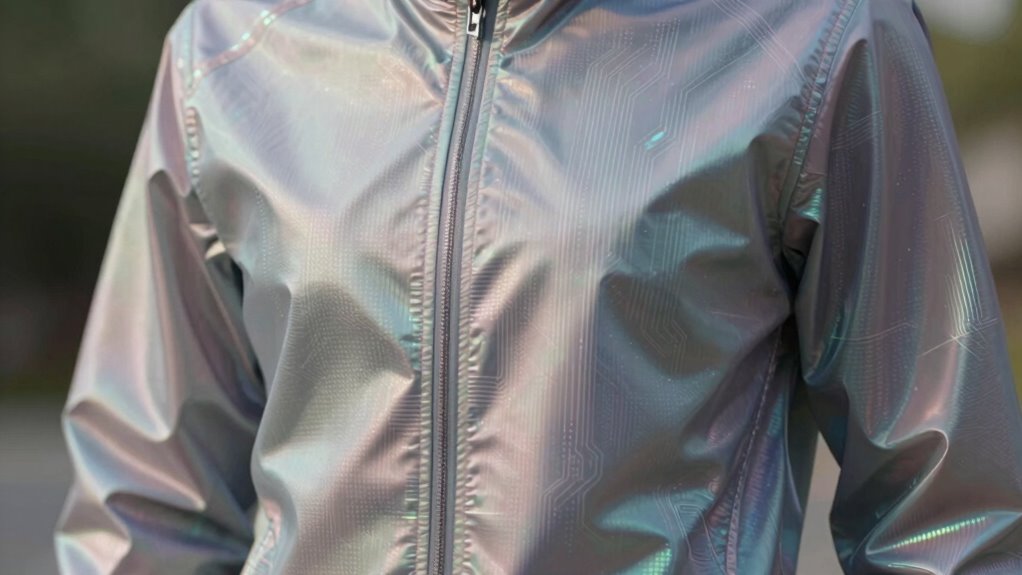

Smart fabric innovations can make your everyday wear more comfortable, adaptable, and sustainable. Imagine clothing that adjusts to temperature changes, tracks your health, and reduces the need for multiple outfits. These fabrics are designed to be durable, washable, and eco-friendly, helping you stay stylish while minimizing waste. As technology progresses, your clothes could become smarter and longer-lasting. Keep exploring to discover more about how these advancements might shape your daily wardrobe.

Get your wardrobe favorites delivered free with Prime
- Fast, free delivery on millions of items
- Prime Video, Amazon Music and more included
- Member-only deals all year
Key Takeaways
- Smart fabrics enable adaptive clothing that adjusts temperature for enhanced comfort and reduces the need for multiple garments.
- Embedded sensors in smart textiles facilitate real-time health and activity monitoring, promoting healthier lifestyles.
- Durable, washable smart textiles simplify maintenance and longevity, making high-tech clothing practical for daily use.
- Sustainable innovations in smart fabrics can extend clothing lifespan, decreasing waste and environmental impact.
- Future smart fabrics could offer personalized style and functionality, seamlessly integrating technology into everyday fashion.

Imagine clothing that adapts to your needs, seamlessly integrating technology into your daily wardrobe. That’s the promise of smart fabric innovation, transforming how you experience everyday wear. These fabrics aren’t just about style—they’re about functionality, comfort, and sustainability. As these materials evolve, they could substantially reduce environmental impact by decreasing the need for multiple clothing items. For example, a single smart shirt could adapt its temperature, eliminating the necessity for layering or additional garments, which in turn cuts down waste and resource consumption. Furthermore, fabrics embedded with sensors can track your health or activity levels, providing valuable insights without requiring separate devices. This integration simplifies your routine while promoting a more sustainable approach to fashion. The development of durable, flexible, and washable textiles remains a key focus to ensure these innovations are practical for daily use. Advances in textile durability are essential for making these fabrics reliable in everyday scenarios. Additionally, understanding wearable technology integration is critical for creating seamless and user-friendly smart clothing. To achieve this, ongoing research into energy-efficient power sources is vital for maintaining functionality without adding bulk or sacrificing comfort.
Smart fabrics adapt to your needs, blending style, comfort, and sustainability for a smarter, eco-friendly wardrobe.
However, developing smart fabrics comes with a set of technological challenges. Creating textiles that are durable, flexible, and washable remains a complex task. These fabrics must withstand repeated washing without losing their functionality, which requires innovative solutions in material science. Ensuring the electronic components embedded within the fabric are safe, lightweight, and unobtrusive adds to the challenge. Manufacturers need to balance technological sophistication with comfort, so your clothing doesn’t feel stiff or cumbersome. Additionally, powering the embedded technology efficiently remains a hurdle. Researchers are exploring energy harvesting methods, like solar or movement-based power, but these solutions still face hurdles before they can be widely adopted. Sustainable sourcing and recycling options are also critical to making these fabrics more environmentally friendly and responsible.
You might also consider the environmental impact of producing these advanced fabrics. While they promise to reduce waste by extending clothing lifespan and reducing the need for multiple items, their manufacturing can be resource-intensive. The production of smart fabrics often involves complex processes and rare materials, which could offset some of their environmental benefits if not managed carefully. Ensuring sustainable sourcing and recycling options is vital to truly minimize their ecological footprint. As the technology advances, so does the importance of addressing these challenges to make smart fabrics a responsible choice for consumers and manufacturers alike. The integration of advanced materials and sustainable practices will be crucial for their future success.
Ultimately, if these technological challenges are overcome, smart fabric innovation could dramatically change your wardrobe. Imagine garments that adapt in real-time, monitor your health, and last longer—all while reducing environmental impact. These fabrics could make your daily routine more efficient, comfortable, and sustainable. But for that future to become reality, ongoing research must focus not only on technological breakthroughs but also on minimizing environmental impact and ensuring the durability and safety of these innovative textiles. The potential is enormous, and with careful development, your everyday wear could soon be smarter, more sustainable, and perfectly tailored to your life.
smart temperature regulating clothing
As an affiliate, we earn on qualifying purchases.
As an affiliate, we earn on qualifying purchases.
Frequently Asked Questions
How Durable Are Smart Fabrics After Repeated Washing?
Smart fabrics are generally designed to withstand repeated washing, but fabric longevity varies depending on the material and technology used. You might notice some impact from washing, like reduced sensor sensitivity or color fading over time. To maintain durability, follow care instructions carefully. While smart fabrics are becoming more resilient, frequent or harsh washing can still affect their performance, so gentle cycles and appropriate detergents are best to preserve their functionality.
Are Smart Fabrics Safe for Sensitive Skin?
Smart fabrics are generally safe for sensitive skin, but they can sometimes cause skin irritation or allergy risks, especially if they contain reactive chemicals or metals. Imagine wearing a second skin that feels like a gentle breeze—yet, for some, it might trigger skin irritation. Always check the fabric’s materials and testing certifications. If you have allergies or sensitive skin, opt for hypoallergenic options and consult a dermatologist before wearing new smart garments.
What Is the Cost Comparison With Regular Clothing?
Smart fabrics tend to be more expensive than regular clothing because of advanced technology and materials involved. However, as market availability increases and production scales up, cost affordability improves. You might find basic smart garments at comparable prices to regular clothing, but high-tech options remain a bit pricier. Over time, expect smart fabric innovations to become more accessible, making everyday wear smarter without breaking your budget.
Can Smart Fabrics Be Recycled or Reused?
Smart fabrics are like chameleons—they can be recycled or reused, but it’s not always simple. The environmental impact depends on the fabric’s materials and technology. Recycling challenges include separating complex layers and preserving the fabric’s functionality. While some innovations aim for eco-friendly options, you’ll need to check if specific smart textiles are designed with sustainability in mind, making reuse more feasible and reducing waste.
How Do Smart Fabrics Affect Clothing Maintenance Routines?
Smart fabrics simplify your clothing maintenance routines by offering features like stain resistance and self-cleaning, reducing the need for frequent washing. With technological integration, these fabrics adapt to your needs, making fashion versatility easier to achieve. You spend less time on upkeep and enjoy garments that stay fresh longer. This seamless blend of innovation and practicality enhances your daily wear, ensuring you stay comfortable and stylish with minimal effort.
Conclusion
As smart fabrics continue to evolve, they gently weave their way into your daily life, quietly enhancing comfort and convenience. These innovations subtly hint at a future where your clothing responds and adapts, offering a touch of sophistication and ease. Embrace the understated elegance of this technological tapestry, and allow it to elevate your everyday experiences. With each gentle thread, smart fabrics promise a seamlessly integrated future—one where innovation feels almost like a natural extension of yourself.
Columbus Day / Indigenous Peoples' Day Picks
long weekend sales
As an affiliate, we earn on qualifying purchases.