
TL;DR

Get your wardrobe favorites delivered free with Prime
- Fast, free delivery on millions of items
- Prime Video, Amazon Music and more included
- Member-only deals all year
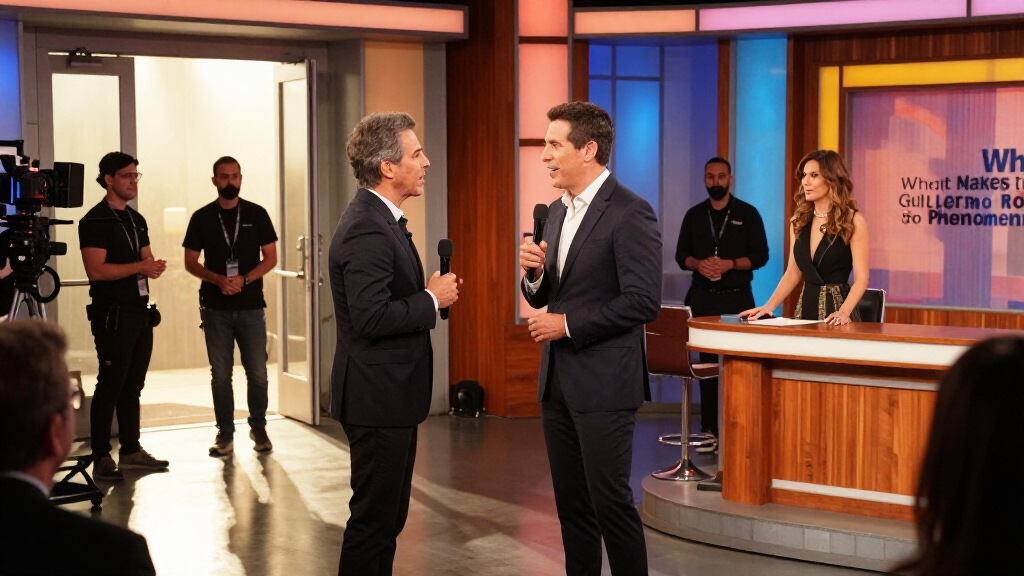
Guillermo Rodriguez, Jimmy Kimmel’s longtime sidekick, has become an unexpected fan favorite on the current season of Dancing With the Stars, despite low judges’ scores. Psychology Today says his perceived authenticity and underdog story may help explain the response, alongside “basking in reflected glory,” a psychological concept about sharing emotionally in someone else’s success.
Guillermo Rodriguez, Jimmy Kimmel’s longtime sidekick, has become an unexpected audience favorite on the current season of Dancing With the Stars, with enough viewer support to remain in the competition despite a low score for a recent samba. A Psychology Today article argues that his appeal may stem from his perceived authenticity and underdog status, as well as a psychological response known as “basking in reflected glory,” or BIRG.
Rodriguez, whose DWTS experience has drawn attention, is competing with professional dancer Witney Carson. In the episode discussed by Psychology Today, the pair received 13 out of 30 from the judges for their samba, yet audience voting kept them in the competition for another week. The article does not provide a vote total or a comparison with other contestants’ scores.
Psychology Today describes Rodriguez’s appeal as an extension of his earlier public persona: he moved from working as a security guard to appearing as a sidekick on Jimmy Kimmel’s show. The article says fans value his apparent lack of pretension, his willingness to acknowledge when he is not skilled at something, and an ability to take himself less seriously. These are explanations offered by the article, rather than measured findings about why individual viewers voted.
Rodriguez has also acknowledged the audience’s role in his progress. After a dance, he reportedly opened his shirt to show the words “Dancing 4 The People.” The article interprets the gesture as recognition that fan enthusiasm, not high dance scores, has helped keep him in the contest. It also reports that some viewers object to his continued run, while his supporters have continued voting.
Audience psychology · Dancing with the Stars
What Makes the Guillermo Rodriguez Phenomenon So Intriguing?
A low-scoring samba, a devoted audience and an unlikely dance journey have made Guillermo Rodriguez a talking point. One explanation centers on authenticity and the underdog story; another invokes the pleasure of sharing in someone else’s success.
Performance is only one part of the contest
The reported result shows audience support was sufficient to keep Rodriguez in the show. It does not reveal how many votes he received or how his support compared with other contestants.
A comparatively low score for the dance described by Psychology Today.
Viewers helped keep the pair in the competition.
The show combines judges’ scores with audience voting. In this episode, continued participation indicates meaningful viewer support, but the available account does not quantify it.
Three ideas behind the appeal
Psychology Today offers interpretations of the response, not measured explanations of why individual viewers voted.
Perceived authenticity
The article describes Rodriguez as unpretentious and willing to acknowledge when he is not skilled at something. Viewers may find that candor relatable.
The underdog arc
His path from security guard to a familiar television sidekick gives fans a story of unexpected opportunity—and now, an unlikely dance run.
Basking in reflected glory
BIRG describes sharing emotionally in the success of someone or a group we support. Fans may enjoy being part of an unexpected win.
From sidekick to dance contestant
Rodriguez’s television identity may shape how audiences interpret his performance, especially when he appears vulnerable or takes himself less seriously.
“Dancing 4 The People”
After a dance, Rodriguez reportedly opened his shirt to reveal the message. Psychology Today reads the gesture as recognition that fan enthusiasm—not high judges’ scores—has helped keep him in the contest.
“Just like everybody else, I’m obsessed with you.”
Derek Hough · Judge, as quoted by Psychology Today“I understand why you’re becoming a national obsession.”
Bruno Tonioli · Judge, as quoted by Psychology Today“We couldn’t be more obsessed with Guillermo and Witney’s Samba.”
Dancing with the Stars · Official Instagram, as quoted by Psychology TodayA possible chain of fan identification
BIRG offers one way to think about the emotional appeal of an unlikely success. It cannot tell us what any particular voter was thinking.
A known face
Viewers recognize the longtime Jimmy Kimmel sidekick.
A relatable outsider
His unpolished image may make the underdog story feel personal.
Rooting for a win
Supporters may feel part of the excitement when he advances.
Votes keep him in
Audience voting helped the pair continue after the samba.
Keep the evidence in perspective
Viewer enthusiasm is visible in the outcome, while its exact scale and causes remain unclear from the details reported.
No vote totals: The account does not report counts or how Rodriguez compared numerically with other contestants.
No motive study: There is no survey or experiment measuring why viewers cast their votes.
Rigging claims unsubstantiated: The article mentions online allegations but provides no evidence that the competition is rigged.
Future results unknown: The information provided does not establish how far Rodriguez will progress or whether he will reach the Mirrorball Trophy.
Fan Votes Versus Judges’ Scores
The contrast between the 13-point samba score and Rodriguez’s survival illustrates how audience votes can keep a contestant in the show even when judges award limited points. His run has become a talking point not just because he is competing, but because viewers appear to be responding to more than technical performance. The supplied account does not give vote counts, so the scale of that support cannot be independently quantified from the information available.
The Psychology Today article links the response to BIRG, a concept describing how people can feel a reflected sense of achievement when someone they support succeeds. Social psychologist Robert Cialdini and co-authors introduced the term in a 1976 study of football fans. Applied to Rodriguez, the idea suggests that viewers may enjoy being associated with an unlikely success story. It is a possible interpretation of the voting pattern, not proof that BIRG is the reason people voted for him.
That distinction matters because entertainment competitions combine performance, personality, fan loyalty and audience voting. Rodriguez’s progress may inspire viewers who identify with an underdog, while fans of other contestants may see the same results as unfair. The article notes criticism of his dancing and allegations online that the show is rigged, but provides no evidence that the competition is rigged. Those comments should be understood as viewer claims, not established facts.
Dancing With the Stars fan support merchandise
As an affiliate, we earn on qualifying purchases.
As an affiliate, we earn on qualifying purchases.
From Sidekick to Dance Contestant
Rodriguez was already known to television audiences before joining the competition. As a security guard who became a recurring onstage sidekick on Jimmy Kimmel’s program, he built a public image that Psychology Today describes as quirky and unpretentious. The article suggests that viewers may see continuity between that image and his approach to dancing: he does not present himself as a polished performer and is willing to appear vulnerable.
The psychological concept used to interpret his popularity has a longer history. In their 1976 paper, Cialdini and co-authors described people publicly associating themselves with successful groups, including sports teams. A later study by C. R. Snyder, Mary Lassegard and Carol Ford, published in 1986, examined the contrasting tendency to distance oneself from a group after failure, known as “cutting off reflected failure,” or CORFing. Psychology Today uses these ideas to explain why fan identification can feel rewarding during a winning streak and uncomfortable after a loss.
The article also points to comments from the show’s judges and official social media account as signs that Rodriguez has attracted attention within the program. Judge Derek Hough reportedly said, “Just like everybody else, I’m obsessed with you,” while Bruno Tonioli said, “I understand why you’re becoming a national obsession.” The show’s official Instagram praised the samba by Rodriguez and Carson. These remarks show enthusiasm around the contestant, but do not establish why audience members cast their votes.
“Just like everybody else, I’m obsessed with you.”
— Derek Hough, Dancing With the Stars judge, as quoted by Psychology Today
What the Voting Cannot Show
The account does not identify the episode’s air date, provide vote totals, or state how Rodriguez’s audience support compares numerically with that for other contestants. It is therefore not possible to establish from these details how close the results were or how much a particular voting pattern affected the outcome.
BIRG is presented as a possible explanation, not a finding that explains every fan’s behavior. Viewers may support Rodriguez for different reasons, including his television history, personality, performance, or enjoyment of an underdog story. The article offers no survey or experiment measuring the reasons behind votes in this season.
Psychology Today reports online allegations that the show is rigged, alongside criticism that Rodriguez should leave because of his dancing. It does not substantiate those allegations. The available information also does not establish whether Rodriguez will remain in the competition beyond the episode described or how far he will progress.
Rodriguez’s Next Competition Results
Rodriguez and Carson’s place in the competition will depend on the show’s subsequent performances and audience voting. The Psychology Today article frames the unresolved question as whether his supporters can keep him in the contest, potentially through to the Mirrorball Trophy. No future result is confirmed in the information provided.
Further episodes may show whether the gap between judges’ scores and audience support persists. Without published vote totals or further evidence about why people are voting, the extent and causes of Rodriguez’s popularity will remain difficult to measure. For now, his continued presence is evidence of audience support sufficient to keep him in the show—not proof of any single psychological explanation.
Key Questions
Why is Guillermo Rodriguez attracting attention on Dancing With the Stars?
Psychology Today points to his underdog story, perceived authenticity and willingness to acknowledge his limitations. The article also suggests BIRG may help explain why viewers enjoy supporting someone who is succeeding unexpectedly.
What does BIRG mean?
Basking in reflected glory describes feeling a reflected sense of success through association with a person or group that is doing well. It is one possible way to understand fan behavior, not a confirmed explanation for Rodriguez’s votes.
What score did Rodriguez and Witney Carson receive for their samba?
Psychology Today reports that the pair received 13 out of 30 from the judges for the samba discussed in the article. It says audience voting kept them in the competition, but gives no vote total.
Has the show been proven to be rigged?
No. The article reports that some viewers made rigging allegations online, but provides no evidence substantiating them. The allegations should not be treated as established fact.
Source: psychologytoday.com
Columbus Day / Indigenous Peoples' Day Picks
long weekend sales
As an affiliate, we earn on qualifying purchases.