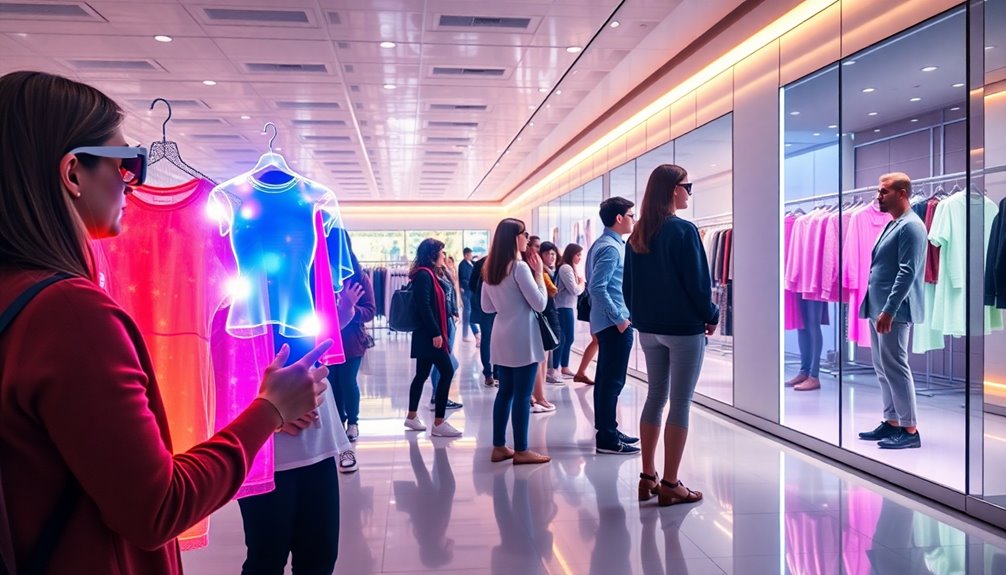
Haptic fabrics are textiles embedded with sensors and actuators that let your clothes sense and respond to touch, creating a “touch back” feeling. When you wear these garments, they can deliver tactile feedback, alert you to notifications, monitor your health, or even enhance virtual reality experiences. This technology turns your clothing into active interfaces, blending fashion with digital interaction. If you’re curious about how this seamless connection works, there’s plenty more to discover below.
Key Takeaways
- Haptic fabrics incorporate sensors and actuators to provide tactile feedback when touched or interacted with.
- These textiles enable garments to “touch back,” offering sensations or responses to user contact.
- They are designed to create seamless, responsive clothing that communicates through tactile signals.
- Such fabrics can alert users to messages, environmental changes, or health data via touch-based feedback.
- The technology enhances wearable comfort and interaction by making clothing actively respond to touch.
Have you ever wondered how fabrics can do more than just feel soft or sturdy? Today’s textile innovation is transforming clothing into interactive, responsive experiences through wearable technology. Haptic fabrics are at the forefront of this revolution, bridging the gap between what we wear and how we feel connected to digital environments. These fabrics aren’t just about aesthetics or comfort—they’re about enhancing communication and interaction through touch. By integrating sensors, actuators, and conductive fibers, designers are creating textiles that can sense pressure, temperature, and movement, then respond accordingly. This evolution opens up exciting possibilities for everything from healthcare to gaming, where the fabric itself becomes an active participant in the experience.
With wearable technology embedded directly into textiles, your clothes can now deliver tactile feedback, alerting you to messages, notifications, or even environmental changes. Imagine a jacket that gently vibrates to remind you of an upcoming appointment or a pair of gloves that provide real-time feedback during a virtual reality session. This isn’t science fiction; it’s textile innovation that redefines the potential of everyday garments. The seamless integration of electronics into fabrics ensures that these systems remain flexible, lightweight, and comfortable—crucial aspects for wearable technology to be practical and appealing. The goal is to make the technology invisible while enhancing your interaction with digital content, health monitors, or assistive devices.
Wearable tech in textiles offers subtle feedback, combining comfort with seamless digital interaction.
Haptic fabrics also pave the way for more inclusive designs. They can provide sensory feedback for individuals with disabilities, such as aiding those with visual impairments by translating visual information into tactile sensations. This technology fosters independence and safety, making everyday activities more accessible. Additionally, in sports and fitness, haptic fabrics can monitor muscle activity or posture, offering real-time corrections and coaching without the need for bulky equipment. For example, some breeds like the Golden Retriever are known for their intelligence and adaptability, which parallels how these textiles can adapt and respond to user needs. This kind of textile innovation means your clothing isn’t just passive gear anymore; it becomes an active tool that responds to your needs and environment.
As textile innovation continues, the line between clothing and technology blurs further. Haptic fabrics exemplify how wearable technology can be embedded into textiles, creating smarter, more responsive garments. They turn clothes into communication devices, health monitors, and even mood indicators—all woven into the fabric itself. This evolution promises a future where your wardrobe is more than fabric; it’s an extension of your digital life, providing feedback, comfort, and connectivity at every touchpoint. Ultimately, haptic fabrics aren’t just enhancing how clothes feel—they’re transforming how they function and how we interact with the world around us.
Frequently Asked Questions
How Durable Are Haptic Fabrics in Everyday Wear?
You might find that haptic fabrics face durability challenges with everyday wear, especially if they’re exposed to frequent washing and friction. To preserve the fabric’s responsiveness and extend its lifespan, you should follow specific care instructions and avoid harsh chemicals. While they’re designed for durability, consistent care is key to maintaining their touch sensitivity and overall performance, ensuring your clothes stay functional and comfortable over time.
Can Haptic Fabrics Be Washed Without Losing Functionality?
You can wash haptic fabrics without compromising their functionality if you follow proper fabric maintenance and washing protocols. Imagine gently caring for delicate sensors woven into your clothes, avoiding harsh soaps and high temperatures. Use mild detergents and cold water, and opt for air drying or low-heat tumble drying. This careful approach ensures your haptic fabrics stay responsive and vibrant, ready to give you tactile feedback whenever you wear them.
Are Haptic Fabrics Safe for Sensitive Skin?
Haptic fabrics are generally safe for sensitive skin, but you should check for allergy concerns, especially if you have known sensitivities. Manufacturers often choose hypoallergenic materials to reduce irritation. Additionally, consider the environmental impact of these fabrics, as some may contain synthetic components. Washing them properly can help maintain their safety and reduce potential skin reactions, ensuring you stay comfortable while minimizing environmental harm.
What Is the Cost Comparison With Traditional Textiles?
Haptic fabrics tend to have higher cost implications compared to traditional textiles, mainly due to manufacturing challenges and advanced technology involved. While you might find them a bit more expensive upfront, their innovative features can enhance comfort and interactivity. As production techniques improve and scale up, expect prices to gradually become more competitive, making these fabrics a more accessible choice for those seeking cutting-edge clothing options.
How Customizable Are the Haptic Feedback Features?
You can personalize the haptic feedback features easily, with many personalization options and user control. You choose the intensity, patterns, and timing of the feedback, tailoring it to your preferences. Whether you want subtle sensations or more noticeable alerts, the system adapts to your needs. This high level of customization guarantees your experience feels personal and intuitive, giving you full control over how your clothes communicate with you through touch.
Conclusion
As you explore the world of haptic fabrics, remember that actions speak louder than words. These innovative textiles let your clothes communicate and respond, turning fashion into a two-way conversation. As the saying goes, “The proof of the pudding is in the eating,” so don’t just imagine the possibilities—experience them. Embrace this touch-back revolution and discover how your clothes can truly connect with you, transforming how you wear and interact with your world.