
Eco-monitoring devices help you track water use and detect pollutants in your textile washing processes, allowing you to save water and reduce environmental impact. These smart sensors analyze wastewater in real-time, providing immediate feedback on over-washing and chemical levels. By integrating these systems, you can improve efficiency, stay compliant with regulations, and protect waterways. Discover how these innovative tools can make your operations more sustainable and environmentally responsible as you explore further details.
Key Takeaways
- Eco-monitoring devices enable real-time tracking of water consumption in textile washing processes for better conservation.
- They detect dyes, chemicals, and pollutants at low levels, ensuring wastewater quality and regulatory compliance.
- Advanced sensors provide continuous data analysis, helping identify inefficiencies and prevent environmental contamination.
- Seamless integration with cloud platforms allows easy access to water use and pollution data via user-friendly dashboards.
- These devices support proactive operational adjustments, reducing water footprint, chemical use, and potential fines.
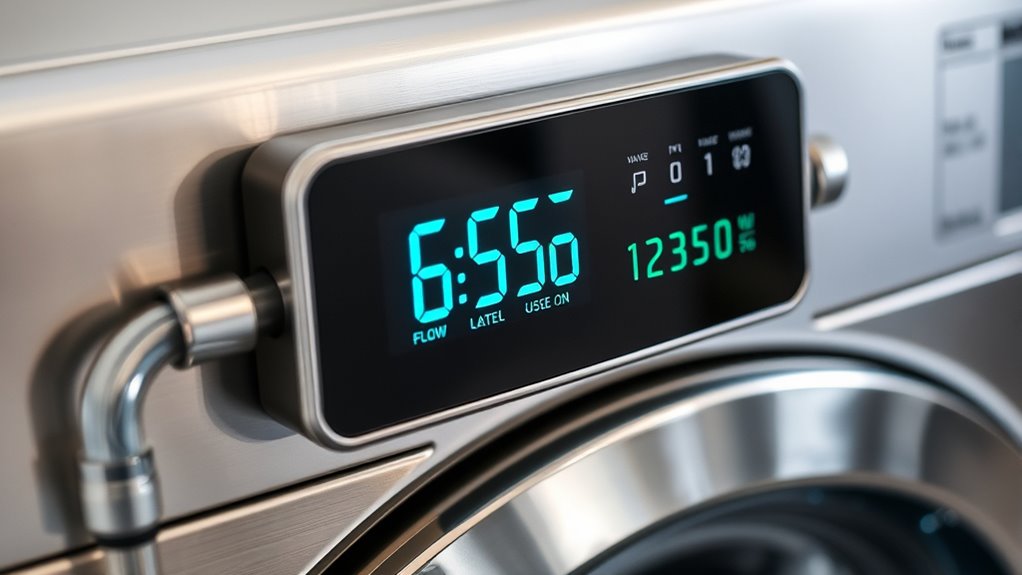
Eco-monitoring devices are revolutionizing how we track environmental health and manage natural resources. When it comes to water use in textile washing, these devices give you the power to monitor consumption closely, helping you adopt smarter water conservation practices. Instead of relying on estimates or manual checks, you can now get real-time data on how much water your washing processes consume. This immediate feedback allows you to identify inefficiencies, such as over-washing or unnecessary rinses, so you can adjust operations to save water without compromising quality. By doing this, you’re not only reducing your water footprint but also contributing to the preservation of crucial freshwater resources. These devices are especially valuable in regions where water scarcity is a concern, ensuring that textile factories and laundries operate sustainably while maintaining productivity.
Beyond water conservation, eco-monitoring devices excel at pollution detection. During textile washing, wastewater can contain dyes, chemicals, and other pollutants that threaten local ecosystems if not properly managed. Modern monitoring tools can detect pollutants at very low concentrations, providing early warnings before contamination levels become dangerous. With this capability, you can promptly address leaks or overflows, preventing harmful substances from entering waterways. Pollution detection features also help you comply with environmental regulations, avoiding costly fines and reputational damage. By continuously analyzing wastewater quality, you’re able to optimize cleaning processes, reducing chemical use and minimizing environmental impact. Additionally, some advanced devices incorporate high-precision sensors that enhance detection accuracy, further safeguarding the environment and improving operational efficiency. This proactive approach not only protects the environment but also improves your overall operational efficiency.
Implementing eco-monitoring devices is straightforward, and many are designed to integrate seamlessly into existing systems. They often use sensors connected to cloud-based platforms, giving you instant access to data from your smartphone or computer. With user-friendly dashboards, you can track water consumption trends, identify peak usage times, and see where improvements are needed. These insights empower you to make data-driven decisions that enhance water conservation efforts and reduce pollution. Additionally, many devices feature alerts that notify you of abnormal readings, so you can take immediate action without delay. This real-time monitoring capability is essential for maintaining compliance and ensuring your operations remain environmentally responsible.

HiLetgo TDS Sensor Water Conductivity Sensor Liquid Detection Sensor Water Quality Monitoring Sensor Module TDS Monitor Kit Analog Output
Wide Voltage Input: 3.3~5.5V; Output Voltage: 0 ~ 2.3V
As an affiliate, we earn on qualifying purchases.
As an affiliate, we earn on qualifying purchases.
Frequently Asked Questions
How Accurate Are Eco-Monitoring Devices in Detecting Water Pollution?
You might wonder how accurate eco-monitoring devices are at detecting water pollution. Their accuracy depends on proper sensor calibration, which guarantees precise measurements. When well-calibrated, these devices provide reliable data, making it easier for you to assess water quality effectively. Keep in mind, regular calibration is essential for maintaining data reliability. Ultimately, with proper maintenance, eco-monitoring devices can offer trustworthy insights into water pollution levels.
Can These Devices Be Used in Small-Scale or Home Laundry Setups?
You might wonder if eco-monitoring devices work in small or home laundry setups. These devices are increasingly designed for household integration, making it easier for you to monitor water usage and pollution levels. Many models now feature DIY installation, so you can set them up without professional help. While some advanced features may be limited, these devices generally offer practical insights, helping you reduce water waste in your daily laundry routines.
What Is the Average Cost of Implementing Eco-Monitoring Systems?
Thinking about the cost analysis for eco-monitoring systems, you’ll find market pricing varies based on features and scale. Generally, small setups start around $200, while more advanced systems can cost up to $1,000 or more. These prices include installation and calibration. You should consider your specific needs and budget to determine the best fit, but overall, eco-monitoring offers a cost-effective way to reduce water use and save money long-term.
How Do Eco-Monitoring Devices Impact Overall Water Conservation Efforts?
Eco-monitoring devices boost water conservation by encouraging behavior change and supporting policy incentives. When you track water use in real time, you become more aware of consumption patterns, leading to more mindful habits. These devices also help policymakers identify high-usage areas, enabling targeted incentives that promote efficient water use. Overall, they create a feedback loop that motivates responsible water management and enhances conservation efforts.
Are There Any Privacy Concerns Associated With Monitoring Water Usage?
Like an invisible guardian watching over your every move, monitoring water use raises privacy concerns, making you wonder if your data security is truly safe. You might feel exposed, as sensitive information could be vulnerable to breaches or misuse. While these devices aim to conserve resources, it’s essential to address privacy concerns, ensuring your data stays secure and your personal space remains protected amid the digital eyes watching your water habits.
real-time wastewater pollution detection devices
As an affiliate, we earn on qualifying purchases.
As an affiliate, we earn on qualifying purchases.
Conclusion
By using eco-monitoring devices, you can markedly reduce water waste in textile washing. Did you know that these devices can cut water use by up to 30%? That means you’re not only saving valuable resources but also lowering your environmental footprint. Embracing this technology makes a real difference—helping you stay eco-friendly and efficient. So, take action today and start tracking your water use to make a positive impact on the planet.

FloodStop Washing Machine Leak Detector Kit with Automatic Water Shut-Off and Visual/Audible Alarms, 3/4" 90deg, Hot & Cold Valves
Discontinued by Manufacturer
As an affiliate, we earn on qualifying purchases.
As an affiliate, we earn on qualifying purchases.

YoLink LoRa Smart Water Level Monitoring Sensor, Wireless Battery-Powered Float Switch Alarm, Sump Pump Alarm, AC Condensate Overflow, Tank Level, Toilet Leak Sensor, 105dB Siren, YoLink Hub Required
MANY APPLICATIONS! Sump pump alarm, AC condensate pan overflow alarm, runaway toilet/jammed flapper, internal toilet leak alarm, fish…
As an affiliate, we earn on qualifying purchases.
As an affiliate, we earn on qualifying purchases.