
Automated laundry systems now use smart technology to handle everything from sorting to folding with minimal effort on your part. They identify fabrics, adjust wash cycles, and sort clothes automatically, reducing errors and protecting delicate materials. Robotic arms or folding machines neatly organize your laundry, saving time and effort. Plus, these systems learn your routines over time for a personalized experience. Keep exploring to discover how these innovations can revolutionize your laundry days effortlessly.
Key Takeaways
- Automated laundry systems utilize smart sensors and machine learning to sort clothes by color, fabric, and type, reducing manual effort.
- Advanced robots handle folding and stacking, producing neatly organized laundry with minimal human intervention.
- Smart wash technology detects fabric types, adjusts cycles, and optimizes cleaning for different materials.
- Integration with mobile apps allows remote control and monitoring of laundry processes for added convenience.
- These systems enhance efficiency, reduce errors, and extend clothing lifespan through tailored care routines.
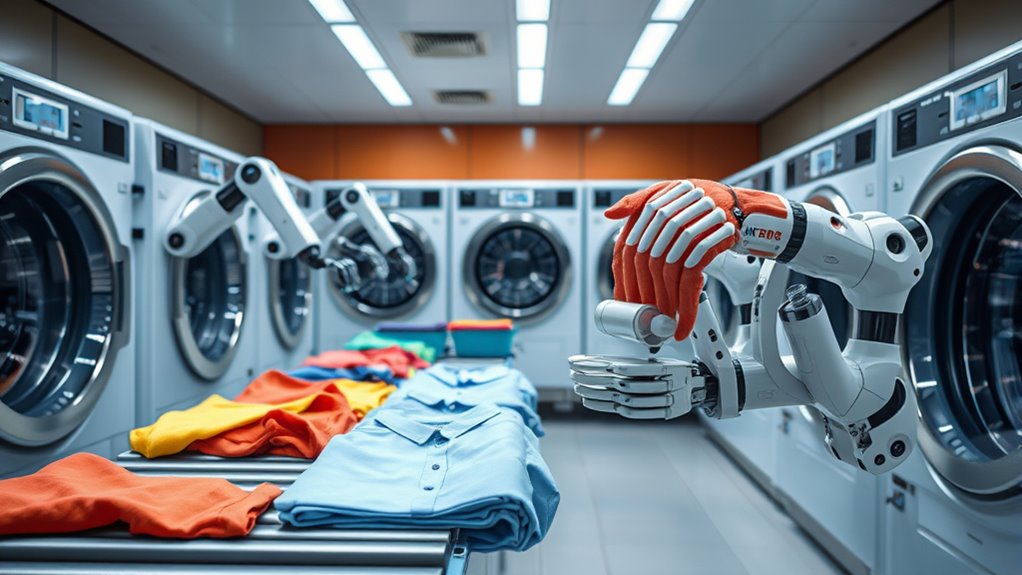
Automated laundry systems are revolutionizing the way you do your laundry by streamlining the entire process. These advanced setups incorporate smart wash technology that automatically detects the type of fabric and adjusts water levels, wash cycles, and temperature settings accordingly. This guarantees your clothing gets the perfect clean every time, while also maximizing energy and water use. With smart wash capabilities, you no longer need to guess the right settings or manually adjust controls; instead, the system intelligently tailors each wash to protect your fabrics and prolong their life. This focus on fabric care means your clothes stay vibrant and intact longer, reducing wear and tear caused by improper washing.
Beyond just washing, these systems handle sorting and folding in ways you never thought possible. Automated sorting mechanisms use sensors to separate whites, colors, and delicates, eliminating the tedious task of manual sorting. This not only saves you time but also minimizes the risk of color bleeding or damaging fragile fabrics. Once the wash cycle finishes, some systems even employ robotic arms or folding machines that neatly fold your clothes, leaving you with perfectly folded laundry ready to put away. The entire process becomes more efficient, freeing up your time for other activities.
The integration of smart sensors and machine learning further enhances fabric care. These systems learn from your laundry habits, adjusting wash cycles for different types of fabrics and stains. They can identify delicate materials like silk or wool and switch to gentler cycles automatically, ensuring your most sensitive clothing receives the appropriate treatment. This personalized approach helps maintain the quality and appearance of your wardrobe over time, reducing the need for costly repairs or replacements.
Automation also reduces the chance of human error, which is common with manual laundry routines. Forgetting to add detergent or overloading the machine; with these systems, everything is calibrated for ideal performance. Some models even have remote control apps, so you can start or monitor your laundry from anywhere, making the entire experience more convenient. As a result, your laundry process becomes less of a chore and more of an effortless task, all while caring better for your clothes. Additionally, understanding the importance of proper maintenance of these high-tech systems ensures they continue to operate efficiently and extend their lifespan.
Frequently Asked Questions
How Do Automated Laundry Robots Handle Delicate Fabrics?
When it comes to handling delicate fabrics, automated laundry robots prioritize fabric care by using advanced sensors that gauge fabric sensitivity. You’ll notice the robots adjust their washing and drying techniques, applying gentle movements and lower temperatures. This careful approach guarantees your delicate items aren’t damaged. The robot’s sensitivity to fabric types helps maintain quality and prolongs the life of your clothes, making laundry both easier and safer for your special fabrics.
What Is the Maintenance Cost of Automated Laundry Systems?
When considering the maintenance cost of automated laundry systems, you should do a thorough cost analysis and establish a regular maintenance schedule. These systems typically require periodic inspections, software updates, and part replacements, which can vary in cost depending on the complexity of the equipment. Staying proactive with maintenance helps prevent costly repairs, ensuring your system runs efficiently and reduces unexpected expenses over time.
Can These Systems Be Integrated With Existing Laundry Facilities?
You can certainly integrate automated laundry systems with your existing facilities, but compatibility challenges may arise. It is crucial to assess your current infrastructure to confirm smooth retrofit possibilities. Some systems might require upgrades or modifications, so working with providers who offer adaptable solutions helps. With proper planning, you can effectively combine new automation technology with your current setup, improving efficiency without significant disruptions or costs.
How Do Robots Identify and Sort Different Clothing Materials?
Did you know robots can identify and sort thousands of clothing items daily? They use advanced clothing detection and material recognition techniques to distinguish fabrics like cotton, wool, or synthetic fibers. By analyzing texture, weight, and color, these robots accurately sort laundry, reducing errors and saving time. This technology allows seamless integration into existing laundry setups, making your laundry process more efficient and reliable with minimal manual intervention.
Are Automated Laundry Systems Energy-Efficient Compared to Traditional Methods?
You might wonder if automated laundry systems are energy-efficient compared to traditional methods. These systems often use advanced sensors and optimized processes that reduce energy consumption, which lowers their environmental impact. By streamlining sorting, washing, and folding, you save water and electricity. Overall, automation can lead to a smaller environmental footprint, making these systems a more sustainable choice for eco-conscious users seeking efficient laundry solutions.
Conclusion
You can see how automated laundry systems are transforming everyday chores, making life easier and more efficient. With robots handling sorting, washing, and folding, you save time and reduce errors. Did you know that these systems can process up to 50 pounds of laundry in just an hour? That’s a huge leap from manual efforts. As technology advances, you’ll find yourself spending less time on laundry and more on what truly matters.