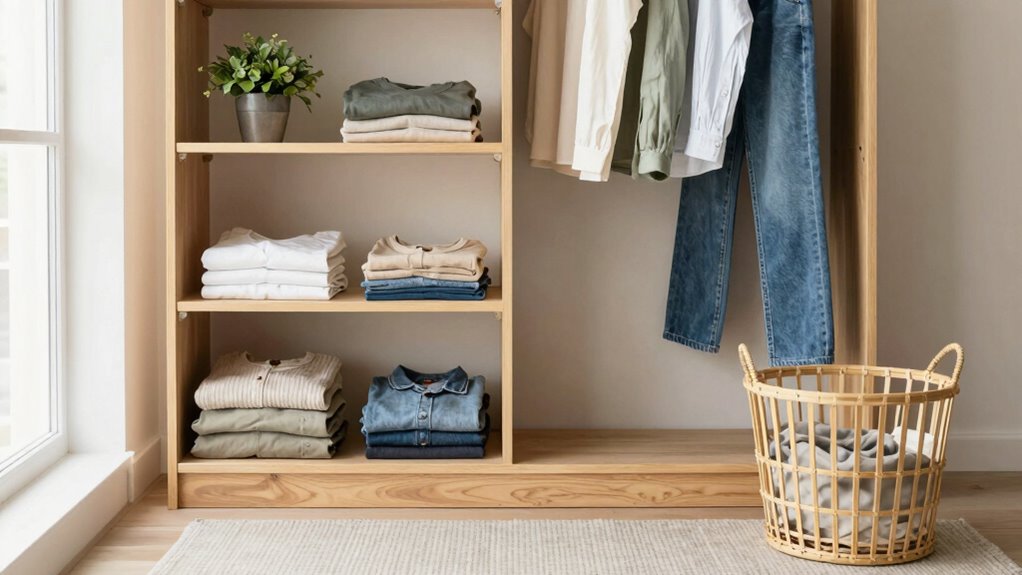

To build a more sustainable closet, start with small habits like upcycling, swapping, or donating clothes you no longer wear. Choose eco-friendly fabrics like organic cotton or recycled materials, and support responsible brands committed to ethical practices. Invest in quality pieces that last longer, reducing the need for frequent replacements. Proper clothing care, like washing in cold water and avoiding dryers, also extends your wardrobe’s life. Keep exploring for more practical tips to make your wardrobe truly eco-friendly.

Get your wardrobe favorites delivered free — and shop member deals
- Fast, free delivery on millions of items
- Access to Prime Big Deal Days deals on October 6–7
- Prime Video, Amazon Music and more included
Key Takeaways
- Incorporate clothing recycling, upcycling, or swapping to extend the life of your garments.
- Choose eco-friendly fabrics like organic cotton, hemp, or recycled fibers for new purchases.
- Support ethical brands committed to sustainable and responsible manufacturing practices.
- Prioritize quality over quantity by investing in durable, timeless pieces.
- Adopt eco-friendly washing habits, such as using cold water and eco detergents, to prolong clothing lifespan.

Have you ever wondered how to create a wardrobe that’s stylish, functional, and eco-friendly? Building a sustainable closet doesn’t happen overnight, but small, intentional habits can make a big difference over time. One effective way to start is by embracing fashion recycling. Instead of constantly buying new pieces, you can give your existing clothes a second life through alterations, upcycling, or swapping with friends. This reduces waste and minimizes the demand for new production, which often involves environmentally harmful practices. When you focus on fashion recycling, you’re not only cutting down on clutter but also fostering a more mindful approach to your wardrobe, making every piece count.
Embrace fashion recycling—upcycle, swap, and repurpose to create a stylish, eco-friendly wardrobe with less waste.
In addition to recycling your clothes, pay attention to the fabrics you choose. Eco-friendly fabrics are essential to creating a sustainable closet. These materials, such as organic cotton, hemp, Tencel, or recycled fibers, are produced with less water, fewer chemicals, and lower emissions. When shopping or updating your wardrobe, prioritize brands that use eco friendly fabrics, and look for certifications like GOTS or OEKO-TEX. By doing so, you support sustainable manufacturing practices and reduce your ecological footprint. Over time, these conscious choices help build a collection of versatile, durable pieces that contribute less to environmental harm. Incorporating sustainable manufacturing practices into your wardrobe choices can further amplify your positive impact. Additionally, choosing brands that prioritize ethical production ensures your garments are made under fair labor conditions and with minimal environmental impact. Developing an awareness of clothing lifecycle can help you make more sustainable decisions throughout the lifespan of your garments.
Another habit to adopt is investing in quality over quantity. Instead of filling your closet with fast fashion items that wear out quickly, choose well-made garments that last longer. This means fewer trips to buy replacements and less waste overall. When you buy fewer, better, and more sustainable pieces, your wardrobe becomes more cohesive and easier to maintain. Also, consider supporting brands committed to ethical production and sustainability—they often use eco friendly fabrics and incorporate fashion recycling into their business models. Your commitment to these brands encourages the industry to move toward more responsible practices. Additionally, being mindful of the environmental impact of your clothing choices can help you make more informed decisions when shopping.
Finally, be mindful of your washing habits. Use cold water, skip the dryer when possible, and choose eco-friendly detergents. These small steps extend the life of your clothes and reduce energy consumption. Taking care of your wardrobe in this way not only preserves your favorite pieces but also lessens their environmental impact. Over time, these habits become second nature, transforming your closet into a reflection of your values—stylish, practical, and eco-conscious. Building a sustainable closet one habit at a time is achievable, and your efforts will contribute to a healthier planet while ensuring you always look and feel great.
eco-friendly organic cotton t-shirts
As an affiliate, we earn on qualifying purchases.
As an affiliate, we earn on qualifying purchases.
Frequently Asked Questions
How Can I Identify Truly Sustainable Clothing Brands?
You can identify truly sustainable clothing brands by checking their use of sustainable fabrics like organic cotton, hemp, or recycled materials. Look for ethical certifications such as Fair Trade, GOTS, or B Corp, which verify responsible practices. Research the brand’s transparency about their supply chain and labor conditions. If they openly share their sustainability efforts and hold credible certifications, you’re likely choosing a genuinely sustainable brand.
What Are Eco-Friendly Laundry Practices for a Sustainable Closet?
You can adopt eco-friendly laundry practices by using natural fibers, which typically require less harsh chemicals and energy. To conserve water, wash full loads and opt for eco-friendly detergents. Consider air-drying clothes instead of using a dryer, which saves energy and prolongs fabric life. Studies show that water conservation and choosing natural fibers considerably reduce your environmental footprint, making your closet more sustainable.
How Do I Maintain Quality While Shopping Sustainably?
To maintain quality while shopping sustainably, focus on choosing eco-friendly fabrics like organic cotton, hemp, or Tencel. Prioritize brands that emphasize ethical sourcing, ensuring fair labor practices and transparency. Invest in timeless, versatile pieces that last longer, reducing the need for frequent replacements. By researching brands and prioritizing quality over quantity, you build a sustainable wardrobe that’s both durable and environmentally responsible.
Are Thrift Shopping and Clothing Swaps Effective Sustainability Strategies?
Thrift shopping and clothing swaps are powerful tools against fast fashion’s throwaway culture. They symbolize rebirth—giving pre-loved clothes new life—while reducing waste. These strategies promote sustainable choices and often feature items with ethical certifications, ensuring you support fair labor practices. By embracing them, you’re actively creating a more sustainable closet, making a direct impact by extending clothing lifespans, cutting waste, and fostering community connections.
How Can I Reduce Clothing Waste at Home?
You can reduce clothing waste at home by focusing on clothing durability and fabric recycling. Opt for well-made garments that last longer, and repair or repurpose damaged clothes instead of discarding them. Learn about fabric recycling options in your area to transform old textiles into new items. Additionally, donate or sell clothes you no longer wear, ensuring they find a new purpose rather than ending up in a landfill.
Conclusion
By making small, mindful changes, you can transform your closet into a more sustainable space. Remember, about 85% of clothing items end up in landfills, so every conscious choice counts. When you choose quality over quantity and support eco-friendly brands, you’re helping reduce waste and pollution. Keep building these habits—your wardrobe will become more ethical, and you’ll feel good knowing you’re making a difference, one step at a time.
Halloween Picks
halloween
As an affiliate, we earn on qualifying purchases.