When hand-washing wool, use cool or lukewarm water to prevent shrinking or felting, as hot water can damage the fibers. Opt for a gentle, wool-specific detergent and only use a small amount to avoid residues that can cause stiffness. Gently soak and swirl your garment without wringing, then rinse thoroughly in cool water. Lay flat to dry, reshaping it carefully. To discover more tips for keeping your wool looking its best, keep exploring.

Get your wardrobe favorites delivered free — and shop member deals
- Fast, free delivery on millions of items
- Access to Prime Big Deal Days deals on October 6–7
- Prime Video, Amazon Music and more included
Key Takeaways
- Use cool or lukewarm water to prevent wool shrinking or felting.
- Choose mild, wool-specific or fragrance-free detergents; avoid harsh soaps and bleach.
- Use a small amount of detergent and gently swirl the garment without agitation.
- Rinse thoroughly with cool water to remove soap residues and prevent fiber stiffening.
- Avoid wringing; gently press out excess water and lay flat to dry, reshaping as needed.
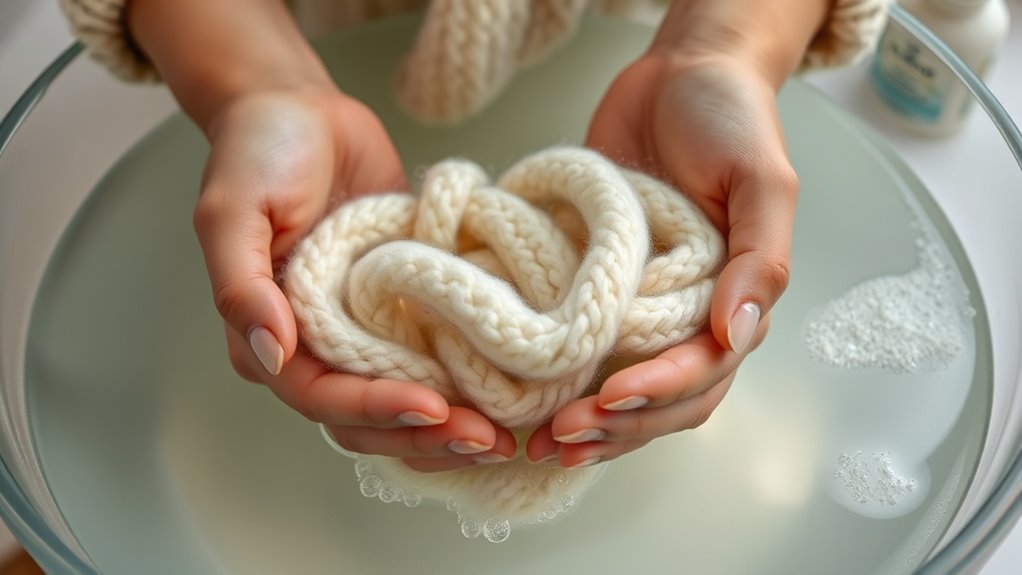
Wondering how to keep your wool garments in top shape? Hand-washing is often the best way to preserve their softness and longevity, but knowing the right temperature and detergent guidelines makes all the difference. You want to avoid machine drying, as it can cause wool fibers to shrink or become misshapen, and it also increases the risk of pilling. Instead, gentle hand-washing helps maintain the natural integrity of your wool and keeps pilling prevention measures effective.
Start by filling a clean basin or sink with cool or lukewarm water. Hot water can cause wool to shrink or felt, so steer clear of high temperatures. The water should be just warm enough to dissolve the detergent and clean the fibers without damaging them. Use a mild, wool-specific detergent or a gentle, fragrance-free option. Avoid harsh soaps or detergents with bleach, which can weaken fibers and lead to premature wear. When adding the detergent, use only a small amount—more isn’t better and can leave residues that irritate your skin or cause the wool to stiffen.
Gently submerge your wool garment, avoiding agitating or wringing it out aggressively. Instead, softly swirl the garment in the water, ensuring all areas are soaked. Be cautious with the handling, as rough movements can fray fibers or cause pilling over time. Let the garment soak for about 10 to 15 minutes, letting the detergent do its work without any excessive agitation. After soaking, drain the basin and rinse the wool thoroughly with cool water until no soap residue remains. Proper rinsing is essential because leftover detergent can cause fibers to stiffen and lead to pilling.
Once rinsed, avoid twisting or wringing your wool. Instead, gently press out excess water by pressing the garment against the side of the basin or laying it flat on a clean towel. Rolling the garment in a towel can help absorb additional moisture without stressing the fibers. Resisting the urge to machine dry is key here. Instead, lay your wool flat on a clean, dry towel or drying rack, reshaping it gently to its original form. This prevents shrinking and helps maintain the garment’s smooth appearance.
Additionally, taking care with temperature control and detergent not only preserves your wool’s softness but also helps prevent pilling. Proper hand-washing reduces friction and fiber breakage that often leads to pilling, ensuring your garment stays looking pristine longer. By avoiding machine drying and handling wool gently, you keep your garments comfortable, durable, and looking new for many wears.
As an affiliate, we earn on qualifying purchases.
Frequently Asked Questions
How Often Should I Hand-Wash My Wool Garments?
You should hand-wash your wool garments only when they’re visibly dirty or have absorbed odors, typically every few wears. Proper drying techniques are essential—lay your wool flat to prevent stretching and maintain their shape. Store wool properly in a cool, dry place, and avoid frequent washing to preserve fibers. This approach keeps your wool looking fresh, ensures longevity, and avoids unnecessary wear, so you can enjoy your garments longer.
Can I Use Regular Laundry Detergent for Wool?
You might wonder if regular laundry detergent works for wool, but it’s best to check detergent compatibility first. Regular detergents often contain harsh chemicals that can damage wool fibers, so they aren’t recommended. For your wool garments, use a gentle, wool-specific detergent to preserve quality. Also, keep in mind that washing frequency should be limited to avoid unnecessary wear. Always follow care instructions for the best results.
Is It Safe to Soak Wool for a Long Time?
You might wonder if soaking wool for a long time is safe. It’s best to limit soaking duration because prolonged exposure can weaken wool fibers and cause damage. Keep your wool submerged only as long as necessary to clean or treat it, usually around 10-15 minutes. Extended soaking increases the risk of fiber damage, so always monitor the time to preserve your wool’s softness and integrity.
Should I Use Cold or Warm Water for Hand-Washing Wool?
For hand-washing wool, you should use cold water to protect the fibers from shrinking or felting. Warm water can cause damage, so stick with cold water for the best results. Choose a gentle, wool-specific detergent that’s mild and free from harsh chemicals. This combination preserves your wool’s softness and shape, ensuring it stays in great condition after washing. Always avoid hot water to prevent any unwanted damage.
How Do I Prevent Wool From Shrinking During Washing?
To prevent wool from shrinking during washing, you need to follow proper wool fiber care and shrink prevention techniques. Always wash wool in cold water, as warm water can cause fibers to tighten and shrink. Use a gentle detergent specifically designed for wool. Avoid wringing or twisting the fabric, and instead, gently press out excess water. Lay your wool item flat to dry, maintaining its shape and preventing shrinkage.
Conclusion
Now that you know the gentle touch wool needs, imagine dipping your fingers into cool, clear water, feeling the softness of the fibers. With just the right temperature and a gentle detergent, you’ll breathe new life into your wool, like guiding a delicate flower through a tender rain. Handle it with care, and your cherished piece will stay cozy and beautiful, ready to warm you again and again, like a comforting hug from nature itself.
Fall Picks
fall essentials
As an affiliate, we earn on qualifying purchases.