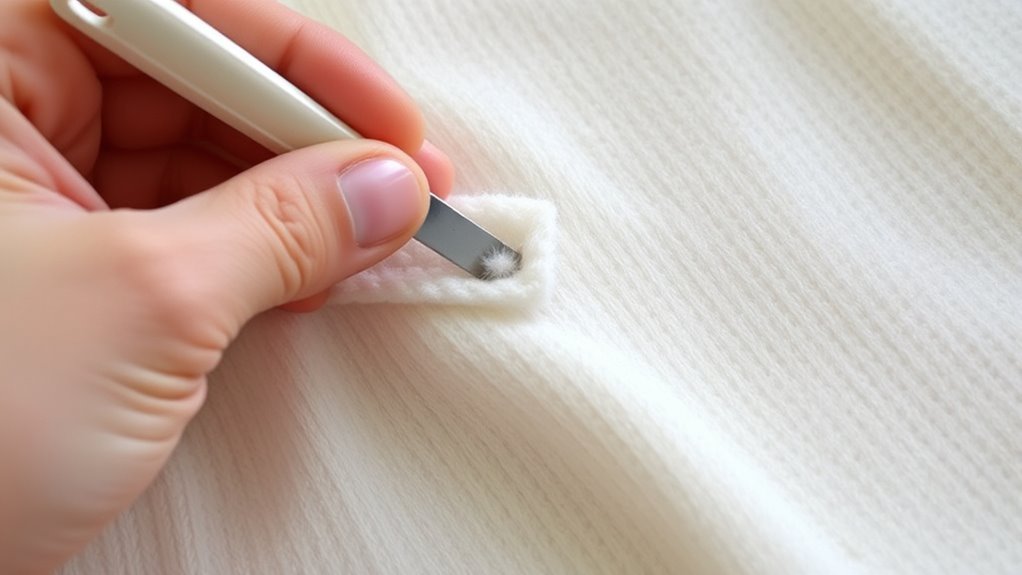
To de-pill sweaters without damage, gently use a fabric shaver with a protective guard or a fine-toothed sweater comb, applying light pressure to lift pills without snagging the fabric. For delicate materials like wool or cashmere, opt for a fabric shaver and work carefully in well-lit areas. You can also try wrapping adhesive tape around your hand and pressing it gently onto the pills. Keep your approach gentle and tailored to your sweater’s fabric to avoid tears—discover more safe techniques below.
Listen free for 30 days with Audible
Thousands of audiobooks and originals — cancel anytime.
As an affiliate, we earn on qualifying purchases.
Key Takeaways
- Use a fabric shaver with a protective guard and gentle pressure on delicate sweaters.
- Gently run a fine-toothed sweater comb over the fabric to lift pills carefully.
- For natural removal, press adhesive tape onto the fabric to lift pills without pulling.
- Always work in well-lit areas to see pills clearly and avoid damaging the fabric.
- Regularly de-pill sweaters using gentle methods to prevent excessive pilling and fabric damage.
Over time, sweaters can develop unsightly pills that make them look worn and less appealing. These little fuzz balls, or pills, happen because of the fabric types your sweater is made from and the pilling causes associated with each. Different fabrics respond differently to wear, and understanding these differences helps you choose the right method to de-pill without damaging the material. For example, wool and cashmere tend to pill more easily due to their fine fibers, while cotton and synthetic blends may pill less but can still develop fuzz balls over time. Knowing your sweater’s fabric type is essential, as it guides you in selecting the safest de-pilling method.
Understanding fabric types helps you choose the safest de-pilling method for your sweater.
Pilling causes are primarily related to friction and abrasion. When you wear or wash your sweater, fibers rub against each other or against other surfaces, causing loose fibers to tangle and form pills. This is especially common in areas of high friction, like elbows, underarms, or where the sweater folds. Additionally, the way you wash and dry your sweater influences pilling. Rough handling, aggressive washing cycles, and dryers with high heat can all accelerate fiber breakage and pilling. Understanding these pilling causes helps you prevent future fuzz balls, but when pills do appear, the key is to remove them carefully to avoid damaging the delicate fibers.
To de-pill your sweater safely, start by evaluating its fabric type. For wool or cashmere, a gentle approach works best. Use a fabric shaver designed specifically for delicate fabrics—these have a protective guard that prevents cutting into the fibers. Lightly run the shaver over the surface, applying minimal pressure, and work in small sections. For cotton or synthetic blends, a fine-toothed sweater comb is effective. Gently glide it over the surface to lift pills without snagging the fabric. Always work in a well-lit area so you can spot pills clearly and avoid missing any or causing damage.
If you prefer a more natural method, tape can also be useful. Wrap a piece of adhesive tape around your hand, with the sticky side outward, and gently press it onto the fabric to lift pills. This method is safe for most fabrics and requires no special tools. Remember to be gentle throughout the process—ripping or aggressive pulling can cause pulling or tearing, especially in softer fabrics. Regular maintenance with these methods keeps your sweaters looking fresh and minimizes the need for harsh interventions. With the right approach tailored to your sweater’s fabric type and an understanding of pilling causes, you can de-pill effectively without risking damage, keeping your favorite sweaters looking their best for years.
fabric shaver for delicate sweaters
As an affiliate, we earn on qualifying purchases.
As an affiliate, we earn on qualifying purchases.
Frequently Asked Questions
Can De-Pilling Damage Delicate or Specialty Fibers?
Yes, de-pilling can damage delicate or specialty fibers if you’re not careful. Fiber sensitivity varies, so some fabrics are more prone to damage during pilling prevention. Using a gentle de-pilling tool, like a fine-toothed comb or a fabric shaver designed for delicate fibers, minimizes risk. Always test on a small area first, and avoid excessive pressure to keep your sweater’s fibers intact while effectively removing pills.
How Often Should I De-Pill My Sweaters?
You should de-pill your sweaters whenever they start to look fuzzy or dull, usually every few wears or once a month. Regular de-pilling helps maintain fabric softness and prevents excessive pilling, keeping your sweater looking fresh longer. Be gentle during the process to avoid damaging delicate fibers. Consistent maintenance not only improves appearance but also extends the life of your sweater, ensuring it stays soft and cozy over time.
Are There Eco-Friendly De-Pilling Options Available?
Yes, there are eco-friendly options for de-pilling your sweaters. You can choose sustainable solutions like bamboo fabric shavers or ceramic blades, which are gentle on fabrics and eco-conscious. These eco-conscious tools help you effectively remove pills without causing damage, all while reducing environmental impact. By selecting green gadgets, you guarantee your sweater stays pristine and planet-friendly, proving that caring for your clothing can also mean caring for the Earth.
Will De-Pilling Change the Sweater’s Color or Texture?
De-pilling generally won’t change your sweater’s color or texture if you use fiber-safe tools and techniques. When you choose gentle methods, like a fabric shaver or depilling comb, you preserve the fiber integrity, ensuring color stays vibrant and texture remains soft. Always follow the product instructions carefully to avoid damage, and consider eco-friendly options for a safer, effective de-pilling process that maintains your sweater’s original look.
Can I De-Pill Sweaters Made of Blended Fibers Effectively?
Imagine you’re a modern-day Marie Antoinette tackling blended fiber challenges. Yes, you can de-pill sweaters made of blended fibers effectively, but it requires patience. Use gentle pilling prevention techniques like a fabric shaver or a fine-tooth comb. Be cautious, as some fibers may be more delicate. Always test a small area first to prevent damage, and avoid over-aggressive methods to maintain your sweater’s integrity and appearance.
Conclusion
By de-pilling sweaters carefully, you protect their softness, preserve their appearance, and extend their lifespan. You prevent damage, maintain their comfort, and keep them looking their best. You take control of your wardrobe’s quality, show your sweaters some love, and enjoy wearing them confidently. With just a few simple steps, you guarantee your sweaters stay fresh, new, and beautiful—because caring for your clothes is caring for yourself. Keep de-pilling, keep loving, and keep looking great.
Evergreen bestsellers Picks
bestsellers
As an affiliate, we earn on qualifying purchases.