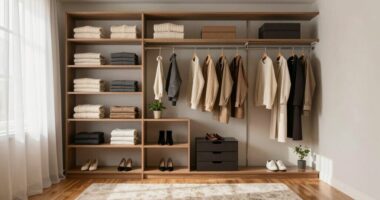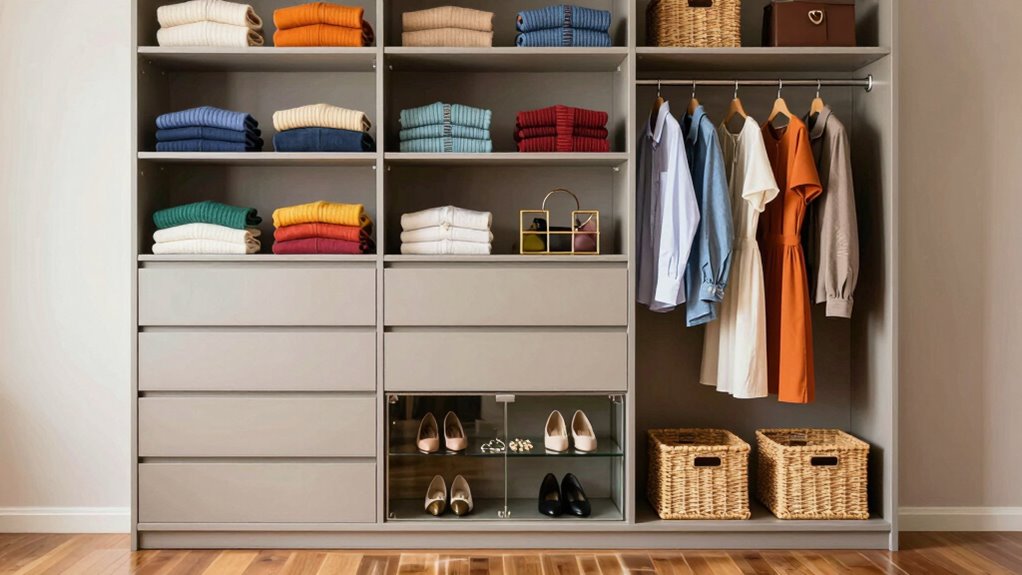
To build a closet around what you actually wear, start by decluttering and removing items that no longer fit, are unworn, or don’t match your current style. Organize your wardrobe based on your daily routines, keeping your go-to pieces front and center. Create dedicated zones for different clothing types and store seasonal items out of the way. Use efficient storage solutions to maximize space and keep accessories tidy. Keep it simple, functional, and tailored to your habits—more tips come with continued effort.
Key Takeaways
- Declutter regularly to keep only items that suit your current lifestyle and style preferences.
- Organize clothing by routine, placing daily wear accessible and easy to find.
- Create dedicated zones for different wardrobe categories to streamline outfit selection.
- Store seasonal and less-used items out of immediate reach to maintain a functional, clutter-free space.
- Use quality storage solutions to maximize space and keep frequently worn items front and center.
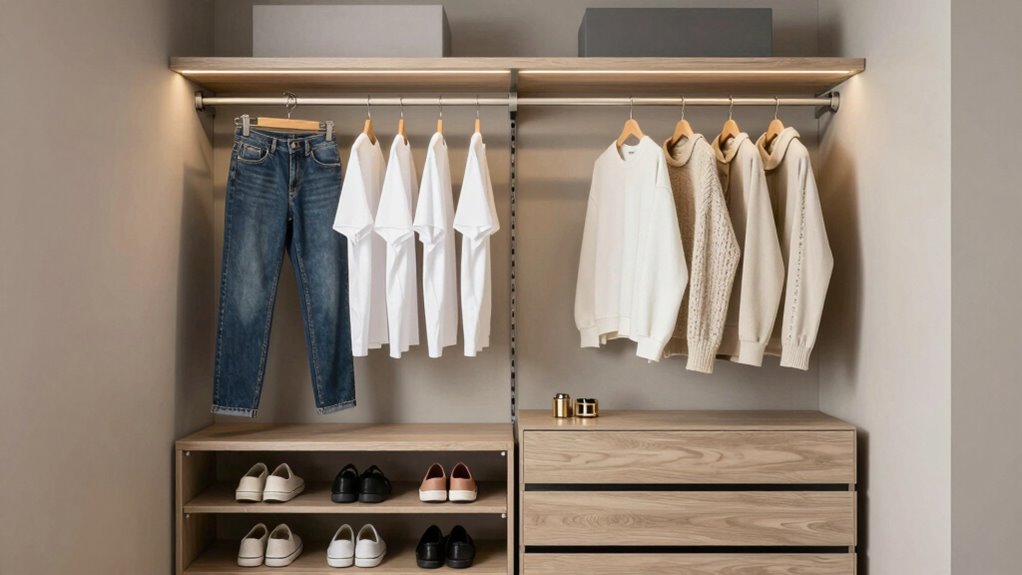
Ever wonder how to create a closet that truly works for your daily wardrobe? The key is to design it around what you actually wear, not what looks good in theory. Start by decluttering your space and removing everything that no longer fits, you don’t wear, or simply doesn’t suit your current style. Once you’ve pared down your wardrobe, organize what remains based on your daily routines. Keep your go-to pieces front and center, making it easy to see and access what you wear most often. This way, you minimize time spent hunting for the right outfit and reduce clutter, creating a more functional space.
Next, focus on accessory organization. Accessories can easily become cluttered and hard to find, so creating dedicated spots for jewelry, belts, scarves, and hats helps keep everything tidy. Use small drawers, hooks, or tiered trays to categorize these items. When accessories are well-organized, you’ll find it easier to coordinate outfits quickly, which saves time and mental energy. It also prevents you from losing pieces or buying duplicates because you can’t locate what you already own.
Seasonal storage is another *essential* element in building a closet that genuinely supports your wardrobe habits. Store out-of-season clothing in bins or vacuum-sealed bags, and tuck them away in less accessible areas like the top shelves or under the bed. This frees up space for your current season’s essentials, making your closet less crowded and more manageable. When the seasons change, swap out your seasonal storage, so you’re always working with the clothes you actually need. This keeps your closet streamlined and prevents it from becoming overwhelmed by items you only wear a few months each year. Incorporating storage solutions that maximize space can also help optimize your closet’s functionality. Additionally, understanding your wardrobe habits can help tailor your storage to better suit your needs.
As you build your closet around what you wear, also consider creating designated zones for different clothing categories. For example, keep everyday casual wear in one section and work clothes in another. This zoning makes it easier to put together outfits without rummaging through the entire closet. Invest in quality hangers to prevent clothing from slipping or getting misshapen, and use drawer dividers to keep smaller items like socks and underwear sorted. The goal is to create a space that’s intuitive and easy to maintain.
closet organization storage bins
As an affiliate, we earn on qualifying purchases.
As an affiliate, we earn on qualifying purchases.
Frequently Asked Questions
How Do I Determine My Core Wardrobe Essentials?
To determine your core wardrobe essentials, start by identifying your wardrobe staples—clothing you wear most often and feel comfortable in. Think about versatile pieces like a white tee, jeans, a blazer, and comfortable shoes. Evaluate your daily routines and style preferences to pick essential clothing that can mix and match, creating numerous outfits. Keep only what fits well, suits your lifestyle, and makes you feel confident.
What Storage Solutions Are Best for Limited Space?
For limited space, you should use versatile storage solutions like clothing racks and under-bed storage. Clothing racks help you hang frequently worn items, freeing up closet space and making your wardrobe more accessible. Under-bed storage is perfect for seasonal clothing or overflow, keeping things organized and out of sight. Combining these options maximizes your space efficiency, making it easier to access your essentials without cluttering your room.
How Often Should I Reassess My Wardrobe?
They say “out of sight, out of mind,” so you should reassess your wardrobe every few months. Regular wardrobe decluttering helps you identify items you no longer wear and makes clothing rotation easier. By doing this, you guarantee your closet stays organized and reflects your current style. Reassessing seasonally or when your wardrobe feels cluttered keeps your space functional and prevents unnecessary purchases.
How Can I Organize Seasonal Clothing Efficiently?
To organize seasonal clothing efficiently, plan a clothing rotation during seasonal shifts. Store off-season items in labeled bins or under-bed storage to free up space and reduce clutter. When the season changes, swap out your wardrobe, keeping only current-season pieces accessible. This method helps you stay organized, prevents overpacking, and makes it easier to find what you need quickly, ensuring your closet remains tidy and functional year-round.
What Are Tips for Maintaining an Organized Closet Long-Term?
Stay on top of your closet game by making it a habit to regularly reassess your space. Keep clothing color coordination in mind to prevent clutter, and use accessory storage ideas like small bins or hooks to keep items tidy. Remember, a place for everything and everything in its place helps you maintain an organized closet long-term. Consistency is key—don’t let things pile up, or you’ll be chasing your tail.
clothing hanging organizers
As an affiliate, we earn on qualifying purchases.
As an affiliate, we earn on qualifying purchases.
Conclusion
So, here’s the twist: by building your closet around what you actually wear, you might just end up with a space that’s less about storage and more about simplicity. Ironically, the more you focus on only what works, the less clutter you’ll have—yet somehow, you’ll also have less excuse to shop. Turns out, the secret to a functional closet isn’t more space, but smarter choices. Who knew minimalism could be so liberating?
accessory storage solutions
As an affiliate, we earn on qualifying purchases.
As an affiliate, we earn on qualifying purchases.
vacuum sealed clothing storage bags
As an affiliate, we earn on qualifying purchases.
As an affiliate, we earn on qualifying purchases.