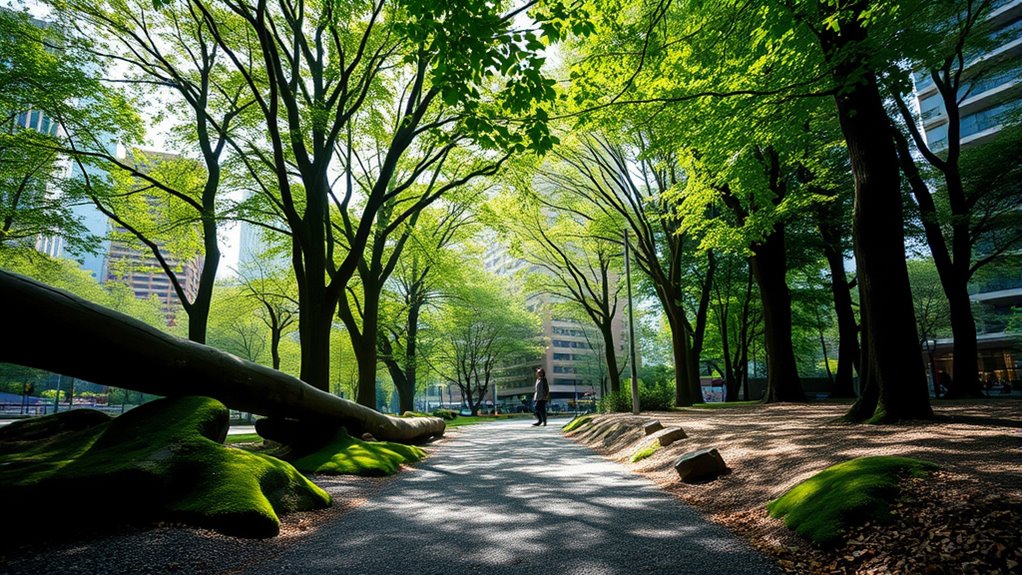

To start forest bathing in urban parks, find a quiet green space and set aside time to walk slowly, paying attention to your senses. Observe wildlife, identify trees, and focus on natural sounds, smells, and sights. Practice mindfulness by breathing deeply and fully experiencing your environment. Engaging with nature this way reduces stress and boosts well-being. Exploring these simple steps further will help you discover how to deepen your connection with urban nature.

Get your wardrobe favorites delivered free — and shop member deals
- Fast, free delivery on millions of items
- Access to Prime Big Deal Days deals on October 6–7
- Prime Video, Amazon Music and more included
Key Takeaways
- Choose a quiet, green urban park to minimize distractions and enhance relaxation.
- Practice slow, mindful breathing and sensory awareness during your walk.
- Observe and identify local trees and wildlife to deepen your connection with nature.
- Engage all senses by noticing sounds, smells, textures, and colors in the environment.
- Use mindfulness to focus on present-moment experiences, reducing stress and enhancing well-being.
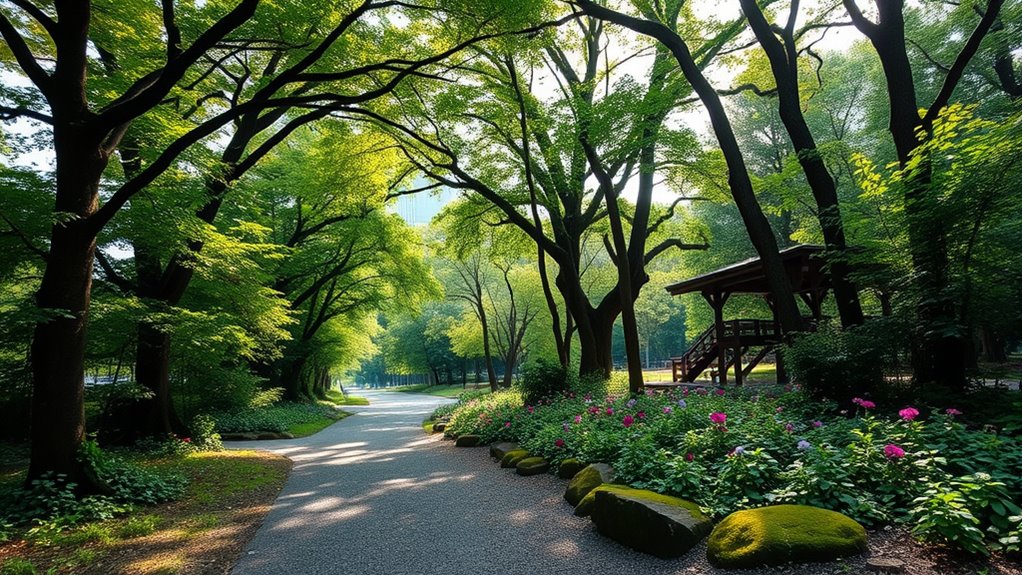
In today’s busy urban environments, finding a peaceful retreat can be challenging, but urban parks offer a perfect escape for forest bathing. As you step into these green spaces, you begin to notice the subtle sounds of rustling leaves, chirping birds, and distant city noise blending into a calming symphony. To deepen your experience, try engaging in wildlife observation. Keep your eyes open for birds perched on tree branches, squirrels darting across the ground, or insects buzzing nearby. Noticing these small creatures helps you feel more connected to nature, even amid the city’s hustle. As you observe wildlife, you may also become interested in identifying the trees around you. Learning to distinguish different tree species enhances your forest bathing practice and deepens your appreciation for the park’s natural diversity. Start by looking for key features like leaf shape, bark texture, and overall tree form. For example, oak trees often have lobed leaves and rugged bark, while maples display palmate leaves and smooth or flaky bark. Taking a moment to identify and appreciate these trees can anchor your attention and ground you in the present moment. This process turns a walk into an educational experience, making your time in the park more meaningful. Additionally, understanding the color accuracy of the natural environment can enhance your perception of the different shades and hues present in the foliage, enriching your sensory experience.
As you move through the park, focus on slow, mindful breathing, syncing your breath with each step. Notice how your body feels as you walk softly over the ground, paying attention to the sensation of your feet touching different surfaces—dirt, grass, or paved paths. Engage your senses fully: smell the fresh scent of leaves, feel the coolness of the breeze, and listen to the diversity of sounds around you. If you see a bird singing or a squirrel scurrying, take a moment to observe without judgment or distraction. This mindful awareness helps calm your mind and reduces stress.
urban park binoculars for bird watching
As an affiliate, we earn on qualifying purchases.
As an affiliate, we earn on qualifying purchases.
Frequently Asked Questions
Can Children or Seniors Safely Participate in Forest Bathing?
You might wonder if children or seniors can safely participate in forest bathing. With proper precautions, child safety and senior participation are attainable. Always choose gentle, accessible trails and keep an eye on their comfort. Encourage short, leisurely sessions and ensure they stay hydrated. By planning thoughtfully, you create a safe environment where both children and seniors can enjoy the calming benefits of nature without worry.
How Often Should I Practice Forest Bathing for Health Benefits?
Think of your well-being as a garden that needs regular tending. To reap health benefits, aim for at least one to two sessions weekly, as this frequency recommendation supports stress reduction and improved mood. Consistency enhances the health impact, helping you feel calmer, more centered, and energized. By making forest bathing a routine, you nurture your mental and physical health, turning each visit into a essential act of self-care.
What Should I Wear or Bring During Urban Forest Bathing?
When urban forest bathing, you should wear appropriate clothing that keeps you comfortable and protected from weather changes. Light layers and breathable fabrics work well. Bring essential gear like a water bottle, insect repellent, and a small notebook to jot down your thoughts. Comfortable shoes are a must for walking. Avoid heavy gear or bright colors that might disturb the peaceful atmosphere. Preparing properly helps you enjoy the experience fully.
Are There Specific Urban Parks Recommended for Beginners?
They say, “Start small,” and that’s wise for beginners. For urban parks, look for those with easy access, paved paths, and calming park features like water or trees. Parks such as Central Park in NYC or Golden Gate Park in San Francisco are great choices because of their accessibility options and welcoming environments. These parks help you ease into forest bathing, making your experience enjoyable and stress-free.
How Does Urban Pollution Affect the Benefits of Forest Bathing?
Urban pollution can impact the benefits you get from forest bathing by reducing air quality, which may cause you to breathe in pollutants instead of pure, fresh air. While pollution mitigation efforts help improve air quality, it’s best to choose parks with lower pollution levels. This way, you maximize the calming effects and health benefits, ensuring you truly enjoy nature’s restorative power without the harmful effects of urban pollution.
Conclusion
So, next time you need a quick escape, remember that spending just 20 minutes in an urban park can reduce stress hormones by up to 20%. Forest bathing isn’t just a trend—it’s a simple way to boost your mood, improve focus, and reconnect with nature right in your city. So, take a deep breath, slow down, and let the greenery work its magic. Your mind and body will thank you for it.
Halloween Picks
halloween
As an affiliate, we earn on qualifying purchases.