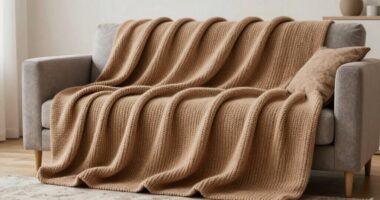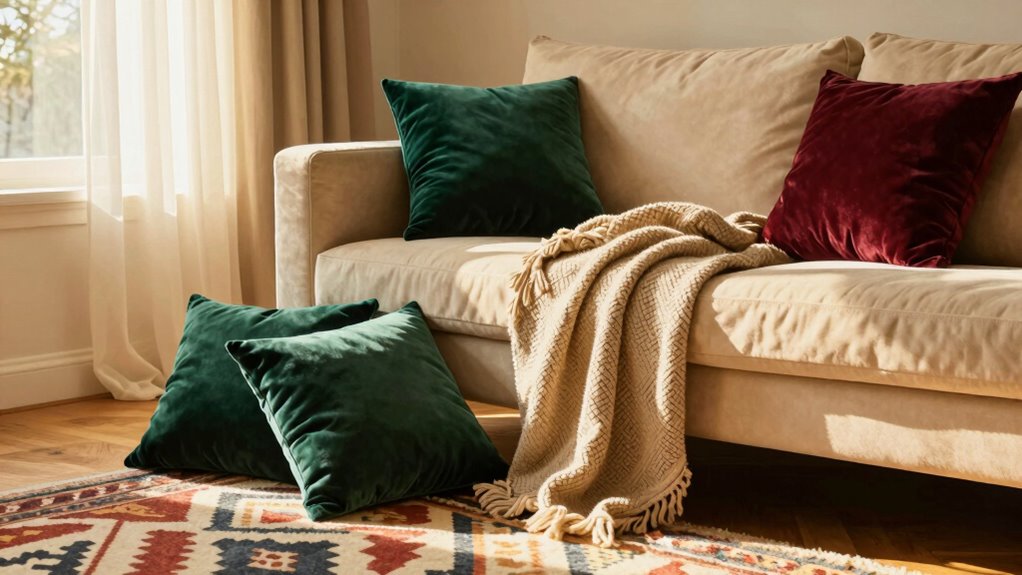

You can instantly change your room’s mood by choosing textiles with the right colors and textures. Bright hues like reds and oranges energize the space, while soft pastels create calm and serenity. Mixing different textures adds depth and interest, making your environment feel more inviting or vibrant. Small swaps, such as new pillow covers or throws, have a big impact without a full makeover. Keep exploring to discover more tips on transforming your space effortlessly.

Get your wardrobe favorites delivered free with Prime
- Fast, free delivery on millions of items
- Prime Video, Amazon Music and more included
- Member-only deals all year
Key Takeaways
- Swapping pillow covers or throws instantly updates the room’s color scheme and mood.
- Using vibrant or soft textiles quickly creates energy or calmness in the space.
- Mixing textures like plush velvet with smooth silk adds depth and influences ambiance.
- Changing curtains or rugs alters the visual and tactile experience immediately.
- Coordinating contrasting or harmonious colors with textiles instantly shifts the room’s vibe.
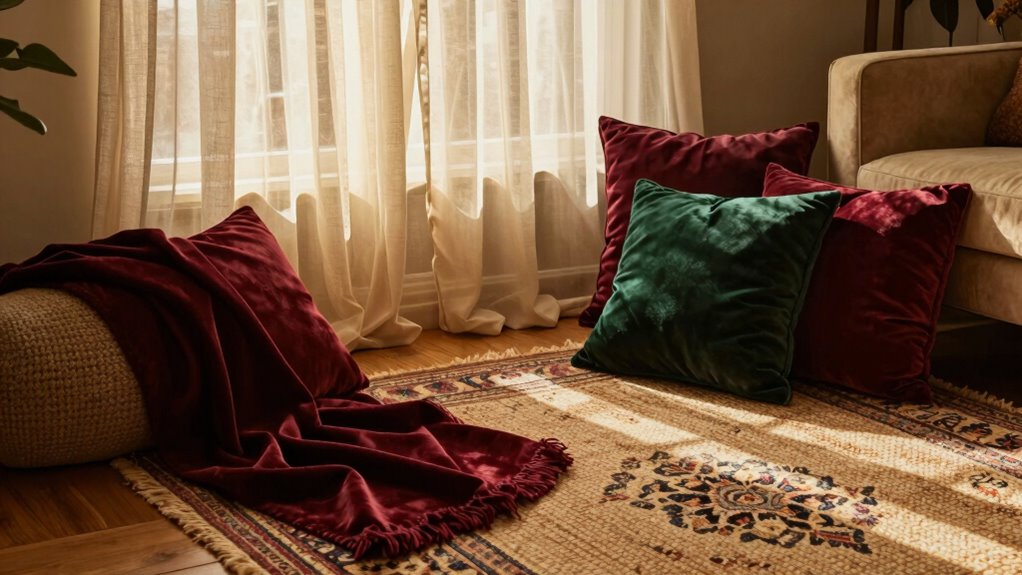
Textiles play a pivotal role in shaping the mood of a room, influencing how inviting, cozy, or vibrant it feels. When you consider adding new textiles, think about how color coordination can dramatically alter the atmosphere. Bright, bold hues like reds and oranges inject energy, making a space feel lively and dynamic. Conversely, soft neutrals and pastels create a calming, serene environment. By choosing textiles with complementary colors or contrasting shades, you can set the tone you want in an instant. For example, pairing a deep navy sofa with mustard-yellow cushions adds a striking visual appeal that energizes the room, while blending similar shades produces a more harmonious, soothing effect.
Textiles shape your room’s mood with vibrant or calming colors, creating energy or serenity instantly.
Texture contrast is another powerful tool at your disposal. When you introduce textiles with different textures—smooth silk pillows alongside chunky wool throws—you add depth and interest. This contrast can make a space feel more layered and inviting, encouraging touch and interaction. If your goal is to make a room feel cozy and warm, opt for plush, tactile fabrics like velvet or faux fur. These fabrics evoke comfort and intimacy, especially when paired with softer lighting. On the other hand, incorporating sleek, shiny fabrics such as satin or leather can lend a modern, sophisticated vibe, changing the room’s mood from relaxed to chic. Additionally, understanding how textiles influence room ambiance can help you make more intentional design choices. Recognizing the impact of fabric textures allows you to craft a space that truly reflects your desired atmosphere. Exploring different fabric combinations can also help you create a unique and personalized style that resonates with your mood preferences.
You can also quickly influence the room’s ambiance by mixing textures thoughtfully. For example, a rougher, textured rug can ground a space, while smooth curtains or silk cushions soften the overall look. The contrast between textures creates visual interest, making the space feel more curated and intentional. When you combine this with well-chosen color coordination, the room’s mood shifts effortlessly. A monochromatic palette with varied textures feels calm and cohesive, while a vibrant mix of contrasting colors paired with contrasting textures can energize the space and make it feel lively. Paying attention to color harmony and how it interacts with textures ensures your design choices work synergistically to enhance the room’s mood. Moreover, understanding how fabric textures influence perception can help you fine-tune your decor to evoke specific feelings. Incorporating textile selection principles can further refine your approach, ensuring each element complements the overall ambiance.
Ultimately, the way you use textiles to play with color coordination and texture contrast has immediate impact. You don’t need a complete overhaul to change your room’s vibe—just a few well-chosen textiles can do the trick. Swapping out pillow covers, adding a textured throw, or changing curtains are quick fixes that can make your space feel more inviting, vibrant, or cozy. Pay attention to how different textures and colors interact, and you’ll see how easily textiles can transform the mood of your room in no time.
As an affiliate, we earn on qualifying purchases.
Frequently Asked Questions
How Do Different Fabric Textures Affect Room Ambiance?
Different fabric textures instantly influence your room’s ambiance by adding depth and interest. Pattern variety keeps the space lively, while texture contrast creates visual intrigue and comfort. Soft, plush fabrics evoke coziness, perfect for relaxing areas, whereas sleek, smooth textiles give a modern, sophisticated vibe. You can easily transform your room’s mood by mixing textures and patterns, making it feel more dynamic, inviting, or calming depending on your choice.
Can Changing Textiles Instantly Transform a Room’s Mood?
Yes, changing textiles can instantly transform a room’s mood. By selecting textiles that align with color psychology, you influence emotions and atmosphere quickly. For example, vibrant reds energize, while calming blues relax. Seasonal updates, like cozy throws or light fabrics, refresh your space and reflect the time of year. You can easily create a new vibe by swapping out textiles, making your room feel fresh and inviting in moments.
What Colors of Textiles Have the Most Calming Effect?
Pastel blues and soft greens, with their gentle hues, offer the most calming effect through color psychology. These textiles reduce sensory stimulation, creating a serene atmosphere amid a busy world. Their subtle tones provide a soothing contrast to vibrant surroundings, encouraging relaxation. You’ll find that incorporating these calming colors into your textiles can instantly foster peace and tranquility, transforming your space into a restful retreat.
How Often Should Textiles Be Replaced to Maintain a Fresh Look?
You should replace textiles every 1-2 years to keep your space feeling fresh. Incorporate personalized fabric pieces that reflect your style, and consider seasonal textile updates to refresh the look regularly. This not only maintains a vibrant atmosphere but also prevents wear and fading. By updating your textiles periodically, you guarantee your room stays inviting, cozy, and aligned with your evolving taste, making each season feel new and exciting.
Do Natural Fibers Create a Different Mood Than Synthetic Ones?
Natural fibers create a warm, inviting, and calming mood, while synthetic ones often bring a sleek, modern, and vibrant vibe. You feel cozy with eco-friendly materials like cotton and wool, embracing comfort and sustainability. Vintage textiles, with their rich history and unique textures, evoke nostalgia and charm. Whether you choose natural or synthetic, selecting textiles based on mood and style helps set the perfect atmosphere for your space.
Conclusion
Think of textiles as the soul’s whisper in your space, wrapping your room in a comforting embrace or energizing it with vibrant hues. They’re like a painter’s brushstroke, transforming dull walls into a lively canvas or softening corners into cozy retreats. With a simple throw or plush curtain, you hold the power to change your room’s mood instantly—turning an ordinary space into a sanctuary of your feelings, a reflection of your inner world woven into every thread.
Fall Picks
fall essentials
As an affiliate, we earn on qualifying purchases.