
To style open shelves without looking random, curate a mix of art, personal items, and greenery thoughtfully. Distribute larger pieces at the bottom and lighter ones higher up to create balance. Incorporate plants of varying heights and use decorative pots to add texture. Leave empty space to let individual items stand out and avoid clutter. Group similar objects for cohesion and consider using risers or stands for layers. Keep an eye on harmony and intentionality—more tips await if you’re curious.
Key Takeaways
- Curate each shelf with purpose, grouping similar items and leaving negative space for a balanced, intentional look.
- Incorporate a mix of art, personal items, and plants at varying heights to create visual interest and cohesion.
- Distribute heavier and larger objects towards the bottom, with lighter pieces higher for stability and balance.
- Use plant stands, risers, and varied sizes to add layers and prevent flat, cluttered appearances.
- Maintain harmony by thoughtfully spacing items, avoiding overcrowding, and ensuring each piece has room to breathe.
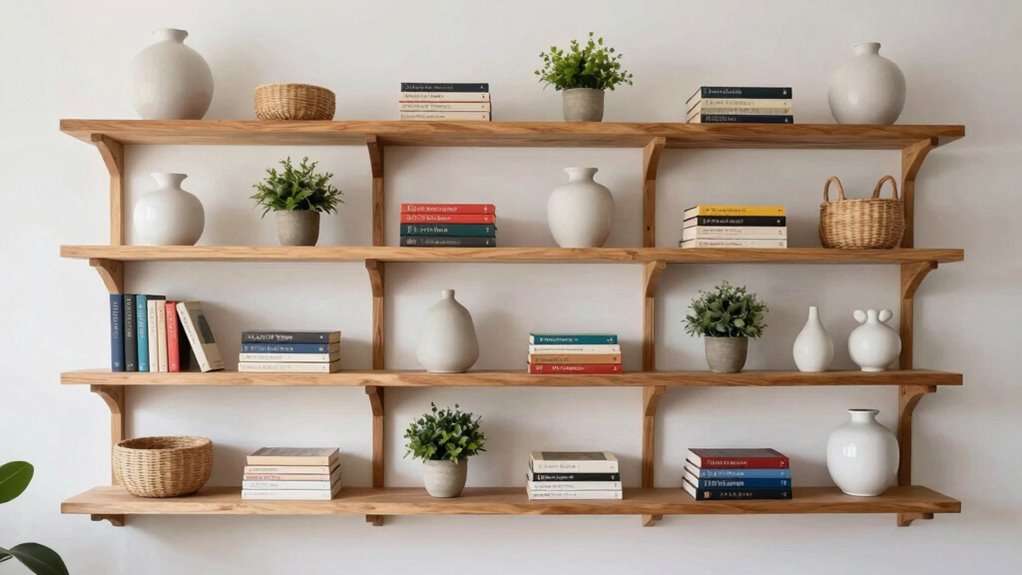
Open shelves can instantly elevate your space, but styling them correctly is key to achieving a balanced and appealing look. When you’re decorating with art, choose pieces that speak to your personality and complement your overall decor. Instead of cluttering shelves with random objects, select artwork that adds visual interest and creates focal points. Small framed prints, abstract pieces, or even a favorite photograph can bring personality without overwhelming the space. Mix different sizes and shapes to keep the display dynamic, but avoid overloading the shelves. Remember, negative space is just as important as what you display; it helps each piece stand out.
Incorporating plants is another effective way to add life and texture to your open shelves. Choose plants that thrive indoors and suit the lighting conditions of your space. Small succulents, trailing pothos, or elegant ferns can soften the look and introduce a natural element. Place plants at varying heights—some tucked into decorative pots, others cascading over the edges—to create visual interest. Be mindful not to crowd the shelves; give each plant enough space to breathe. Use plant stands or risers to elevate some greenery, which adds layers and prevents the display from feeling flat. The greenery not only adds color but also creates a sense of freshness and warmth. Additionally, understanding contrast ratio can help you optimize the visual impact of your decor elements, especially when considering lighting and color schemes.
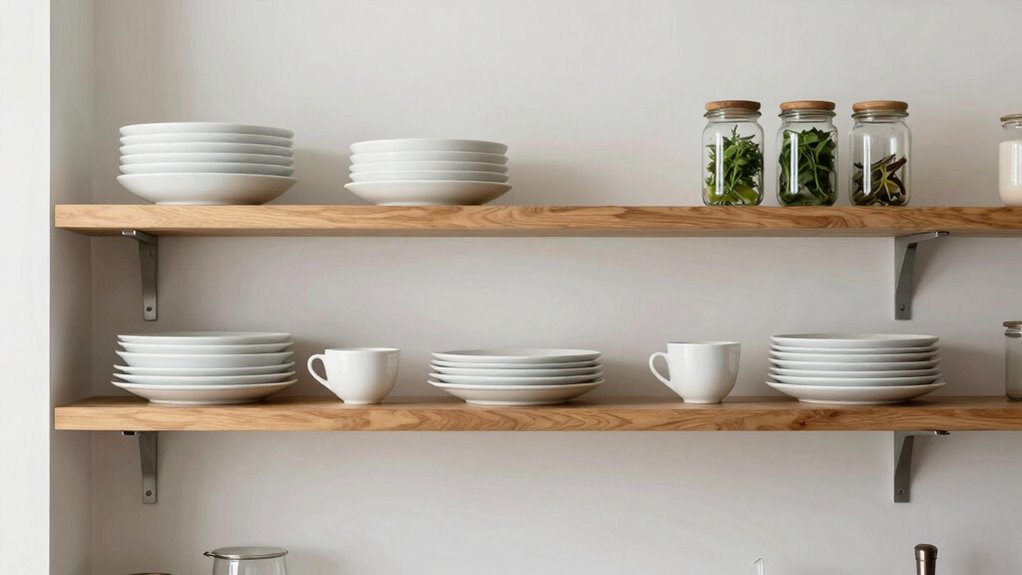
To keep your open shelves from looking random, think about the overall balance. Distribute heavier or larger items towards the bottom and lighter or smaller objects higher up. Group similar items together to create cohesion, whether that’s a row of books, a collection of bowls, or a set of decorative objects. When combining art and plants, consider their placement carefully—art can serve as a backdrop, while plants can serve as accents. Incorporate symmetry by mirroring objects on either side or stagger items for a more relaxed vibe. Don’t be afraid to leave some empty space; it allows your decorative elements to breathe and prevents the shelves from appearing cluttered.
Being intentional with your choices is essential, as visual balance ensures a harmonious display that feels curated and appealing. Ultimately, the key to styling open shelves is intentionality. Select each piece with purpose, balancing visual weight and incorporating natural elements and art thoughtfully. When you do this, your shelves will look curated and cohesive, turning an ordinary storage solution into a striking design feature.
decorative plant stands for indoor plants
As an affiliate, we earn on qualifying purchases.
As an affiliate, we earn on qualifying purchases.
Frequently Asked Questions
How Often Should I Update the Items on My Open Shelves?
You should update your open shelves every few months to keep them fresh. Focus on maintaining shelf symmetry by balancing items, and use color coordination to create a cohesive look. Swap out decor pieces or rearrange books and accessories regularly, so your shelves stay stylish and organized. Updating periodically helps prevent clutter and keeps your space feeling lively, while also giving you a chance to refresh your overall decor theme.
What Colors Work Best for Open Shelf Decor?
You should choose color schemes that create harmony and contrast on your open shelves. Neutral tones like whites, grays, and beiges work well for a calm, cohesive look, while bold colors add personality. For shelf arrangements, mix textures and sizes to avoid monotony, and balance your decor with a few statement pieces. Keep the color palette consistent to make your shelves look intentional and stylish, not chaotic.
Can Open Shelves Look Cluttered Even When Styled Well?
Yes, open shelves can look cluttered even when styled well, like a garden overgrown with weeds. To avoid this, you focus on decorating with plants for a fresh touch and arrange symmetrical items to create balance. Regularly editing your decor keeps the space feeling intentional rather than chaotic. Think of your shelves as a living canvas—careful placement transforms clutter into a curated display that invites admiration, not overwhelm.
How Do I Prevent Dust Accumulation on Open Shelves?
To prevent dust accumulation on your open shelves, regularly dust them with a microfiber cloth or a soft duster. Incorporate shelf maintenance into your routine—wipe down surfaces weekly to keep dust at bay. Consider using clear acrylic or glass fronts on some shelves for added dust prevention. Keeping items organized and avoiding clutter also makes dust easier to remove, ensuring your shelves stay clean and stylish without the fuss.
What Are Some Budget-Friendly Styling Tips for Open Shelves?
You can style open shelves on a budget by focusing on decorative accents and shelf organization. Start with affordable items like DIY crafts, thrift finds, or plants to add personality. Arrange your decor with balance, mixing taller and shorter pieces, and leave some space between items for a clean look. Using everyday objects creatively as decor can help you achieve a stylish, curated vibe without overspending.
Conclusion
Think of your open shelves as a blank canvas, waiting for your personal touch. When you style them intentionally, you’re not just arranging objects—you’re telling a story. Each item, like a chapter, adds meaning and rhythm. With a little thought, your shelves can become a symbol of your unique style and personality, transforming a simple space into a reflection of you. So, curate with purpose and let your shelves speak volumes about who you are.