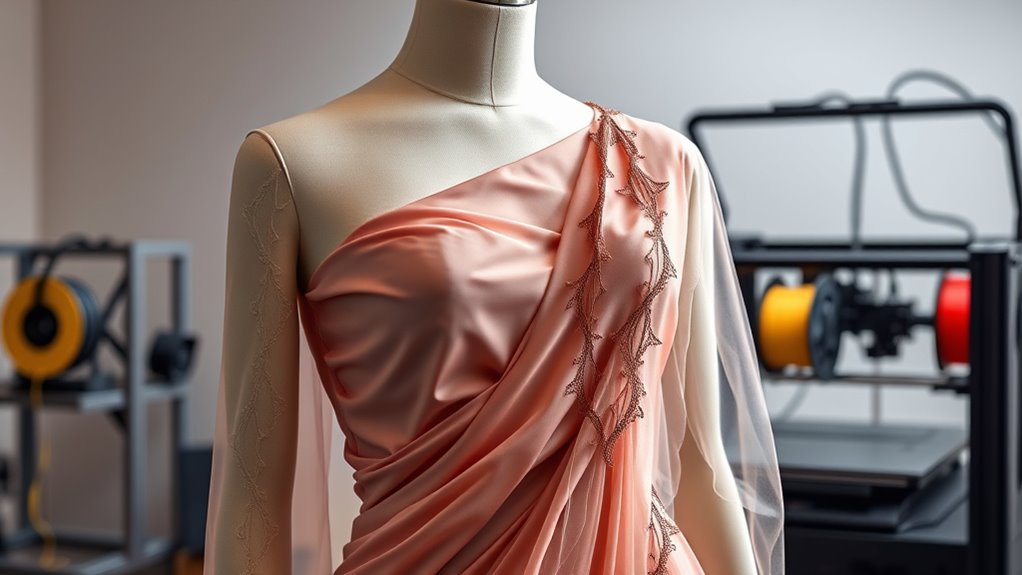

Discover how 3D printing is transforming couture with hybrid techniques that blend digital design and traditional craftsmanship. Designers now create intricate, customized garments that combine printed components with handcrafted details, pushing the limits of aesthetics and structure. These case studies showcase innovative methods like complex geometries, sustainable materials, and on-demand production, reducing waste and expanding creative possibilities. To explore how these cutting-edge approaches are shaping fashion’s future, keep exploring the exciting developments ahead.
Key Takeaways
- Hybrid techniques combine 3D printed components with traditional textiles for innovative, customizable couture designs.
- Case studies showcase complex geometries and intricate details achievable through digital fabrication and manual craftsmanship.
- Designers utilize bio-based and eco-friendly materials in 3D printing to create sustainable, high-fashion hybrid garments.
- Integration of 3D printed structural elements enhances garment functionality and visual appeal in couture collections.
- Innovative collaborations demonstrate how 3D printing pushes creative boundaries within haute couture through hybrid techniques.
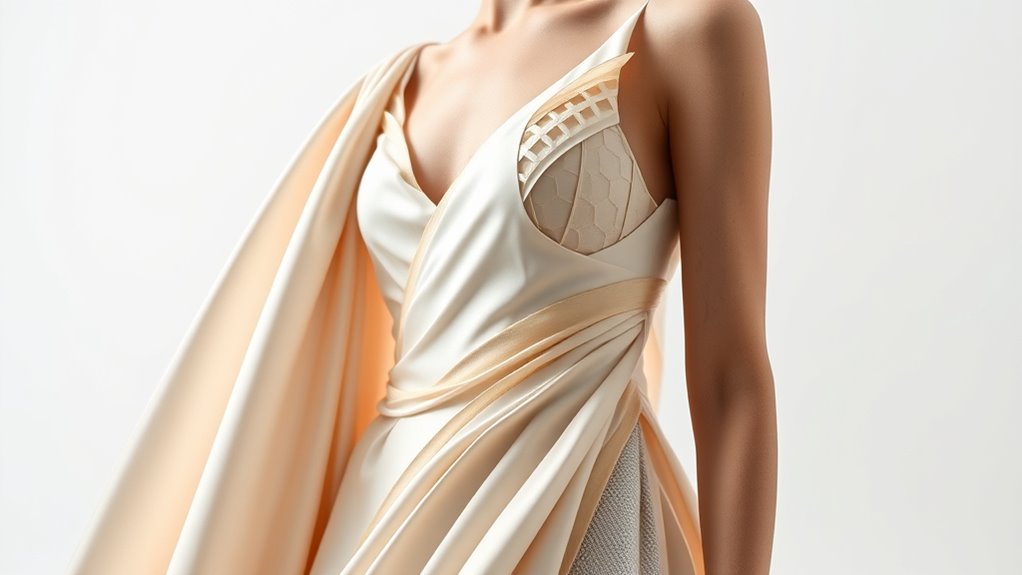
Have you ever wondered how technology is transforming the world of fashion? 3D printing is revolutionizing couture by enabling designers to create intricate, customized garments with unprecedented precision and speed. This innovation pushes the boundaries of traditional craftsmanship, allowing for complex geometries and detailed embellishments that were once impossible or prohibitively expensive to produce. As you explore this emerging landscape, you’ll notice that material innovation plays an essential role. Designers are experimenting with a wide array of printable materials, from lightweight plastics to bio-based filaments, aiming to find options that balance durability, flexibility, and aesthetic appeal. This constant evolution of materials not only expands creative possibilities but also aligns with sustainability strategies that are increasingly shaping the industry.
By integrating sustainable practices, designers are turning to recycled or biodegradable materials to reduce environmental impact. For example, some are using bio-inks derived from natural sources, which decompose more easily and lessen waste. These strategies are fundamental because fashion has historically been a resource-intensive industry, producing significant waste and pollution. With 3D printing, you can produce garments on demand, minimizing excess inventory and reducing waste from unsold pieces. This shift toward more responsible production methods demonstrates how innovation can serve both artistic vision and ecological consciousness.
Moreover, 3D printing offers the opportunity to rethink how fabrics and embellishments are constructed. Instead of cutting and sewing traditional textiles, designers can print entire garments or accessories in one piece, which simplifies assembly and reduces material waste. Hybrid techniques often combine printed components with conventional textiles, creating a fusion of digital precision and handcrafted detail. This approach not only enhances design flexibility but also enables the integration of complex patterns and structural elements that add both functionality and visual interest.
As you observe the industry’s evolution, you’ll see that these hybrid techniques reflect a broader commitment to sustainability and material innovation. They allow designers to experiment with new forms and functions while keeping environmental impact in check. The use of innovative, eco-friendly materials coupled with on-demand production models exemplifies how 3D printing is reshaping couture into a more sustainable, forward-thinking art form. Ultimately, this convergence of technology, sustainability, and creativity is opening exciting new avenues for fashion, making it more personalized, responsible, and innovative than ever before. Material innovation continues to be a driving force behind these transformative developments.
Frequently Asked Questions
How Do 3D Printed Materials Compare to Traditional Fabrics in Couture?
When comparing 3D printed materials to traditional fabrics in couture, you find that 3D printing offers unique material flexibility, allowing for complex, intricate designs impossible with conventional textiles. It also opens new avenues for artistic expression, giving you the ability to customize and innovate in ways traditional fabrics can’t match. While traditional fabrics excel in softness and drape, 3D printed materials push boundaries, enabling you to craft futuristic, highly detailed couture pieces.
What Are the Environmental Impacts of Hybrid 3D Printing and Couture?
You might think hybrid 3D printing and couture are eco-friendly, but they can impact the environment. Recycling initiatives help reduce waste, yet some materials aren’t biodegradable, contributing to pollution. However, designers are exploring biodegradable materials, which lessen environmental harm. By focusing on material biodegradability and sustainable practices, you can enjoy innovative fashion without sacrificing ecological responsibility. This balance is key to making couture more environmentally conscious.
How Do Designers Ensure Durability in 3D Printed Couture Garments?
You guarantee durability in 3D printed couture garments by performing thorough material testing to select the strongest, most suitable materials. Additionally, you incorporate structural reinforcement techniques, like adding internal supports or combining 3D printed parts with traditional fabrics, to enhance strength. These steps help your designs withstand wear and tear, ensuring that your innovative pieces are both striking and long-lasting.
Can 3D Printed Couture Be Easily Customized for Individual Clients?
You can effortlessly customize 3D printed couture for individual clients thanks to its high personalization flexibility and design adaptability. With digital design tools, you can modify intricate details or fit precisely to each person’s body, creating unique pieces quickly. This technology allows you to experiment with textures, colors, and shapes, ensuring every garment reflects your client’s personality and preferences, making the entire process more efficient and tailored.
What Are Future Technological Advancements Expected in This Hybrid Field?
You’re likely curious about future technological advancements in this hybrid field. Expect AI integration to streamline customization, making it faster and more precise for individual clients. Material innovation will introduce new, sustainable, and flexible fabrics that enhance design possibilities. These advancements will enable you to create highly personalized, innovative couture pieces, blending technology seamlessly with fashion. This evolution promises a future where couture becomes more accessible, sustainable, and expressive through cutting-edge techniques.
Conclusion
By now, you see how 3D printing transforms couture, blending innovation with tradition. These case studies show that, like a tailor’s careful stitch, hybrid techniques create unique, personalized designs. Remember, “The whole is greater than the sum of its parts”—embracing both craftsmanship and technology elevates fashion to new heights. As you explore this fusion, stay open to the endless possibilities where creativity and technology intertwine seamlessly.