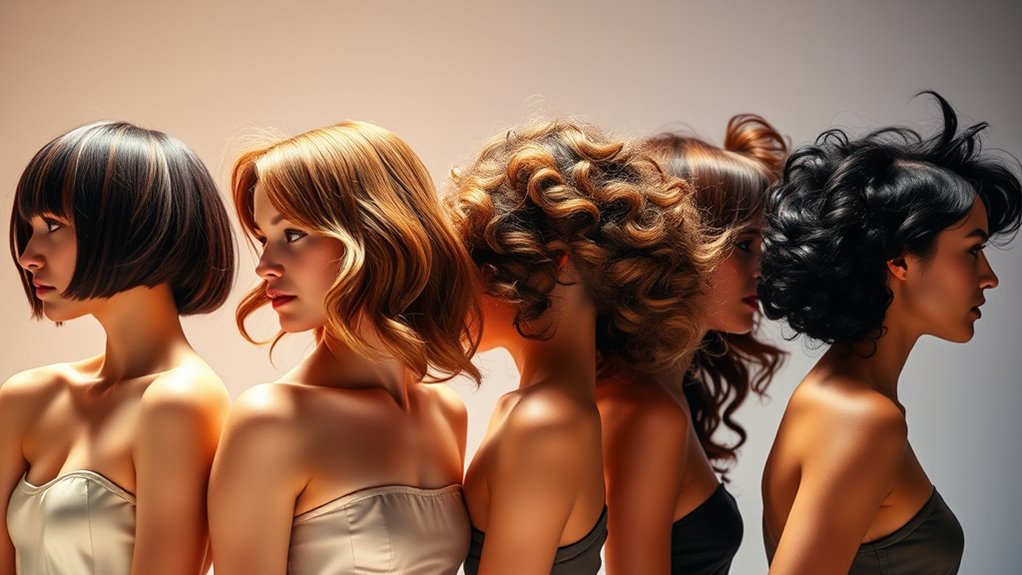

Runway hair styles have evolved dramatically, showcasing a mix of vintage and modern influences. In the 1920s, sleek finger waves and bobs set the tone, while the 1960s brought towering beehives and bold volume. The 1980s embraced big, teased hair with bright colors, reflecting excess and creativity. Today, designers blend retro elements with contemporary textures and finishes, creating high-impact looks. If you keep exploring, you’ll see how each decade’s style inspires fresh runway trends now.
Key Takeaways
- 1920s runway hairstyles featured sleek finger waves and geometric bobs, embodying the flapper spirit.
- The 1960s showcased towering beehives and bouffants, emphasizing exaggerated volume and height.
- 1980s runway trends included bold, teased hair with bright colors and wild textures for a daring look.
- Modern runway styles blend vintage elements like pin curls with contemporary textures and sleek finishes.
- Current trends reimagine past styles, balancing nostalgia with innovation to create versatile, high-fashion looks.

Throughout the decades, runway hair has reflected the boldness and evolving trends of each era. You’ve seen how vintage hairstyles from the past continue to inspire modern runway trends, blending nostalgia with innovation. In the 1920s, for example, models strutted down the runway with sleek, finger waves and bob cuts that epitomized the flapper spirit. These vintage hairstyles emphasized smooth, sculpted waves and geometric shapes, giving a chic, rebellious edge to the runway. Fast forward to the 1960s, and you notice towering beehives and voluminous bouffants, showcasing the era’s love for height and drama. These styles were all about making a statement, with exaggerated volume that pushed boundaries and captured attention.
As you look at more recent runway shows, you see designers drawing inspiration from these vintage hairstyles but adding a modern twist. For instance, sleek, polished looks often incorporate retro elements like pin curls or victory rolls, but with a contemporary finish—shiny, textured, or subtly messy. This fusion creates a fresh, yet nostalgic aesthetic that keeps runway hair exciting and relevant. The 1980s brought bold, daring styles like big, teased hair and bright, flashy colors. Runway models sported gravity-defying volume and wild textures, embodying the decade’s love for excess. Today, you might see that same sense of daring, but with a refined touch—think exaggerated volume but with sleek, controlled finishes or creative accessories that elevate the look.
Throughout the evolution, the key to understanding runway hair is recognizing how designers adapt vintage hairstyles to suit modern trends. Now, you often see styles that emphasize texture and movement—sleek, straight hair with a polished finish or tousled, effortless waves that look both chic and natural. These modern runway trends focus on versatility, making hair styles more wearable while still maintaining a high-fashion edge. Whether it’s a nod to vintage glamour or a bold statement inspired by the 80s, the runway continues to serve as a playground for experimenting with form, volume, and texture. Additionally, the use of market demand influences the popularity of certain styles, ensuring they evolve with consumer preferences.
In the end, runway hair through the decades shows a fascinating dialogue between the past and present. You get to witness how vintage hairstyles are reimagined with contemporary techniques, giving each era’s looks a fresh, innovative vibe. It’s a constant evolution—one that celebrates boldness, creativity, and the timeless desire to push beauty boundaries. As fashion moves forward, expect runway hair to keep blending the vintage with the modern, always keeping you captivated with new ways to express style and personality.
Frequently Asked Questions
How Have Technological Advances Influenced Runway Hairstyles?
Technological advances have markedly shaped runway hairstyles, making them more innovative and diverse. You benefit from hair extension innovations that create dramatic looks effortlessly, while the styling tool evolution allows for quicker, more precise styling. These advancements enable you to experiment with bold textures, volume, and intricate designs, elevating your runway game. As technology progresses, expect even more creative possibilities that help you achieve show-stopping hairstyles with ease and precision.
What Are the Key Materials Used in Creating Runway Hair Looks?
Oh, sure, because nothing screams high fashion like using glitter glue or duct tape, right? Actually, you mainly rely on hair extension techniques and styling product innovations. Think strong-hold sprays, mousse, gels, and quality extensions—whether clip-ins, tape-ins, or sew-ins—to achieve those jaw-dropping runway looks. These materials help create volume, length, and texture, ensuring your hairstyle stays flawless from the first walk to the final curtain call.
How Do Cultural Shifts Impact Runway Hairstyle Trends?
Cultural shifts markedly impact runway hairstyle trends by reflecting evolving cultural identity and contributing to fashion evolution. As society embraces diverse influences, you’ll notice hairstyles that celebrate different backgrounds and ideologies, making the runway more inclusive and expressive. These changes inspire designers and hairstylists to experiment with new styles that resonate with current cultural values, ensuring that runway looks stay fresh, relevant, and deeply connected to the world’s ongoing cultural dialogue.
What Role Do Celebrity Models Play in Setting Runway Hair Trends?
Celebrity models play a significant role in setting runway hair trends, as their influence shapes model trends and inspires fashion industry standards. When a celebrity model debuts a striking hairstyle, you notice how it quickly becomes popular, influencing designers and stylists alike. Their celebrity influence amplifies these trends, making them more mainstream and desirable. So, next time you see a bold runway hairstyle, remember that celebrity models are often behind its rise to fame.
How Sustainable Are the Hairstyling Products Used on the Runway?
Is sustainability a shining star or a fading mirage in runway hairstyling? You’ll find that many products now boast eco-friendly packaging and prioritize natural ingredient sourcing, making them more sustainable. While some brands are genuinely committed, others still have room to improve. Overall, you can feel better knowing that these products aim to reduce environmental impact, blending style with responsibility—showing fashion’s potential to lead in eco-conscious innovation.
Conclusion
So, next time you step onto a runway—or just into your bathroom mirror—remember, hair is basically a time machine. From towering beehives to sleek ponytails, each decade’s look is just a fancy hat for your head’s wild history. Who knew that your hair’s evolution could be a hilarious parade of “what were we thinking?” So go ahead, experiment—your hair might just be craving a rebellious, vintage, or futuristic makeover. After all, history’s just a bad hair day waiting to happen.