The Industrial Revolution transformed clothing production by introducing machines like the spinning jenny, water frame, and power loom, which greatly increased output and lowered costs. This shift moved fashion from handmade, custom pieces to mass-produced garments, making clothing more affordable and accessible. Factory systems replaced skilled craftsmanship, changing how clothes were made and consumed. If you want to understand how these changes shaped modern fashion, there’s more to explore ahead.
Key Takeaways
- Technological innovations like the spinning jenny and power loom drastically increased textile production speed and volume.
- Factory-based systems replaced skilled craftsmanship, enabling large-scale, standardized clothing manufacturing.
- Clothing became more affordable and accessible, breaking social barriers and shifting from bespoke to ready-made garments.
- Long working hours and poor conditions persisted, often exploiting women and children in the mass production process.
- Overall, the Industrial Revolution transformed fashion into a mass-market industry with cheaper, widely available clothing.
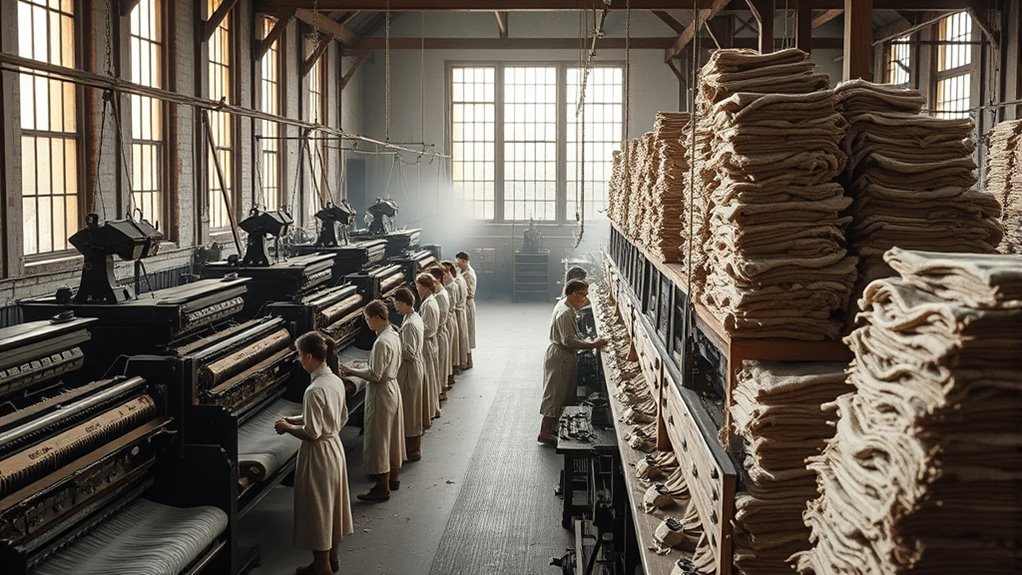
The Industrial Revolution fundamentally transformed the way clothing is made and consumed, revolutionizing manufacturing processes and making mass-produced garments accessible to a broader population. This shift didn’t happen by chance; it was driven by groundbreaking technological innovations that changed how textiles and clothing were produced. You can see how inventions like the spinning jenny, water frame, and power loom dramatically increased textile output, reducing the time and effort needed to produce fabric. These innovations made it possible to manufacture large quantities of cloth quickly and at lower costs, setting the stage for mass production of clothing.
As these technological advancements took hold, labor shifts also played an essential role. Before the Industrial Revolution, clothing was mostly handmade in small workshops or homes, with skilled artisans controlling every step. Now, factory-based production emerged, drawing workers from rural areas into urban centers. You might find yourself working on assembly lines or in textile mills, where repetitive tasks replaced the detailed craftsmanship of earlier times. These labor shifts meant that clothing production became more centralized and standardized, allowing for consistent quality and faster output. It also meant that jobs shifted from skilled artisans to less specialized factory workers, often working long hours for lower wages.
This shift had profound effects on society. As factories multiplied, clothing became more affordable and widely available, breaking down class barriers that once limited access to fashionable garments. You could now buy ready-made clothes in department stores rather than commissioning tailor-made outfits. The increased efficiency of mass production also meant that clothing styles could change more rapidly, fueling consumer demand for new designs and trends. This democratization of fashion changed the way people viewed clothing—not just as a necessity but as a means of expressing identity and social status.
However, these labor shifts weren’t without their downsides. Factory work was often grueling, with poor working conditions and long hours. Many workers, including women and children, endured unsafe environments and low pay. Despite these challenges, the overall impact of technological innovations and labor shifts was undeniable: they lowered production costs, increased availability, and transformed the fashion industry into a mass-market enterprise. You now live in a world where clothing is produced at an unprecedented scale, a direct result of these ongoing changes initiated during the Industrial Revolution. The legacy of these innovations continues to influence how clothes are made and consumed today, shaping modern fashion and manufacturing in ways you might not always notice but are deeply rooted in that transformative era.
The Age of Machinery: Engineering the Industrial Revolution, 1770-1850 (People, Markets, Goods: Economies and Societies in History, 12)
As an affiliate, we earn on qualifying purchases.
As an affiliate, we earn on qualifying purchases.
Frequently Asked Questions
How Did the Industrial Revolution Influence Global Clothing Trade?
You see, the industrial revolution transformed global clothing trade by introducing textile innovation, which made fabric production faster and cheaper. This shift led to trade expansion, as countries could now export more clothing and textiles worldwide. As a result, you experience a more interconnected market, with clothing becoming accessible to many. The revolution’s advances truly reshaped how nations traded textiles, boosting economies and changing fashion consumption on a global scale.
What Environmental Effects Resulted From Mass-Produced Clothing?
Imagine your wardrobe as a garden overrun by weeds. Mass-produced clothing creates this chaos by producing tons of synthetic fibers, which don’t decompose easily. This leads to increased textile waste polluting landfills and waterways, harming ecosystems. Your fast fashion choices contribute to this environmental mess, making it clear that the convenience of cheap, mass-produced clothes comes at a hefty ecological cost, transforming our planet into a discarded textile landfill.
How Did Mass Production Affect Clothing Quality and Durability?
Mass production improved fabric consistency, making clothing more uniform and easier to produce. However, it also raised durability concerns, as many garments were made quickly with lower-quality materials. You might notice that mass-produced clothing doesn’t last as long as handcrafted items, often wearing out faster. While efficiency increased, the focus on speed sometimes compromised clothing quality, leaving you with less durable pieces that need replacing more often.
Were There Any Social Consequences for Traditional Tailors?
You might think traditional tailors thrived, but the industrial revolution caused significant social consequences. As mass production increased, many faced tailor unemployment and artisanal decline, making it harder to sustain their crafts. This shift led to the decline of personalized, handcrafted clothing, affecting their livelihoods and local communities. While factory-made clothes became popular, tailors struggled to compete, transforming the social fabric for those skilled artisans.
How Did Consumer Preferences Shift Due to Industrialized Clothing?
You notice that your consumer preferences shifted toward faster, more affordable clothing because of industrialized production. This led to the rise of fast fashion, making trendy styles accessible to everyone. You now expect to buy new clothes frequently and at lower prices, which democratizes fashion by allowing more people to participate. This shift reflects a desire for convenience and affordability, transforming how you and others engage with clothing.

Brother Sewing Machine, XM2701, Lightweight Machine with 27 Stitches, 6 Included Sewing Feet
27 Unique built-in stitches: The XM2701 includes 27 built-in stitches including decorative, blind hem, zigzag, and stretch stitches…
As an affiliate, we earn on qualifying purchases.
As an affiliate, we earn on qualifying purchases.
Conclusion
You can see how the Industrial Revolution transformed clothing, making fashion more accessible and affordable. Today, over 60% of clothes are mass-produced, a direct result of those innovations. This shift not only changed how you shop but also impacted economies and environmental practices. Remember, the revolution’s legacy continues to shape your wardrobe—so next time you buy a shirt, think of the incredible history behind its production.

First Mfg Co – Commando – Men's Swat Style Leather Motorcycle Vest For Men with Adjustable Side Panels, Zipper Front Vest
✅ Premium Thick Naked Cowhide Leather: Crafted from high-quality full-grain 1.1–1.2mm drum-dyed naked cowhide, this premium 100% leather…
As an affiliate, we earn on qualifying purchases.
As an affiliate, we earn on qualifying purchases.

Tracing Textile Production from the Viking Age to the Middle Ages: Tools, Textiles, Texts and Contexts
As an affiliate, we earn on qualifying purchases.
As an affiliate, we earn on qualifying purchases.