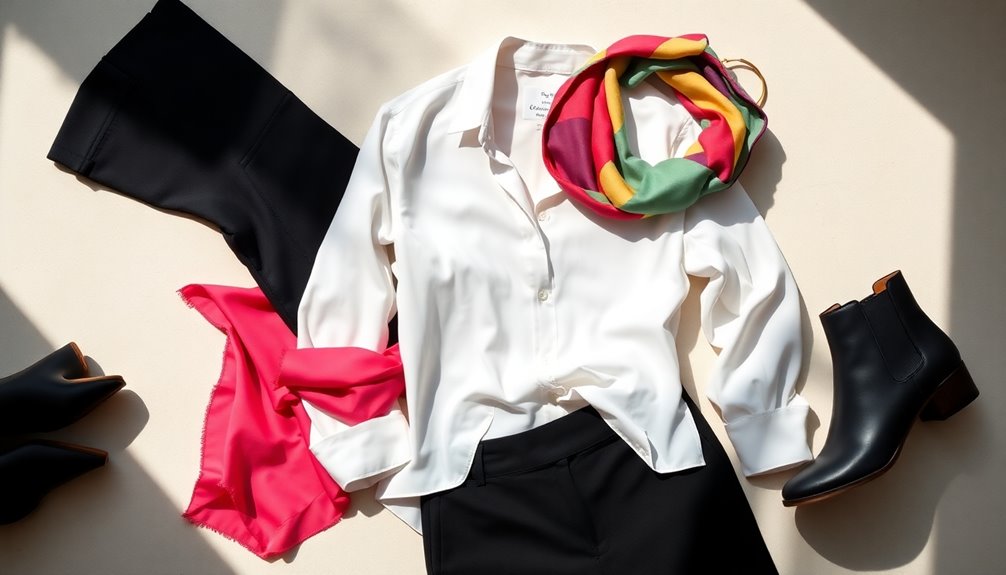
Belts, sashes, and cinchers are accessories that help you define your waist by gathering or cinching fabric. Historically, they’ve evolved from simple functional strips to decorative symbols of status and culture. Today, you can style them in various ways to create tailored silhouettes, add color, or showcase personal taste. If you want to explore how these accessories carry rich traditions and modern trends, there’s more to discover beneath the surface.
Key Takeaways
- Belts, sashes, and cinchers are accessories that define and shape the waist, enhancing silhouette and style.
- Belts are typically narrower straps worn around the waist for function or fashion, often with buckles.
- Sashes are long fabric strips tied around the waist, historically used for decoration or cultural significance.
- Cinchers are fitted garments or accessories that contour the waist, often used to create an hourglass figure.
- All three serve to emphasize, support, or add decorative detail to the waist area in fashion.
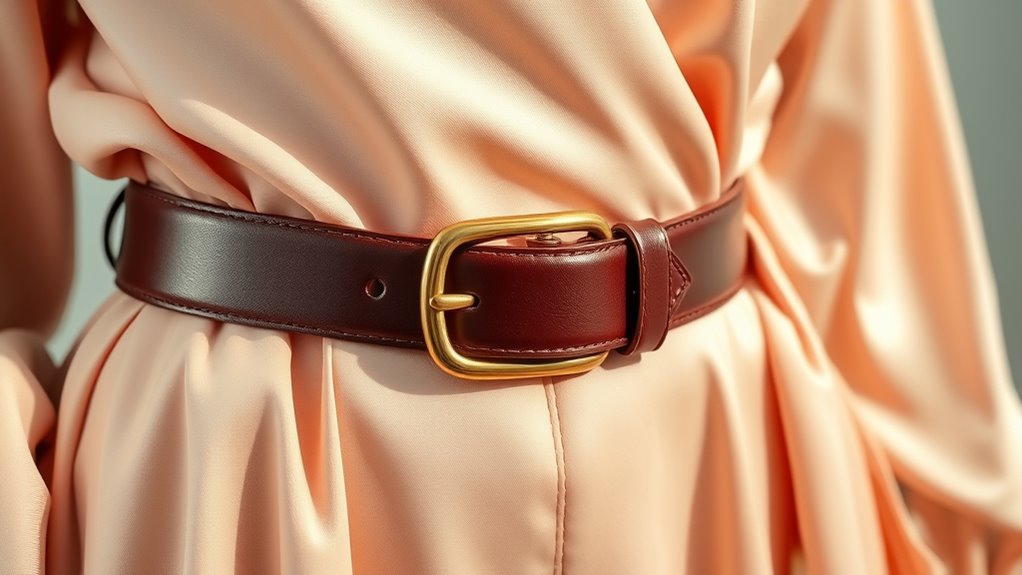
Have you ever noticed how belts and sashes not only serve practical purposes but also make bold style statements? These accessories have a rich history of evolving beyond their basic functions, transforming into symbols of status, fashion, and personal expression. The history of belt fashion dates back thousands of years, with early civilizations using simple strips of leather or cloth to secure garments. Ancient Egyptians, Greeks, and Romans all employed belts as both functional items and decorative elements. Over time, belts gained importance as indicators of social rank, with elaborate designs and precious materials signifying wealth and power. As fashion progressed through the Middle Ages and Renaissance, belts became more ornate, featuring intricate metalwork, gemstones, and embroidery, reflecting the wearer’s social standing and taste.
Meanwhile, sash styling techniques have developed into an art form, allowing individuals to creatively express themselves. Sashes, traditionally worn as long strips of fabric tied around the waist, have been used for ceremonial, military, and fashion purposes throughout history. In many cultures, the way you tie a sash carries meaning—whether it’s a simple knot, a bow, or a more complex arrangement. For example, in traditional Japanese dress, the obi is a wide sash that requires specific wrapping and tying techniques to achieve a precise look. Similarly, in European fashion, sashes have been draped and knotted in various ways to enhance the silhouette or add a splash of color. The styling techniques can vary based on fabric, occasion, and personal style, but the goal remains the same: to create a balanced, aesthetically pleasing look that accentuates the waist. Understanding cultural significance of sash tying techniques adds depth and authenticity to their styling.
In contemporary fashion, belts and sashes continue to serve as versatile style tools. You can cinch a coat for warmth, add a pop of color to a dress, or create a tailored silhouette with a well-chosen belt. Sash styling techniques now often involve experimenting with knotting, folding, or layering fabrics to create unique, personalized looks. Whether minimal and sleek or bold and elaborate, these accessories let you define your waist in a way that reflects your mood and style. So, next time you slip on a belt or tie a sash, remember the centuries of history and craftsmanship behind these pieces. They’re more than just practical accessories—they’re a form of self-expression that has stood the test of time.

XuoAz Women-Leather-Belt for Jeans Pants Adjustable-Fashion-Casual-Waist-Belts Hollow Flower Belt for Ladies Girls
Top Quality Leather: This women belt is made of high quality leather, Extremely soft and comfortable to wear….
As an affiliate, we earn on qualifying purchases.
As an affiliate, we earn on qualifying purchases.
Frequently Asked Questions
What Materials Are Commonly Used for Belts and Sashes?
You’ll find that belts and sashes are commonly made from leather, showcasing craftsmanship and durability. Fabric versatility also plays a big role, with materials like cotton, silk, and velvet offering stylish options. Leather provides strength and a polished look, while fabrics add variety and comfort. By choosing these materials, you can match your accessories to any outfit, ensuring both function and fashion in your wardrobe.
How Do Belt Widths Affect Fashion and Function?
You’ll find that belt widths greatly influence both fashion and function. Narrow belts are perfect for subtle belt styling, offering a sleek look that complements formal outfits, while wider belts add emphasis and structure, making a bold style statement. When sash tying techniques come into play, wider belts help secure the sash neatly, creating a balanced silhouette. Choose your belt width based on your desired fashion impact and practicality.
Are There Cultural Significances Behind Different Sash Styles?
Think of a sash as your fashion time machine—these styles carry deep traditional symbolism and regional variations. You’ll find that in different cultures, sashes represent status, identity, or rites of passage. For example, a kimono obi signifies honor in Japan, while a Scottish belt highlights clan heritage. These styles aren’t just accessories; they’re cultural stories woven into fabric, connecting history with modern expression.
What Is the History Behind the Cincher’s Popularity?
You may find that the cincher’s popularity stems from medieval waist shaping and renaissance fashion trends. During medieval times, waist-cinching garments emphasized a narrow silhouette, a style revived during the renaissance to showcase wealth and status. As you explore fashion history, you’ll see how cinchers became symbols of elegance and power, shaping not only bodies but also social perceptions, making them a staple in historical and modern fashion alike.
How Should I Choose the Right Belt or Sash for My Body Type?
You should choose a belt or sash based on your body proportions to enhance your natural shape. For instance, if you have an hourglass figure, a medium-width belt highlights your waist, while taller individuals might prefer wider styles for balance. Consider outfit coordination too—opt for contrasting colors or textures to make your look pop. Remember, the right accessory underscores your style and flatters your body, so select thoughtfully.

obmwang Wedding Satin Sash Belt for Special Occasion Dress Bridal Sash 4'' Wide Double Side, Black
Size Details: Our dress sash belt is 250cm/98inch in length, width: 10cm/4inch, It’s a pretty wide and long…
As an affiliate, we earn on qualifying purchases.
As an affiliate, we earn on qualifying purchases.
Conclusion
Now that you know the difference between belts, sashes, and cinchers, you can confidently choose the perfect accessory to define your waist. Did you know that nearly 70% of people wear belts regularly to enhance their outfits? So, next time you style yourself, remember these options and make your waist the star of your look. Your choice can truly boost your confidence and elevate your fashion game effortlessly.

FeelinGirl Workout Waist Trainer Underbust Corsets Cincher Belt Hourglass Corset Body Shaper for Women Black L
Important Note on Materials: This waist trainer contains materials, including latex, which may cause allergic reactions for some…
As an affiliate, we earn on qualifying purchases.
As an affiliate, we earn on qualifying purchases.

ZooBoo Japanese Kimono Obi Sash Belt & Yukata Tying Cord | Traditional Waist Tie Belt for Yukata and Kimono
Easy to Tie: Designed for simple and secure tying, ensuring your kimono or yukata stays in place. And…
As an affiliate, we earn on qualifying purchases.
As an affiliate, we earn on qualifying purchases.