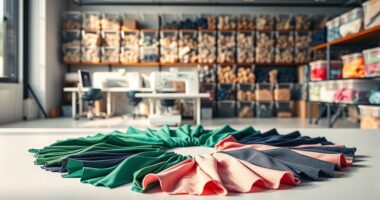
Algae-based textiles are a sustainable alternative made from fast-growing algae, which require minimal land, water, and pesticides. These fabrics can mimic traditional materials like silk or wool, offering natural, biodegradable, and functional qualities such as antimicrobial and moisture-wicking properties. Their production is eco-friendly, utilizing waste streams and reducing greenhouse emissions. As demand grows and research advances, these textiles are poised to become a key part of eco-conscious fashion—but there’s more to discover about their potential.

Get your wardrobe favorites delivered free — and shop member deals
- Fast, free delivery on millions of items
- Access to Prime Big Deal Days deals on October 6–7
- Prime Video, Amazon Music and more included
Key Takeaways
- Algae-based textiles are eco-friendly, renewable, and require minimal land, water, and chemical inputs compared to traditional fibers.
- They can mimic fabrics like silk, linen, or wool, and are biodegradable, non-toxic, and infused with functional properties.
- The production process is energy-efficient, utilizing waste streams and reducing greenhouse gas emissions.
- Market adoption is increasing as research improves fiber quality, durability, and affordability, with brands promoting sustainable collections.
- Ongoing research aims to enhance scalability and integration into mainstream fashion, supporting circular economies and responsible consumption.

Algae-based textiles are emerging as an innovative, eco-friendly alternative to traditional fabrics, offering a sustainable solution to the fashion industry’s environmental impact. These textiles are derived from algae, a fast-growing, renewable resource that requires minimal land and water compared to conventional crops like cotton or hemp. This shift toward algae supports sustainable production practices, reducing the ecological footprint of textile manufacturing. By harnessing algae’s natural properties, manufacturers can create fibers that are biodegradable, non-toxic, and produced with less energy, aligning with the growing demand for environmentally conscious fashion options.
One of the most exciting aspects of algae-based textiles is their innovative applications. These fabrics can be integrated into a variety of products, from clothing and accessories to home furnishings. Thanks to advances in biotechnology, algae fibers can be engineered to mimic the feel and appearance of traditional textiles like silk, linen, or wool, making them versatile for designers and consumers alike. Additionally, algae-based textiles can be infused with functional qualities, such as antimicrobial properties or moisture-wicking capabilities, enhancing their practicality and appeal. This versatility opens the door for sustainable fashion that doesn’t compromise on style or performance.
The production process itself emphasizes sustainable principles. Algae grow rapidly in controlled environments, often using wastewater or carbon dioxide emissions that would otherwise contribute to pollution. This not only helps reduce greenhouse gases but also repurposes waste, creating a circular approach to resource management. Unlike conventional crops that demand extensive pesticides, fertilizers, and water, algae cultivation can be scaled without such inputs, further minimizing environmental harm. As a result, algae-based textiles exemplify a commitment to sustainable production, reducing reliance on fossil fuels and diminishing the overall carbon footprint associated with textile manufacturing.
In terms of commercial viability, algae textiles are gaining momentum thanks to ongoing research and development. Companies are experimenting with various strains of algae to optimize fiber quality, durability, and cost-effectiveness. These innovations could soon make algae-based fabrics more accessible and affordable for mainstream markets. As awareness around sustainable fashion rises, consumer interest in eco-friendly textiles increases, encouraging brands to adopt algae fibers as part of their eco-conscious collections. This shift not only benefits the environment but also aligns with a broader movement toward responsible consumption and circular economies in the fashion industry. More research is being conducted to improve the scalability and affordability of algae-based textiles, which could accelerate their adoption in global markets.
As an affiliate, we earn on qualifying purchases.
Frequently Asked Questions
How Durable Are Algae-Based Textiles Compared to Traditional Fabrics?
You might wonder about durability compared to traditional fabrics. Algae-based textiles are increasingly durable, but they still lag slightly behind conventional materials like cotton or polyester. However, they offer a better environmental impact and are biodegradable, reducing waste. With ongoing research, their strength continues to improve, making them a promising sustainable alternative. You’ll find that, over time, algae fabrics could become more competitive in durability while maintaining their eco-friendly benefits.
Can Algae Textiles Be Dyed Using Conventional Methods?
You can dye algae textiles using conventional dyeing techniques, just like traditional fabrics. These textiles often accept dyes well, allowing you to achieve vibrant colors. However, you should consider their colorfast properties, as algae-based materials may require specific treatments or dyes to guarantee long-lasting color. Testing different dyeing methods helps determine the best approach for achieving durable, vibrant results while maintaining eco-friendly practices.
What Are the Costs Associated With Producing Algae-Based Textiles?
When considering the costs of producing algae-based textiles, you’ll find a cost analysis reveals higher initial investments due to specialized equipment and sustainable practices. Scalability challenges also impact expenses, as expanding production requires overcoming technological hurdles and ensuring consistent quality. Although costs can decrease with larger-scale operations, current production remains more expensive than traditional textiles, making cost management essential for broader adoption.
Are Algae Textiles Suitable for All Clothing Types?
You might wonder if algae textiles suit all clothing types. Their fabric versatility allows for various textures and finishes, making them suitable for casual wear, sportswear, and even fashion-forward pieces. However, their fashion compatibility can vary, especially for formal or luxury garments. While algae textiles excel in sustainability, consider the specific fabric properties to guarantee they meet your clothing needs and style preferences.
How Do Algae Textiles Perform in Extreme Weather Conditions?
You might wonder how algae textiles perform in extreme weather. Algae textile resilience is quite impressive, as it withstands harsh conditions better than some traditional fabrics. Its algae weather adaptability helps it resist moisture, UV rays, and temperature fluctuations, making it suitable for various climates. While not entirely invincible, algae textiles generally offer good durability, ensuring your clothing remains functional and comfortable even in extreme weather.
Conclusion
As you explore algae-based textiles, you’ll find they’re a sustainable, innovative alternative to traditional fabrics. These eco-friendly materials offer a fresh take on fashion, blending nature and technology seamlessly—kind of like a modern-day Renaissance. By choosing algae-derived textiles, you’re helping reduce environmental impact and supporting a greener future. So, don’t be a knave—embrace this eco-chic trend and be part of the solution, one stylish piece at a time.
Fall Picks
fall essentials
As an affiliate, we earn on qualifying purchases.