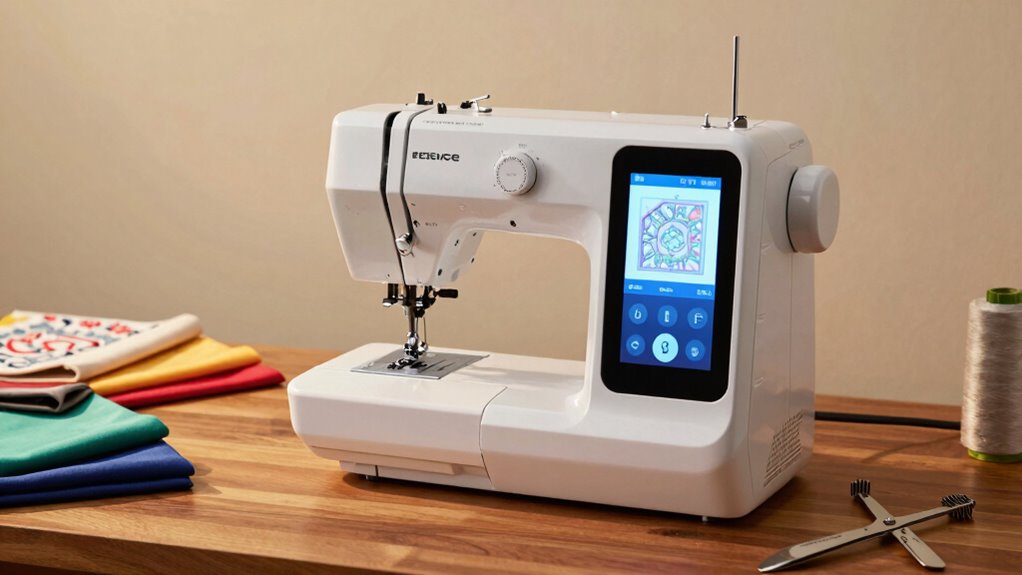

Computerized sewing machines trade mechanical dials for push-button stitch selection, LCD screens, and automatic features like needle threading, thread cutting, and buttonholes — and the gap between a good one and a frustrating one comes down to stitch quality, motor control, and how well the controls actually make sewing easier. The Brother CS7000X stands out as the best overall pick for its combination of a readable LCD display, consistent tension, and generous accessory storage at a mid-range price. The SINGER Quantum Stylist 9960 makes the most sense for stitch variety hunters with its massive built-in library and speed control, while the Brother SE700 is the pick if embroidery capability matters as much as sewing. The main tradeoffs in this category: more stitches often mean a steeper learning curve, and feature-dense machines can overwhelm beginners who just want reliable straight and zigzag stitching. Keep reading for the full breakdown, including which machines justify their price and which bundles are worth skipping.

Get your wardrobe favorites delivered free with Prime
- Fast, free delivery on millions of items
- Prime Video, Amazon Music and more included
- Member-only deals all year
Key Takeaways
- Brother dominates this lineup with seven of ten spots, and its LCD interface consistency across models means upgrading within the brand feels familiar rather than like starting over.
- The CS7000X earned best overall because its wider work area and improved accessory storage beat the similarly-priced XR9550, which sacrifices workspace for a slightly larger stitch count.
- The two HC1850 listings are essentially the same machine — the difference is entirely the bundled accessories, and the hard-case bundle holds value better than the accessory-kit bundle.
- The SINGER Quantum Stylist 9960 offers the largest stitch library in the roundup, but its steeper learning curve and noisier motor make it better suited to experienced sewists than first-time buyers.
- The Brother SE700 is the only machine here with embroidery capability, but buyers paying for that function should understand its 4×4 embroidery field limits it to small monograms and patches, not large designs.
- For true beginners, the CS5055’s smaller stitch set of 50 built-in stitches is an advantage, not a limitation — fewer options means faster mastery and less menu confusion.
| 1130 Computerized Sewing and Quilting Machine with 300 Stitches |  | Best Overall | Stitch options: 300 | Alphanumeric fonts: 100 | Twin-needle setups: 57 | VIEW ON AMAZON | See Our Full Breakdown |
| Brother CS7000X Sewing and Quilting Machine with LCD Display |  | Best Value | Built-in stitches: 70 | Buttonholes: 7 one-step, auto-size styles | Display: LCD | VIEW ON AMAZON | See Our Full Breakdown |
| Brother XR9550 Computerized Sewing and Quilting Machine |  | Best for Beginners | Built-in stitches: 165 (110 utility/decorative/heirloom, 55 alphanumeric) | Buttonhole styles: 8 auto-size one-step | Display: LCD screen | VIEW ON AMAZON | See Our Full Breakdown |
| Brother HC1850 Sewing and Quilting Machine with 185 Built-in Stitches, LCD Display, Hard Case, and 5-Piece Needle Set |  | Best for Monogramming on a Budget | Built-in stitches: 185 (130 sewing, 55 alphanumeric) | Buttonhole styles: 8 auto-size | Display: LCD screen | VIEW ON AMAZON | See Our Full Breakdown |
| Brother HC1850 Sewing and Quilting Machine with 185 Built-In Stitches and Accessory Bundle |  | Best Starter Bundle | Built-in stitches: 185 (130 sewing, 55 alphanumeric) | Buttonhole styles: 8 auto-size | Display: LCD | VIEW ON AMAZON | See Our Full Breakdown |
| Brother SE700 Sewing and Embroidery Machine |  | Best for Embroidery-Curious Sewists | Embroidery Field: 4″ x 4″ | Built-in Embroidery Designs: 135 | Embroidery Fonts: 10 | VIEW ON AMAZON | See Our Full Breakdown |
| SINGER Quantum Stylist 9960 Computerized Sewing & Quilting Machine |  | Best Stitch Library | Built-in Stitches: 600 | Stitch Applications: 1,172 | Buttonhole Styles: 13 one-step automatic | VIEW ON AMAZON | See Our Full Breakdown |
| Brother CS5055 Computerized Sewing Machine with LCD Display |  | Best Budget-Friendly Simplicity | Built-in Stitches: 60 | Buttonholes: 7 one-step auto-size styles | Display: LCD | VIEW ON AMAZON | See Our Full Breakdown |
| Brother CP100X Computerized Sewing and Quilting Machine |  | Best for Quilting Beginners | Built-in Stitches: 100 | Buttonhole Styles: 8 auto-size one-step | Needle Threader: 1-step automatic | VIEW ON AMAZON | See Our Full Breakdown |
| Brother CS7205 Computerized Sewing and Quilting Machine with 150 Built-In Stitches |  | Best Mid-Range All-Rounder | Built-in Stitches: 150 | Buttonhole Styles: 8 one-step auto-size | Lettering Font: 1 | VIEW ON AMAZON | See Our Full Breakdown |
| computerized sewing machine | Built-in stitches | Included accessories | Buttonhole styles | Display |
|---|---|---|---|---|
| 1130 Computerized Sewing and Q | — | Wide table, presser foot set, maintenance tools, needles, bobbins, foot controller, storage box | — | — |
| Brother CS7000X Sewing and Qui | 70 | Wide table, 10 presser feet, quilt guide, protective hard case | — | LCD |
| Brother XR9550 Computerized Se | 165 (110 utility/decorative/heirloom, 55 alphanumeric) | — | 8 auto-size one-step | LCD screen |
| Brother HC1850 Sewing and Quil | 185 (130 sewing, 55 alphanumeric) | Wide table, 8 feet, hard plastic case, 5-piece needle set, manual | 8 auto-size | LCD screen |
| Brother HC1850 Sewing and Quil | 185 (130 sewing, 55 alphanumeric) | Wide table, 8 feet, manual, hard plastic carrying case, 6-color thread pack, assorted universal sewing machine needles | 8 auto-size | LCD |
| Brother SE700 Sewing and Embro | — | — | 10 one-step auto-size | — |
| SINGER Quantum Stylist 9960 Co | 600 | — | 13 one-step automatic | — |
| Brother CS5055 Computerized Se | 60 | 7 sewing feet, 4 bobbins, needle set | — | LCD |
| Brother CP100X Computerized Se | 100 | Wide table, 10 sewing feet, quilt guide, hard case | 8 auto-size one-step | — |
| Brother CS7205 Computerized Se | 150 | Wide table, quilt guide, accessory pouch | 8 one-step auto-size | LCD screen |
More Details on Our Top Picks
1130 Computerized Sewing and Quilting Machine with 300 Stitches
This model earns the top spot because it solves the two problems that frustrate computerized machine owners most: limited stitch libraries and weak fabric-feeding power. With 300 stitches—including 100 alphanumeric fonts and 57 twin-needle setups—it more than doubles the creative range of the Brother XR9550 and its 165 stitches. Where most entry-level computerized machines balk at heavy denim, the 7-point feed dog here pushes through up to nine layers, which matters for jeans hems and bag-making. The Start/Stop button and speed slider let you sew without the pedal, a feature the Brother CS7000X also offers but with a far smaller stitch set. The tradeoff is uncertainty: dimensions, weight, and warranty terms aren’t specified, so buyers who value long-term support may prefer Brother’s documented 25-year coverage.
Pros:- 300 stitches including 100 alphanumeric fonts and 57 twin-needle setups
- Feeds up to 9 layers of denim thanks to the 7-point feed dog
- Start/Stop button and speed slider allow pedal-free sewing
- Quilting-ready with drop feed and a detachable wide extension table
Cons:- Machine dimensions and weight are not specified, making fit and portability hard to judge
- No warranty or service details are listed
Best for: Ambitious hobbyists and quilters who want maximum stitch variety and serious denim-handling power in one machine
Not ideal for: Buyers who prioritize documented warranty coverage and long-term brand support, since service details are unspecified
- Stitch options:300
- Alphanumeric fonts:100
- Twin-needle setups:57
- Buttonhole:1-step automatic
- Feed dog:7-point
- Fabric capacity:Feeds up to 9 layers of denim
- Controls:LCD screen, Start/Stop button, speed control slider, reverse sewing
- Included accessories:Wide table, presser foot set, maintenance tools, needles, bobbins, foot controller, storage box
Our verdict“The strongest all-around pick for stitch-hungry sewists who need heavy-fabric muscle and can accept thinner documentation.”
Brother CS7000X Sewing and Quilting Machine with LCD Display
The CS7000X makes this list as the smart-money pick because it delivers the features beginners actually use—70 built-in stitches, 7 auto-size buttonholes, an automatic needle threader, and a jam-resistant drop-in bobbin—without padding the price with stitches you’ll never select. Compared with the 300-stitch 1130 Computerized Machine, its stitch library looks modest, but most garment and craft projects need ten stitches at most. The metal frame gives it more stability than typical plastic-bodied budget machines, and the bundled 10 presser feet plus hard case beat the accessory kits on many pricier models. Its limitations are real, though: no alphanumeric fonts means no monogramming, and the 120-volt US-only power design rules it out for international buyers.
Pros:- 70 built-in stitches with 7 one-step auto-size buttonholes
- Metal frame and jam-resistant drop-in bobbin for dependable everyday sewing
- Generous bundle: 10 presser feet, quilt guide, wide table, and protective hard case
- Automatic needle threader reduces setup friction
Cons:- No alphanumeric stitches, so lettering and monogramming are off the table
- 120-volt US-only design; other use may void the warranty
Best for: Budget-conscious beginners and garment sewists who want reliable core features and a generous accessory kit without paying for unused stitches
Not ideal for: Sewists who want monogramming or lettering, and anyone outside the US given the 120-volt limitation
- Built-in stitches:70
- Buttonholes:7 one-step, auto-size styles
- Display:LCD
- Needle threader:Automatic
- Bobbin:Jam-resistant drop-in top bobbin
- Frame:Metal
- Included accessories:Wide table, 10 presser feet, quilt guide, protective hard case
Our verdict“The best value for sewists who want solid fundamentals and accessories over an oversized stitch library.”
Brother XR9550 Computerized Sewing and Quilting Machine
What separates the XR9550 as the beginner pick is support and confidence, not just features. Its 165 stitches—including 55 alphanumeric—give newcomers room to grow far beyond the Brother CS7000X‘s 70, while the automatic needle threader and jam-resistant drop-in bobbin eliminate the two most common early frustrations. The 25-year limited warranty plus lifetime technical support is the real differentiator: no other machine in this lineup offers that safety net, which matters when you’re learning and unsure what a problem even is. Against the HC1850 bundles, it matches near-identical stitch counts but adds documented long-term backing. Drawbacks? It’s US-market only at 120 volts, and the hard cover’s fixed styrofoam insert is an odd quirk that makes case storage less flexible.
Pros:- 165 built-in stitches including 55 alphanumeric options
- Automatic needle threader and jam-resistant drop-in bobbin
- 25-year limited warranty with lifetime technical support
- Wide table and 8 quick-change presser feet included
Cons:- US-only 120-volt design; other use may void the warranty
- Styrofoam inside the hard case must stay in place, limiting storage flexibility
Best for: New sewists who want a forgiving, well-supported machine with room to grow into lettering and heirloom stitches
Not ideal for: International buyers, and anyone annoyed by non-removable packaging foam inside the hard case
- Built-in stitches:165 (110 utility/decorative/heirloom, 55 alphanumeric)
- Buttonhole styles:8 auto-size one-step
- Display:LCD screen
- Needle threader:Automatic
- Bobbin:Jam-resistant drop-in top bobbin
- Presser feet:8 quick-change feet
- Warranty:25-year limited warranty with lifetime technical support
Our verdict“The safest entry point into computerized sewing thanks to grow-into features and unmatched long-term support.”
Brother HC1850 Sewing and Quilting Machine with 185 Built-in Stitches, LCD Display, Hard Case, and 5-Piece Needle Set
This HC1850 bundle occupies a specific niche: sewists who want 55 alphanumeric stitches for personalized projects without stepping up to the 300-stitch 1130 Computerized Machine. The 185-stitch set covers utility, decorative, and lettering work well, and the lever-operated advanced needle threader is quicker to use than the simple automatic units on cheaper models. Compared with the Brother XR9550, the stitch count is higher but the documented warranty backing is thinner—worth weighing if longevity worries you. The 5-piece needle set means you can start sewing different fabric weights immediately. Two honest drawbacks: the hard plastic case with metal latches can crack under travel abuse where padded soft cases flex, and the LCD is strictly for stitch selection—no customization menus for advanced users.
Pros:- 185 built-in stitches including 55 alphanumeric for monogramming
- Advanced lever-operated needle threader speeds up setup
- Jam-resistant drop-in bobbin reduces mid-project interruptions
- Bundle includes hard case, wide table, 8 feet, and 5-piece needle set
Cons:- Hard plastic case is more crack-prone than padded soft cases
- Basic LCD lacks advanced customization options
Best for: Craft-focused sewists and small-business makers who want lettering and monogramming capability with a starter needle set
Not ideal for: Frequent travelers or advanced users wanting a customizable interface and a more travel-tolerant case
- Built-in stitches:185 (130 sewing, 55 alphanumeric)
- Buttonhole styles:8 auto-size
- Display:LCD screen
- Needle threader:Advanced lever-operated
- Bobbin:Jam-resistant drop-in top bobbin
- Included accessories:Wide table, 8 feet, hard plastic case, 5-piece needle set, manual
Our verdict“A well-rounded bundle for personalization-heavy projects when you don’t need the 1130’s maximum stitch count.”
Brother HC1850 Sewing and Quilting Machine with 185 Built-In Stitches and Accessory Bundle
Same proven HC1850 machine, different package—and that’s the whole story here. Where the sibling Brother HC1850 with 5-piece needle set leans toward monogrammers, this bundle targets the true first-day sewer: the included 6-color thread pack and assorted universal needles mean you unbox, thread, and sew without a separate shopping trip. Stitch capability is identical at 185, including 55 alphanumeric fonts, so compared with the Brother CS7000X you’re getting far more creative range at a modest complexity increase. The advanced lever needle threader and jam-resistant drop-in bobbin keep the learning curve gentle. The weak point is the same as its twin: the hard plastic carrying case is rigid and can be less forgiving than padded alternatives, and the LCD remains basic with no stitch-width fine-tuning beyond presets.
Pros:- 185 built-in stitches with 55 alphanumeric fonts
- Truly ready-to-sew bundle: thread pack, needles, 8 feet, wide table, and case included
- Advanced needle threader and jam-resistant drop-in bobbin
- LCD display makes stitch selection straightforward for newcomers
Cons:- Hard plastic carrying case is less durable than a padded soft case
- Basic LCD offers little customization for growing skills
Best for: Complete beginners who want everything needed to start sewing on day one, including thread and needles in the box
Not ideal for: Sewists who already own thread and needle collections and would rather spend less on the bare machine
- Built-in stitches:185 (130 sewing, 55 alphanumeric)
- Buttonhole styles:8 auto-size
- Display:LCD
- Needle threading:Advanced lever-operated needle threader
- Bobbin:Jam-resistant drop-in top bobbin
- Included accessories:Wide table, 8 feet, manual, hard plastic carrying case, 6-color thread pack, assorted universal sewing machine needles
Our verdict“The most complete out-of-box package for first-time buyers who want to skip the accessories aisle entirely.”
Brother SE700 Sewing and Embroidery Machine
This option stands out as the only machine in this lineup that does embroidery at all, which changes the buying math entirely. Where the SINGER Quantum Stylist 9960 offers an enormous stitch library but no embroidery capability, the SE700 trades stitch count for 135 embroidery designs, 10 fonts, and wireless design transfer through Wi-Fi and the Artspira app. The 3.7-inch color touchscreen with on-screen editing is a genuine step up from the plain LCD panels on the CS5055 or CS7205. The tradeoff is real, though: the 4″ x 4″ embroidery field is small, so larger monograms and borders will need rehooping. Compared with a dedicated sewing model like the Brother CP100X, the SE700’s 103 stitches and 710 spm max speed feel modest — you’re paying for the dual functionality, not raw sewing power.
Pros:- Two machines in one: full sewing functions plus 135 embroidery designs and 10 fonts
- Wireless design transfer via Wi-Fi and the Artspira mobile app
- 3.7-inch color touchscreen with on-screen design editing
- Automatic needle threader and jam-resistant drop-in bobbin
Cons:- Small 4″ x 4″ embroidery field limits design size
- 120V US-only power — use elsewhere voids the warranty
- App and software compatibility varies by device and operating system
Best for: Hobbyists and gift-makers who want to add personalized embroidery to their sewing without buying two machines
Not ideal for: Quilters or garment sewists who want maximum stitch variety and speed — the small embroidery hoop and modest stitch library will feel limiting
- Embroidery Field:4″ x 4″
- Built-in Embroidery Designs:135
- Embroidery Fonts:10
- Sewing Stitches:103
- Buttonhole Styles:10 one-step auto-size
- Touchscreen:3.7″ LCD color display
- Connectivity:Wireless LAN, USB port
- Included Sewing Feet:8
- Max Sewing Speed:710 spm
Our verdict“If you want to dip into embroidery alongside everyday sewing, this is the only choice here that does both — just know the hoop is small.”
SINGER Quantum Stylist 9960 Computerized Sewing & Quilting Machine
Nobody else in this roundup comes close on raw stitch variety: 600 built-in stitches and 1,172 stitch applications, versus 150 on the Brother CS7205 and just 60 on the CS5055. For sewists who love decorative work, monogramming with the five built-in fonts, or experimenting with specialty techniques, this model makes the most sense. The start/stop button and speed control allow pedal-free sewing, something the CP100X doesn’t offer, and the accessory bundle — 13 presser feet, extension table, hard dust cover — beats every Brother model here. The catch is usability: 600 stitches mean a steeper learning curve than the plug-and-play CS5055, and at 14.6 lbs, it’s the least portable machine in the batch. This is a machine for people who will actually use the variety, not beginners who’ll stick to a straight stitch.
Pros:- Largest stitch library in the lineup: 600 stitches, 1,172 stitch applications
- Five fonts for monogramming and lettering
- 13 presser feet, extension table, and hard dust cover included
- Speed control and start/stop button for pedal-free sewing
Cons:- Steep learning curve due to the sheer number of features and stitches
- At 14.6 lbs, heavier and less portable than the Brother models here
Best for: Creative sewists and fabric artists who want maximum decorative stitch and monogramming options in one machine
Not ideal for: Beginners who mainly need straight and zigzag stitches — the feature overload adds cost and complexity they won’t use
- Built-in Stitches:600
- Stitch Applications:1,172
- Buttonhole Styles:13 one-step automatic
- Fonts:5
- Presser Feet Included:13
- Machine Dimensions:15″ x 6.25″ x 12″
- Weight:14.6 lbs
- Power:84 Watts, 120 Volts, 60 Hz
- Warranty:90 day / 2 yr / 25 yr
Our verdict“The pick for stitch obsessives who want every option available — overkill for anyone content with the basics.”
Brother CS5055 Computerized Sewing Machine with LCD Display
Where the SINGER 9960 overwhelms with 600 stitches, the CS5055 takes the opposite approach: 60 built-in stitches and seven buttonhole styles, which is plenty for garment sewing, mending, and home décor. This pick makes the most sense for buyers who want computerized conveniences — automatic needle threader, jam-resistant drop-in bobbin, LCD stitch selection — without paying for decorative stitches they’ll never touch. The metal frame and fixed needle bar give it noticeably more stitching stability than typical plastic-bodied budget machines, and the spacious work area handles larger projects better than its price class suggests. Compared with the Brother CP100X, you give up 40 stitches, two buttonhole styles, the wide quilting table, and the hard case — but if you’re not quilting, those extras are dead weight. Note it’s a US-only 120V machine, like the rest of the Brother lineup here.
Pros:- 60 built-in stitches with seven one-step buttonhole styles
- Metal frame and fixed needle bar for stable, consistent stitching
- Automatic needle threader and drop-in bobbin simplify every setup
- Spacious work area for larger projects
Cons:- US-only 120V operation limits where it can be used
- No quilting table or hard case — fewer accessories than sibling models
Best for: Budget-conscious garment sewers and menders who want core computerized features without paying for excess stitches
Not ideal for: Quilters and decorative stitch fans — the 60-stitch library and lack of a wide table make it a poor fit for those projects
- Built-in Stitches:60
- Buttonholes:7 one-step auto-size styles
- Display:LCD
- Frame:Metal
- Included Accessories:7 sewing feet, 4 bobbins, needle set
- Voltage:120V (US only)
- Warranty:25-year limited
Our verdict“The simplest, most focused computerized machine in this batch — ideal if you want the essentials done well for less.”
Brother CP100X Computerized Sewing and Quilting Machine
This model is better suited to quilters than anything else in its price bracket here, mainly because of what’s in the box: a wide quilting table, 10 sewing feet including a 1/4″ piecing foot, and a quilt guide. Compared with the Brother CS7205, which has more stitches (150 vs. 100), the CP100X counters with the durable metal frame that handles denim and multi-layer quilt sandwiches without wavering — the CS7205’s documentation doesn’t make the same build claim. The Quick-Set bobbin and one-step needle threader reduce the fiddly setup that frustrates new quilters, and the hard case is a thoughtful inclusion the CS5055 lacks. The honest tradeoff: you’re giving up 50 stitches and a lettering font to the CS7205, and there’s no published maximum speed spec, which makes it hard to compare pace against the SE700’s 710 spm. For quilt-focused buyers, though, the accessories and frame matter more than the stitch count.
Pros:- 100 stitches plus 8 auto-size buttonholes cover utility, decorative, and heirloom work
- Metal frame handles heavy fabrics like denim and layered quilts
- One-step needle threader and Quick-Set bobbin simplify setup
- Wide table, quilt guide, 10 feet, and hard case included
Cons:- No published maximum sewing speed specification
- US-only 120V operation — use elsewhere may void the warranty
Best for: New quilters who need a metal-framed machine bundled with quilting-specific feet, a wide table, and a hard case
Not ideal for: Sewists who prioritize decorative stitch variety or monogramming — the CS7205 and 9960 offer more creative range
- Built-in Stitches:100
- Buttonhole Styles:8 auto-size one-step
- Needle Threader:1-step automatic
- Frame:Durable metal
- Included Accessories:Wide table, 10 sewing feet, quilt guide, hard case
- Voltage:120V (US only)
Our verdict“The most quilt-ready package in this batch — buy it for the table, feet, and frame rather than the stitch count.”
Brother CS7205 Computerized Sewing and Quilting Machine with 150 Built-In Stitches
This pick makes the most sense for the buyer caught in the middle: more capable than the entry-level CS5055 (150 stitches vs. 60), less overwhelming than the SINGER 9960’s 600-stitch library, and more creatively versatile than the quilt-focused CP100X thanks to its lettering font. The eight one-step auto-size buttonholes match the CP100X, and the included wide table and 11 sewing feet make it genuinely quilt-capable, not just quilt-marketed. The automatic needle threader and jam-resistant drop-in bobbin bring the same conveniences as every Brother here, so the real differentiator is balance — the largest stitch library available in this sibling group without stepping up in complexity. Two honest caveats: the product listings show conflicting stitch counts, so verify before buying, and like the rest of the lineup it’s locked to 120V US power. It’s a strong default choice rather than a category winner.
Pros:- 150 built-in stitches plus a lettering font for basic monogramming
- Eight one-step auto-size buttonholes
- Wide table and 11 sewing feet included
- Automatic needle threader and jam-resistant drop-in bobbin
Cons:- Conflicting stitch counts in the product details create uncertainty
- US-only 120V operation
- Jack-of-all-trades design means it doesn’t dominate any single category
Best for: Intermediate sewists who want a generous stitch library with lettering and quilting capability in one balanced machine
Not ideal for: Buyers who need embroidery (see the SE700) or maximum decorative range (the 9960) — this splits the difference rather than excelling at one thing
- Built-in Stitches:150
- Buttonhole Styles:8 one-step auto-size
- Lettering Font:1
- Sewing Feet:11
- Included Accessories:Wide table, quilt guide, accessory pouch
- Display:LCD screen
- Voltage:120V (US only)
- Warranty:25-year limited
Our verdict“A sensible middle path — more range than the CS5055, less complexity than the 9960, and quilting-ready out of the box.”

How We Picked
I evaluated each machine against the factors that actually determine day-to-day satisfaction with computerized sewing: stitch quality and consistency (does tension hold across fabric weights?), interface clarity (can you find and adjust a stitch without the manual?), motor control and speed range, workspace and throat height for quilting and larger projects, and the真实 value of included accessories versus buying them separately. Because these machines live on the spectrum from entry-level to mid-range enthusiast, I judged each against its intended buyer rather than against the group as a whole — a beginner machine with 50 stitches can outrank a 300-stitch machine if it executes its core job better.
The ranking order reflects a simple logic: machines that balance capability, usability, and durability rise to the top, while models that pad their spec sheets with stitches most sewists never use — or bundles that inflate price without adding function — rank lower. Where two listings cover near-identical machines, the better-value configuration wins the higher slot.
| computerized sewing machine | Display |
|---|---|
| 1130 Computerized Sewing and Q | — |
| Brother CS7000X Sewing and Qui | LCD |
| Brother XR9550 Computerized Se | LCD screen |
| Brother HC1850 Sewing and Quil | LCD screen |
| Brother HC1850 Sewing and Quil | LCD |
| Brother SE700 Sewing and Embro | — |
| SINGER Quantum Stylist 9960 Co | — |
| Brother CS5055 Computerized Se | LCD |
| Brother CP100X Computerized Se | — |
| Brother CS7205 Computerized Se | LCD screen |
Factors to Consider When Choosing Computerized Sewing Machines
Before committing to a computerized machine, it helps to understand what you’re actually paying for — and where manufacturers pad the spec sheet to justify a higher price. These are the factors that separate a machine you’ll use for a decade from one that collects dust.Stitch Count Is the Most Overrated Spec
Nearly every machine in this category advertises a big stitch number, but the honest reality is that most sewists use fewer than twenty stitches regularly: straight, zigzag, a few stretch stitches, a blind hem, and buttonholes. A machine with 300 stitches sounds superior to one with 50, but the difference only matters for decorative embellishment, heirloom sewing, or specialty techniques. What matters more than quantity is stitch quality, maximum stitch width, and how adjustable each stitch is — a well-tuned zigzag with adjustable density beats fifty mediocre decorative stitches. When comparing models, scroll through the actual stitch chart rather than comparing headline numbers. If you can’t picture using two-thirds of the stitches, that extra count is marketing, not capability.
The Interface Determines Whether You’ll Actually Use the Features
The single biggest complaint among computerized machine owners isn’t mechanical failure — it’s menu confusion. Machines differ dramatically in how you navigate between stitches, adjust length and width, and recall saved settings. An LCD display is only useful if the menu structure is logical; some models bury frequently used adjustments behind multiple button presses, which interrupts your sewing flow every time you change fabric. Look for dedicated physical buttons for speed control and start/stop in addition to the pedal, and check whether the screen shows your selected stitch settings at a glance. Before buying, watch a demonstration video of the exact model navigating between stitches — this tells you more about daily usability than any spec sheet. A simpler interface you master in a week beats a powerful one you fight for a year.
Motor Power and Speed Control Matter More Than Peak Speed
Beginners often fixate on maximum stitches-per-minute, but minimum controllable speed is what builds skill. A machine that can crawl at a slow, even pace gives you precision on curves, corners, and delicate fabrics — this is where computerized machines genuinely outperform mechanical ones. Sliding speed control, common on Brother and SINGER models here, lets you cap the motor so even a full pedal press stays within your comfort zone. Motor torque also determines whether the machine can push through multiple denim layers or quilt sandwiches without stalling or skipping stitches. If you plan to sew heavy fabrics, read the fine print on presser foot clearance and motor rating rather than trusting the marketing term ‘heavy duty.’ A machine that stalls on six layers of denim will frustrate you regardless of its stitch library.
Bundles and Accessories: When They Help and When They Waste Money
This roundup includes two listings of the same HC1850 machine differing only by what’s in the box — a perfect illustration of how bundles work. A hard case adds genuine protective value if you’ll store or transport the machine, while generic accessory bundles (extra bobbins, needle kits, seam rippers) often contain low-quality items you’ll replace anyway. Before paying more for a bundle, price the included items separately: if walking foot, quilting guide, and extension table cost less bought individually, skip the bundle. The accessories that genuinely change your sewing experience are a walking foot for layered fabrics, an extension table for quilting, and a knee lever if the machine supports one. Everything else is negotiable. Manufacturers know bundles photograph well on product pages — treat them as a pricing tactic, not a gift.
Workspace and Throat Height: The Quilter’s Deciding Factor
If quilting is on your project list, the space to the right of the needle — the throat width and height — will matter more than any stitch feature. Machines like the CS7000X earn their quilting reputation partly from a wider work surface and included extension table, letting you maneuver a rolled quilt without dragging fabric through the feed dogs. Smaller machines like the CS5055 are more portable but force quilters into awkward fabric bunching on anything larger than a baby quilt. Also check presser foot lift height, since thick seams and batting require extra clearance that budget machines sometimes lack. A machine can advertise ‘quilting’ in its name and still have a cramped workspace — always verify the actual working dimensions. For garment sewists this factor matters far less, which is why compact models remain a smart choice for that audience.
Sewing-Only Versus Combo Machines
The Brother SE700 raises a question worth settling before you buy: should you pay extra for embroidery capability? Combo machines cost more and split their engineering budget between two functions, which means the sewing side may have fewer built-in stitches than a dedicated sewing machine at the same price. Embroidery also carries ongoing costs — stabilizer, embroidery thread, and design files add up quickly. If you’re certain you want monograms and small patches, a combo machine saves you a future second purchase. If embroidery is a maybe, buy a dedicated sewing machine now and add an embroidery-only machine later; you’ll get better performance on both fronts for similar total money. The 4×4 embroidery field on entry-level combos also limits you to small designs, which some buyers don’t discover until after purchase.
Frequently Asked Questions
Is a computerized sewing machine worth it for a beginner, or should I start mechanical?
A computerized machine is genuinely beginner-friendly when it automates the tasks that frustrate new sewists — automatic needle threading, one-step buttonholes, and speed limiting all flatten the learning curve. The risk isn’t the technology itself but overbuying: a beginner facing 300 stitches and a multi-level menu can feel lost before threading their first bobbin. A machine like the CS5055, with a modest stitch set and simple LCD, delivers the helpful automation without the overwhelm. Mechanical machines still teach fundamentals well and survive neglect, but they lack the fine speed control that helps beginners sew accurately. If you can afford a computerized model with a simple interface, there’s no reason to start mechanical.
What’s the real difference between the Brother CS7000X, XR9550, and CS7205?
All three sit in Brother’s mid-range, and the differences are about work area, stitch count, and physical controls rather than fundamental quality. The CS7000X prioritizes a wider workspace and better accessory storage, which suits quilters and larger projects. The XR9550 packs in more stitches and decorative options but gives up some of that workspace, making it better for garment sewing and embellishment. The CS7205 lands between them with a 150-stitch library and a balanced footprint. Tension and stitch quality are comparable across all three since they share the same platform DNA, so your choice should come down to what you sew most — not the stitch number on the box. If you quilt, favor workspace; if you embellish, favor stitch variety.
The two HC1850 listings look identical — which one should I buy?
The machine itself is the same in both listings; only the included bundle differs, and that’s where the decision lives. The version with a hard case protects your investment during storage and transport, which matters if your machine won’t have a permanent sewing table. The accessory-bundle version includes extra needles, bobbins, and small tools that are convenient but individually cheap to buy — and often lower quality than what you’d purchase separately. My guidance: choose the hard case if storage or portability is a factor, and choose the standard package plus separately purchased quality accessories if it isn’t. Never pay a large premium for either bundle; the machine’s core value should drive the purchase, with the bundle as a tiebreaker.
Can the Brother SE700 handle real embroidery projects, or is it too limited?
The SE700 is an honest entry point into embroidery, but its 4×4-inch embroidery field sets hard boundaries on what you can create in a single hooping. That size handles monograms, small logos, patches, and appliqué elements well — the projects most people actually start with. Larger designs require multi-hooping with precise repositioning, which is tedious and produces visible seams between sections unless done carefully. The sewing side is solid mid-range Brother quality, so you’re not sacrificing your primary function. Where the SE700 disappoints is buyers who imagine jacket-back designs or large quilt blocks on day one. If small-scale personalization is your goal, it’s a smart two-in-one; if you want large embroidery, plan on a dedicated embroidery machine with a bigger field.
How long do computerized sewing machines last, and what maintenance do they need?
A quality computerized machine from Brother or SINGER typically delivers 10 to 15 years of regular home use, though circuit boards make longevity less predictable than the old all-metal mechanical machines. The maintenance routine is simple: clean lint from the bobbin area and feed dogs after every few projects, use quality thread to reduce buildup, and service the machine professionally every couple of years if you sew frequently. The most common failure points are user-inflicted — forcing fabric through, using bent needles, or neglecting lint until it packs into the feed mechanism. Electronics failures do happen, and out-of-warranty board repairs can approach the cost of a new budget machine, which is one argument against overbuying features you won’t use. Treat the machine well and the computerized components are rarely what gives out first.
Conclusion
After comparing all ten machines, the right choice depends less on specs and more on matching the machine to how you actually sew. Best overall goes to the Brother CS7000X, which balances stitch quality, workspace, and usable features at a price that leaves room for fabric and thread. Best value belongs to the Brother CS5055 — it skips the inflated stitch counts and delivers the core computerized experience at the most accessible price. For beginners, the CS5055 or the standard HC1850 package keeps things approachable; skip the bundles unless the hard case specifically suits your setup. Best for quilting is the CS7000X, with its wider work area and extension table, while the XR9550 better serves garment sewists and decorative stitching enthusiasts. The SINGER Quantum Stylist 9960 is the pick for experienced sewists who want maximum stitch variety and don’t mind a learning curve, and the Brother SE700 stands alone as the choice for anyone certain they want small-scale embroidery alongside sewing. Buyers wanting the 300-stitch ceiling of the 1130 or the balanced 150-stitch CS7205 get solid machines too — just confirm you’ll use what you’re paying for before choosing a bigger number.
Evergreen bestsellers Picks
bestsellers
As an affiliate, we earn on qualifying purchases.