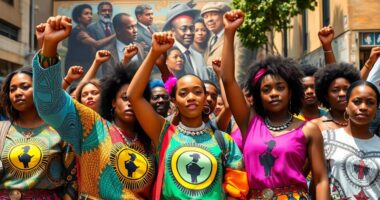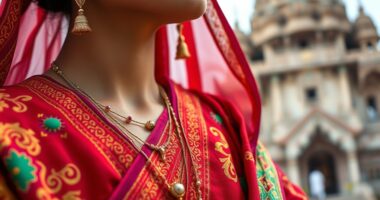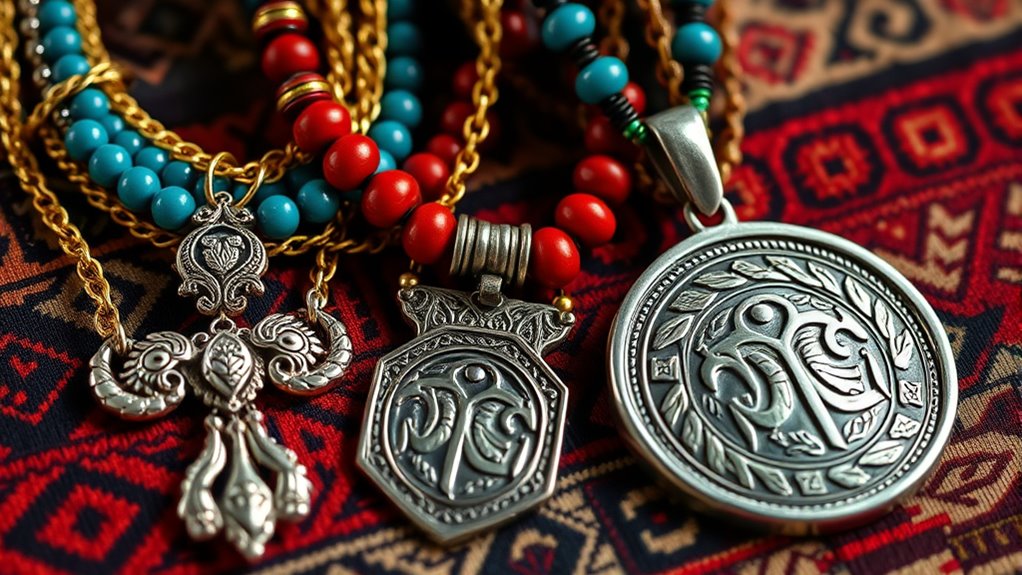

Cultural jewelry connects you to a community’s identity through symbols and stories that have been passed down across generations. These pieces often feature unique patterns, materials, or motifs that symbolize beliefs, history, and traditions. They serve as tangible links to cultural roots, celebrating craftsmanship and heritage. As you explore further, you’ll discover how these timeless accessories evolve and adapt, inviting you to appreciate their deeper meanings and ongoing stories.
Key Takeaways
- Cultural jewelry embodies symbols and motifs that convey community identity, beliefs, and historical narratives.
- Each region uses unique materials and patterns, linking jewelry to specific cultural stories.
- Traditional craftsmanship techniques, like beadwork and engraving, preserve and express cultural symbolism.
- Modern adaptations blend traditional symbols with contemporary designs, maintaining cultural relevance.
- Jewelry functions as a living story, connecting past traditions with present identities across generations.
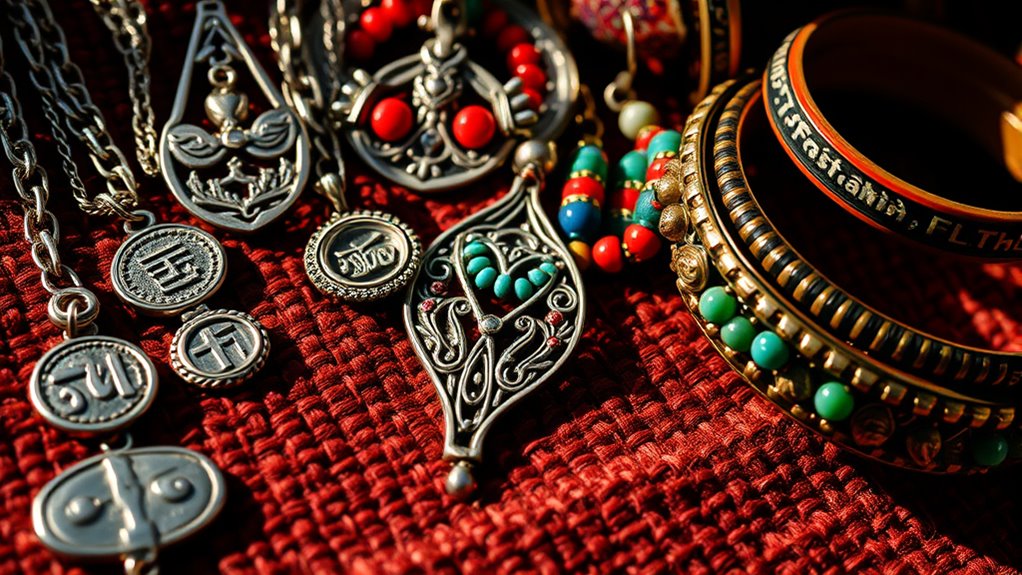
Have you ever wondered how jewelry goes beyond adornment to become a powerful symbol of identity and tradition? It’s fascinating how each piece carries stories, beliefs, and history that connect generations. At the heart of this are traditional craftsmanship techniques, which have been passed down through centuries. These methods involve meticulous handiwork, such as hand-engraving, beadwork, or metalworking, often performed by artisans who dedicate their lives to preserving cultural heritage. When you see a piece crafted with traditional skills, you’re witnessing more than just jewelry—you’re experiencing a tangible link to a community’s origins and values. These handcrafted pieces often feature symbols, patterns, or materials unique to a region, adding layers of meaning that resonate deeply with those who wear or gift them. Additionally, understanding the emotional support embedded in cultural jewelry can deepen appreciation for its significance. In recent years, modern interpretations have begun to influence cultural jewelry, blending old traditions with contemporary design. This fusion creates pieces that appeal to today’s aesthetic sensibilities while still honoring historical significance. For instance, artisans might incorporate modern materials or minimalist styles into traditional motifs, making the jewelry more accessible and versatile. Such reinterpretations don’t erase the past; instead, they breathe new life into it, allowing cultural symbols to evolve and remain relevant. You might see a necklace that uses sleek, geometric shapes inspired by ancient patterns but made with sustainable or innovative materials. These modern takes often attract a broader audience, sparking conversations about cultural appreciation versus appropriation and encouraging a deeper understanding of origins. This blend of traditional craftsmanship and modern interpretations illustrates how cultural jewelry adapts over time without losing its core identity. When you wear or admire these pieces, you’re participating in a dialogue between the past and present. You recognize the skill and cultural significance embedded in each design, whether it’s an intricate beadwork from Africa, a delicate filigree from the Middle East, or a bold statement piece inspired by indigenous art. This ongoing evolution shows that cultural jewelry isn’t static; it’s a living expression of community identity that evolves while maintaining its roots. By appreciating both the traditional techniques and innovative reinterpretations, you gain insight into how jewelry functions as a vessel for stories, beliefs, and heritage—an enduring symbol that links generations past to those of the future.
Frequently Asked Questions
How Do Jewelry Symbols Evolve Over Time?
Jewelry symbols evolve over time through a mix of symbol preservation and design innovation. You’ll see traditional meanings maintained, even as artisans introduce fresh styles and techniques. This blend allows symbols to adapt to modern tastes while keeping their cultural essence intact. As you wear and share jewelry, you help keep these evolving symbols alive, bridging past traditions with contemporary expressions and ensuring their stories continue to resonate.
Can Cultural Jewelry Be Personalized?
Yes, cultural jewelry can be personalized, and recent trends show that over 60% of people seek unique pieces to express their identity. By customizing designs, you can incorporate personal stories or symbols that reflect your cultural roots, strengthening your cultural identity. Personalization trends allow you to blend tradition with modernity, making each piece meaningful. Embrace this evolving practice to celebrate your heritage in a deeply personal way.
What Materials Are Traditionally Used in Cultural Jewelry?
You’ll find that traditional materials like gold, silver, beads, shells, and stones hold great significance in cultural jewelry. These materials often reflect the community’s history, beliefs, and environment. Crafting techniques vary, including metalworking, bead weaving, and carving, which showcase skilled craftsmanship. Using these materials and techniques, artisans create pieces that are not only beautiful but also meaningful, representing stories and values passed down through generations.
How Do Jewelry Symbols Vary Between Regions?
Did you know that regional design motifs can differ greatly, with over 50% of jewelry symbols holding unique meanings? You’ll find that in one area, symbols represent spiritual beliefs, while in another, they signify social status. These variations reflect local history, beliefs, and traditions. By studying the symbol meanings, you can uncover rich cultural stories, making each piece of jewelry a meaningful window into regional identity.
Are There Specific Rituals Associated With Wearing Cultural Jewelry?
Yes, there are specific rituals associated with wearing cultural jewelry. You often wear pieces with ritual significance during ceremonial occasions, such as weddings, rites of passage, or religious festivals. These rituals honor traditions, symbolize social status, or connect you to ancestors. You might also perform specific gestures or prayers when donning certain jewelry, emphasizing its spiritual or cultural importance. Wearing these pieces deepens your connection to your community and heritage.
Conclusion
Now that you’ve explored the rich symbolism behind cultural jewelry, you realize it’s more than just adornment—it’s a wearable story. These pieces connect you to traditions that date back centuries, proving that style and history can coexist beautifully. As you wear these symbols, remember that even in a world obsessed with TikTok trends, ancient stories continue to inspire and shape our identities. Cultural jewelry truly bridges past and present, making every piece a timeless treasure.