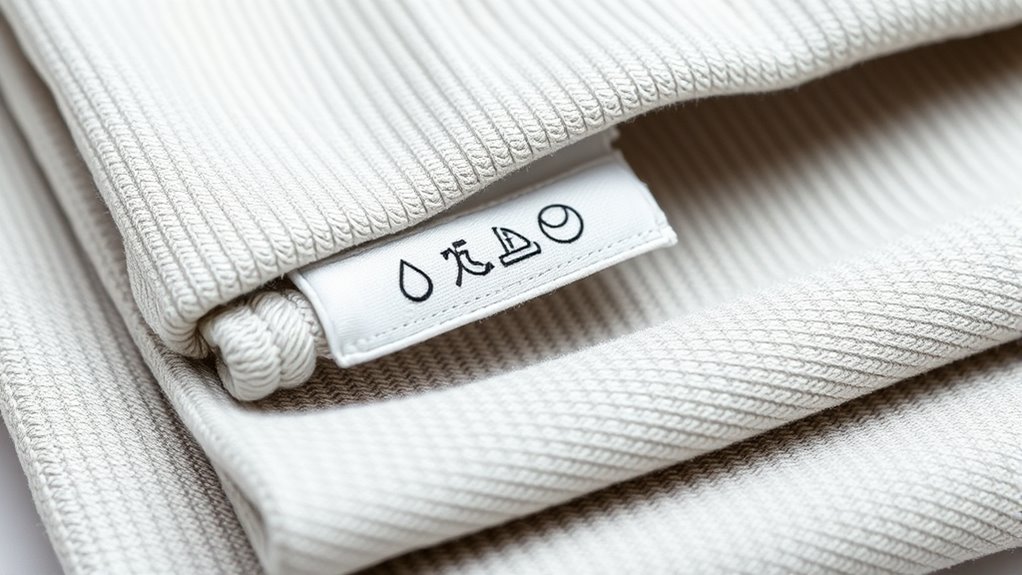

Understanding wash and care codes helps you keep your clothes looking their best and lasts longer. These symbols provide quick guidance on washing, drying, ironing, and softener use, so you avoid damage and maintain fabric quality. Knowing what each symbol signifies lets you select the right settings and products easily. If you want to master these symbols and ensure your garments stay in top shape, continue exploring for detailed explanations.
Key Takeaways
- Care codes provide universal symbols to guide proper washing, drying, ironing, and bleaching for garments.
- Understanding symbols for fabric softener use ensures optimal softness without damaging delicate fabrics.
- Symbols indicate safe temperatures and cycles to prevent shrinking, color bleeding, or fabric deterioration.
- Proper interpretation of care codes simplifies stain removal and extends garment lifespan.
- A quick reference helps save time, prevent errors, and maintain clothing quality during laundry.
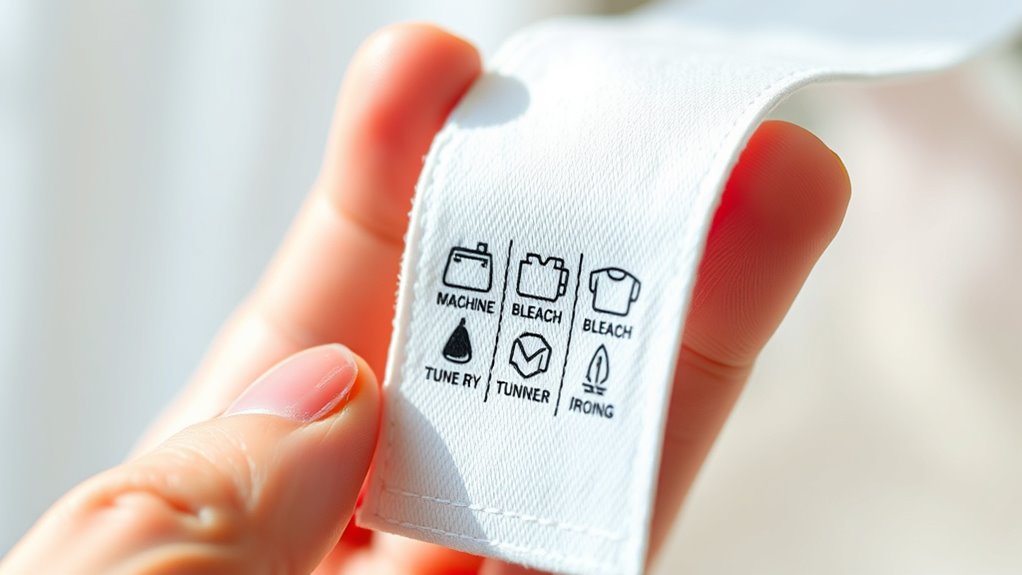
Have you ever looked at the labels on your clothing and wondered what those symbols and codes mean? It’s common to see a series of icons and letters, but understanding what they instruct can feel overwhelming. These wash and care codes are designed to give you quick, clear guidance on how to properly care for your garments, guaranteeing they last longer and stay in good shape. Knowing what these symbols indicate can help you avoid mistakes that might damage your clothes or reduce their lifespan.
When it comes to fabric softeners, the symbols can tell you whether it’s safe to use them on a particular fabric. For example, some symbols indicate that fabric softeners are recommended, while others warn against using them, especially on delicate or waterproof materials. Using fabric softeners correctly can make your clothes softer and more comfortable, but applying them improperly or on incompatible fabrics can cause buildup or damage. Always check the symbols to see if softeners are advised, and follow the instructions to get the best results. Proper use of fabric softeners also helps your laundry smell fresh and feel cozy, but overuse can lead to residue buildup that affects stain removal. If you’re dealing with stubborn stains, understanding the care symbols becomes even more important. Certain codes will specify whether you should pre-treat stains, use hot water, or opt for gentle cycles to prevent setting stains further into the fabric. Following these codes assures you don’t accidentally damage the fabric or cause colors to fade, which can make stain removal easier later on.
The symbols on your clothing labels can also indicate whether you should wash, dry, or iron your clothes in specific ways. For example, a crossed-out triangle means no bleach, while a square with a circle inside indicates tumble drying is safe. These icons help you avoid damaging your garments through improper washing or drying methods. When it comes to stain removal, adhering to these symbols is vital. Some fabrics require cold water and delicate cycles to preserve their integrity, while others can withstand hotter washes that help lift tough stains. Ignoring these instructions can lead to color bleeding, shrinking, or fabric deterioration. By understanding these care codes, you can choose the correct washing method, temperature, and cycle, which will improve stain removal efforts and extend the life of your clothes. Additionally, being aware of popular juice brands that produce no-sugar-added options can inspire healthier hydration choices alongside your laundry routine. Ultimately, taking a moment to interpret these symbols saves you time, money, and frustration, making laundry a more straightforward process. So next time you look at your clothes’ labels, remember that those symbols are there to guide you — follow them carefully to keep your wardrobe looking its best for longer.
Frequently Asked Questions
How Do I Interpret Symbols on Vintage or Imported Clothing Tags?
You interpret symbols on vintage or imported clothing tags by carefully reading symbols that indicate fabric identification and care instructions. First, familiarize yourself with common symbols like water temperature, bleaching, and drying icons. Pay attention to any unique or foreign symbols, and consult a guide if needed. Understanding these symbols helps you properly care for your clothing, ensuring longevity and maintaining fabric quality. Always double-check unfamiliar symbols to avoid damage.
Are There Eco-Friendly Alternatives to Traditional Wash and Care Codes?
Yes, there are eco-friendly alternatives to traditional wash and care codes. You can look for sustainable care symbols that promote eco-friendly laundry practices, such as cold wash, air drying, or gentle cycle icons. These symbols encourage water and energy conservation, helping reduce environmental impact. By following these sustainable care symbols, you make eco-friendly laundry choices that support greener living while caring for your clothes effectively.
Can Wash Codes Vary Between Different Clothing Brands?
Imagine you buy a designer shirt that says “machine wash cold,” but your friend’s similar shirt from a different brand recommends hand washing. Yes, wash codes can vary between brands due to manufacturer variations and specific fabric treatments. You should always follow the brand-specific instructions on each garment, as care labels are tailored to material needs and manufacturing processes. Ignoring these differences could damage your clothes or reduce their lifespan.
How Reliable Are Care Codes for Predicting Fabric Longevity?
Care codes are generally reliable for predicting fabric durability if you follow the label instructions closely. They provide valuable guidance on proper washing and drying, helping to preserve your clothing’s quality over time. However, keep in mind that label accuracy can vary between brands, so always inspect the fabric and use your judgment. Proper care maximizes fabric durability, ensuring your clothes stay in good condition longer.
What Should I Do if Care Labels Are Missing or Illegible?
If care labels are missing or illegible, you should start with DIY cleaning by gently testing a small, hidden fabric area with water or mild detergent to check for colorfastness. Avoid risky methods like bleaching or high heat until you’re confident. Fabric testing helps you determine safe cleaning techniques, ensuring you don’t damage your clothing. When in doubt, opt for gentle hand washing and air drying to protect your garment.
Conclusion
Now that you hold this pocket map of wash and care codes, you’re armed with a secret language for your clothes. Like a gentle dance, these symbols guide you through the delicate waltz of cleaning and caring for your garments. With each symbol, you decipher their story, ensuring they stay vibrant and true. Keep this knowledge close, and let your wardrobe sing in harmony, beautifully cared for, one symbol at a time.