

Starting as an intern, you gain industry knowledge, practical skills, and valuable connections that open doors. Seek out mentorships with experienced designers or stylists to refine your talents and learn industry secrets. Progress by building a strong portfolio and gaining experience in entry-level roles like assistant or coordinator. Stay engaged with industry events and continue learning to advance toward editorial roles. If you’re eager to grow, there’s more to discover about steering your fashion career journey.
Key Takeaways
- Gain industry experience through internships to develop skills and build professional connections essential for advancing to editorial roles.
- Seek mentorship from experienced fashion editors or designers to refine your editorial vision and industry knowledge.
- Build a strong portfolio showcasing your writing, styling, and editorial projects to demonstrate your capabilities.
- Attend industry events and stay informed on trends to broaden your network and understanding of the fashion landscape.
- Progress from entry-level roles like assistant or coordinator to senior editorial positions by continuously learning and leveraging connections.
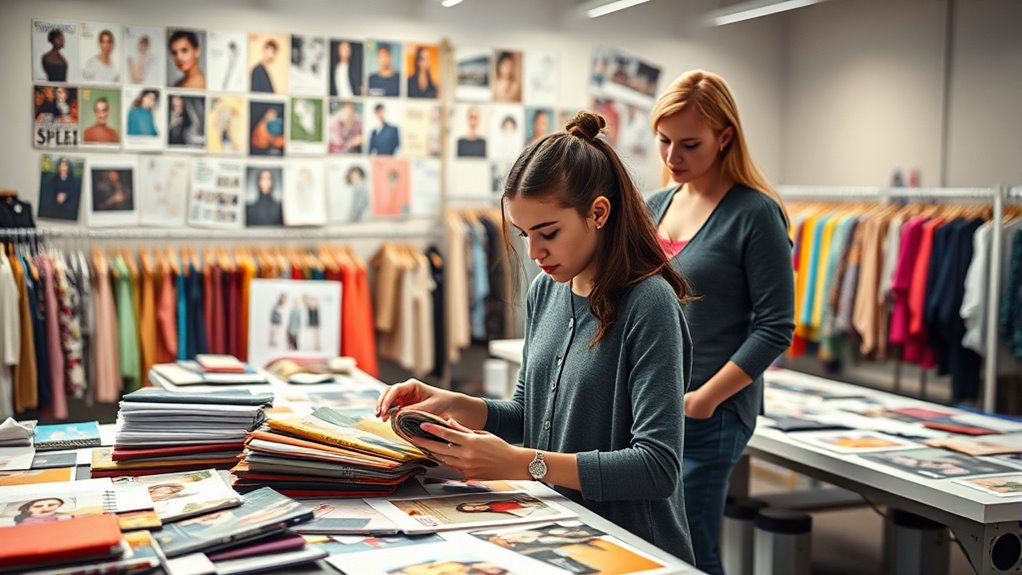
Are you curious about how to turn your passion for fashion into a successful career? If so, understanding the importance of gaining experience early on is essential. Starting with fashion internships can be a game-changer. They give you a firsthand look into the industry, allowing you to develop practical skills, build your network, and understand how fashion houses operate behind the scenes. Internships are your opportunity to learn from seasoned professionals, observe their workflows, and get a sense of the different roles within the industry. Whether you’re assisting on photo shoots, managing samples, or helping with runway preparations, each task adds to your knowledge base. These experiences also help clarify what area of fashion excites you most, whether it’s styling, production, or marketing.
Gaining early experience through internships helps you develop skills, build networks, and discover your true passion in fashion.
Alongside internships, seeking out design mentorships can greatly accelerate your career. Design mentorships connect you with experienced designers who can offer personalized guidance, critique your work, and share industry secrets. This one-on-one support is invaluable because it helps you refine your skills more quickly and gain insights that aren’t always available in formal education. Mentors can introduce you to important industry contacts, recommend opportunities, and help you develop your unique style and voice as a designer. Engaging in these mentorships demonstrates your dedication and enthusiasm to learn, qualities highly valued in the fashion world.
As you accumulate experience through internships and mentorships, you’ll start to understand how different careers interconnect. Many successful professionals began as interns or assistants, gradually climbing the ladder by demonstrating their talent, work ethic, and creativity. It’s common to start in entry-level roles like assistant or coordinator, gaining exposure to the industry’s intricacies. From there, you might specialize as a stylist, fashion buyer, or brand manager, each step bringing you closer to your ultimate goal. Building a strong portfolio, showcasing your best work, and continuously learning are essential at every stage. Additionally, understanding the Forex market and how currency fluctuations can impact global fashion brands can give you a broader perspective on international business dynamics.
Networking also plays an important role in this journey. Attend industry events, fashion shows, and workshops to meet people who can offer opportunities or mentorships. The more you immerse yourself in the community, the more doors will open. Remember, a career in fashion isn’t just about talent; it’s about perseverance, connections, and strategic moves. Keep pushing forward, learn from every experience, and stay true to your vision. Whether you’re starting with a fashion internship or seeking out a design mentorship, every step you take brings you closer to turning your passion into a thriving career.
Frequently Asked Questions
What Skills Are Most Important for Advancing in Fashion Editing?
To advance in fashion editing, you need strong skills in fashion communication and editorial storytelling. You should be able to craft compelling narratives that capture trends and resonate with your audience. Stay updated on industry trends, develop excellent writing and editing abilities, and hone your eye for visual storytelling. Building a network and understanding the business side of fashion also help you stand out and grow in your career.
How Can Interns Stand Out in Competitive Fashion Industries?
Think of your fashion internship as your backstage pass—stand out by showing enthusiasm, creativity, and quick learning. Seek industry mentorship actively; ask for feedback and show your initiative. Stay updated on trends and bring fresh ideas to the table, just like a modern-day Leonardo da Vinci. Your proactive attitude and genuine passion will help you shine in this competitive industry, turning your internship into a stepping stone for a stellar career.
What Are Typical Salaries at Different Fashion Career Levels?
You’ll find that salary progression varies by role, with entry-level positions like assistants earning around $30,000 to $50,000, while mid-level designers or managers make $60,000 to $100,000. Industry benchmarks show that senior editors or creative directors can earn over $150,000 annually. As you gain experience and responsibilities, your salary increases accordingly. Staying updated on these benchmarks helps you negotiate better and plan your career growth effectively.
How Do Networking Opportunities Vary Across Fashion Career Stages?
As you progress from intern to editor, your networking opportunities grow through mentorship programs and industry conferences. For example, attending a major fashion week might connect you with designers and editors, opening doors for mentorship. Early on, internships offer informal connections, but as you advance, industry conferences become key for making impactful contacts. Active participation helps you build relationships that can shape your career at every stage.
What Are Emerging Trends Shaping Future Fashion Careers?
You’ll see emerging trends like sustainable innovation and digital transformation shaping future fashion careers. As industry shifts, you’ll adopt eco-friendly practices and leverage advanced technologies like AI and virtual shows. Staying adaptable and embracing these trends will boost your relevance and growth. By continuously learning about sustainability and digital tools, you position yourself at the forefront of the evolving fashion landscape, ready to lead and innovate in a dynamic market.
Conclusion
Your journey from intern to editor is achievable with dedication and passion. Did you know that over 60% of fashion professionals start their careers in entry-level roles before advancing? This statistic highlights the importance of persistence and continuous learning. Keep honing your skills, networking, and staying inspired. Every step you take brings you closer to your dream role. Stay motivated, and remember, your fashion career is within reach—your future starts now.