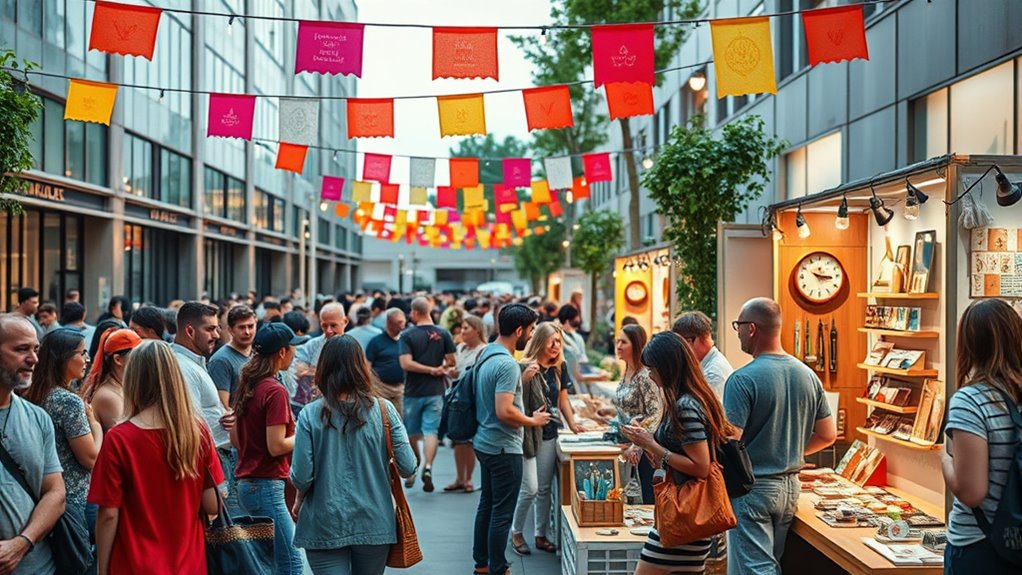
To plan a successful pop-up event for your micro-brand, start by choosing a location that aligns with your brand identity and appeals to your target audience. Design the space to reflect your brand’s personality, creating an engaging environment that tells your story and encourages interaction. Make sure your branding is consistent across all touchpoints and focus on fostering genuine connections. Keep exploring to discover more tips that will help your pop-up stand out and leave a lasting impression.
Key Takeaways
- Define your target audience and select a location that aligns with your brand identity and attracts relevant foot traffic.
- Design a space that reflects your brand’s personality and tells a compelling story to engage visitors.
- Develop cohesive branding elements, including signage and packaging, to reinforce your micro-brand’s message across all touchpoints.
- Create an interactive, memorable experience that fosters genuine connections and builds brand loyalty.
- Promote your pop-up event through targeted marketing channels to maximize visibility and attract the right audience.
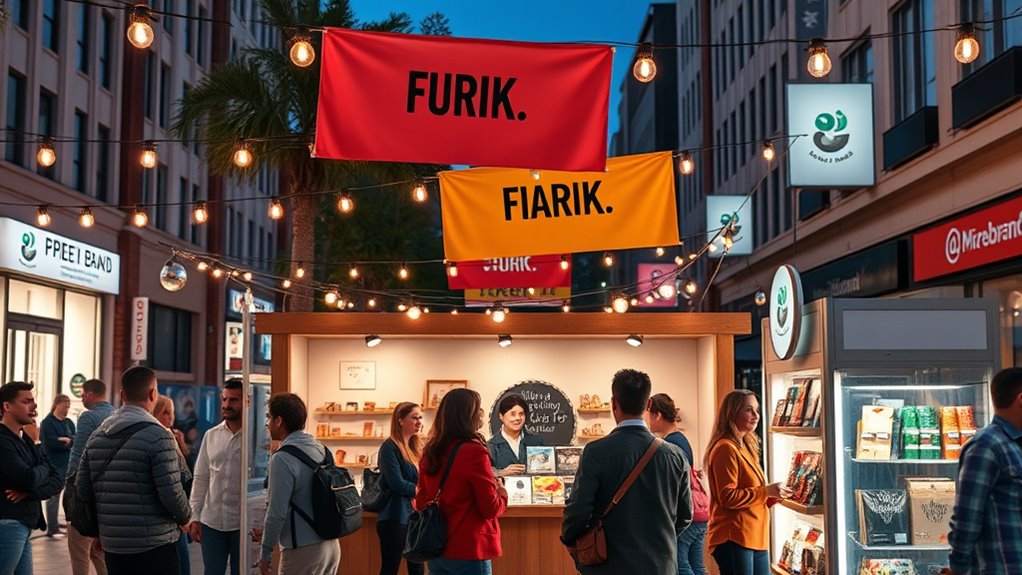
Pop-up events have become an exciting way for businesses and creators to connect with audiences in unexpected and engaging spaces. These temporary setups offer a fresh and dynamic approach to marketing, allowing you to showcase your micro-brand in a way that feels authentic and memorable. When planning a pop-up, your branding strategy plays a vital role in guaranteeing your event resonates with your target audience. Think about how you want your brand to be perceived—what story you want to tell and what emotions you want to evoke. Your branding should be consistent across all touchpoints, from signage to packaging, creating a cohesive experience that leaves a lasting impression. By doing so, you not only attract attention but also build trust and recognition in a crowded marketplace.
Effective branding across all touchpoints creates memorable pop-up experiences that build trust and recognition.
Location selection is one of the most essential decisions you’ll make when planning a pop-up event. You want to pick a spot that aligns with your brand identity and reaches your ideal audience. For example, if your micro-brand is eco-conscious, consider hosting in a trendy farmers’ market or a community space known for sustainability initiatives. If you’re targeting young professionals, a bustling downtown or a popular weekend market might be ideal. Think about foot traffic, accessibility, and the overall vibe of the area—these elements can profoundly impact your event’s success. Don’t just choose a location because it’s convenient; choose it because it amplifies your brand message and invites the right people to engage with your offerings.
Once you’ve settled on a location, think about how it complements your branding strategy. The space should reflect your brand’s personality and values. If your brand is minimalist and modern, opt for a sleek, clean setup that emphasizes simplicity. Conversely, if your brand is vibrant and playful, a colorful, energetic environment will better showcase your identity. Remember, the environment you create should tell a story about your brand and invite visitors to become part of that narrative. Incorporating the right environment can also help with your overall brand safety and reputation, ensuring your event is both attractive and secure. Carefully considering both your location and how you present your brand within that space will help you craft an experience that feels genuine and compelling, encouraging attendees to share their experience and spread the word.
In the end, a successful pop-up hinges on thoughtful location selection and a cohesive branding strategy. When these elements align, you create a memorable event that not only promotes your micro-brand but also fosters genuine connections with your audience. This targeted approach ensures your pop-up isn’t just a fleeting moment but a meaningful step forward in building your brand’s presence and reputation.
Frequently Asked Questions
How Do I Choose the Best Location for My Pop-Up Event?
You choose the best location by doing thorough location scouting and analyzing foot traffic. Visit potential spots during different times to gauge busy periods and observe customer behavior. Look for high foot traffic areas that match your target audience’s habits. Consider accessibility, visibility, and nearby complementary businesses. A well-chosen location with strong foot traffic guarantees maximum exposure, helping your micro-brand gain visibility and attract more customers effectively.
What Is the Ideal Duration for a Successful Pop-Up?
The ideal duration for a successful pop-up depends on your goals and audience, but generally, aim for 2 to 4 days. Consider timing considerations like peak foot traffic hours and days to maximize engagement strategies. Keep your event lively and interactive, encouraging visitors to stay longer and share their experience. Shorter events create urgency, while longer ones build deeper connections. Adjust based on your brand’s capacity and customer engagement.
How Much Budget Should I Allocate for a Pop-Up Event?
You should allocate around 10% to 20% of your total marketing budget for a pop-up event. Start with budget planning by identifying funding sources like savings, sponsorships, or small business loans. Consider costs for venue, permits, marketing, staff, and supplies. Keep a buffer for unforeseen expenses. This approach ensures you manage expenses effectively while maximizing your event’s impact, helping your micro-brand gain visibility and attract new customers.
How Can I Attract My Target Audience Effectively?
Think of your target audience as a magnet, pulling in the right people. You can attract them effectively by leveraging social media to showcase your brand’s personality and creating engaging content. Partner with influencers whose followers align with your target market, turning their influence into a powerful beacon. This combo increases visibility and draws your ideal crowd naturally, making your pop-up event unforgettable and well-attended.
What Legal Permits or Insurance Are Needed for Hosting?
You need to secure the necessary permit requirements from your local authorities before hosting your event. Additionally, obtaining liability insurance is vital to protect yourself from potential claims or damages. Check whether your city or venue has specific permits for pop-up events, and make sure your insurance coverage includes general liability. Staying compliant with permit requirements and having liability insurance in place keeps your event legal and safeguards your micro-brand.
Conclusion
Hosting a pop-up event isn’t just about showcasing your micro-brand; it’s about creating a memorable moment that gently invites people into your world. With a little planning and a touch of creativity, you can craft an experience they’ll quietly carry with them. So, take that first step—your audience is ready to discover what you have to offer, and this could be the charming beginning of something beautifully unexpected. Let your journey unfold naturally.